

CONDUCTOR OF LIVING EMOTIONS
Raulia Turkkan: "In every production, one has the right of own vision, and the responsibility for it before the audience is my choice and my destiny"
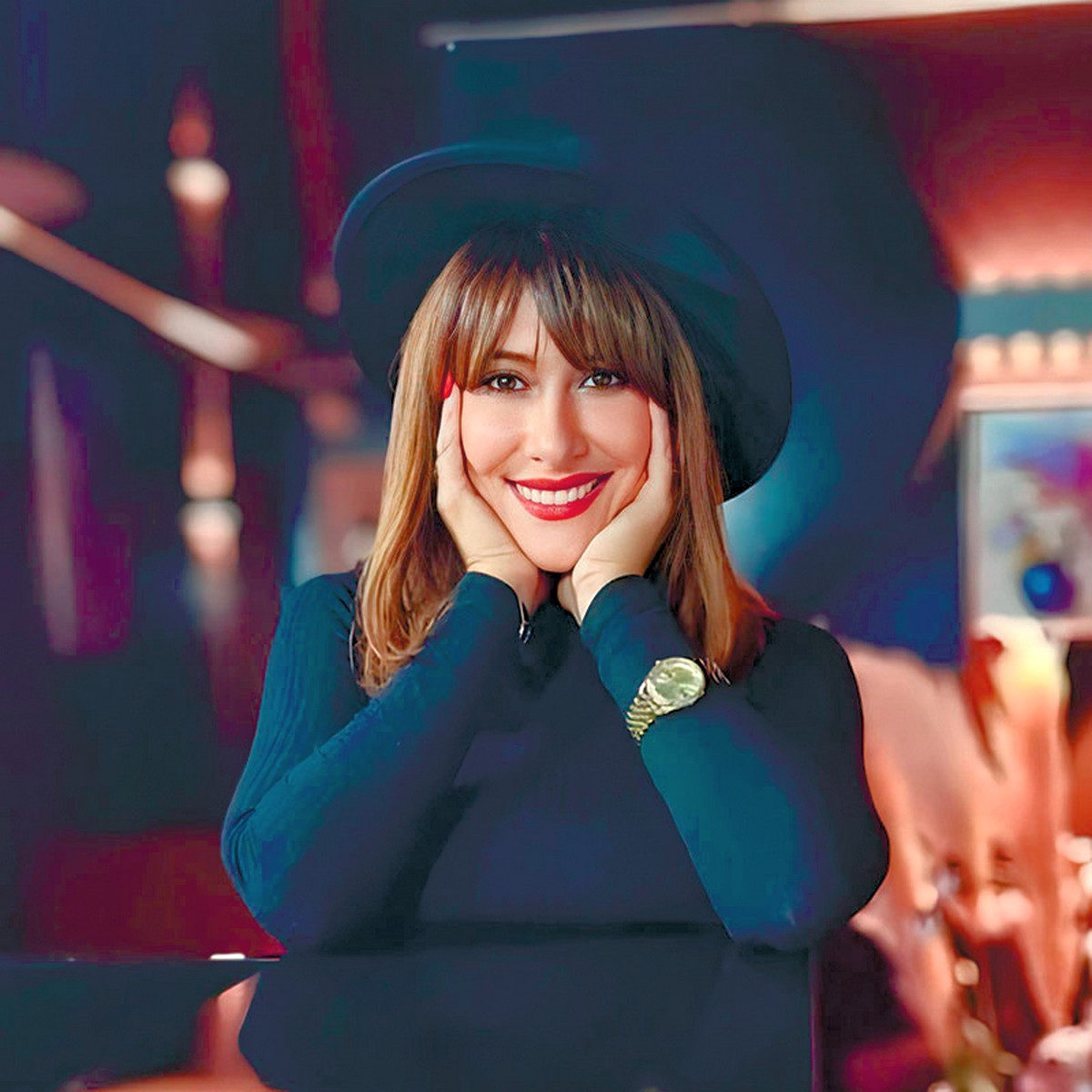
Author: Tatyana IVANAYEVA
In the theatrical world, directing is traditionally a domain of strong personalities and tough decisions. Women have to fight for their right to a voice. As a director, you must manage the process, set the tone and shape the artistic vision of a performance. As a woman director, I am breaking down the barriers that exist in a male-dominated leadership sector.
Raulia Turkkan is a director who confidently builds her own creative trajectory. She does this without open confrontation, yet without dissolving into stereotypes. Her productions are spaces of emotional precision, inner tension and attentive observation of human nature. She has developed her own language of power in an environment where most leadership positions are traditionally held by men. This language is not demonstrative, but deep, based on professionalism, discipline and artistic conviction. Raulia Turkkan and I discuss what it means to be a female director among men, how to build authority within the theatrical hierarchy and preserve individuality in a complex system of coordinates.
"My entry into directing was somewhat predetermined. That is precisely why I entered the institute as an adult, drawing on experience that included work as a choreographer, assistant director and everything else my desire to learn new things could reach. I have a trait in my character: an interest in every component of theatrical action. I could spend all day and night in the theatre, figuring out how they set up the lights, assemble the sets and create the sound accompaniment. The director's approach completely captivated me. As soon as enrolment for the institute opened, I was certain: if I got in, this was my destiny. I received my answer, confirmed by studying with the legendary Jannat-khanym Salimova, who became my Master. I still turn to her experience and wisdom today."
"So what about the debate over male versus female directing?"
"I know for certain that the profession of director cannot have a concept of gender. I work on projects outside the theatre as well. The conversation here should be about abilities and the skill of 'plugging into' the chosen material. The only differences here are individual understandings of the common issues raised by the author of a literary work, and how to translate them into stage action using the tools available. The director determines what the audience sees on stage. I am personally involved in all its components, from lighting and sound to set and costume designs, stage assembly, and the interaction between actors and their existence in the proposed space. This is not professional paranoia. It is akin to conducting a peculiar orchestra. A director must clearly understand what they want from the chosen performers and be able to explain and 'draw out' those characters whose lives they are to live for a conditional two hours. And where does gender come into this?"
"And yet…"
"So many researchers over several decades have turned to this aspect. In that case, you can rather talk about an approach inherent to the male and female views of a conventionally proposed story—what is usually called a narrative with an emotional component. Otherwise, there is only one universal criterion: bad or good. True, we still have to admit that stereotypes exist. I think this is due to the fact that directing came from a time when female professions did not exist at all. That is probably why men find it somewhat difficult to see representatives of the fair half of humanity in what they consider their original domain—and they diligently look for ‘specks in the eye’ of women’s work. On top of that, there is the aspect of submitting to a woman, which, you will agree, men do not particularly welcome. Does that bother me? No. I simply do my job, and its high results have been repeatedly confirmed by recognition from both the public and professionals at the international level. Although… I recall the words of Marina Belyaeva, art director of the Baltic House: ‘Women’s directing has its own special features, its own more soulful reaction to the problems of our life.’ In my view, this only emphasises the quality of the presentation of the material. And a place ‘under the green lamp’ is beyond any division into male and female…"
"You must be serious in your preparation for the difficulties of the profession…"
"Jannat-khanym always said that a director must first of all be self-sufficient and self-confident. By the way, I asked her many questions, and she gave interesting answers. For example, I once asked her why directors use the same actors in their productions, seeing this as somewhat unfair to others. I should note that I was not directing myself at the time. She answered in her characteristic tone: ‘You see, directors develop a trained eye, and you get so used to those actors that you know that no matter what task you give them, they will play exactly what you need.’ And then she immediately added that you must definitely take other actors and not be afraid to experiment. Another example: I approached her with a question about how to organise the process of working with authors, including contemporary ones who can actually watch how the director handles their work. She immediately replied: ‘The author gave you the play, entrusted you with it—and that’s it!’ That is how she taught me to correctly define the boundaries of relationships in the directing profession, which implies the right to one’s own vision and responsibility for it before the audience."
"Is that the secret behind the success of the studio you created, ‘I am an Actor’?"
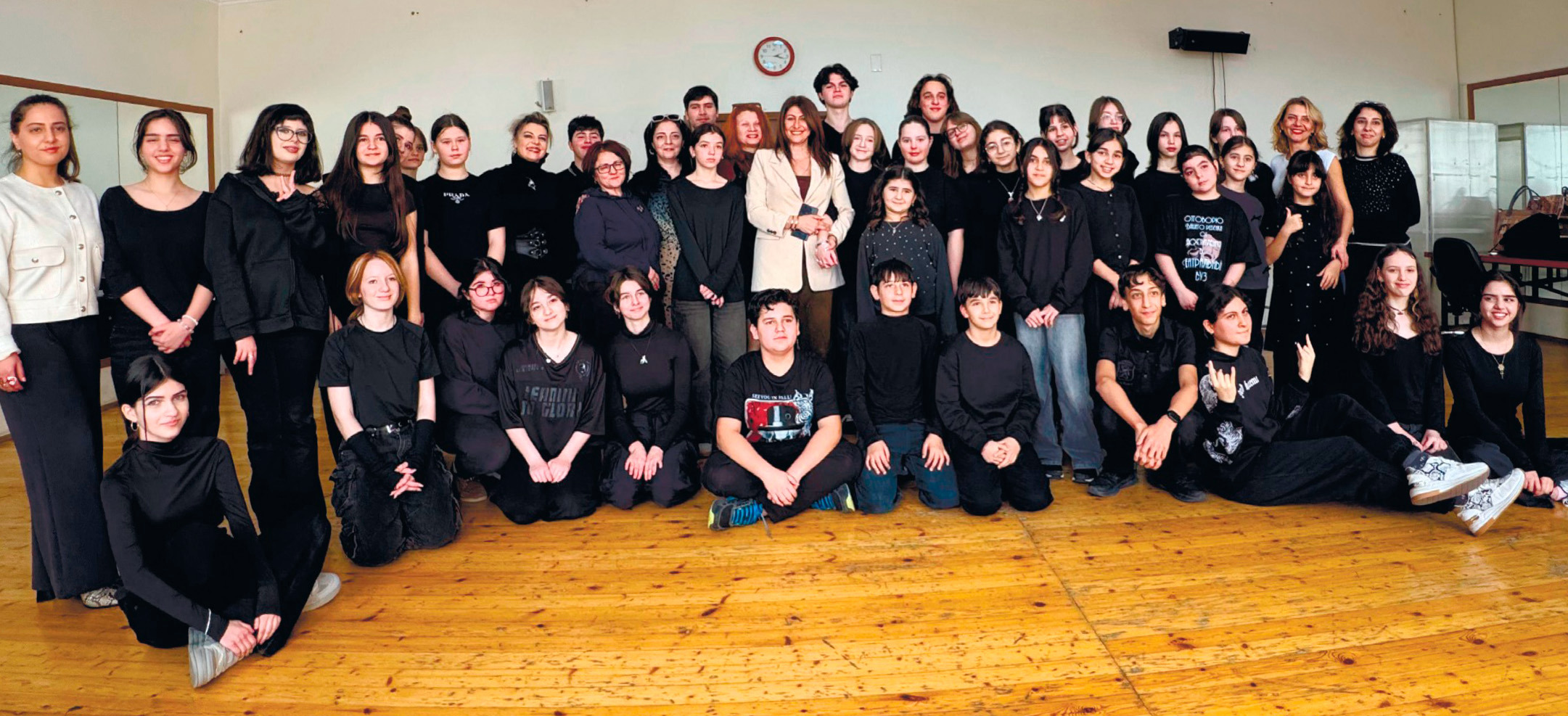
"I think the universal recipe for success of 'I am an Actor' is a good, effective training programme. My colleagues Inna Imranova and Milana Sokolenko are also excellent. I position the acting studio precisely as a school, with a clear study schedule. People come in September, and in the summer they take an exam and receive a certificate. I created the studio to be close to my daughter. We created a space where children learn the subtleties of acting and develop empathy by combining various developmental circles. They learn to be communicative, kind and friendly without gadgets and phones. I was very clear that the absence of the latter in the play 'The Future That Gives Birth to a Dream' was a matter of principle. The teaching system at 'I am an Actor' is designed to build strong relationships between participants. And it works! Watching my studio members, I am glad to see the dynamics of their growth—above all, on a human level."
"Nevertheless, in your directorial portfolio, we can notice a feminine thread running through it."
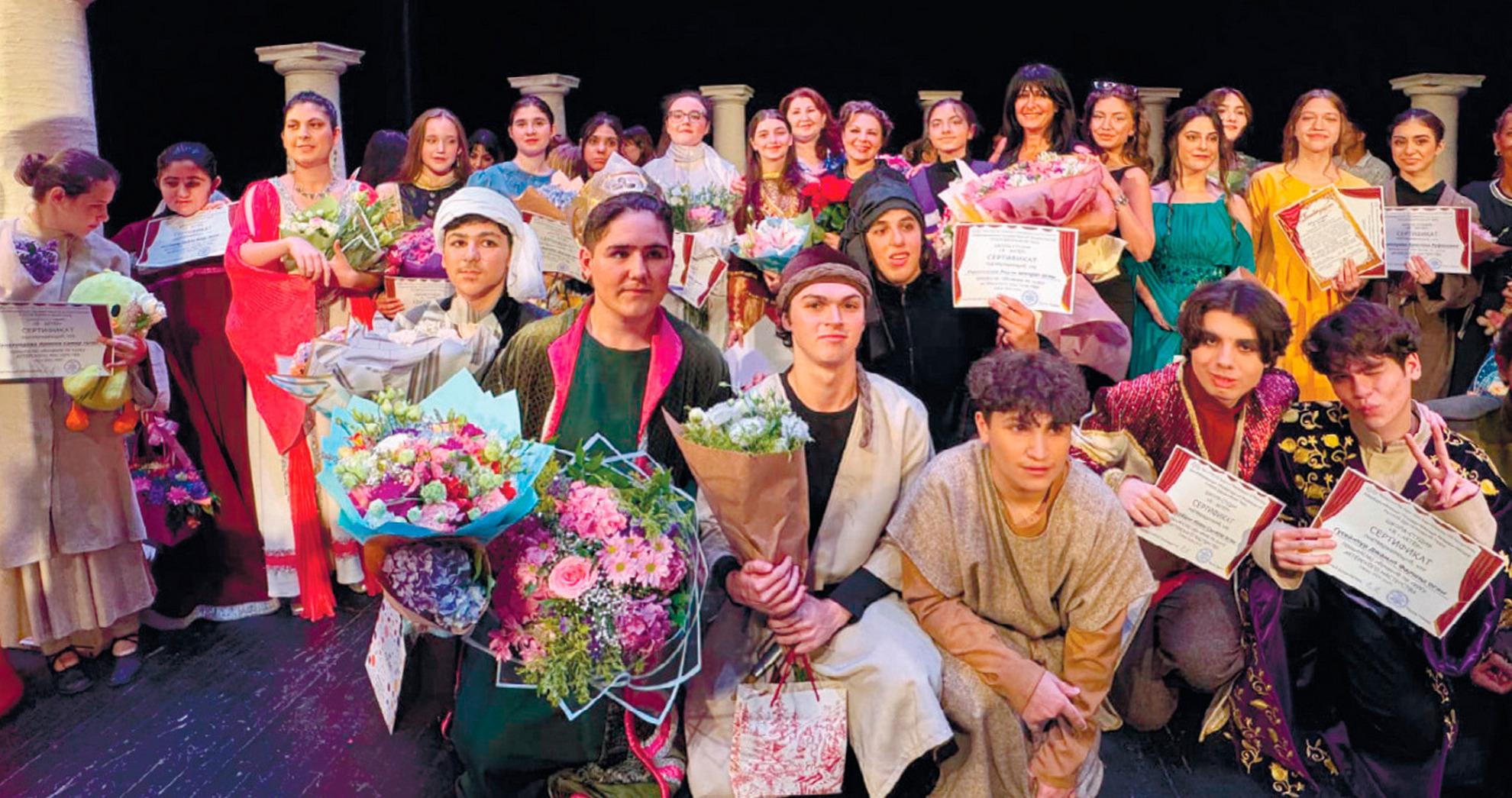
"Which is quite logical. This world is female. Even though it is said to be ruled by men, women stand behind them. Women push men to actions and deeds, even if men do not realise it in their attempt to prove their own worth in women’s eyes. With ‘Emma’, I spent quite a long time living with the material, calibrating the narrative line and the interaction of the characters. In ‘The Price of Happiness’, the theme of woman ran through the pain of war and the fear for a loved one. Actually, working with the author of that piece was extraordinarily interesting. At night, I remembered a young author and immediately wrote to him, offering collaboration with a young director—meaning myself. And even though it was quite late, he replied with an invitation for an urgent meeting, after which we staged a production for Victory Day. We presented it within the framework of the theatre festival ‘Qalib Olan Azərbaycan’, sharing the stage with the Azerbaijan State Academic National Drama Theatre. We performed it in Türkiye, where our girls’ hands were literally kissed. In 2025, we played it in Baku on Victory Day and took it to Ganja. And each time the audience received it with delight."
"Which is more difficult emotionally to stage on the theatrical stage?"
"Let me set the record straight. I loved my father. He was my world. In my directing, the father figure carries a certain symbolism. For example, in 'The Heavenly One', there is an address to the father; in 'Eight Loving Women', one of the heroines is worried about her father; in 'The Price of Happiness', the male hero is a prototype of the father. My father is the thread that runs through my life. I become interested in a play, start reading it and realise that some moments are so emotionally heavy for me that I put it aside. Milana Sokolenko's monologue in 'The Heavenly One' is always moving, and I experience a catharsis every time she performs it. I can say with confidence that my choice of material for a production is always driven by my own personal emotional charge. I am a sucker for anything to do with love, and that passion is clearly evident in the production 'All About Love' set to poems by Leyla Aliyeva."
"By the way, one of the characteristic features of your directorial signature is portraying a female character through several actresses."
"Whenever I have that opportunity, I always try to use it. It is a kind of personal vision of woman in this world—several women ‘live’ in each one. Probably, this feeling is projected, first of all, onto myself. I see no need to hide that I consider myself a strong woman, and at the same time vulnerable, in love. Perhaps that is why this theme is close to me, and I find it interesting to translate a kind of disincarnation of one heroine’s character traits across several faces."
"Your theatrical productions are of different genres. Which one is most comfortable for you in terms of directorial solutions?"
"I will always remember how, in my first year, Jannat-khanym, I and my colleagues from the Russian Drama Theatre – Yura Omelchenko, Farida Nesterenko, Bella Safina, with whom we studied in the same course – were floored when we were set the task of putting on a play. We had just started studying. I was a choreographer at the time and I chose Alexei Shchepanov's play 'The Heavenly One, or Four Hours from Her Life'. I decided to do it as a monologue from the heroine's perspective. When I announced my choice, Jannat-khanym explained that I was aiming for the most difficult directorial task and suggested I think again. I realised straight away that 'The Heavenly One' was already 'built' in my head, and I told her so. She accepted my choice after learning that Honoured Artist of Azerbaijan Milana Sokolenko would be involved. I later travelled with that production to various festivals while still studying at the institute. I discovered that the mono format was not as challenging as I had thought, and I returned to it in 'Mannequin' based on the work of Firuz Mustafa. Today, I know for certain that my biggest challenge to myself was precisely those 'Eight Loving Women'. Let me be clear: the comedy genre is the most difficult of all. I can make the audience cry, but laughter is a whole other level. The 'read-around' is clearly a funny affair. When the play is performed in front of a public audience, the lines we expect to provoke a reaction often fall flat and go unnoticed, while other lines elicit laughter from the audience. I found an algorithm for 'Eight Loving Women' and now I can master that genre. I am a person who always loves to learn, who reads a lot, watches a lot, and tries to travel to get acquainted with the work of other theatres. I can honestly admit today that I would not dare to tackle Chekhov. For me, it is not yet time."
"However, you have already mastered the classic English ‘Emma’…"
"‘Emma’ unexpectedly turned out to be a somewhat overwhelmingly female production. I personally think I was lucky—as a director, as a person and as a woman—that the stage stars aligned that way. Especially since the audience also accepted my interpretation of the classic English women’s novel. I say this based on the feedback I receive both directly in real life and on social media. After all, most of the people in the audience are people I do not know. I trust their opinion. Because art is always tied to individual perception. And there will always be at least two polar opinions—which is perfectly normal, and I take that fact quite calmly. The presence of differing judgments means that my work has not left room for indifference. And isn’t that one of the goals of theatre?"
RECOMMEND:
 169
169

