

DOUBLE IMPACT
From Hormuz to Kiev: interconnections between the two crises
Author: Ilgar VELIZADE
Military operations in Ukraine and around Iran have presented considerable challenges to the international system. Among those not directly involved, the European Union has felt the most tangible consequences. This is a view that is gaining recognition among European experts and external observers. We are discussing the convergence of multiple crises that have impacted the foundations of European stability.
The Hormuz test
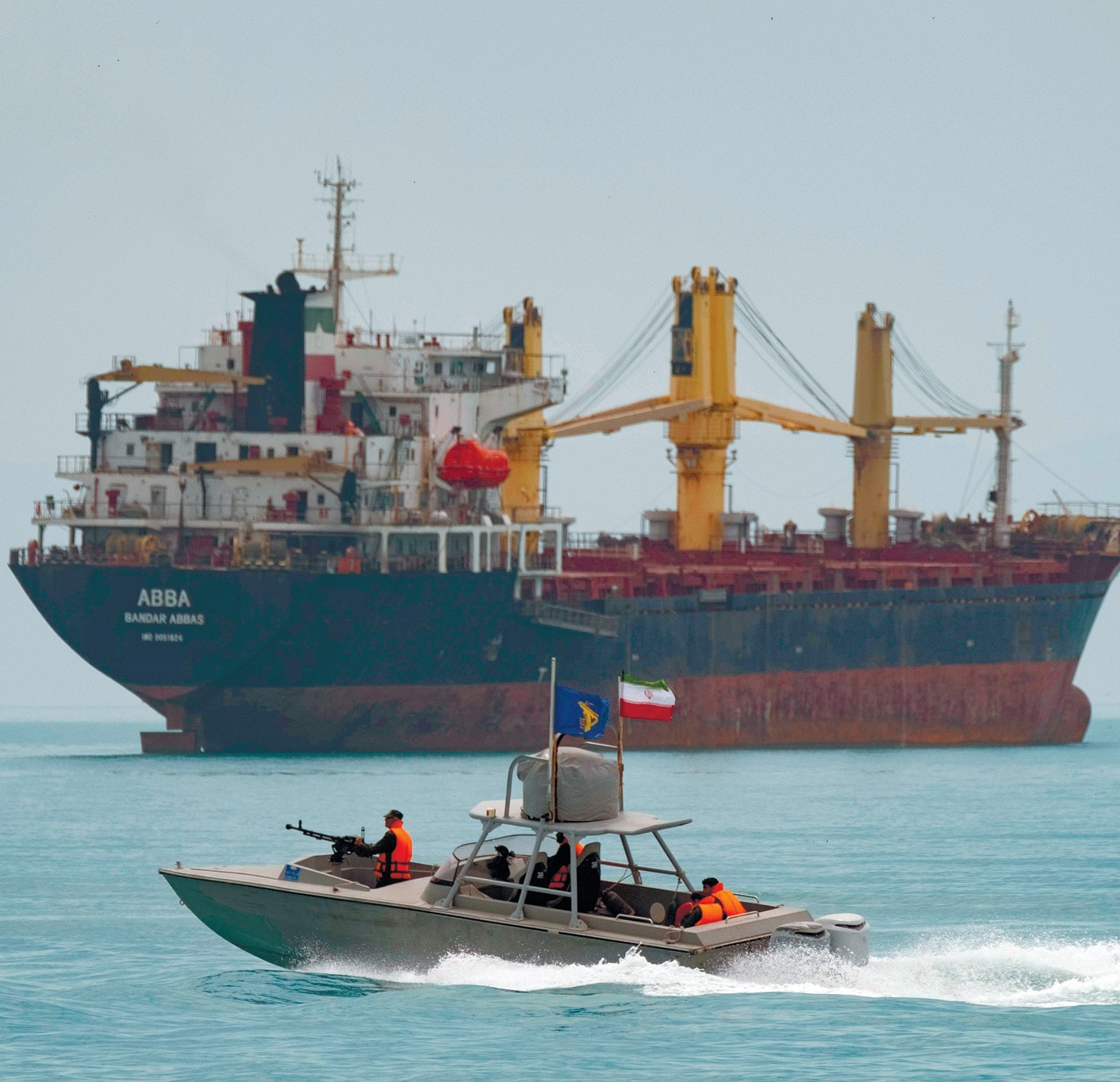
Since 2022, the EU has been working to reduce its reliance on Russian energy resources. This has led to a shift towards alternative sources, including LNG, which are more expensive. This has already resulted in rising prices and a decline in industrial competitiveness. The heightened tensions surrounding Iran have introduced a new dimension of risk to this scenario. The Strait of Hormuz, through which a significant proportion of the world's oil passes, is of crucial importance to European markets. Therefore, any threats to this important waterway will have a significant impact on European markets. Notwithstanding the absence of a physical blockade, the mere rise in insurance costs and logistics expenses is sufficient to cause a surge in energy prices in Europe once again.
According to industry experts, in the context of ongoing conflict and infrastructure attacks, the global supply of oil has been reduced by approximately 12 million barrels per day, which is equivalent to around 12% of global demand. For the EU, this means not just expensive oil, but higher costs for diesel, aviation fuel, transport and electricity.
In Europe, the price of aviation fuel has risen to around $220, whilst diesel has exceeded $200 per barrel. These are the most sensitive areas for transport, aviation and parts of industry. It is evident that the majority of the economic chain has become more costly, with price hikes affecting various sectors, from freight transport to tickets and production costs.
This is beginning to have an impact on the macroeconomy as well. In March, economic growth in the eurozone was recorded at 0.9%, falling short of the anticipated 1.2%. The recent economic downturn in the Middle East resulted in a 0.3 percentage point decrease. Concurrently, the inflation forecast for 2026 has been revised upwards to 2.6%, despite the previously considered figure of 1.9%. It is important to note that the energy shock is affecting the EU from multiple perspectives. In particular, businesses and households are facing increasing costs, declining purchasing power, and growing uncertainty, which is affecting investment and consumption. The most vulnerable sectors have been identified as those with high energy consumption, including chemicals, metallurgy, transport and aviation. These sectors are already anticipating tariff increases and are monitoring the potential risks of fuel shortages. The ongoing conflict in Iran is having a detrimental effect on the EU economy.
Brussels has already acknowledged the issue at the political level. Following the EU summit held in Brussels on 19–20 March, the European Commission was tasked with preparing temporary, targeted measures to mitigate the price surge. At the summit, the participants discussed the possibility of reducing electricity taxes, lowering grid charges, and offering more flexible state support. They also discussed specific measures for energy-intensive sectors. Ursula von der Leyen has announced that the EU intends to reduce electricity taxes in order to ensure that prices remain at a level that is accessible to households and businesses.
Concurrently, the EU plans to allocate approximately €30 billion, generated from the emissions trading scheme, to projects aimed at facilitating the transition to cleaner energy sources and enhancing independence from external suppliers.
A challenging decision in challenging circumstances
However, this is precisely where the primary internal contradiction arises. Some countries are keen to ease the pressure on industry more quickly, including through a more significant adjustment to carbon regulations. Some stakeholders are concerned that this could potentially compromise the EU's climate policy objectives. In this context, the summit reaffirmed the commitment to further diversifying energy sources, including expanding cooperation with alternative suppliers, developing infrastructure and accelerating the energy transition.
Southern EU countries, notably Italy and Spain, are placing a strong emphasis on the need to deepen ties with external suppliers, including North Africa and the Caspian region. Meanwhile, France is advocating a strategic approach, linking the current crisis to the task of establishing EU 'energy sovereignty', including the development of nuclear energy.
In the short term, the EU is likely to face several challenges. Firstly, high and volatile prices for gas, oil, diesel and jet fuel are set to continue. Despite a possible easing of hostilities, a full return to normal market conditions is not expected immediately. Disruptions to logistics and damage to infrastructure are likely to persist, and traders and insurers are already taking heightened risks into account.
This has a detrimental effect on the competitiveness of the European economy. The US and several other key players are successfully navigating this crisis due to their robust domestic resource base. However, the EU is once again facing the same challenge it encountered in 2022, when external energy shocks led to higher production costs and diminished global competitiveness. Consequently, in the forthcoming months, Europe is expected to provide subsidies to the most vulnerable sectors, reduce the tariff and tax burden, and accelerate projects related to networks, generation and import diversification.
In this context, it is interesting to note that, despite Donald Trump's call to join forces to ensure the security of shipping in the Strait of Hormuz, there was no consolidated support for this initiative from the EU. European leaders deliberately avoided any language that could be interpreted as implying direct military involvement. They viewed the situation primarily as a factor of energy instability, rather than as a reason to participate in military scenarios.
States that have a long-standing involvement in maritime missions have historically adopted a cautious approach, favouring multilateral and monitoring formats over more unilateral ones. It was emphasised by several countries, including Germany, that diplomatic space must be preserved and further escalation prevented.
Ukraine: no loan, but support
A significant part of the discussions at the Brussels summit was devoted to further support for Kiev, including financial and military assistance. The EU has historically maintained a consensus in favour of providing ongoing support to Ukraine as part of European security interests. However, in practice, differences are becoming increasingly apparent regarding the scale of this support, its sources of funding, and the possible parameters of a long-term settlement.
The primary point of contention related to the €90 billion loan package for Ukraine. This issue dominated the summit, becoming the primary point of contention among member states. Hungary's obstruction of the final stages of the decision's approval has prompted a strong reaction from EU leadership and the majority of member states.
According to the negotiators, Viktor Orbán's actions are at odds with the consensus previously reached. The President of the European Council, António Costa, has explicitly stated that such actions are unacceptable and are in direct contradiction to the principles of consistency and sincere cooperation within the Union.
Budapest's attempt to link the issue of financial aid to Ukraine with the situation surrounding the Druzhba oil pipeline caused particular irritation. In Brussels, such a link was viewed as political bargaining that goes beyond the EU's remit.
At the same time, Orbán himself insists that the delay in restoring the infrastructure is not so much technical as politically motivated. In Budapest, the view is that the resumption of full-scale operations of the pipeline would lead to the stabilisation and reduction in the cost of oil supplies to Hungary, which, in turn, would strengthen Orbán's position ahead of the parliamentary elections in April.
This is precisely why Kiev has no interest in the prompt restoration of Druzhba. The Hungarian side has openly accused the Ukrainian leadership of seeking to weaken Orbán's political position and prevent his re-election.
Brussels' attitude towards the Hungarian prime minister's policies is also creating additional tension. In Budapest, there is a perception that the EU leadership is de facto siding with Kiev, and that Orbán represents a key obstacle to implementing its policy on Ukraine. Consequently, the energy issue is part of a broader political confrontation, where questions of internal legitimacy, European solidarity and the strategic interests of the parties are intertwined.
It is interesting to note that even among Kiev's allies there is no complete unanimity. For instance, Italian Prime Minister Giorgia Meloni remarked at a closed-door meeting that she understood the reasons behind Hungary's position. This is indicative of an increasing reluctance to commit to further endeavours due to a sense of exhaustion and caution.
Consequently, no definitive decision regarding the loan was reached at the meeting. The EU is currently experiencing a state of affairs where political unity is ostensibly upheld, yet in practice, there is an evident rise in the influence of individual states. This can result in a slower decision-making process and more contentious discussions.
The summit demonstrated that, formally, the EU maintains unity on strategic issues, but is increasingly losing its speed and coherence in decision-making. Energy policy, support for Ukraine and the domestic policies of member states have effectively become entangled in a single web of contradictions. Under such circumstances, there is a risk that any new external crisis could not only intensify economic pressure but also deepen divisions within the Union, undermining its ability to act as a cohesive and effective player.
RECOMMEND:
 127
127

