

ARMENIA'S CHOICE: WAR OR PEACE?
Political passions and revanchist sentiments could return the country to conflict
Author: NURANI
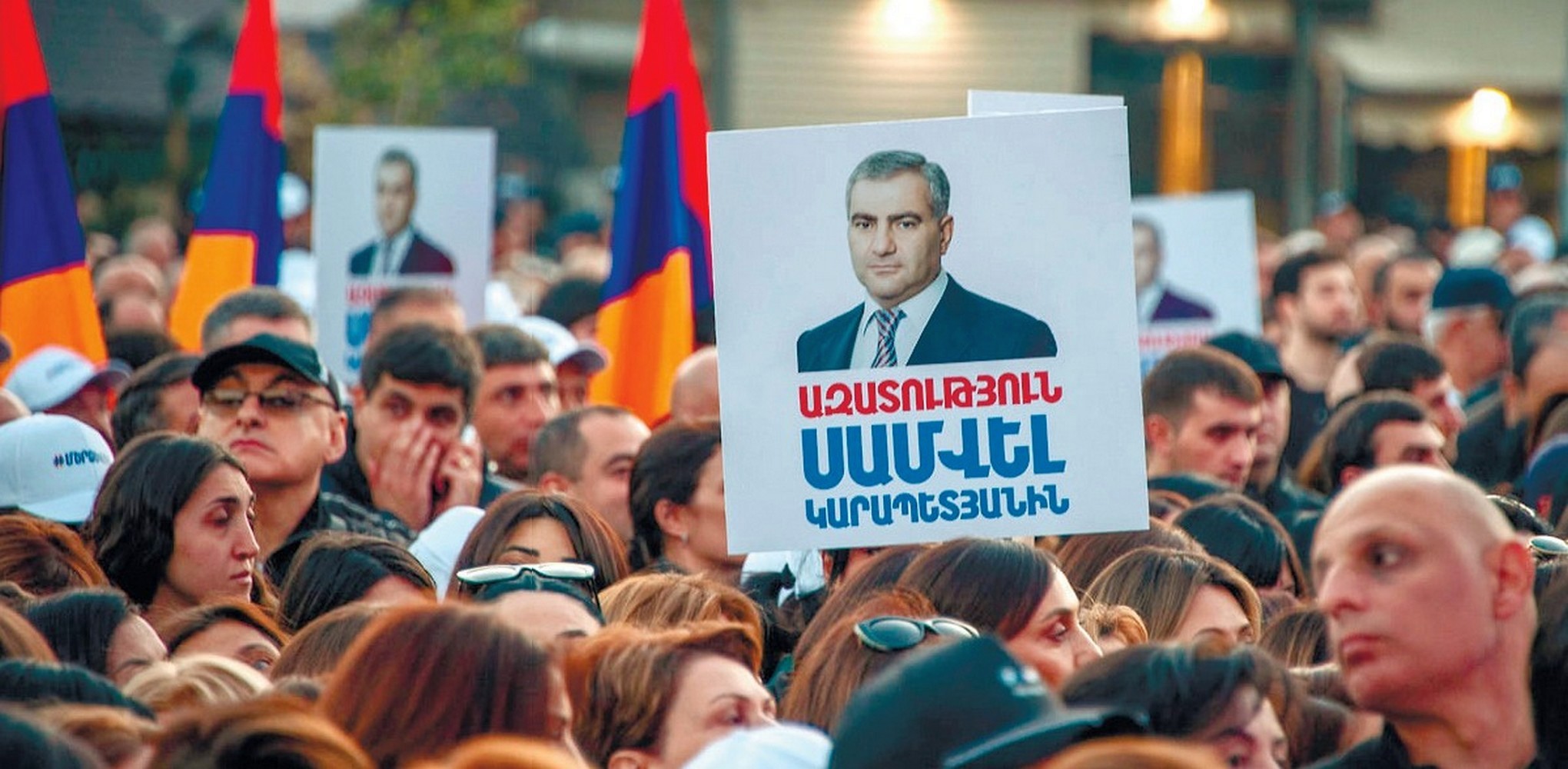
Armenia's domestic political agenda is largely shaped by Baku, which is proven once again by the current election passions. In Azerbaijan, for obvious reasons, the Garabagh issue is fading from the domestic political discourse. The country has achieved an unconditional military victory; territorial integrity and state sovereignty within internationally recognised borders have been restored, and a peace treaty has been initialled, notably on Azerbaijan's terms. It is high time to turn the page on the conflict and build a shared peaceful future in the South Caucasus.
Armenia is a different matter, where Garabagh remains perhaps the central theme of internal politics and the election campaign. Armenian Prime Minister Nikol Pashinyan continues to be accused of "surrendering lands." He is now also accused of fulfilling Azerbaijan's demands and conditions, particularly regarding the issue of amending the Armenian constitution. It should be recalled that it was Baku that demanded the removal of the reference to the Declaration of Independence from the Republic of Armenia's basic law, as it contains a reference to the decision on Miatsum—the reunification of Garabagh with Armenia.
Until recently, Pashinyan was in no hurry to enter into public polemics with his political opponents regarding the Garabagh issue. However, the current Prime Minister has now decided to launch a counter-strike against his opponents in the revanchist camp. According to him, the opposition claims they do not oppose peace, yet if they come to power, they intend to revise the reached agreements. He then issued a warning: "I want to state plainly: this is war."
Suggesting that some opposition statements are formulated outside the country and that the politicians themselves are merely reciting prepared texts, Pashinyan noted that such a position effectively signifies a course towards a revision of peace. This could lead to a new escalation in the coming months—potentially lasting until autumn. Most importantly, he stated that this concerns a "September war" scenario with dire consequences for the country.
Election promises and political realities
There is a famous saying attributed to Otto von Bismarck: "Never do people lie as much as during a war, after a hunt, and before an election." Lavish election promises are an age-old subject of both serious criticism and political satire. Yet it also happens that grand and attractive election slogans are used to mask one's true intentions. It is precisely this that Nikol Pashinyan appears to be hinting at.
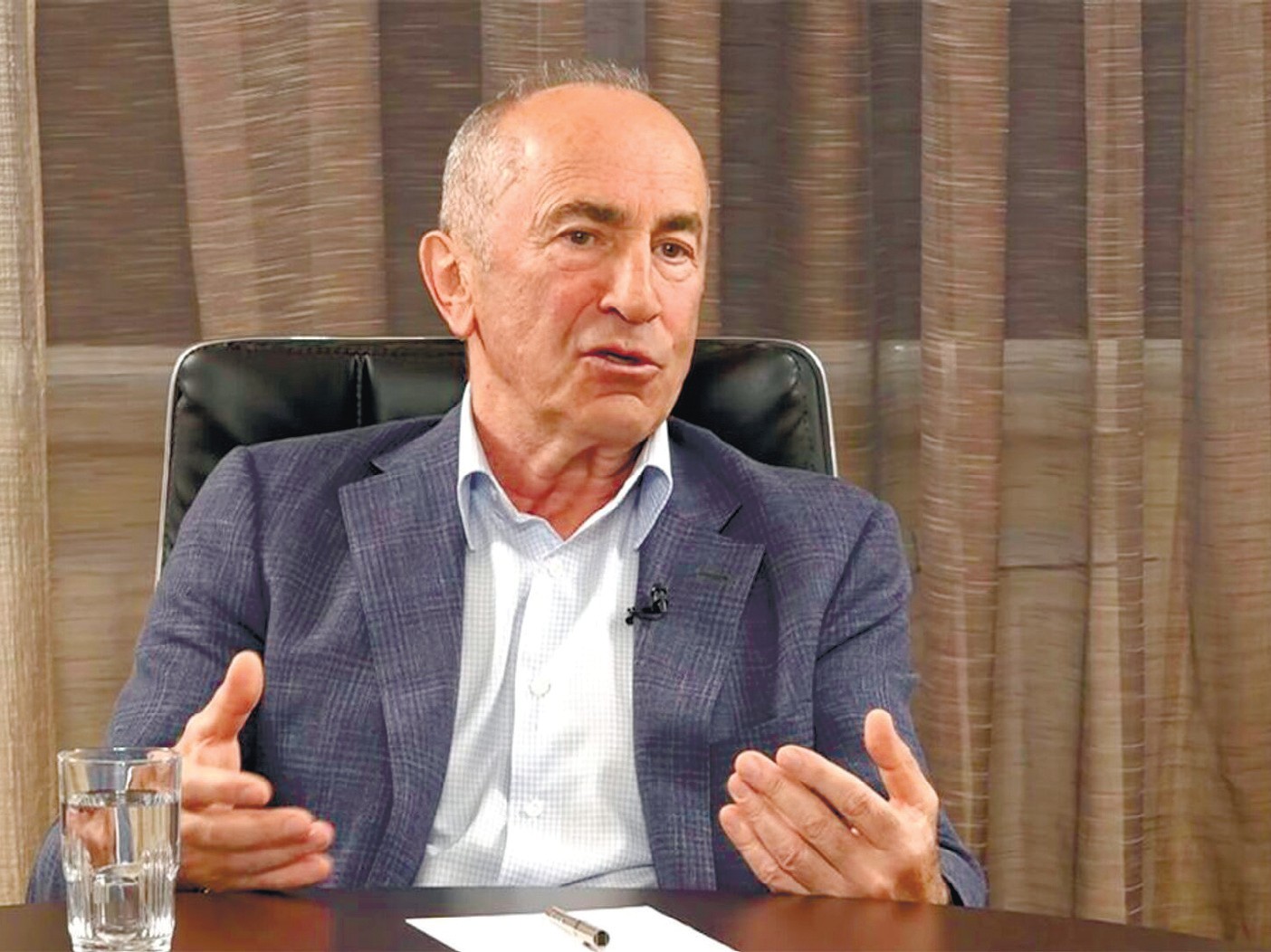
Of course, no rational politician would promise voters a new war and funerals at Yerablur. However, someone like Robert Kocharyan explicitly promises to secure better peace conditions for Armenia. He does not, however, specify exactly how he intends to achieve this, nor does he elaborate on what these "better conditions" entail. This is the key question. While such political realities are not always voiced aloud, a peace treaty most often reflects the outcomes of a war.
For Armenia, these outcomes are lamentable, as Yerevan has consistently lost several military campaigns. The first warning sign came in April 2016, when Yerevan attempted to repeat its territorial seizures. Based on many indirect signs, the plans then involved the capture of the towns of Tartar and Naftalan. In Yerevan, they hoped to advance to the Kura River and, apparently, seize the Gabala region to reach the border with Russia.
Ultimately, they lost the strategic Leletepe height. This was followed by the 2018 Gyzylygaya-Gunnut operation, through which Azerbaijan regained control over vast territories in Nakhchivan. In July 2020, Armenia attempted to "push the border" in the vicinity of Tovuz—and lost again. The climax was the 44-day Patriotic War, during which Azerbaijan liberated the Araz River valley, Shusha, and Hadrut from the occupiers. Additionally, Armenia had to vacate Aghdam, Kalbajar, and part of the Lachin region without a fight.
Following this, there was a series of border skirmishes, mainly in the Kalbajar direction. Yerevan clearly planned to take revenge and carry out at least some territorial seizures, but they repeatedly lost heights and territories. Finally, in September 2023, Azerbaijan conducted anti-terrorist measures in Garabagh and brought a definitive end to the separatist project. The peace treaty in its current form was initialled based on these military realities. After such a defeat, Armenia naturally had to make peace on Azerbaijan's terms, and election promises alone are clearly insufficient to change that now.
But does Yerevan need a new war? Yes, war fatigue has already accumulated in Armenian society, especially against the backdrop of a series of military defeats. However, the charge of revanchist sentiment is also quite high, considering that Armenia lived for more than a quarter of a century under the hypnosis of the military successes of the early nineties. It is no longer a secret to anyone that Yerevan owes all its military achievements to the Kremlin.
Detachments of militants, or "bearded ones" as they were called then, began appearing in Garabagh at the very start of the conflict. Underground weapons caches were being established even before the first rallies under the Miatsum slogan began. Professional Armenian terrorists with combat experience began arriving in Armenia from the Middle East as early as 1989, while the USSR still existed. After its collapse, there were numerous instances of regular Russian units participating in hostilities on Armenia's side. The infamous 366th Regiment, which "distinguished" itself during the Khojaly genocide, is a striking but not the only example.
In Yerevan, they naturally did not wish to admit that Moscow had handed them Azerbaijani territories on a silver platter. Consequently, various PR constructs regarding the "unique fighting spirit of the Armenian people" and "lions with hearts of steel" were employed. This is why the series of defeats came as a complete surprise to the vast majority in Armenia; they simply did not expect such a turn of events. This, too, fuels revanchist sentiments in society.
The leaders of the so-called Garabagh Clan, Robert Kocharyan and, to a lesser extent, Serzh Sargsyan, are the very politicians who rose to "commanding heights" in the early nineties. It is unsurprising that their target audience expects them to repeat the military successes of that period. As the saying goes, voters "love with their ears." During the election campaign, they can be promised anything—golden mountains, rivers of milk and honey, and even diamond rain from the heavens.
Or, given the Armenian specifics, "better peace conditions." However, if the revanchists win the election, they will find themselves prisoners of their promises and their image. After all the election skirmishes, it would be far too risky for them to simply sign the agreements prepared under Pashinyan's leadership. Yet, rejecting the already initialled peace treaty could be a true catastrophe for Armenia, and starting a new war would be even worse.
Learn the basics!
Yerevan has accumulated extensive experience in negotiations within the OSCE Minsk Group, where it would initially take on certain obligations and then promptly forget them. However, the price of breaking an already initialled peace treaty will be far higher. The peace process is only effective as long as it is bilateral; otherwise, the responsibility changes.
If Yerevan revokes its recognition of Azerbaijan's territorial integrity and returns to a policy of territorial claims, Baku will have the right to respond. In such a case, no external calls for peace will help. In the early nineties, Armenia was confident in its military advantage. But after the military parades in Baku in 2011 and 2013, analysts began to say that the military balance was shifting.
At that time, Azerbaijan demonstrated new weapon systems, and experts even noted the improved drill proficiency. In April 2016, it became clear that the Azerbaijani Armed Forces were at least a generation ahead of the Armenian army. Currently, the situation is even worse. During the war in the autumn of 2020, Armenia lost at least $5 billion worth of armoured vehicles, and given the current political climate, no potential allies will compensate for this loss. Furthermore, what would remain is the same army that Azerbaijan has already "flattened."
Garabagh was a natural mountain fortress, easy to defend and easy to launch attacks from. Moreover, there were fortifications that Armenian military engineers had worked on for over a quarter of a century. Nothing similar exists on Armenia's new borders. Political responsibility cannot be avoided either. It is one thing to have an escalation of an existing conflict, but quite another to return to the tactics of armed provocations and territorial seizures once a peace process has gained momentum.
In this instance, Azerbaijan's response would be far more critical. Thus, if Nikol Pashinyan has exaggerated the possibility of a new war and its catastrophic consequences, he has done so only slightly. Now, everything depends on the Armenian voters: peace or ...
RECOMMEND:
 193
193

