

CRACKS IN THE ALLIANCE
Disputes over Iran and threats from US President Donald Trump make the future of NATO dubious
Author: Natig NAZIMOGHLU
The West's premier military-political bloc is navigating the most profound crisis in its 77-year history. At the heart of the turmoil lie deepening rifts between the United States and Europe over a range of pressing global issues. Compounding these tensions are internal dynamics within the North Atlantic Alliance itself—developments that have drawn undisguised frustration from the administration of US President Donald Trump.
Threats from Trump
Serious fissures in the dialogue between NATO's two foundational pillars—the United States and the European Union—first emerged during Trump's initial presidential term, when he pressed European nations to substantially raise their defence expenditures. Upon returning to the White House in early 2025, Trump intensified this pressure, particularly regarding the war in Ukraine. Breaking with the approach pursued by his Democratic predecessor, Joe Biden, the new Republican administration scaled back direct support for Kiev and, notably, compelled European allies to finance the delivery of American weapons to Ukraine using EU funds.
Beyond Ukraine, the Trump administration—driven by its Make America Great Again agenda—has also taken aim at NATO allies themselves. Canada, for instance, faced rhetoric suggesting it could be absorbed as a separate US state. Denmark, meanwhile, found itself confronted with threats of the forcible separation of Greenland. The EU swiftly extended moral and political backing to Copenhagen, and amid widespread condemnation across Europe of Washington's annexationist overtures, Trump agreed to enter talks regarding the future of the world's largest island.
Yet there is little indication that the US has abandoned its ambition to gain control over Greenland, a territory rich in natural resources. Trump continues to entertain the prospect of annexation, as evidenced by his repeated references to the island even at moments when global attention—including that of America's NATO partners—was fixed on far more urgent crises.
Since February 28, when the US and Israel launched military action against Iran, Trump has on multiple occasions expressed frustration that European allies "don't want to give up" Greenland. However, the principal driver of the transatlantic rift now casting doubt on NATO's future has been the war against Iran itself.
Two weeks after hostilities began, and with it becoming clear that the stated objectives of the US and Israel—chief among them, regime change in Tehran—could not be achieved swiftly, the White House outlined its expectations of NATO partners. In essence, while Trump publicly claimed not to require allied assistance in the Iran campaign, he simultaneously demanded that European countries join US military operations against the Islamic Republic. European capitals not only declined to deploy naval assets to help unblock the Strait of Hormuz but also denied Washington permission to use US-based military installations on their soil for the operation. Among those taking this stance were some of Europe's most influential nations, including Spain, which closed its airspace to US military aircraft.
Trump responded with sharp criticism, warning that the alliance—which he dismissed as a "paper tiger"—faced a "very bleak future." Labelling European leaders "cowards," the US president threatened to reassess America's relationship with NATO, going so far as to suggest he was giving "serious reflection" to ending US membership altogether.
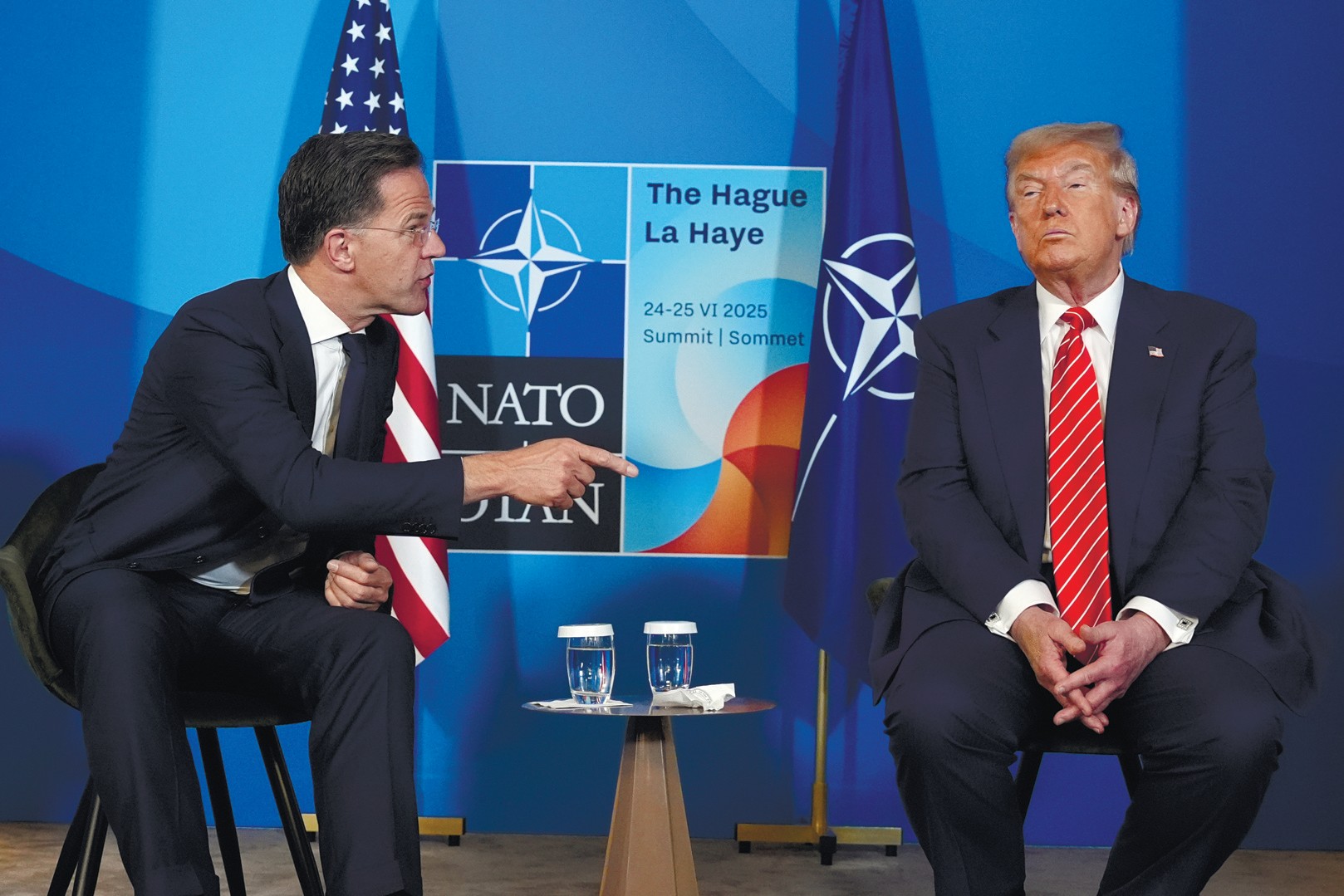
On April 8, following a meeting in Washington with NATO Secretary-General Mark Rutte, Trump reiterated his position: "NATO wasn't there when we needed it, and it won't be there when we need it again."
European allies, however, have made clear that responsibility for escalating the "Iranian problem" rests squarely with the Trump administration, which initiated military action without prior consultation with NATO or the EU. Germany's stance is particularly illustrative. Chancellor Friedrich Merz rejected American assertions that the US-Israeli operation against Iran bore any relevance to NATO's mandate. German Defense Minister Boris Pistorius was even more direct: "This is not our war; we did not start it."
Equally noteworthy was the statement by Czech President Petr Pavel—a retired NATO general and former chair of the alliance's Military Committee. Pavel characterised Trump's criticism of NATO over the Iran conflict as, "to put it mildly, unfair," noting that European allies "were not informed about the goals and operations from the very beginning, and in fact no one even asked them to cooperate." He added: "Only when the war began to develop, perhaps in an unexpected direction, did Donald Trump declare that the European allies should take care of safe shipping in the Strait of Hormuz."
Such counterarguments have only fuelled Trump's indignation. On April 9, following the announcement of a US-Iran truce—which, notably, did not resolve the blockade of the Strait of Hormuz—the US president issued another round of stringent demands to NATO partners. Foremost among them: the submission "within a few days" of specific legal and military commitments to ensure the security of maritime traffic through the strategic waterway.
While leading European nations are indeed discussing the possibility of forming a coalition to unblock the Strait of Hormuz—a step critical to safeguarding Western, and particularly EU, energy interests—they are in no rush to embark on such a high-stakes undertaking. Uncertainty surrounding the trajectory of the Iran crisis only reinforces this caution, keeping alive the question of a potential US withdrawal from NATO.
Barriers to withdrawal
How realistic is Trump's threat to pull the United States out of NATO? Especially considering the considerable geopolitical stakes for Washington in maintaining its leadership role within the Euro-Atlantic sphere—including the forward deployment of troops and military assets across Europe?
Should the Trump administration seriously pursue such a course, it would inevitably confront a significant domestic legal hurdle. Under US law, any initiative to withdraw from NATO would require approval by a two-thirds majority in the Senate. This procedural requirement makes the prospect of congressional support for US exit highly unlikely.
Ironically, the very legislation mandating senatorial approval for withdrawal—and thereby preventing unilateral presidential action—was introduced in 2023 by the current Secretary of State, Marco Rubio. At the time, serving as a senator, Rubio expressed strong opposition even to the hypothetical dissolution of the transatlantic alliance. Today, despite Rubio—now one of the most influential figures in the Trump administration—having evolved into a "NATO skeptic," the legal force of the bill he sponsored remains intact. Should Trump attempt to sign any instrument effecting US withdrawal from NATO, such a move would almost certainly be challenged in the Supreme Court and could provoke a significant political crisis within the Republican Party.
Further procedural delays could arise from Article 13 of the North Atlantic Treaty, signed in Washington in 1949. Under its terms, any member state—including the United States—may cease its participation in the alliance only one year after formally notifying the governments of all other member states.
The broader takeaway from the current turmoil within NATO is this: regardless of whether the US ultimately departs, the alliance's cohesion has already sustained a serious blow. Even without formal withdrawal, Washington retains considerable leverage to pressure its allies and erode NATO's once-monolithic character. It can—and has already threatened to—recall US troops stationed in Europe, curtail arms transfers to European partners, and limit the participation of American officers in the alliance's command structures. In effect, this amounts to a de facto dilution of US security guarantees to the Old World.
All of this constitutes a historic test—not primarily for the United States, but for Europe. The very possibility of a diminished strategic partnership with Washington compels Europe to strengthen its own defence capabilities, pursue greater EU self-sufficiency, and move beyond a posture of strategic dependence on the US.
A test for Europe
The crisis within NATO underscores a fundamental shift: Europe—encompassing both the EU and the UK, which departed the bloc in recent years—no longer trusts the United States to the degree once expected among close allies. Across the Old World, there is growing anxiety that, in a moment of crisis, the US—whether it remains in NATO or exits—might decline to invoke Article 5 of the North Atlantic Treaty, which enshrines the principle of collective defence in the event of aggression against any member. This concern carries particular weight given Europe's genuine fears of potential Russian aggression against one of its eastern neighbours.
Galvanised by these anxieties, European capitals have launched earnest discussions about viable pathways forward—discussions that are increasingly translating into concrete steps in the defence domain.
Several pivotal questions now come into focus. The most fundamental: Is a Europe that has grown accustomed, since the Second World War, to the comfort of American military protection, truly prepared to undertake a radical reassessment of its defence strategy? Will European NATO members reinstate compulsory military service? Will they accept significant reductions in social spending to redirect resources toward defence and military-technical programs? Specifically, will they commit substantial investment to technologies and production capacities for drones, air defence systems, and military and transport aircraft—the very capabilities Europe most urgently needs?
A separate, critically important question: Would France and the United Kingdom be willing to place their nuclear deterrents at NATO's disposal—a move of paramount strategic significance should the US withdraw from the alliance? While these capabilities are considerably more limited than America's, cooperation in this most critical domain—something only two European nations, France and the UK, can provide—is indispensable to preserving the geopolitical stature of either the EU or a post-American NATO.
Thus, Europe faces an unavoidable imperative: to pursue strategic sovereignisation. And in the event of a US exit from NATO, to undertake a fundamental reorganisation of the alliance—a transatlantic structure that might yet endure, provided Canada remains engaged. But is modern Europe truly capable of self-sufficiency? Can it develop and thrive without American leadership? In many respects, this is among the most consequential questions that will shape the future trajectory of global geopolitics.
RECOMMEND:
 130
130

