

NO END TO WAR YET
The US-Iranian dialogue collapsed before sides reached a deal
Author: Ilgar VELIZADE
The US-Iranian negotiations in Islamabad, which had attracted global attention, ultimately proved inconclusive and served only to exacerbate the international situation. Prior to the commencement of the talks, there was a degree of optimism that the parties would be able to reach an agreement. However, following the conclusion of the talks, it is highly unlikely that such a scenario will materialise.
The economic implications of war
On the night of 7-8 April, Donald Trump announced a temporary truce, contradicting earlier threats to 'take Iran back to the Stone Age'. This move was met with a sense that military escalation in the region might be replaced by a period of relative stability. It is widely acknowledged that the parties involved in the conflict are reaching a point where the continuation of hostilities is becoming financially disadvantageous for both sides.
The issue for the US is the high cost of the model for conducting hostilities. Intensive strikes with precision weapons are among the most costly formats of warfare. The cost of a Tomahawk cruise missile is approximately $1-2 million. Aircraft munitions are priced in the hundreds of thousands per unit, and a hour of strategic aviation operation costs tens of thousands of dollars, without accounting for logistics. A modest daily package of strikes can amount to tens or even hundreds of millions of dollars. In addition to these costs, there are the expenses associated with force deployment, the maintenance of carrier groups, air defence systems, intelligence operations and satellite support. Consequently, each day of the operation results in a significant increase in direct budget expenditure.
At the same time, Iran is not a target that can be quickly neutralised. Its infrastructure is dispersed, with some facilities protected and located underground, and military potential not concentrated in a single centre. This indicates that even high-cost strikes do not have a significant impact. The system remains intact and the capacity to respond effectively is maintained. Achieving a result requires more time and more resources, which automatically increases the cost of the campaign.
In parallel, indirect costs rise through the market. Even limited pressure on shipping in the Strait of Hormuz affects global prices. The result is a situation in which the US bears high direct costs for the war, while Iran is able to create a comparable economic effect through cheaper means—via threats and targeted destabilisation. At the same time, there are no quick results. Iran’s infrastructure and military potential are still relatively intact, which means that achieving the objectives would require a longer and more costly campaign.
In this environment, continued escalation becomes economically unprofitable—the cost grows faster than the problem is solved, and a truce looks like an attempt to lock in gains before costs spiral out of control.
Iran, for its part, is also approaching the limit of its capabilities. Its economy is critically dependent on exports, and even partial strikes on infrastructure reduce revenues, increasing pressure on the currency and inflation. Logistics costs are rising, oil is being sold at a discount, and military spending is increasing.
Thus, a mirror situation is emerging: the US faces an expensive war without a quick effect, while Iran faces a gradual weakening of its economy. Both sides are approaching a point where continuing the conflict becomes unprofitable, which creates a convergence of interests. Washington needs a pause to avoid a protracted campaign, and Tehran needs to stop the economic pressure. This is why a truce looks like a rational solution for both sides.
The US needs to secure at least a formal result and not get drawn into a long and expensive war. Trump’s statements about ‘achieved goals’ and ‘regime change’ look like a pre-prepared political framework for a possible transition to diplomacy. In practice, however, neither regime change nor a full military solution is possible now.
Iran, for its part, needs to show that it has withstood the pressure and managed to impose a negotiation format. In the end, it was Iran that ‘closed’ and then ‘opened’ the Strait of Hormuz. Negotiations are not proceeding according to the American 15-point package, but according to the Iranian framework of ten points.
These include a cessation of hostilities, abandoning the regime change scenario, a phased lifting of sanctions—above all in the energy sector—recognition of the right to a nuclear programme under agreed restrictions, an end to strikes, and a partial unfreezing of assets.
All this changes the balance of power. Israel, another party to the conflict, effectively finds itself in a position where it is forced to take into account the parameters worked out in the US-Iran dialogue, since it is unable to wage a large-scale conflict with Tehran on its own.
Pakistan as a mediator
Taking into account the emerging dynamics, Pakistan made a public offer to act as a mediator in the negotiations between the US and Iran and initiated initial contacts through diplomatic channels. On March 29, meetings were held in Islamabad involving regional players, including Türkiye, Egypt and Saudi Arabia, where de-escalation was discussed. And on March 31, a meeting of the foreign ministers of Pakistan and China took place in Beijing, where the situation around Iran was raised. All this indicates that all of Islamabad’s key partners, including China, were indirectly informed of Pakistan’s mediation efforts.
In early April, Pakistan continued contacts with the US and Iran, conveying positions and discussing possible ceasefire terms. According to reports, on April 5-7, a specific format for a temporary truce was already being discussed through Pakistani channels, which was finally announced on the night of April 7-8, including the temporary opening of the Strait of Hormuz.
At the same time, Pakistan’s mediation was purely practical in nature. At the political level, the country’s leadership and foreign ministry were involved, but military communication channels were also used in parallel. According to available information, the key contacts on the parameters of the ceasefire were conducted with the participation of Pakistan’s army chief, Asim Munir, who interacted with the US side and simultaneously ensured the transmission of signals to Iranian representatives.
The negotiations were not direct, but through intermediary channels, with Pakistan acting as a link. This is the so-called back-channel diplomacy—closed contacts through which sensitive issues are agreed, primarily those related to security and ceasefire conditions.
At a critical moment, when the negotiations were on the verge of collapse, it was the military channels that were used to agree on the parameters of the truce, confirming their key role in bringing the process to a result.
Negotiations that lead to war
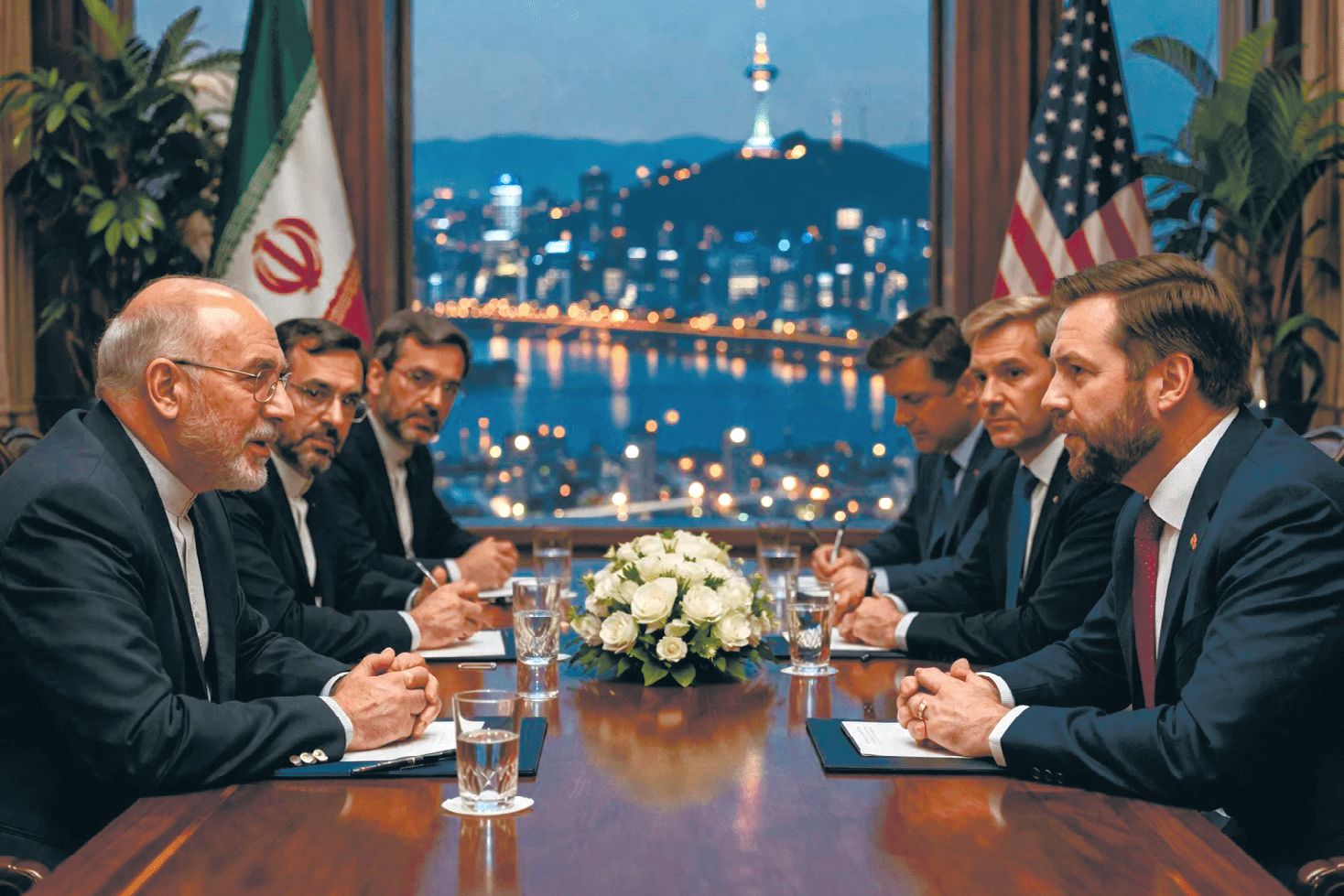
This was made abundantly clear by the direct US-Iranian talks that began on April 11 in Islamabad. Regardless of the fact that they did not lead to the expected result, the talks established the real boundaries of a possible compromise after the war. The fact that Washington and Tehran sent rather impressive delegations indicated a desire to find acceptable solutions already in Islamabad. The US delegation was led by Vice-President JD Vance, and the Iranian delegation by parliamentary speaker Mohammad Bagher Ghalibaf. In effect, these were the first direct US-Iranian talks at such a level in more than forty years of bilateral relations since the 1979 Islamic Revolution. However, the outcome did not meet cautious expectations, and the parties remained stuck in their positions.
It should be noted that Washington had hoped to consolidate its successes in the military campaign in the form of strategic restrictions on Iran, above all on the nuclear issue. This was precisely what the Americans formulated as the central condition of a deal. But Iran, as was to be expected, did not agree to such terms, instead proposing to focus on its ten conditions for ending the conflict.
The Iranian line in Islamabad was initially designed to use the rarely granted opportunity to bargain for the most acceptable terms. Specifically, Tehran sought a broader package that would include the easing or lifting of sanctions, the unfreezing of assets, a cessation of hostilities not only against Iran itself but also in Lebanon, and a special regime around the Strait of Hormuz. Iran did not come to beg for an end to the war on American terms; it attempted to turn the negotiations into a bargaining process over a new post-war balance of power. Hence the tough stance of Ghalibaf, who stated after the meeting that the question now was whether Washington was even capable of earning the trust of the Iranian side.
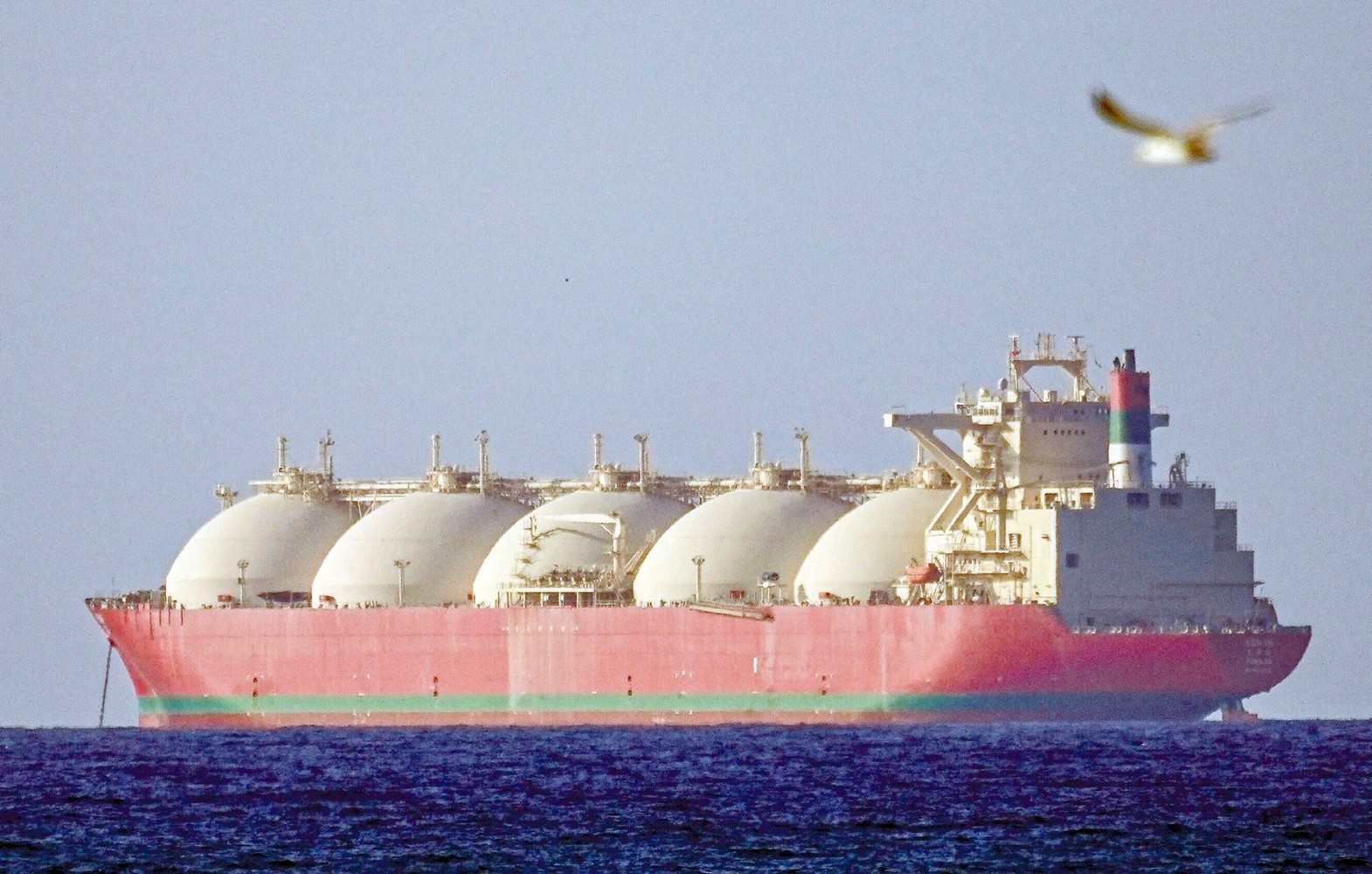
The most sensitive sticking point in the negotiations remains the Strait of Hormuz. In essence, what clashed in Islamabad were not just two positions, but two different models of the post-war order. For the US, free navigation and the restoration of normal passage for oil and gas cargoes through this key global energy corridor are of fundamental importance. It is noteworthy that shortly after the breakdown in the Islamabad talks, President Trump announced that the US Navy would commence blocking the Strait of Hormuz, a vital global shipping route, with immediate effect. He also made it clear that the US is ready for further escalation if necessary, stating that Washington is prepared to act at the 'right moment'. At the same time, Trump once again highlighted Iran's nuclear ambitions as the primary concern.
For Tehran, control over the strait demonstrates its ability to dictate terms even in the aftermath of a significant war, thereby maintaining its negotiating position. Provided that this lever remains in Tehran's hands, it would not, by definition, be possible to regard the dialogue with them as negotiations about surrender.
Another equally important factor that is undermining the prospects for a quick deal is the situation in Lebanon. Iran has asserted that the ceasefire should also apply to Lebanon, where there are ongoing strikes on Hezbollah. However, the US and Israel are not prepared to include this theatre of operations within the framework of a bilateral US-Iranian agreement. This has the effect of increasing the complexity of the entire process. Even if there were to be a mutual understanding between Washington and Tehran on the nuclear programme and sanctions, the Lebanese track could still have a potential negative impact on any compromise. This is one of the main features of the current stage.
Consequently, there is a strong possibility that the conflict will persist. Furthermore, the current situation suggests the risk of it escalating further—potentially leading to new rounds of conflict with Iran, or even a third war, until Tehran loses its capacity for retaliation, or until Trump decides that he has finally won.
RECOMMEND:
 190
190

