

LAND THAT KILLS
Landmine threat in Azerbaijan remains a key obstacle to peace, the return of displaced people and the development of liberated territories
Author: Namig H. ALIYEV
The landmine threat in Azerbaijan's liberated territories is not a mere echo of war, but a continuation of it. Explosions are occurring even in peacetime, resulting in severe injury and death to individuals returning home, engaged in agricultural activities, and constructing infrastructure. This is the very reality that is increasingly being described as 'mine terror'.
One of the most heavily contaminated countries
The International Day for Mine Awareness and Assistance in Mine Action was established on 8 December 2005 by a UN General Assembly resolution, and it is important to note that this was not an arbitrary decision. This day, 4 April, is of great significance to Azerbaijan, as it serves as a poignant reminder of the ongoing threat. While the global community engages in discussions on humanitarian standards, the people of this region continue to live in conditions where the ground beneath their feet remains unstable.
Azerbaijan is ranked among the top ten most mine-contaminated countries worldwide. Since the cessation of hostilities in 2020 and up to April 2026, there have been regular reports of explosions affecting both civilians and military personnel.
The figures presented here are not merely statistics, but a chronicle of tragedy. According to the Azerbaijan Republic's Demining Agency, between 10 November 2020 and April 2026, 421 people were killed or injured by landmines: The latest figures show that 72 people have lost their lives and 349 have been injured. Over a period of 30 years, there have been approximately 3,500 victims, including 362 children and 38 women. This is not merely the aftermath of hostilities—it is their continuation by other means.
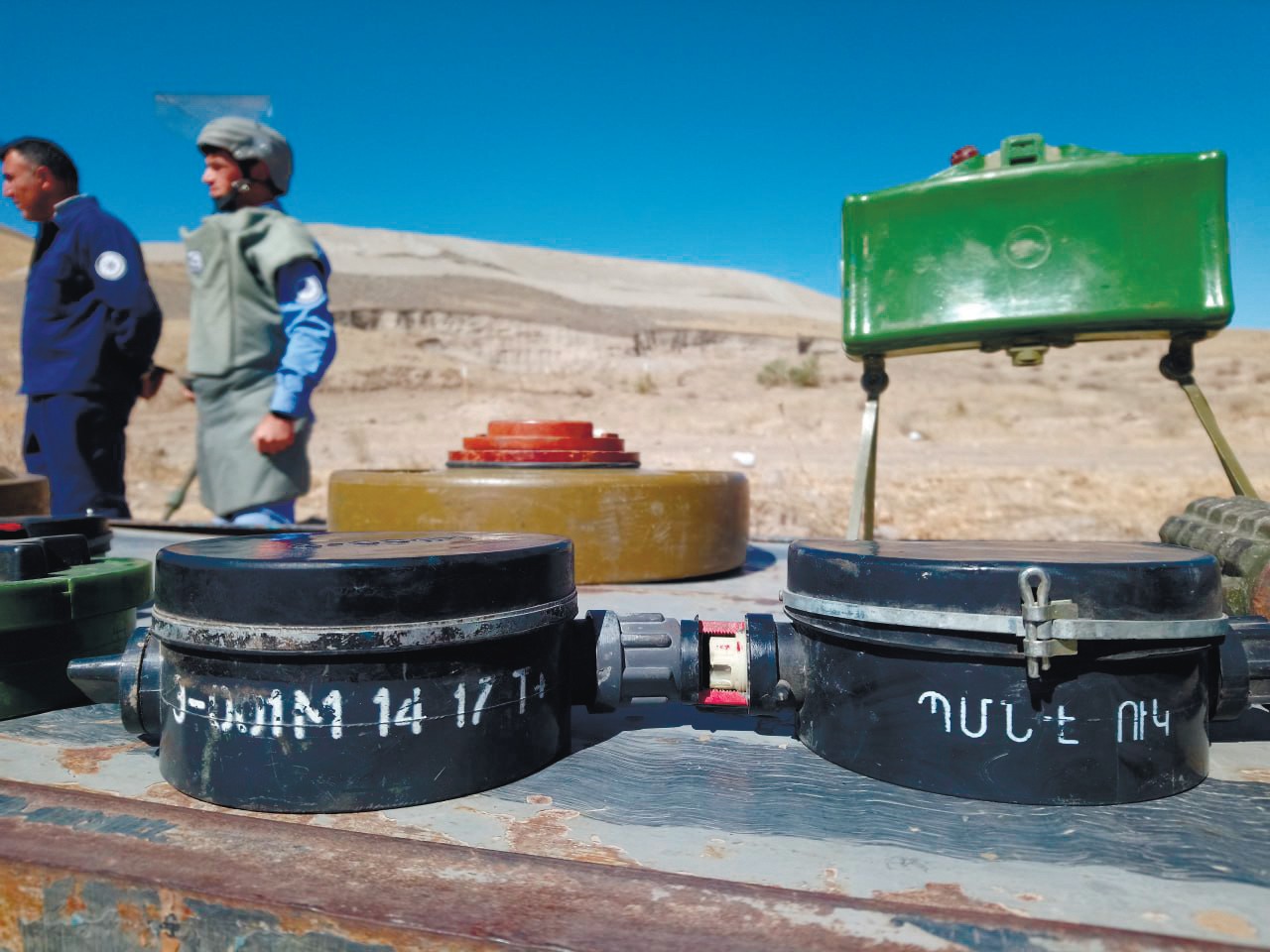
The extent of the contamination is truly astounding. As Hikmet Hajiyev, Assistant to the President of Azerbaijan, noted during the years of occupation, around 12% of the country's territory was mined—over 1.5 million mines. This is not limited to the front lines: roads, cemeteries, agricultural land and areas surrounding settlements were also mined. This fundamentally changes the assessment of what is happening—such practices go beyond military logic and take on the character of indiscriminate destruction.
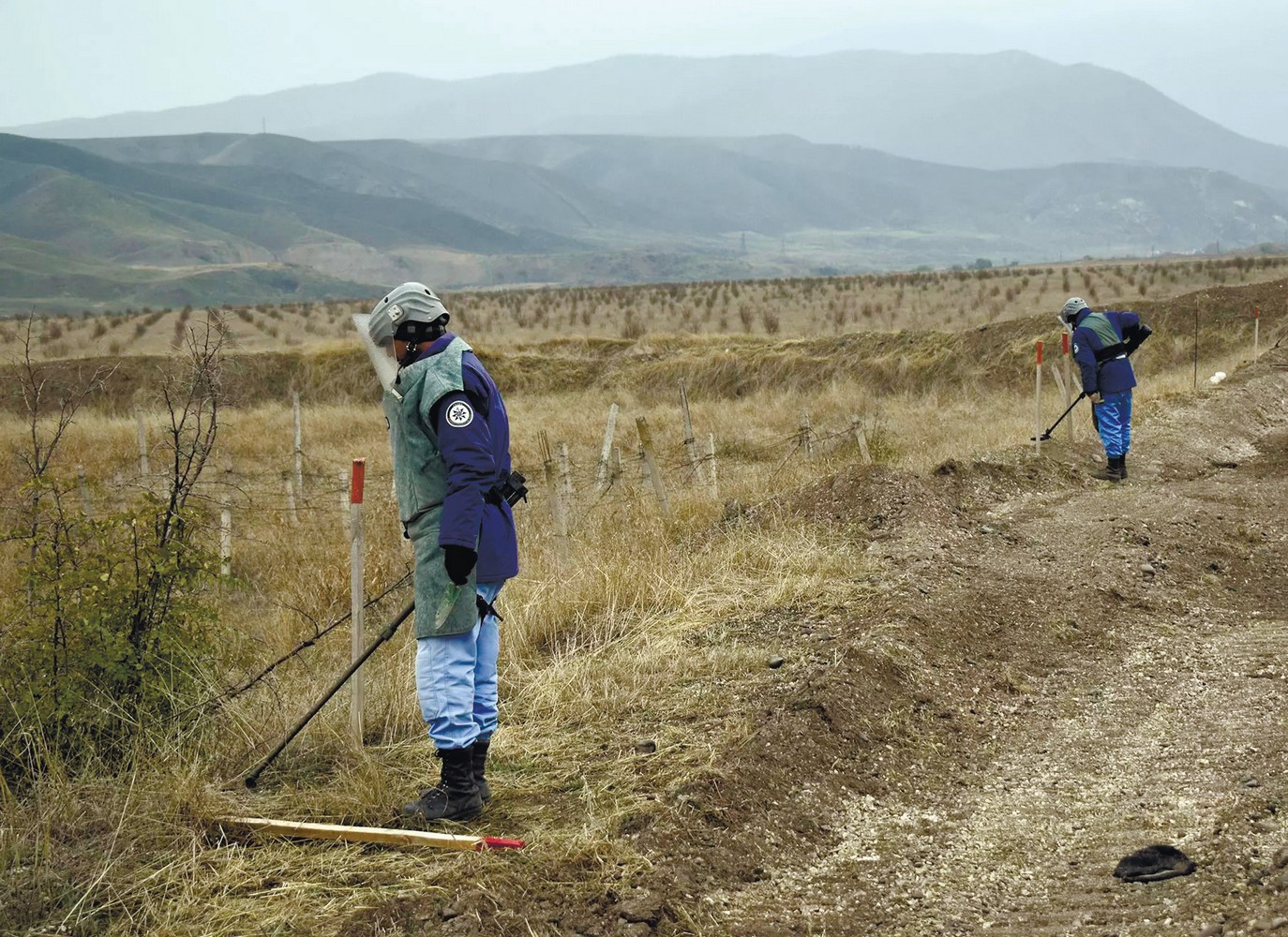
Azerbaijan is currently taking proactive measures to address this issue, implementing systematic solutions to resolve it. The scale of the demining operation is impressive. According to the latest figures, 261,551 hectares of land have been cleared. Work is ongoing and steady: in just one week in April, almost 900 hectares were cleared, with dozens of mines and over a thousand unexploded ordnance neutralised.
A matter of national importance
Contamination of mine sites is proving to be a significant obstacle in the reconstruction of Garabagh and Eastern Zangezur. The issue has a detrimental effect on three key areas: the construction of roads, the return of former internally displaced persons, and the development of agriculture. Essentially, this is preventing post-conflict development. The land has been liberated, but remains uninhabitable—this is the key humanitarian paradox. The recent detonation of an explosive device at an Azerbaijani mine serves as a poignant reminder of Armenia's ongoing aggression and the Armenian occupation.
It is for this reason that demining is regarded in Azerbaijan as a matter of national priority. The state does not limit itself to technical measures. In March and April of this year, the Head of State signed a decree entitled 'On the establishment of a pension from the President of the Republic of Azerbaijan for the family members of deminers who died as a result of an accident caused by the detonation of explosive ordnance whilst carrying out demining work, or who died from injuries sustained during such work'. The Head of State also signed an order entitled 'On awarding the "For Merit in Demining" medal to persons who have distinguished themselves in the demining of territories'.
This suggests that the problem is perceived not as a temporary one, but as a strategic one.
An additional element to consider is the international legal aspect. The Convention on the Prohibition of the Use, Stockpiling, Production and Transfer of Anti-Personnel Mines and on Their Destruction (the Ottawa Convention) recognises contact-activated mines, booby traps and other similar devices as prohibited means of warfare. The document was signed on 3 December 1997 in Ottawa and entered into force on 1 March 1999. The primary message is clear: under no circumstances should anti-personnel mines be used.
This obligation applies to all situations of armed conflict. An anti-personnel mine is designed to act indiscriminately and remains functional for a long time. Injuries sustained as a result of the explosion are reported to be particularly severe. The purpose of this weapon is not only to kill, but also, far more often, to maim a person for life. The logic behind them is simple and cruel: a mine makes no distinction between a soldier and a child, or between war and peace. Consequently, significant areas of land become unsuitable for agricultural use.
Armenia's key challenge and responsibility
There are clear examples of such consequences in global practice: Afghanistan, Angola and Cambodia have been affected by mass landmines for decades. At the same time, there are instances where states have provided maps of minefields, participated in demining operations, and cooperated with international organisations. This initiative is a key element in our commitment to responsibility and a vital step in restoring trust. In the South Caucasus, this stage has not yet been observed.
The lack of accurate minefield maps remains a significant challenge. This is not merely a technical oversight, but a factor that increases the number of casualties. It is important to note that every error on a map has the potential to result in a loss of life. Inaccurate information has the potential to endanger both deminers and civilians.
In this context, the question of Armenia's responsibility becomes a matter of principle. This issue is of relevance not only to the past, but also the present. If the laying of mines was widespread and affected civilian areas, this would already amount to a humanitarian offence.
Let's consider Chapter 33 of the Criminal Code of Armenia, 'Crimes against Peace and the Security of Mankind'. This chapter contains Article 387, which deals with the use of prohibited means and methods of warfare. As stated in the document, the use of means and methods prohibited by international treaties during military operations or armed conflicts is subject to a maximum penalty of twenty years' imprisonment. The use or testing of weapons of mass destruction, as prohibited by an international treaty of the Republic of Armenia, is subject to a range of penalties, including imprisonment for a minimum of twelve years and a maximum of twenty years, or life imprisonment.
In accordance with the provisions of this article, Armenia is obliged to initiate criminal proceedings against individuals responsible for mining activities in the occupied territories of Azerbaijan, and to refrain from transferring minefield maps. This is despite the fact that Armenia has not yet acceded to the Ottawa Convention.
Part 1 of Article 387 stipulates liability for 'the use of means and methods prohibited by an international treaty during military operations or armed conflicts', irrespective of whether the Republic of Armenia has acceded to this universal treaty. The legislator has clearly defined the meaning of this article on humanitarian grounds—there are universal human values that should not be contingent on particular political decisions or preferences. Therefore, the second part of the same article refers to 'the use or testing of weapons of mass destruction prohibited by an international treaty to which the Republic of Armenia is a party'. In other words, it refers to treaties to which the state has acceded.
Consequently, individuals found guilty of perpetrating crimes against peace and the security of humanity must, in accordance with the Criminal Code of Armenia, face the appropriate legal consequences.
The question that arises from this is whether genuine reconciliation is possible without acknowledgement and repentance. It is important to note that repentance is not a political category, but rather a practical one. The primary evidence for this is not in statements, but in actions. In this instance, participation in demining activities, the provision of complete and accurate maps, and cooperation with humanitarian missions are all essential components. This is the minimum required to transform post-conflict rhetoric into concrete steps.
Until this occurs, mines will continue to fulfil their destructive function. The consequences of their actions extend beyond the loss of human life; they also destroy trust, hinder progress and prevent the development of future opportunities by focusing on past issues.
Azerbaijan is currently at the vanguard of the global effort to combat this threat. The issue of mine terror is not a local problem. This represents a significant challenge to the international security system and a test of its ability to protect fundamental human rights.
It is our understanding that explosions are holding back the peace process. Providing there are mines concealed underground, the war will continue.
RECOMMEND:
 175
175

