

FROM THE 51ST STATE TO THE 28TH EU MEMBER-STATE?
Tensions in the US heat up discussions on Canada's future with Europe
Author: Irina KHALTURINA
The debate surrounding Canada's potential membership of the European Union is once again in the spotlight in the media. In March 2026, Jean-Noël Barrot, France's Foreign Minister, stated at a conference in Berlin that Canada and Iceland are potential future members of the EU. Kaja Kallas, the EU's foreign policy chief, also told Bloomberg that Canada could, in principle, join the bloc. Other politicians, including Finland's President Alexander Stubb, and various experts have also discussed the idea informally.
Particular attention was paid to the flexibility of Article 49 of the Treaty on European Union—specifically, whether being European can be interpreted more in a cultural and political sense than a strictly geographical one. It is evident that this would constitute a noteworthy geopolitical shift. Canada's accession to the EU would result in a significant realignment of the political landscape. The Union would expand to encompass an area 3.5 times larger and would gain a population of 41 million. There has never been a formal application from Canada, so it is important to understand why these discussions keep surfacing, and why they have flared up again right now.
From the 51st state to the 28th EU member-state
Firstly, this subject gained traction against the backdrop of deteriorating Canada–US relations. Secondly, it is encouraged by the broader geopolitical climate, marked by a re-examination of international relations and the established global order. This concerns various alliances and organisations, above all.
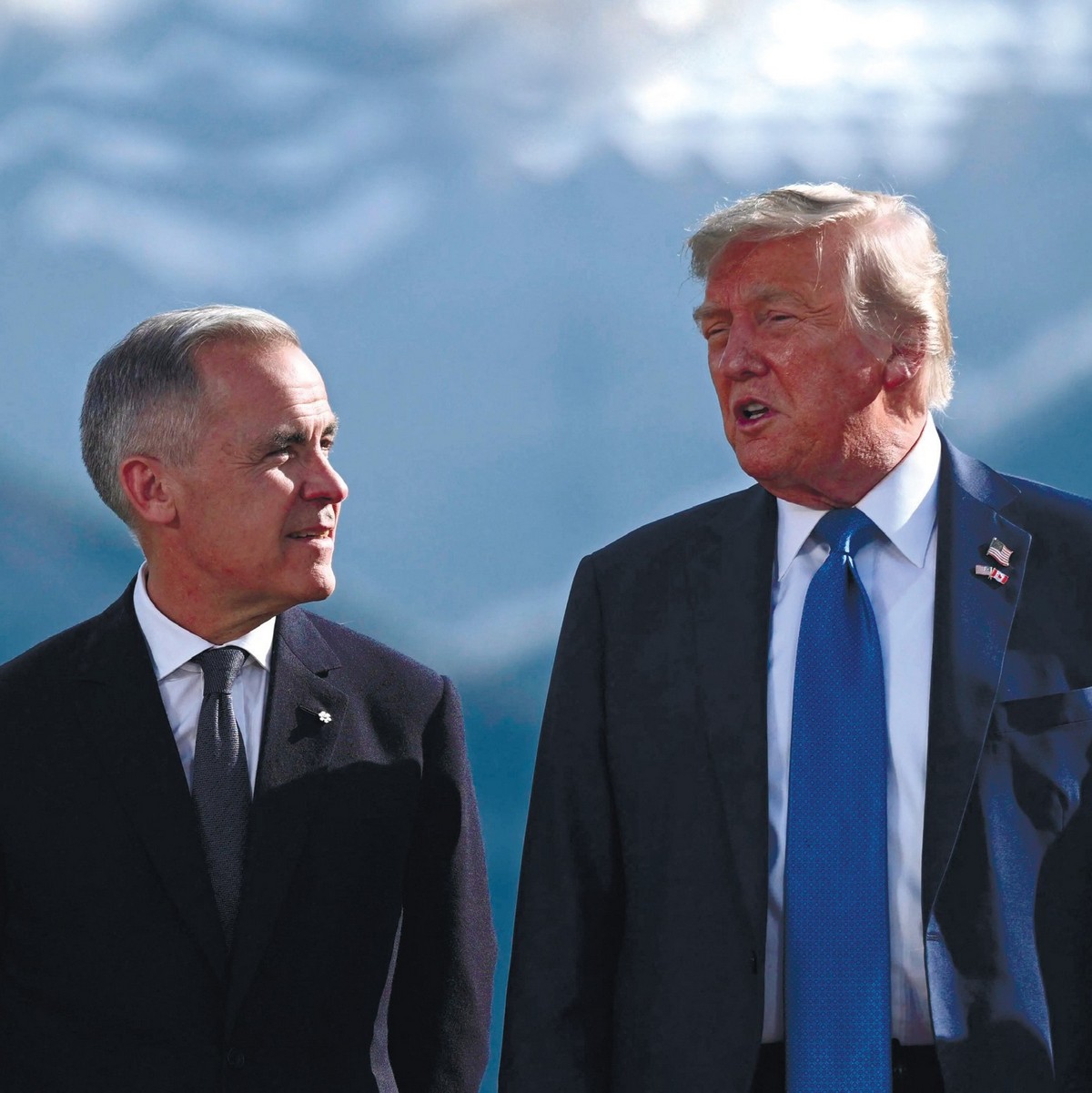
Many analysts have suggested that support for strengthening Canada's ties with the EU, up to and including hypothetical membership, could grow still further "as a defensive strategy" against the mounting pressure on Ottawa from the US. As is widely known, US President Donald Trump has repeatedly suggested that Canada should become the "favourite 51st state" of the United States. These remarks were often made in a friendly, half-joking manner and in the context of various trade disputes, tariffs and border issues during interviews, meetings, social media posts and public speeches. This is more indicative of Trump's typical negotiating strategy than a genuine attempt to alter borders. However, as the saying goes, there is a grain of truth in every joke.
Such statements can sometimes cause significant concern among local leaders and provoke public anger. In his recent address at the Davos Forum, Canadian Prime Minister Mark Carney delivered a compelling speech in which he argued that the post-war international order established by the US and its allies is approaching its conclusion. The Canadian government has called for the establishment of an alliance of middle powers that can effectively challenge the dominant global powers. He emphasised the importance of collaboration among middle powers, cautioning that those left without a voice at the decision-making table risk being marginalised and overlooked. Carney added that, in his professional opinion, powerful countries utilise economic coercion to achieve their objectives. Trump took great umbrage at these words. He referred to the Canadian Prime Minister as "Governor Carney", as if he were the leader of an American state rather than an independent nation, and reprimanded him for his perceived lack of gratitude. The White House chief declared that Canada's very existence is indebted to the United States and that it should therefore show the US greater respect.
In this context, the idea is being floated that, if it came to that, Canada would be better off as the EU's 28th member state than just another American state. In other words, this would be a means of achieving a significant economic boost without compromising national sovereignty.
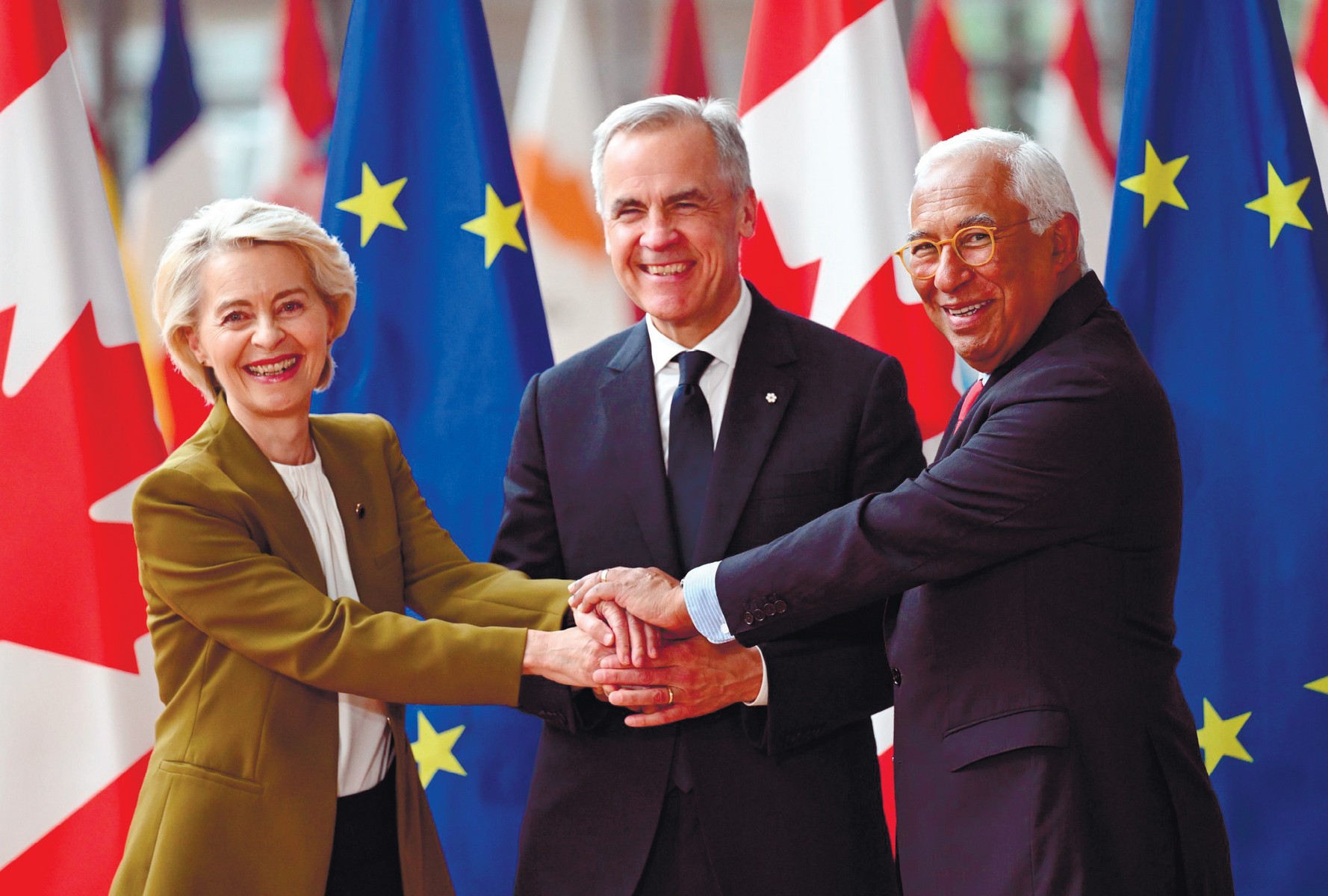
It should be noted that Canada and the EU enjoy a strong and long-standing relationship, with many similarities in their respective approaches. The Comprehensive Economic and Trade Agreement between Ottawa and Brussels, which entered into force in September 2017, eliminated tariffs on 99% of tariff lines. It also opened up public procurement markets for both sides, facilitating investment and trade in services. Furthermore, professional qualifications are recognised on a mutual basis, and there are shared environmental standards in place. In this respect, Canada already has a strong resemblance to an EU member state.
From 2016 to 2024, trade in goods and services between EU countries and Canada grew by approximately 72%. At the 20th EU-Canada summit last year, a new Strategic Partnership Agreement was signed, embracing deeper cooperation in trade, rare earth metals, climate and security. Furthermore, agreements were concluded on AI and digital trust.
Since 2024, the country has participated in a research-funding initiative, and in February 2026 it joined a defence programme, gaining access to European funding for developing its defence industry.
Integration vs. Rupture
Therefore, Canada fulfils two of the three so-called "Copenhagen criteria" used to assess potential enlargement candidates. These are stable political democratic institutions and guarantees of human rights and the rule of law, as well as economic stability and the existence of a robust market capable of handling economic integration with the EU.
The third criterion, namely acceptance of the European Community's legislation, would require much greater effort. For instance, Quebec, Canada's most 'European' province, French-speaking and with deep cultural ties to France, maintains close relations with the EU while simultaneously defending its distinct identity from any supranational structures. The prospect of being subject to European law does not appear to be a matter of great enthusiasm. However, this is not an insurmountable obstacle in the long term, especially if public opinion is taken into consideration.
A more significant obstacle is considered to be Article 49 of the EU Treaty, which restricts membership to "European states". This is both a geographical and a political criterion. Consequently, Morocco's application to join in 1987 was not successful on this basis. Canada is geographically separated from Europe by the Atlantic Ocean; therefore, the only way to proceed would be to amend the treaty, a process which would require the approval of all 27 member states.
However, what if the emphasis is placed not so much on territorial proximity as on constitutional, economic and value-based similarity? According to some experts, this approach could determine the legal category of potential members by geography as well as by political and value characteristics. After all, there is also the factor of a shared external identity of the Union between Canada and the Old World, including common customs and languages. Many Canadians can trace their family history back to Europe, whose political organisation, legal system and democratic aspirations they took as their foundation.
However, it is crucial to acknowledge the potential impact of significant economic challenges. According to the IMF, Canada is the world's ninth-largest economy with a GDP of $2.33 trillion, which would place it fourth in the EU. However, it should be noted that 75% of Canadian exports are destined for the US, and this reliance is not expected to change following the country's accession to the EU.
Furthermore, the USMCA (the existing free trade agreement between Canada, the US and Mexico) creates obligations that are legally incompatible with EU single market membership. Upon joining, Canada would automatically become part of the Union's Common Commercial Policy, which regulates all external trade. This would mean that Canada would no longer be able to independently maintain the agreement with the US and Mexico. In summary, Canada would need to formally withdraw its support for the USMCA. Following this, trade relations with the US would transition to WTO terms, which would include the reintroduction of tariffs. Economists have highlighted that such a rupture of trade with the US would be extremely damaging for Canada, and that in the short term it would outweigh any benefits from EU integration.
Furthermore, Canada's agricultural market regulation system is not compatible with EU policy in this area, and a transitional period would take many years. Canada would need to integrate into the European carbon emissions trading system. Ultimately, EU membership would also involve transitioning to the euro as the official currency. It should be noted that the European market may not be able to compensate for losses resulting from the deterioration of relations with its main trading partner.
A bid for a third superpower
It is also interesting to consider Canada's potential accession to the EU, not only in relation to its relations with the US, but also in terms of the EU's rivalry with China. The Old World's position would be significantly strengthened by joint investments in green technologies and alternative supply chains. Canada holds one of the world's leading reserves of rare earth elements, and the establishment of joint processing plants on Canadian or EU territory would enable the creation of a supply chain entirely free from Chinese control.
Furthermore, Canada is an Arctic power, and an alliance with Europe could well create a new balance of power in the region in the context of the Arctic ambitions of Russia, China and the US. The EU would gain a direct geopolitical presence in the Arctic. This addresses a key question regarding the potential benefits for Brussels from Ottawa's accession.
A union between the EU and Canada would be a very positive step for Europe, allowing the continent to increase its resource and geostrategic independence. This would bring Europe closer to becoming a "third superpower", alongside the US and China. Therefore, it is not inconceivable that Canada's accession to the EU could become a tangible political project in the near future. Although Ottawa officially stresses that it does not plan to adopt full membership, it is nonetheless moving along a path of ever closer alignment with Brussels.
In a world of growing fragmentation and great-power rivalry, such "hybrid" alliances of values and interests are becoming the new normal, which only accelerates the shift towards a more complex multipolarity.
RECOMMEND:
 108
108