

AN INDEFINITE PAUSE
The breakdown of US–Iran dialogue, mounting costs, no clear scenario
Author: Samir VELIYEV
Since the declaration of a temporary ceasefire in the war in Iran on 8 April, the question on everyone's mind has been whether this ceasefire will usher in a new era of peace or if it is merely a brief respite before a more intense phase of the US–Israeli–Iranian conflict. Meanwhile, the most recent collapse of the negotiation process just before talks was expected to result in an increase in pessimistic expectations.
As is well known, the second round of negotiations between the US and Iran in Islamabad on April 26 essentially failed before it could begin, because the Iranian side refused to send its delegation to the Pakistani capital, and Trump was left with no choice but to return his negotiators—who had already flown to the planned meeting point—back to Washington. This episode once again highlighted the ongoing fundamental disagreements between the parties and the absence of interim agreements on de-escalation.
Stalling tactics
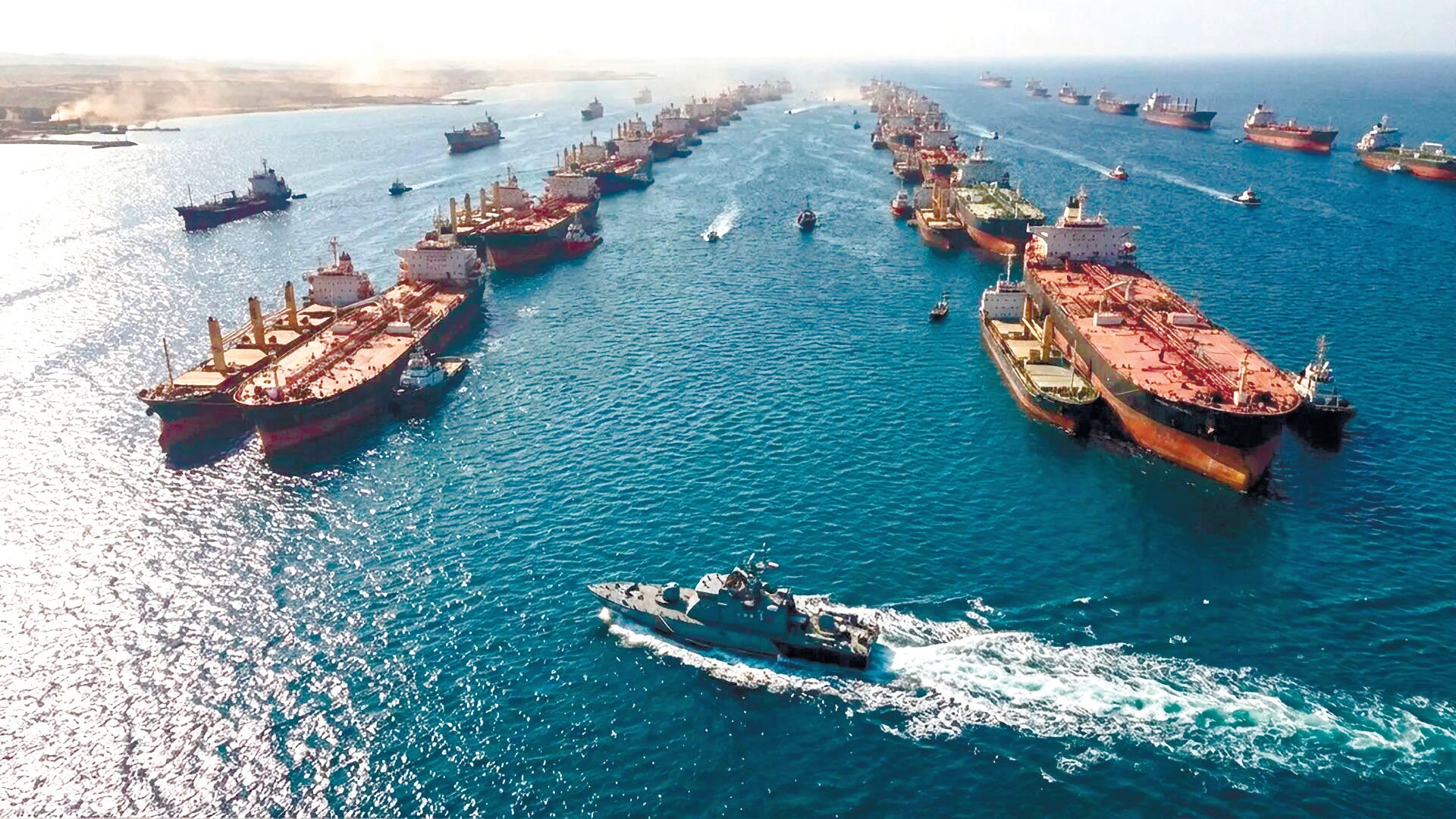
The following day, indications were observed that Tehran was endeavouring to modify the negotiation approach. According to media reports, Iran proposed to the US a multi-stage negotiating scheme that would break the talks into three successive phases. In the initial phase, Tehran has proposed to establish a cessation of hostilities and to provide security guarantees not only to Iran but also to Lebanon. The second phase is to be dedicated to questions of governance and the functioning of the Strait of Hormuz, including parameters for ensuring maritime navigation and possible control mechanisms. These issues are directly linked to the current crisis surrounding energy-resource transportation.
The third phase is set to address the Iranian nuclear programme, however, Tehran has made it clear that this discussion is contingent upon the attainment of agreements on the prior two agenda items. Effectively, they are refusing to place the nuclear issue on the agenda until the military-political and logistical dimensions of the conflict are resolved.
Many observers view the proposals put forward by Iran as part of a stalling tactic aimed at postponing the resumption of an active phase of the conflict for as long as possible. US President Donald Trump has made it clear that he is not satisfied with Tehran's demands. At the same time, it is becoming clear that none of the parties to the conflict is interested in full-scale escalation under current conditions.
There is a rationale behind this. It is evident that for the US, an expansion of military operations signifies a transition to a more costly and risky phase of the confrontation. It is inevitable that strikes on Iranian infrastructure, in particular energy infrastructure, will provoke retaliatory actions from Tehran that will have a significant impact on the wider Persian Gulf region. Consequently, a chain reaction is initiated, endangering the energy infrastructure of multiple states simultaneously. It is clear that Iran is prepared to take a robust and asymmetric response, which could potentially involve military strikes on targets in the Gulf states and the continuation of the blockade of the Strait of Hormuz. This is already having a significant impact on global oil markets, with substantial volumes disappearing from the market, which is of interest to the United States.
The costs of warfare
According to estimates by the International Energy Agency, the scale of this effect is without precedent. Prior to the crisis, around 20 million barrels of oil and petroleum products passed through Hormuz per day. However, under conflict conditions, these flows have reduced to approximately 2-3 million barrels per day, indicating a near-to-minimal level of activity.
We are referring to the temporary withdrawal of millions of barrels per day from circulation due to infrastructure destruction, logistical disruptions and rising insurance restrictions. Consequently, higher energy prices and supply instability are intensifying pressure on the global economy, increasing inflationary risks and reducing market predictability. This represents the most significant supply shock in the history of the oil market, surpassing the crises of the 1970s.
This is a particularly salient issue for major energy importers, but it is no less important for the US itself, despite its status as one of the leading oil producers. Rising fuel costs directly impact consumer spending in the country, intensify inflationary pressures and contribute to growing social discontent. In this context, domestic political tensions are also increasing, including intensified criticism of the Donald Trump administration – not only from the opposition but also from influential figures within the Republican Party itself. They accuse Trump of an ill-considered strategy that is affecting the state of the world's largest economy.
This phenomenon underlies the coexistence of two distinct behavioural patterns. On the one hand, the parties demonstrate their strength; on the other, they attempt to keep the conflict within manageable bounds through negotiating constructs, even if these are protracted and largely tactical in nature.
A similar logic can be discerned in Israel. Despite a declared readiness to solve the Iran problem by military means, the Israeli leadership understands that a protracted conflict will drain resources and reduce the effectiveness of military operations. In light of these circumstances, it would be prudent to explore less radical options for resolving the conflict, particularly given the current impracticality of certain objectives, such as altering Iran's constitutional order.
At the same time, Prime Minister Benjamin Netanyahu, like Donald Trump, faces mounting domestic pressure. This involves both criticism from the opposition and growing discontent within society linked to the protracted nature of the military confrontation, the economic costs and the absence of a clearly defined exit strategy. The strengthening of protest sentiments and political polarisation limits the room for further escalation while simultaneously pushing the Israeli leadership towards a search for more manageable and less costly scenarios.
A new player in the conflict?
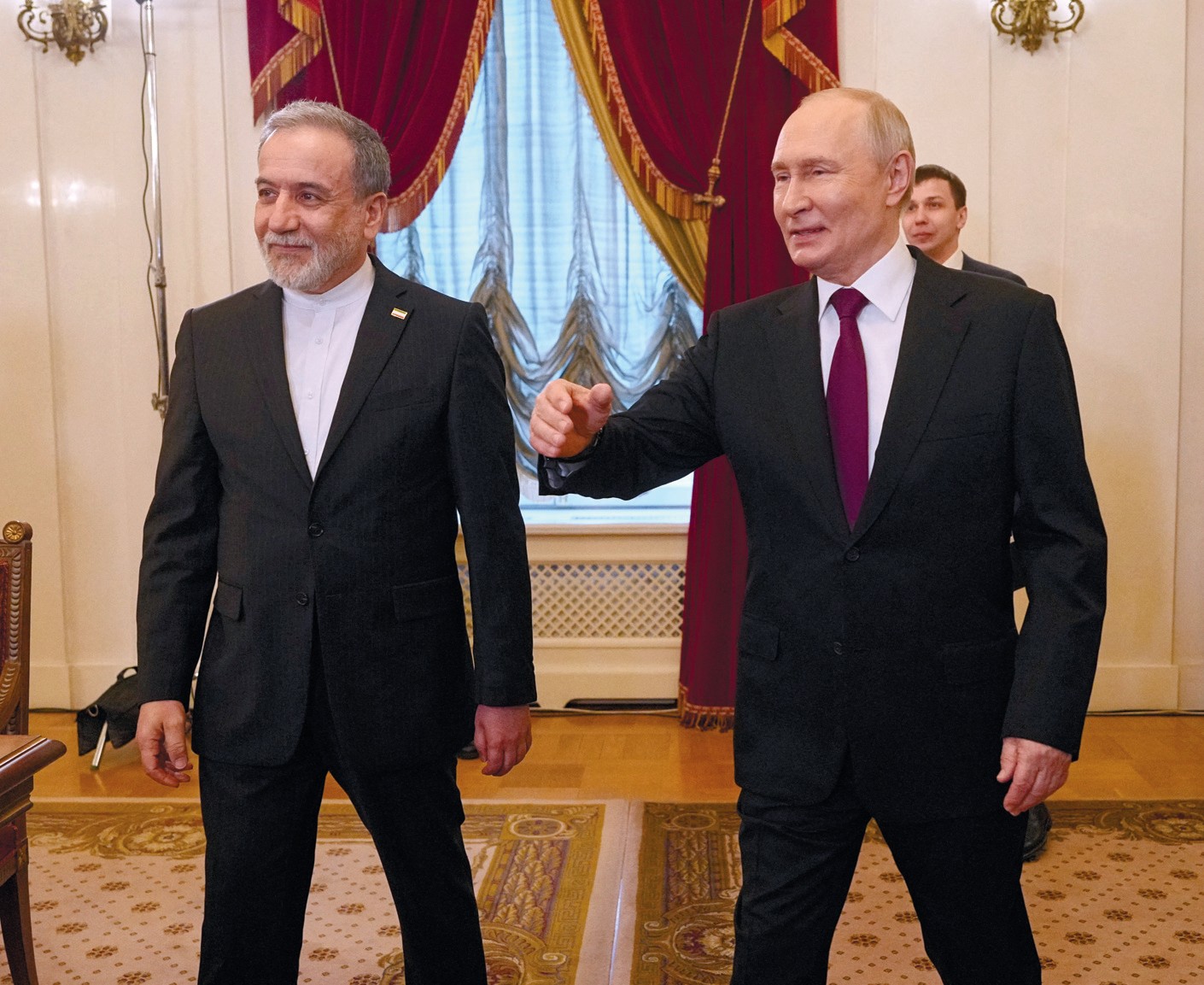
In these circumstances, Iranian Foreign Minister Abbas Araghchi, following his visit to Islamabad, proceeded to St Petersburg, where he met with Russian President Vladimir Putin. This suggests an effort by Tehran to broaden the scope of negotiations beyond the US–Iran direct format, potentially involving an external intermediary.
It is highly likely that the talks addressed the question of possible Moscow assistance in establishing communication with the US. The Russian side has indirectly expressed its willingness to assume such a role. Putin has declared his intention to make efforts to achieve de-escalation and prevent a further worsening of the situation in the region. In turn, Russian presidential aide Yuri Ushakov acknowledged that, following the contacts, Moscow might convey "its own considerations and assessments" to the American side.
It is interesting to note that in the current configuration, Russia finds itself in a specific position that is, in many ways, paradoxical. On the one hand, it remains one of Iran's closest partners, cooperating with it in both the political and the military-technical spheres. Moscow continues to maintain operational communication channels with both Washington and Israel, a capability that positions it as a unique mediator in the region.
It is precisely this combination of factors—strategic closeness to Tehran alongside the existence of communication channels with its adversaries—that creates a niche for Russia in which it can convert its position into an instrument of influence over the negotiation process. In a period where direct dialogue between the parties is facing significant challenges, the role of mediation becomes even more important. This allows Moscow to enhance its position on the regional agenda. It is not yet clear whether it will be able to capitalise on this opportunity and align its actions with the achievement of its objectives in Ukraine.
Running into a brick wall
With regard to military potential and the specific preparations of the involved parties in the event of a resumption of hostilities, the current situation provides no indication of an imminent exhaustion of Iran's resources. However, according to assessments by several Western media outlets, despite the large-scale US and Israeli strikes, a significant portion of Iran's missile, unmanned-aerial and naval infrastructure remains combat-capable. The Guardian, citing leaks from American intelligence, notes that Iran, by one estimate, still retains up to half of its missiles and launch systems, as well as a comparable share of its Shahed strike drones. Furthermore, Iran's ongoing presence in the Strait of Hormuz demonstrates that its naval and asymmetric capabilities have not been fully suppressed.
The US–Israeli campaign has undoubtedly caused significant damage to Iran, but it has not yet achieved the primary objective of removing Tehran's capacity to engage in a protracted war. It is evident that Iran continues to possess the necessary resources to execute missile and drone strikes, exert pressure on Gulf states, disrupt shipping, and engage allied forces in Lebanon and other regions. As early as March, Iran and Hezbollah carried out over 850 missile and drone attacks on Israel, illustrating the scale of a potential that has already been deployed but not yet fully utilised.
Consequently, the military preparations of the involved parties do not appear to be for a short, decisive blow, but rather point to an expectation of a prolonged war of attrition. Israel continues to strike Hezbollah targets in Lebanon even after the ceasefire, expanding the geography of operations. This attests to a desire to weaken Iran's regional network ahead of a possible resumption of the direct phase of the conflict.
The US and Israel are strengthening the regional defence configuration, including anti-missile and anti-drone protection for the Gulf states. Reports of the deployment of the Israeli Iron Dome system in the UAE against the backdrop of the threat of Iranian missile and drone attacks are instructive. This means that the US–Israeli bloc is proceeding not from the assumption that Iran has already been disarmed, but that its retaliatory potential remains serious enough to inflict damage both on Israel itself and on the infrastructure of US allies in the Persian Gulf.
Thus, Iran’s capacity to wage a prolonged asymmetric war remains the main deterrent fact preventing the allies from banking solely on a military scenario. The US and Israel can deliver a new large-scale strike, but they have no guarantee of a swift end to the war, whereas Iran retains the ability to make it expensive, protracted and regionally devastating. Of course, the blockade of Hormuz also comes, to put it mildly, at no small cost for Tehran itself. But negotiations, as practice shows, are not yet yielding practical results. And thus a picture emerges of the absence of any real plan for a way out of the situation. The war seems to be continuing, but it is clearly not going according to schedule.
RECOMMEND:
 113
113

