

BEIJING’S ‘AFGHAN EXPRESS’
New overland corridor to Iran and the Indian Ocean emerging between China, Kazakhstan, and Uzbekistan
Author: Ilgar VELIZADE
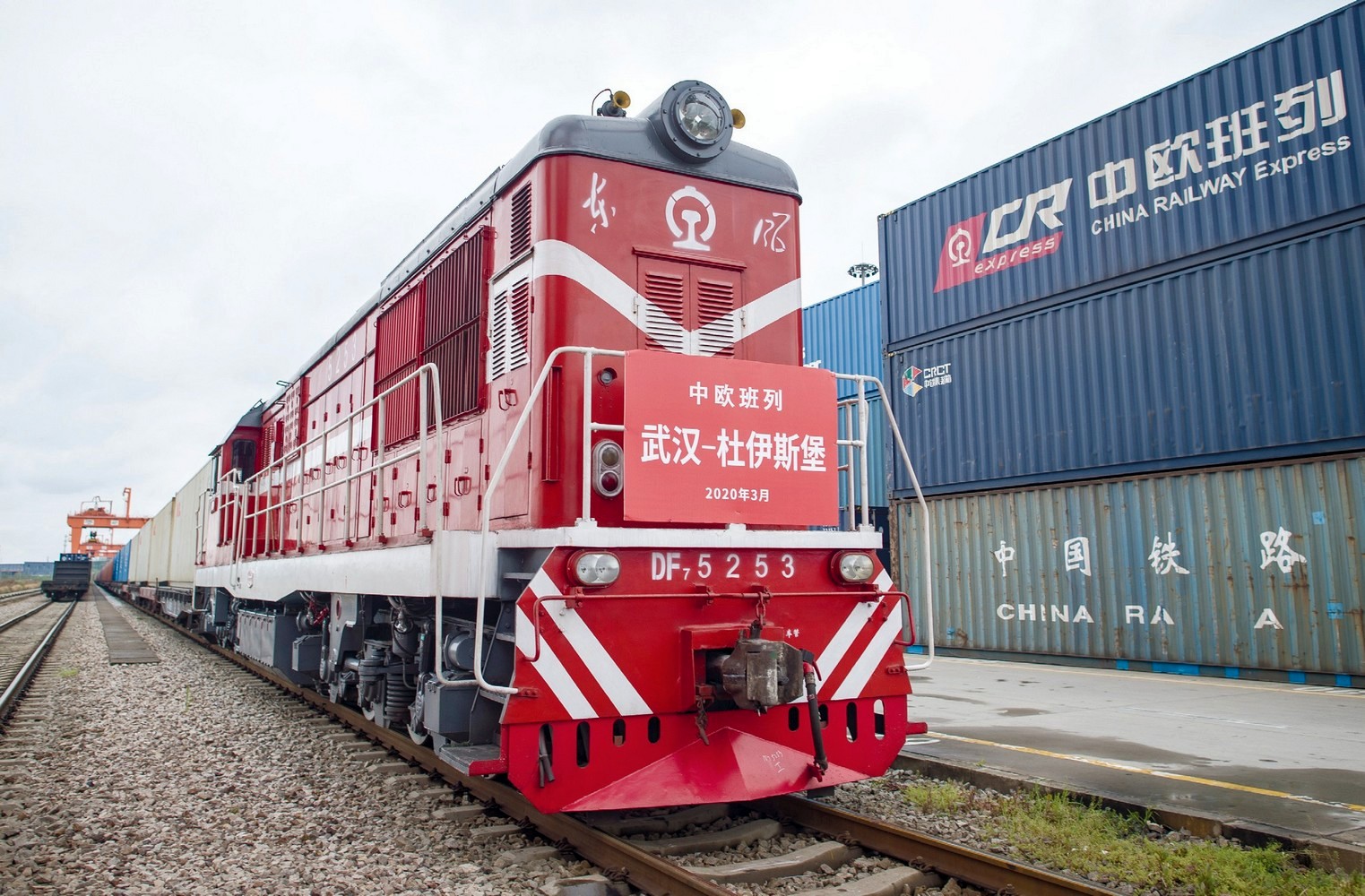
While certain global power centres are preoccupied with conflicts and geopolitical confrontation, Beijing is steadily establishing new intra-continental transport links, ensuring connectivity with previously hard-to-reach regions in central Eurasia.
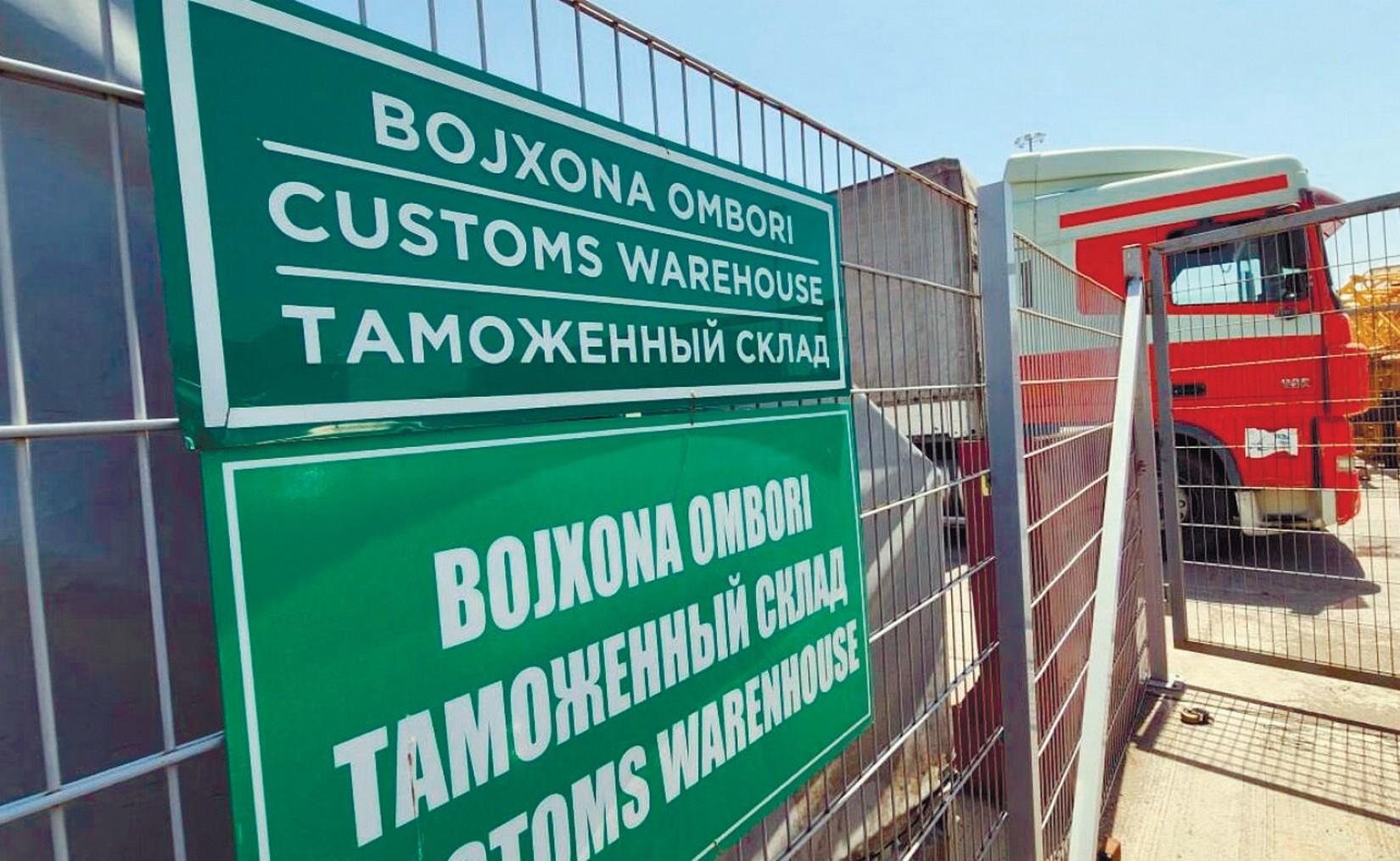
On 5 May, the Uzbek company Uztemiryulkonteyner announced the launch of the 'Afghan Express', a new multimodal route for the delivery of containerised cargo from China to Afghanistan via the territories of Kazakhstan, Uzbekistan and Turkmenistan.
It is clear that the true significance of this project, as evidenced by all parties, extends far beyond the Afghan route in isolation.
From China to Afghanistan via a new route
Reports indicate that the route traverses the Chinese-Kazakh border hub of Khorgos-Altynkol, continuing through Uzbekistan to the Bukhara logistics centre. From there, the containers are transported by road through Turkmenistan to Herat in Afghanistan, which is located in the west of the country. A review of the region's current transport infrastructure suggests that the most feasible route would be through eastern Turkmenistan, culminating at the Serkhetabad-Torgundi border crossing. This crossing has historically been the main transport corridor from Turkmenistan to western Afghanistan and on towards Herat.
The estimated route length is approximately 7,400 km, with an average delivery time of around 30 days.
This initiative is not primarily focused on the construction of new infrastructure, but rather on the integration of the region's existing transport capabilities into a unified logistics system. The key point to note is that a railway line already exists and is operational between Serkhetabad in Turkmenistan and Torgundi in Afghanistan. The project was officially commissioned in 2018. However, there is currently no fully-fledged railway line from Torgundi to Herat, as it is still at the design and pre-construction stage. Consequently, freight beyond Torgundi/Serhetabad towards Herat is mainly transported by road.
Herat is currently undergoing significant development as a major logistics hub, with access to Iran. This refers to the railway connecting Western Afghanistan with Iran via Herat. Construction has been ongoing for several years, and the project is now largely complete and partially operational. However, the full operation of the entire line all the way to Herat has long been hampered by security issues, infrastructure damage and the incompleteness of certain sections.
In 2021, during hostilities, part of the infrastructure on the Afghan side was damaged, which led to a disruption in traffic. Restoration work commenced subsequently, and in May 2023 a trial run of a train on this route was conducted.
Central Asia uniting
The commissioning of this route reflects processes linked to the restructuring of global transport chains and the strengthening of Central Asia's role in Eurasian trade. For China, a new overland route is effectively being established not only to Afghanistan, but further on to Iran. This is the primary reason why Herat was selected as the terminus of the 'Trans-Afghan route'.
The Khaf-Herat railway line runs through Herat, becoming Afghanistan's first fully-fledged rail link to the Iranian rail network. Access to the ports of the Persian and Oman gulfs via Iran is opening up, allowing China to gradually establish alternative cargo delivery routes that bypass traditional maritime routes.
It is important to note the special role played here by the Uzbek railways and their affiliated company, 'Uztemiryulkonteyner'. In essence, Uzbekistan currently functions as a key player in the region's logistics network, facilitating the efficient movement of goods across Central Asia.
The selection of Bukhara as the logistics hub for the route is strategically aligned with the city's unique advantages. Uzbekistan is strategically seeking to establish itself as a major distribution hub for Chinese cargo bound for Afghanistan, Iran, and, in the long term, the ports of the Indian Ocean.
However, this issue goes beyond mere commercial logistics. The development of such routes is of strategic importance for Tashkent. Uzbekistan, a landlocked country, is keen to establish transport corridors that will provide vital links with the outside world. In this regard, Tashkent has been actively promoting various trans-Afghan transport projects in recent years, including the Mazar-i-Sharif–Kabul–Peshawar railway, as well as routes towards Iran via Western Afghanistan.
The launch of the 'Afghan Express' aligns with this strategy. Furthermore, Uzbekistan's involvement is of crucial importance to China, as the Uzbek transport network is one of the most advanced and institutionally stable in Central Asia.
It is also of fundamental importance that Kazakhstan maintains its position as China's primary gateway to the region. The Kazakh-Chinese Khorgos-Altynkol hub is strategically important for the 'Trans-Afghan route', handling container traffic from China to Central Asia. Goods then proceed through Uzbekistan towards Afghanistan and Iran. Kazakhstan serves as China's main land gateway to the region, whilst Uzbekistan is gradually seeking to establish itself as a southern distribution and transit hub, facilitating the onward movement of goods to Afghanistan, Iran and South Asia.
It is equally important that Kazakhstan and Uzbekistan have in recent years managed to establish a pragmatic and functional dialogue with the Taliban leadership, which allows for the development of a relatively predictable model of engagement with Kabul. For Beijing, this is of fundamental importance, as the implementation of any trans-Afghan logistics projects depends directly on the level of governance and political stability in the Afghan region.
The Taliban emerge from isolation
Following the withdrawal of US and NATO forces, and the Taliban's rise to power, China has gradually begun to view Afghanistan not only as a potential security threat, but also as a vital source of mineral and raw materials. This is due to China's growing interest in strategic resources. In particular, the following minerals are of interest: copper, iron ore, cobalt, nickel, gold and rare-earth metals.
In the context of the global demand for raw materials for batteries, electronics and 'green' energy, Beijing is paying particular attention to Afghan lithium, whose reserves have been compared in significance to those of Bolivia by some Western experts.
Chinese companies had already expressed interest in Afghan resources prior to the Taliban's return to power. One of the most well-known projects is the Mes Aynak copper deposit, located near Kabul. In 2007, Metallurgical Corporation of China secured the rights to develop it, as it is considered to be one of the world's largest undeveloped copper deposits. However, due to the war, security issues and infrastructure constraints, the project was never fully realised. Following this, negotiations to revive the project were resumed in 2021.
In addition, in January 2023, the Afghan authorities entered into a formal agreement with the Chinese company Xinjiang Central Asia Petroleum and Gas Co. for oil production in the Amu Darya basin. The project involves investment in the development of oil fields in the north of the country. This was one of the first major foreign energy agreements concluded by Kabul following the change of government.
Concurrently, China is progressively consolidating its transport and logistics infrastructure in Afghanistan. For Beijing, it is of paramount importance to establish stable land transport links capable of ensuring the export of raw materials produced in Afghanistan to China.
Future perspectives
In a cautious move, Beijing is increasing its economic, raw materials and logistics presence in the Afghan region. In addition, it is imperative for China to ensure that Afghan territory is not utilised as a base for radical groups associated with the Uyghur underground in Xinjiang. In this regard, a fairly intensive political dialogue has been established between China and the new Afghan authorities since 2021.
China has adopted a policy of avoiding direct military involvement in Afghan affairs. Instead, it is opting for a more economic-focused approach, working closely with neighbouring Central Asian states and engaging in pragmatic dialogue with the current authorities in Kabul.
In this situation, the Afghan city of Herat is of particular significance. Its strategic location establishes the city as a pivotal land transport hub on the route to Iran. It appears that Beijing is operating on the assumption that the confrontation between Iran and the US could be protracted, creating constant risks for maritime routes in the Middle East.
In this context, it is imperative for China to establish alternative and more reliable land transport routes to ensure the stability of oil and other goods supplies from Iran. Consequently, the importance of the routes passing through western Afghanistan and Herat is objectively increasing for Beijing.
All parties involved in the route are, of course, aware of the extremely unstable nature of the territory, the serious limitations of its infrastructure and the complexity of its internal situation. However, when viewed through the lens of long-term strategic interests, it becomes evident that key regional players are proactively integrating Afghanistan into the emerging network of Eurasian transport and raw materials routes. There is a strong anticipation that Afghanistan will steadily stabilise and evolve into a significant transit hub.
Beijing needs its communications to be as ‘low-key’ and predictable as possible, particularly when it comes to the future export of strategic raw materials from Afghanistan or securing a steady supply of energy resources from Iran. Although the Pakistani route remains a viable option. Ultimately, any form of diversification—be it in transport routes or political ties—is objectively beneficial in today’s extremely unstable world. The key is to keep all such channels of engagement active and avoid becoming critically dependent on any single route.
RECOMMEND:
 110
110

