

THE DECLINE OF THE ALLIED EMPIRE
Trump administration polarising the Transatlantic system?
Author: Natig NAZIMOGHLU
The Euro-Atlantic world is entering a period of increasing discord. The Trump administration's recent decisions, including the reduction of US military presence in Europe and the introduction of tariffs on EU goods, are indicative of this ongoing trend.
The US withdrawing its troops?
Donald Trump has long been known as a critic of NATO. During his first term, he accused the countries of the North Atlantic Alliance of being freeloaders and demanded that Europeans increase their military spending to 2% of GDP. In the second year of his second presidential term, Trump has reaffirmed his distrust of Euro-Atlantic unity. The catalyst was the stance taken by European allies in the context of the US and Israel's war against Iran. "When we required NATO's assistance, they did not provide it," Trump stated. He is also able to confidently predict: "NATO was not present when it was required, and it will not be present when required in future."
Trump has expressed his disappointment at the reluctance of leading European countries to participate directly in the war and, in particular, to join the blockade of the Strait of Hormuz. In response, he has devised a number of ways to punish them. The primary focus of this initiative is the strategic withdrawal of American troops from specific European countries. Specifically, from Italy and Spain. However, Germany has been the subject of the most severe criticism.
The rift in relations between Washington and Berlin was triggered by a public dispute between President Trump and German Chancellor Friedrich Merz. The latter reproached the Americans for their apparent lack of a strategy regarding Iran and expressed the view that US diplomacy had been 'humiliated' by Iranian negotiators.
In response to the criticism he has received, Trump accused Merz of underperforming in his role, citing concerns regarding his management of immigration and energy policy. In response, he confirmed that the US would be reducing the number of its troops stationed in Germany.
Germany, however, remains the largest American military base in Europe. This has been the case since the occupation of the country following the Second World War. Germany currently hosts over 36,000 American military personnel, representing a significant portion of the nearly 80,000-strong American contingent stationed in Europe. In addition, the headquarters of the US European and African Commands are situated in Stuttgart, Germany. Germany is also home to the largest US airbase outside the United States—Ramstein.
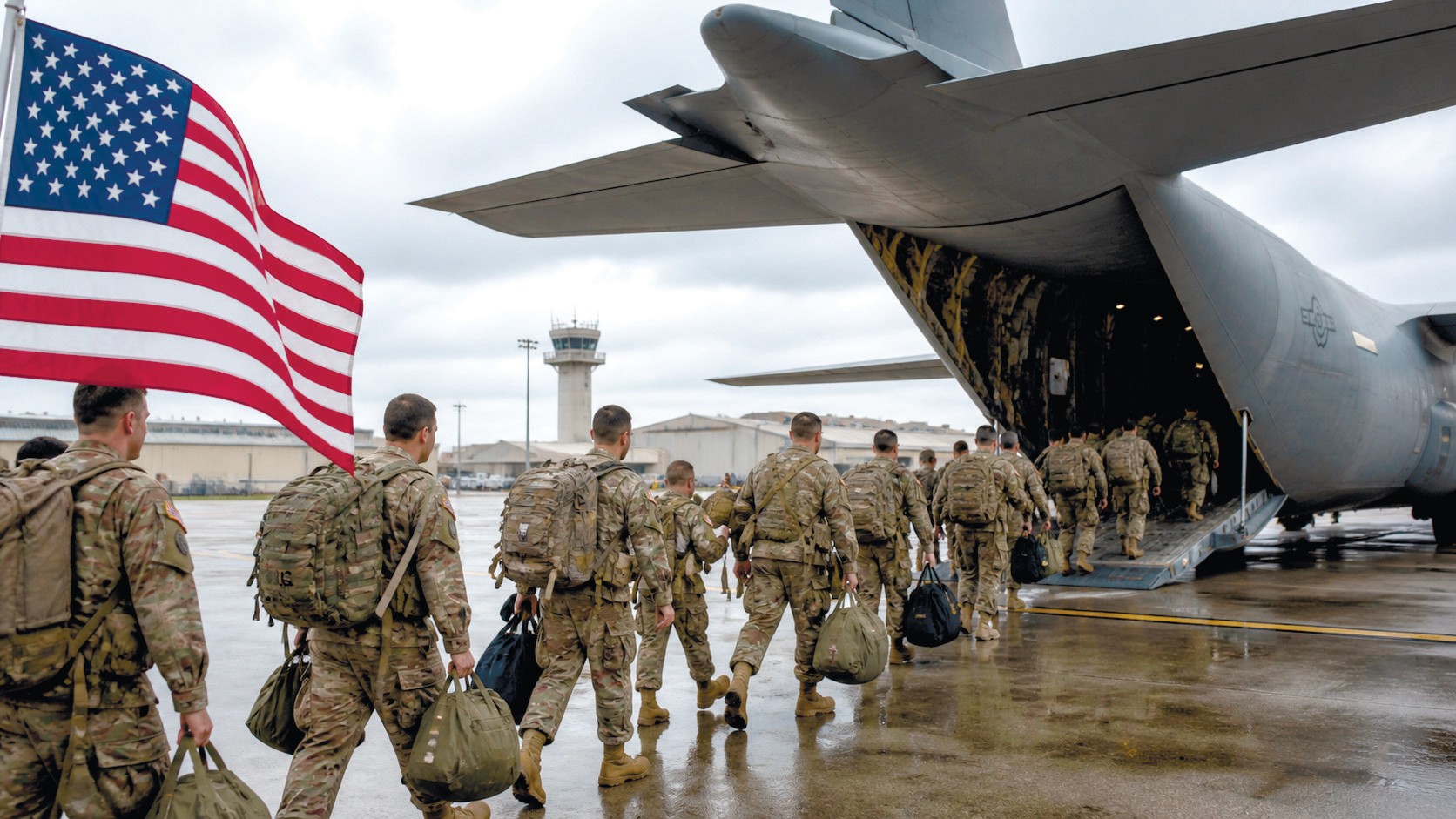
These facts demonstrate Germany's special role in US geostrategy. However, Washington's latest plan, which has been announced by the White House and the Pentagon, provides for the withdrawal of more than 5,000 US troops from German territory within 6–12 months.
Furthermore, the decision, developed under the Biden administration, to deploy a US battalion equipped with long-range Tomahawk missiles in Germany has been cancelled.
Even if part of the US contingent stationed in Germany is transferred to another EU member state (Poland is most frequently mentioned), there is a clear shift in US policy towards Europe. At the core of this process is the attitude towards Germany, a key economic partner within the European Union and a leading military force within NATO.
Furthermore, according to German experts, the reduction in the number of US troops in Germany is considered to be a 'lesser problem' for the country than the cancellation of the plan to deploy long-range missiles. Given the US's de facto monopoly on long-range weapons, this move risks weakening Germany's security from an operational standpoint.
Meanwhile, the Trump administration is considering a number of other measures that may have implications for the interests of the US's European allies. For instance, the possibility of expelling from NATO those countries that have failed to meet Washington's expectations is being considered. Spain is a prime example of this. This is due to its refusal to allow the United States to use its territory as a base for attacks on Iran, and its failure to meet the agreed defence spending target of 5% of GDP, as set at last year's NATO summit in The Hague. However, as the Alliance itself has highlighted, the organisation's founding treaty 'contains no provisions for the suspension of NATO membership'.
The rift in relations between the US and the UK is also noteworthy. While London granted the US access to British bases for strikes on Iranian targets, and Royal Air Force aircraft participated in operations to repel Iranian drone attacks, Prime Minister Keir Starmer was unequivocal in stating that the UK would not be drawn into a war with Iran. In response, the US threatened to withdraw its recognition of Britain's claim to the Falkland (Malvinas) Islands. Argentina also asserts its claim to the islands, located in the southern Atlantic Ocean, a dispute that led to armed conflict in 1982. The US's potential stance in this ongoing conflict, which shows no signs of abating, may be at odds with Britain's interests, potentially undermining the alliance between the two major Anglo-Saxon powers.
These developments suggest the emergence of new cracks in the US's relations with its European allies. It appears that one of the most profound developments will be evident in the economic sector.
German automobile industry in crisis
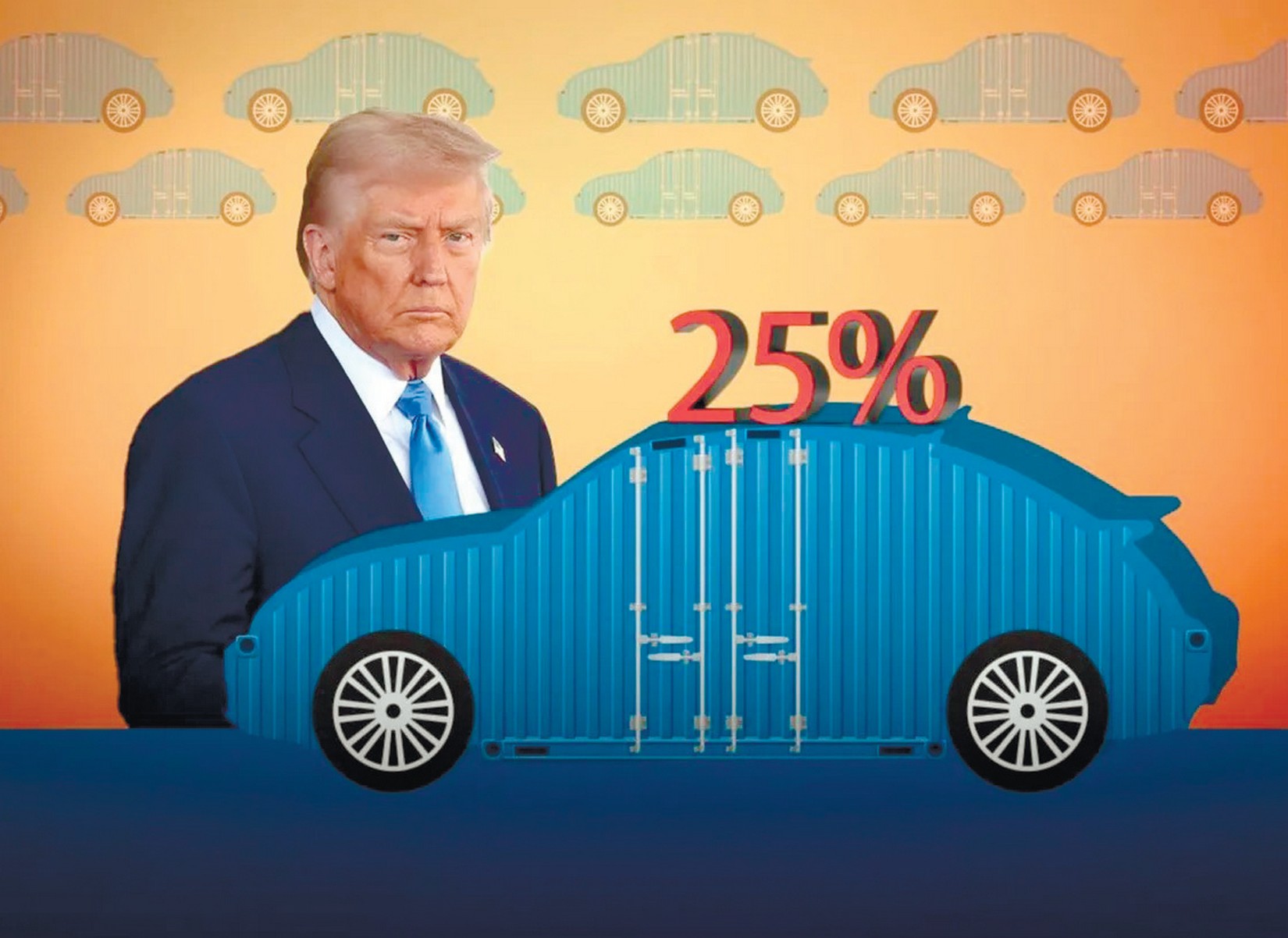
On 1 May, Trump announced that the United States was increasing the import duty rate on cars and lorries from the EU entering the American market to 25%. The US president cited the 'European Union's failure to comply with the terms' of the trade agreement concluded in July 2025 as the basis for this decision.
The EU has committed to implementing a 15% tariff on all exports to the US, in exchange for the US removing its tariffs on EU exports. In addition, the European Commission committed to ensuring the purchase of €750 billion worth of energy resources from the US by the end of 2028, which accounts for around three-quarters of all European energy imports.
However, in February 2026, the US Supreme Court overturned most of the tariffs previously imposed by Trump, ruling that the president had exceeded his authority. At the time, Trump expressed disagreement with the court's decision and promised to find alternative mechanisms to reinstate the trade restrictions. In light of current discontent with Europe's policy towards Iran, President Trump has taken further action. Germany has once again been identified as a key player in the context of US sanctions policy.
It is evident that German car manufacturers are the first to be affected by the United States' increase in tariffs on cars and lorries from the European Union entering the American market. Nevertheless, this does not prevent German Chancellor Merkel from emphasising the pan-European significance of the measures being taken by the Trump administration. Mr. Merz has stated that he does not consider the recently introduced US import tariffs to be a measure directed specifically at Germany. The German chancellor is convinced that Trump is intent on striking a blow against Europe as a whole.
European Commission President Ursula von der Leyen has declared her readiness for any scenario and, in turn, referred to the need for the United States to comply with the terms of the trade agreement. She called on Washington to cease its "unilateral actions" and made the following point: "Our focus is on achieving mutual benefits, fostering cooperation and ensuring reliability."
In general, throughout this whole saga of strained relations with the US, Europe is emphasising the need to preserve transatlantic unity. In this regard, the responsibility lies with the US. However, it appears improbable that the Trump administration will revert to the previous, almost idyllic, relations with the EU and leading European countries. This could potentially result in a scenario where the US no longer assumes the role of guarantor for Europe's security, a position it has held for the past 80 years since the conclusion of the Second World War.
Will Europe become stronger?
The US's latest moves, primarily aimed at reducing the American military presence in Europe, present the countries of the Old World with the need not only to rethink the situation, but also to make significant adjustments to their defence strategy. Furthermore, the current challenges confronting the EU and European states, including the enhancement of defence capabilities, the re-equipping and mobilisation of armed forces, necessitate a relinquishment of certain aspects of the comfortable lifestyle that Europeans have become accustomed to over the past decades. In organisational terms, the European dimension within NATO is becoming a priority.
It is noteworthy that the EU's High Representative for Foreign Affairs and Security Policy, Kaja Kallas, has called on European countries to 'truly strengthen the European pillar within NATO' and to step up their own defence efforts more actively. The validity of this perspective is also recognised within NATO itself. Alliance spokesperson Allison Hart emphasised the necessity for Europe, in light of the shifts in US policy, to "maintain an increase in defence investment and assume a greater share of responsibility for our collective security". Hart expressed his conviction in the feasibility of establishing "a stronger Europe within a stronger NATO".
The change in tone of statements made by leaders of major European countries, prompted by the US stance, is highly significant. At the European Political Community summit in Yerevan, UK Prime Minister Keir Starmer emphasised the following: "It is evident that several of our strategic alliances are not performing in accordance with our expectations. There is a greater level of tension within the alliances than is considered to be acceptable. It is therefore very important that we respond to this together as a group of countries."
Chancellor Friedrich Merz regularly calls for the preservation of Euro-Atlantic unity. However, he also highlights the importance of strengthening Europe's and Germany's defence capabilities. Incidentally, this is hardly surprising. Prior to assuming his role as head of government, Merz had committed to prioritising the strengthening of Europe with the aim of achieving independence from the US in a gradual and incremental manner. Furthermore, he erroneously equated Donald Trump's America with Russia, which Germany and the EU regard as the main threat to Europe's security.
In the current climate of deteriorating relations between the US and Europe, Berlin is publicly asserting its role as a key contributor to the security of the continent. It is noteworthy that German Defence Minister Boris Pistorius has stated that the reduction in US troop numbers in Germany should encourage Europeans to strengthen their own defence further. He added: "We Europeans must take on more responsibility for our own security. Germany is making positive progress by expanding its armed forces, accelerating defence procurement and developing the necessary infrastructure."
The future of European defence capability will be heavily influenced by the ability of the UK and France, both of which are nuclear-armed, to assume the role of nuclear deterrence previously fulfilled by the United States. It should be noted that the US is considering a significant strategic step in the form of the relocation of its nuclear weapons. Such signals are already being received from across the Atlantic. First and foremost, this is being communicated from the German base at Ramstein.
The present crisis in relations between the US and Europe is undoubtedly a manifestation of a broader rift within Western elites—one that is not only political and economic, but also ideological. We are talking about a clash of interests between two branches of globalism: neoliberal and nation-oriented. Their nominal representatives are, respectively, the current governments of most leading European countries and the US administration headed by Trump. However, it is important to note that the ongoing geopolitical shifts and the resulting 'necessities' may also have an impact on the internal dynamics of Euro-Atlanticism.
The neoliberal faction is facing the threat of losing ground, the first serious sign of which can be seen in the case of Italy. The right-wing conservative government of Giorgia Meloni, which had previously been perceived as an ally and supporter of Trump, did not allow the United States to directly involve Italy in a war against Iran. Following Trump's announcement of the withdrawal of American troops from Europe, including from Italy, the UK also expressed its disagreement with this move by the US. It is becoming increasingly evident that the US-European 'dialogue' is developing at a surprising rate.
RECOMMEND:
 101
101

