

LEADING TRENDS IN THE CASPIAN
Azerbaijan expands the capacity of Alat port and builds a container fleet in cooperation with Central Asian countries
Author: Aghasaf NAJAFOV
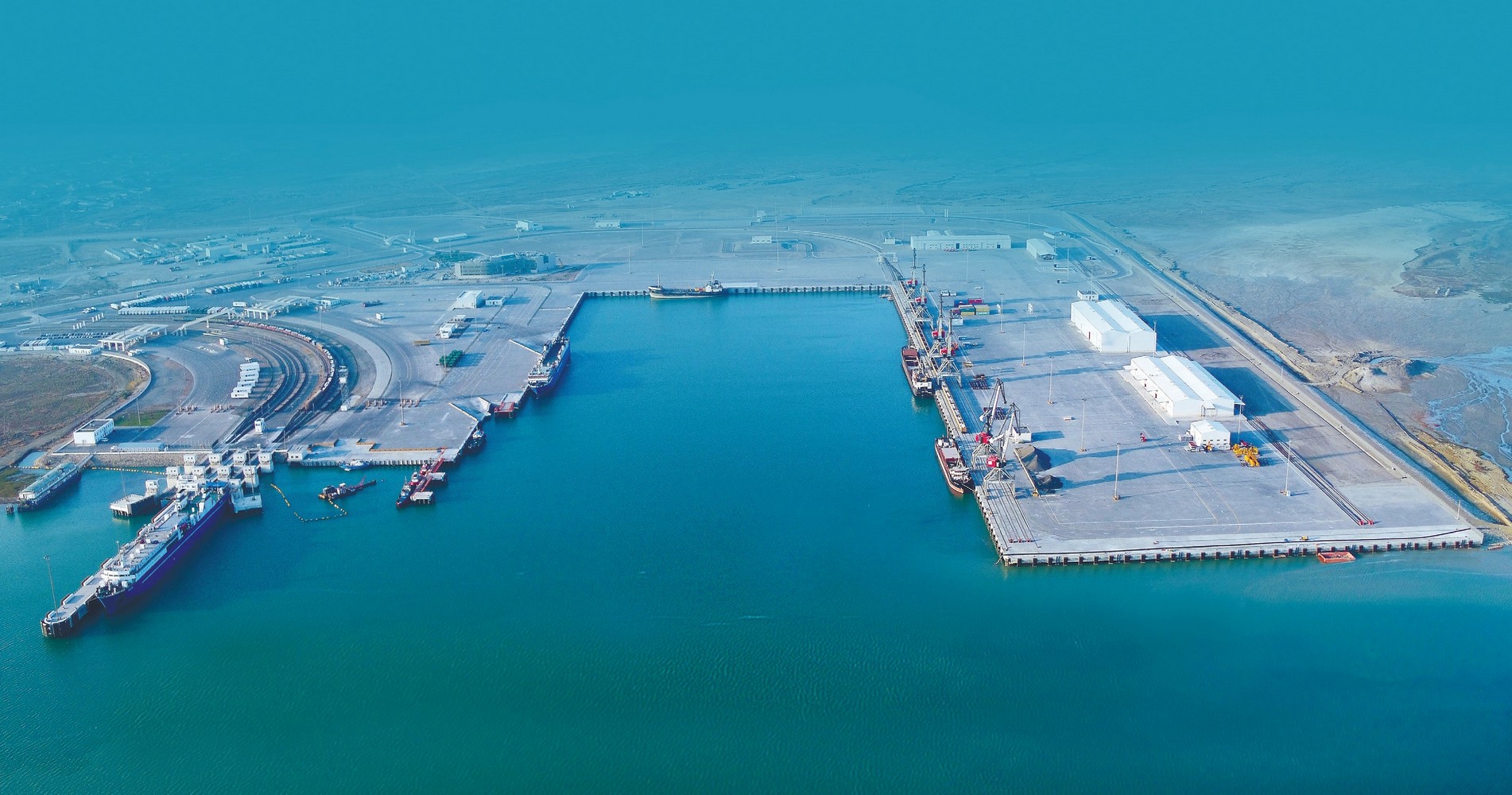
As a key transport hub on the Caspian Sea, Baku is strengthening its logistical cooperation with Central Asian countries, Türkiye, China, and European states. The significance of Azerbaijan’s port potential and powerful cargo fleet within the Middle Corridor increases annually, especially against the backdrop of the fifth year of war in Ukraine and the current conflict in the Persian Gulf.
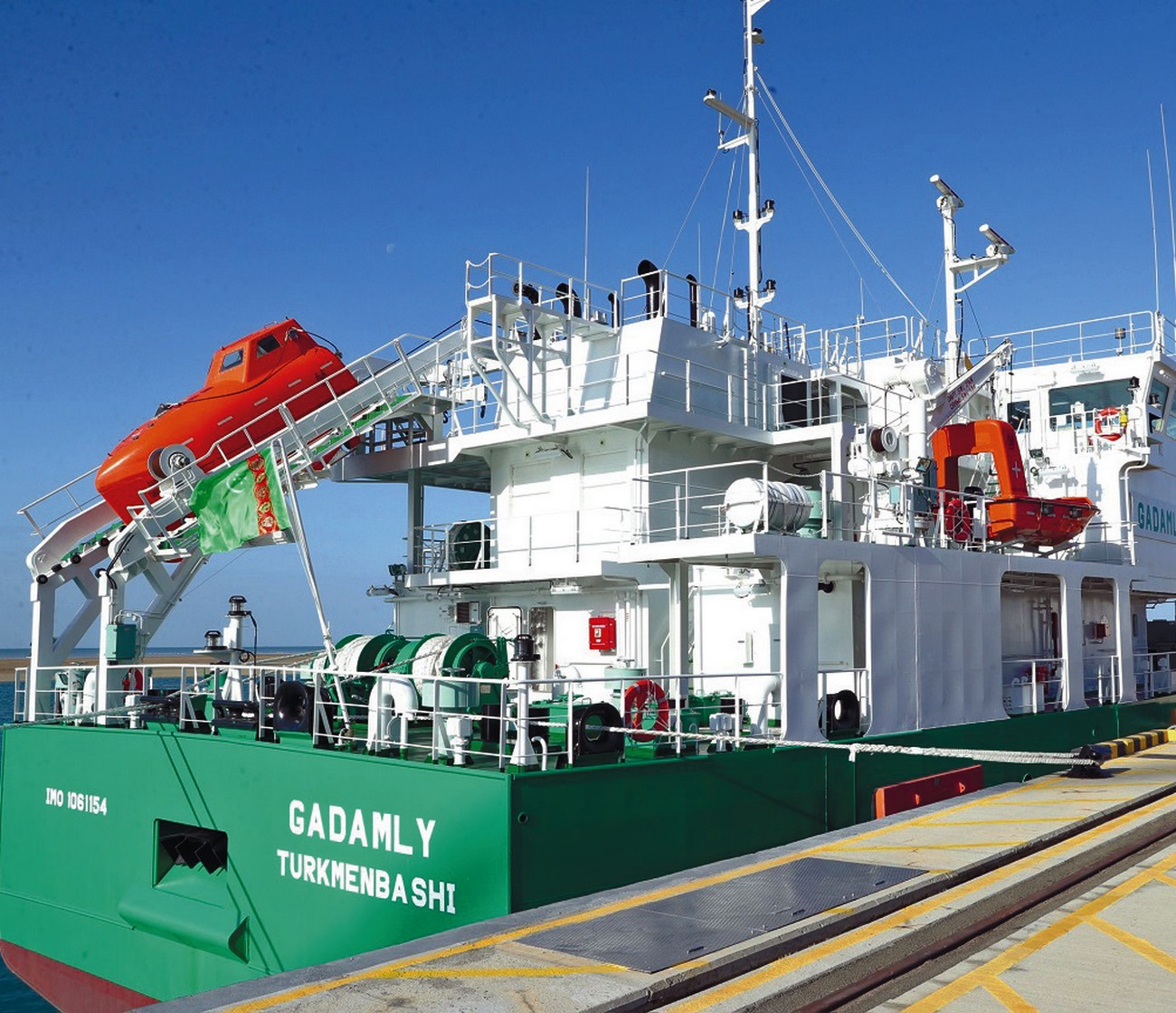
Alongside the development of infrastructure at Alat port, the country is consistently expanding its fleet, actively purchasing ferries and other container-handling vessels. These orders are placed both at the Baku Shipbuilding Plant (BSP), which also builds ships for the UAE and Kazakhstan, and at the Balkan shipyard in Turkmenistan, from where the new container vessel Gadamly recently arrived at Alat port.
Crisis-driven growth
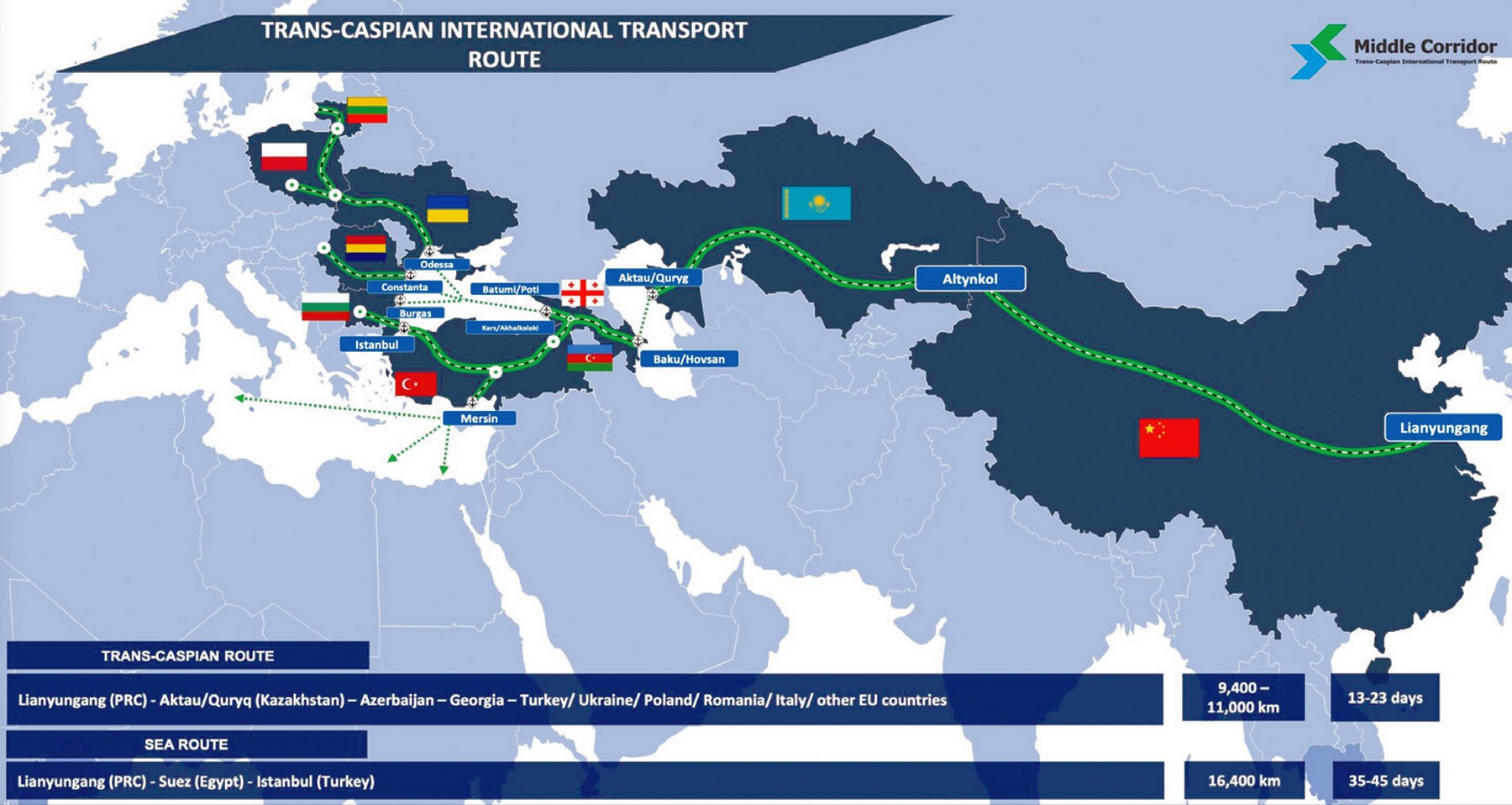
For eight years now, the combined land-sea corridor—the Trans-Caspian International Transport Route (TCITR)—has been operating successfully. Meanwhile, geographically, the Azerbaijani-Turkmen Lapis Lazuli route is developing in parallel, and Baku and Ashgabat, alongside Tbilisi and Bucharest, are participating in the promising Black Sea–Caspian Sea route.
These initiatives have gained special importance for European Union countries since the onset of the geopolitical crisis surrounding Ukraine. Due to sanctions and counter-sanctions, international rail traffic via the Northern Corridor (Trans-Siberian Railway and BAM) has decreased sharply over the past four years, significantly reshaping Eurasia’s transit and logistics routes. The situation has been further complicated by the unresolved conflict in the Middle East—including the closure of the Strait of Hormuz and periodic threats to shipping in the Red Sea, Bab-el-Mandeb Strait, and Suez Canal region. All this further emphasises the importance of combined land-sea routes, recognised as the shortest, fastest, and safest channels for transporting goods from China to Europe and in reverse from the EU and Türkiye to Central Asia.
The Middle Corridor is becoming increasingly important for China as container freight volumes from there to the Old World region grow. To optimise these processes, port and rail infrastructure in Caspian countries is being developed, cross-border and customs procedures simplified, and transit accelerated through electronic waybills, digital “single window” systems, and more. Thanks to these measures and others, delivery times over the last four years have shortened from 58–60 days to 15 days, while freight volumes have increased more than sevenfold—from 600,000 to 4.5 million tonnes in 2025.
According to Azerbaijani Prime Minister Ali Asadov, total transit volume along the Middle Corridor reached approximately 5 million tonnes in 2025, up 11% year-on-year—a figure that directly increases pressure on the Caspian segment of the route.
“Azerbaijan has increased transit shipments 2.5 times in six years,” said Javid Gurbanov, Deputy Minister of Digital Development and Transport of Azerbaijan, at the 18th meeting of the Europe-Caucasus-Asia intergovernmental commission held in mid-May in Astana. “In 2025, total transit freight through our country reached 14.3 million tonnes, 2.5 times higher than in 2019. Of this volume, about 4.7 million tonnes were transported via the Middle Corridor, confirming its growing role in regional connectivity.” The deputy minister also noted that container traffic through Baku International Sea Trade Port (BISTP) rose by 40% in 2025, reaching a record 107,000 TEU (standard 20-foot containers).
The bottleneck effect
Freight flow through the Middle Corridor could reach 10–11 million tonnes by 2030 according to World Bank projections. This encourages Azerbaijan and its TCITR partners to systematically expand transport and logistics infrastructure along the route. It is particularly vital to increase port handling capacity, which still faces congestion problems amid exceptional cargo growth. Ports such as Aktau and Alat as well as Georgian seaports frequently experience high density and bottlenecks that hinder rapid scaling of cargo handling volumes. This issue was evident in summer 2022 and reoccurred in April 2026 when a queue of around 1,500 trucks accumulated at BISTP due to the war in the Persian Gulf; these trucks were travelling from Türkiye to Central Asia bypassing Iran via Georgia and Azerbaijan.
To boost multimodal container transport, Baku and Astana are implementing a roadmap for synchronised removal of bottlenecks and TCITR development for 2022–2027. Achieving this requires hundreds of millions of dollars invested by project participants into port infrastructure enhancement and fleet expansion. Specifically, by 2030 Azerbaijan plans to increase BISTP’s throughput capacity to 25 million tonnes and up to 500,000 TEU during its second development phase. The container terminal capacity at BISTP currently stands at 150,000 TEU but will be raised to 260,000 TEU within two years. Fertiliser terminal construction with an annual handling capacity of 2.5 million tonnes is nearing completion at the port; projects for building a grain terminal and TIR park near the harbour are also underway. Additionally, quay foundations and container yards are being reinforced to ensure safe cargo storage and enable receipt of larger consignments. Container equipment stocks are expanding, preparations for increasing sorting station capacity have begun—all enhancing efficiency along the “railway-truck” track and reducing congestion and delays in cargo handling.
A significant milestone is commissioning berth No.7 at BISTP, which had remained unused until now, alongside strengthening pier technical capabilities with a new-generation port crane with a lifting capacity of 125 tonnes. The introduction of this powerful crane will maximise utilisation of existing port infrastructure without extra costs while expanding throughput capacity and operational potential. Designed according to modern environmental standards and powered electrically, this crane will reduce carbon footprint and improve energy efficiency—contributing notably to BISTP’s “green port” concept.
Caspian cooperation
Notably, alongside port capacity expansion there is also growth in cargo handling by Closed Joint Stock Company “Azerbaijan Caspian Shipping Company” (ASCO). Last year ASCO transported nearly 1.324 million tonnes—a 45% increase—while ferry container throughput surged by 203%, reaching 22,030 TEU.
Container shipping appears set to remain a primary focus for many years ahead; this reality motivates Caspian states and their international partners to invest heavily in this fleet segment. ASCO—the largest dry cargo carrier on the Caspian—currently operates almost sixty vessels of various types.
Baku Shipbuilding Plant has been successfully increasing ASCO’s fleet tonnage; over 12 years it has built 14 different vessels under ASCO contracts. Currently BSP holds contracts to build a total of 17 ships.
This year domestic shipyard orders have come from Caspian region countries as well as farther afield. In March at BSP a ceremony marked the start of construction on two container ships with capacities of 780 TEU each—part of a contract with a UAE-based group of companies. In early May BSP signed a cooperation agreement with Kazakhstan’s KTZ Express Shipping company under which two dry cargo container ships will be built at Baku shipyard.
The regional order portfolio for BSP may expand further over time. In August last year Uzbekistan’s Transport Minister Ilkhom Makhkamov stated that his country intends to operate its own ferries on the Caspian Sea and announced plans to place orders at Azerbaijani and Turkmen shipyards. According to media reports, this project’s financing volume is estimated at $150 million.
Against rising demand for TCITR freight transport, Caspian countries are expanding shipbuilding cooperation. A key development was Gadamly dry cargo ship’s arrival on May 12 at Alat port—with a capacity of 6,100 tonnes able to carry 240 TEU containers. This vessel was built in Turkmenistan under an order from Closed Joint Stock Company “Azerbaijan Railways” (AJD) and represents the first dry cargo ship fully constructed at Turkmen shipyard in partnership with South Korean company Koryo Shipbuilding Industry Technology.
“The Gadamly vessel will be used for container shipments between Baku and Turkmenbashi ports; this event not only adds a new vessel to maritime lines but also makes a significant contribution to Middle Corridor development overall,” said AJD Deputy Chairman Arif Aghayev during the vessel’s official reception ceremony. He also announced ongoing construction of a second dry cargo ship intended for regular container transportation between Baku and Turkmenbashi ports; its launch is tentatively scheduled for late autumn 2026.
At a ceremony in Baku Turkmenistan’s ambassador to Azerbaijan Gurbanmammad Elyasov described Gadamly’s maiden voyage as indicative of growing transport-logistics cooperation between Ashgabat and Baku. It should be recalled that Baku and Ashgabat collaborate actively on non-oil cargo handling via Middle Corridor routes such as Lapis Lazuli and CASCA+. To diversify freight handling, a decision was made to shift part of TCITR traffic towards Turkmenistan. Since early 2023 maritime feeder container shipments have been operating on Turkmenbashi-Baku-Turkmenbashi route.
In recent years Azerbaijani-Turkmen logistics partnership has included projects digitalising freight transport; cross-border and customs procedures have been simplified; tariffs on maritime and railway services reduced—all fostering growth in multimodal freight transport including transit container handling. These aims are also supported by Baku’s and Ashgabat’s accession to the UN protocol on electronic waybills. Furthermore, on April 1, 2026 negotiations were held at BISTP between Turkmen and Azerbaijani authorities concerning port cooperation to increase cargo traffic volumes, coordinate vessel schedules, and develop multimodal transport between Baku and Turkmenbashi ports.
Joint efforts by Caspian states contribute not only to regional transport-logistics infrastructure development but also to economic growth in each country. The mutual interests of all parties fuel implementation of promising new projects that further integrate the region into global transport networks.
RECOMMEND:
 93
93

