
ELECTIONS IN ARMENIA: A DIAGNOSIS
While Pashinyan seeks support in the West, Armenian society is once again infected with revanchist illusions and hatred
Author: NURANI
In the Soviet Union, especially during its final years, there was a great fondness for pompous epithets. Every regular CPSU congress was invariably labelled “historic.” Its decisions were deemed “fateful.” And, overall, it was heralded as a “major milestone in the history of the global communist and labour movement.” Elections, featuring the name of a single candidate from the “inseparable bloc of communists and non-party members” on the ballot, were likewise “fateful”—and nothing less.
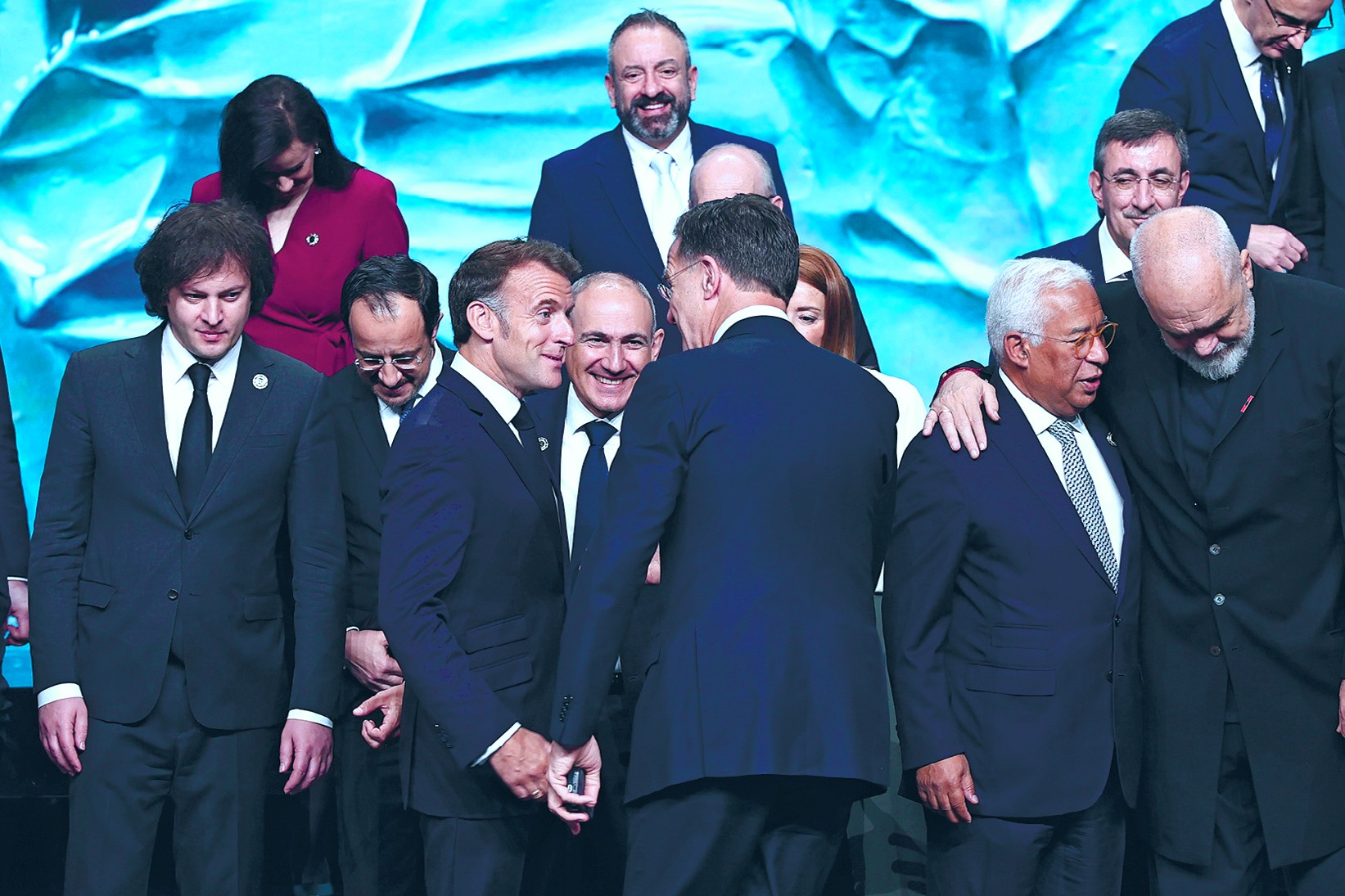
The parliamentary elections in Armenia are not accompanied by similar clamour. Yet, they truly are historic and fateful for the country, with a great deal hanging in the balance. This includes the peace process, Armenia's potential geopolitical reorientation, and much more. On the eve of the elections, the West is providing Pashinyan with unprecedented backing. Yerevan hosted the European Political Community (EPC) summit, French President Emmanuel Macron paid a state visit to Armenia, and a visit by US Secretary of State Marco Rubio was announced at the very last minute.
At the same time, the question remains whether Pashinyan has managed to secure truly substantial and tangible support from his new Western, primarily European, allies. This is particularly critical in the economic sphere, where Armenia remains heavily dependent on Russia.
Should Armenia be allowed into Europe?
Moscow makes no secret of its extreme displeasure with Pashinyan's overtures to EU countries, many of which it considers hostile. While previously it was mainly Russian propaganda that exerted itself in this direction, with officials maintaining diplomatic courtesy, the situation has now shifted. A barrage of accusations rained down on the Armenian Prime Minister after Ukrainian President Zelensky, during the EPC summit, promised that Ukrainian drones might “visit” the May 9 parade in Moscow. As is known, it did not come to that. However, a bitter aftertaste remained: why didn't Pashinyan check Zelensky? Although such actions do not fall within the host country's purview, the May 9 theme is highly sensitive for Russia, and Armenia's flirtations with the European Union are even more so.
Commenting on the signing of a strategic partnership declaration between Armenia and the United Kingdom, Russian Presidential Aide Yury Ushakov noted: “Moscow conducted serious negotiations with Armenian Prime Minister Nikol Pashinyan, during which we set the record straight.” “Unfortunately,” he added, “Yerevan continues to try to pursue a policy of, as I would put it, sitting on two stools. How long one can remain in such a posture, I do not know. But all of this, of course, harms the development of our bilateral relations, which are so beneficial to both Russia and Armenia.”
A new wave of criticism was triggered by the Prime Minister's decision to skip the EAEU meeting in Astana. To some extent, Pashinyan's position is understandable. First, the election campaign is in full swing. Second, a military parade was scheduled in Yerevan to showcase new weaponry, and the Prime Minister, as commander-in-chief, was obligated to attend. And so forth. Nevertheless, against the backdrop of an already tense situation, a storm of reproaches followed. Russian Vice Prime Minister Alexei Overchuk stated: “The fact that he will not be there is already a certain signal regarding how he aligns his priorities.” Meanwhile, Dmitry Peskov, the press secretary for the Russian President, expressed hope that even in Pashinyan's absence, Russia still expects Armenian representatives to attend the Astana meeting.
The epitome of Moscow's sentiment was perhaps the reaction of State Duma Speaker Vyacheslav Volodin. “In the opinion of State Duma deputies, Armenian Prime Minister Pashinyan is pursuing an unfriendly policy toward the Russian Federation, cynically exploiting the opportunities provided by our country,” Volodin wrote on his Max channel. He also noted that Russia supplies gas to Armenia “to its own detriment” at a price of $177.5 per 1,000 cubic meters—nearly four times cheaper than the European price ($633)—and receives “Pashinyan's baseness and dishonesty” in return. Pashinyan’s desire to remain in the EAEU, the State Duma Speaker is convinced, is an attempt to continue utilizing the Eurasian economic space for financial gain, which has already resulted in a 2.5-fold increase in Armenia's GDP. He recalled that the Armenian parliament passed a law to initiate the EU accession process and had previously recognized the jurisdiction of the International Criminal Court, becoming a full member. “Politically, all decisions have already been made by Pashinyan—in favour of building relations with countries hostile to Russia,” Volodin concluded.
While things have not yet progressed to a revision of gas prices—and are unlikely to do so before the elections—Russia has already banned imports of Armenian “Jermuk” mineral water, several types of alcohol, and flowers. Apparently, Armenian voters are being prompted to consider how voting for Pashinyan will impact their own pockets.
“You Want 'Artsakh'? It's Gone”
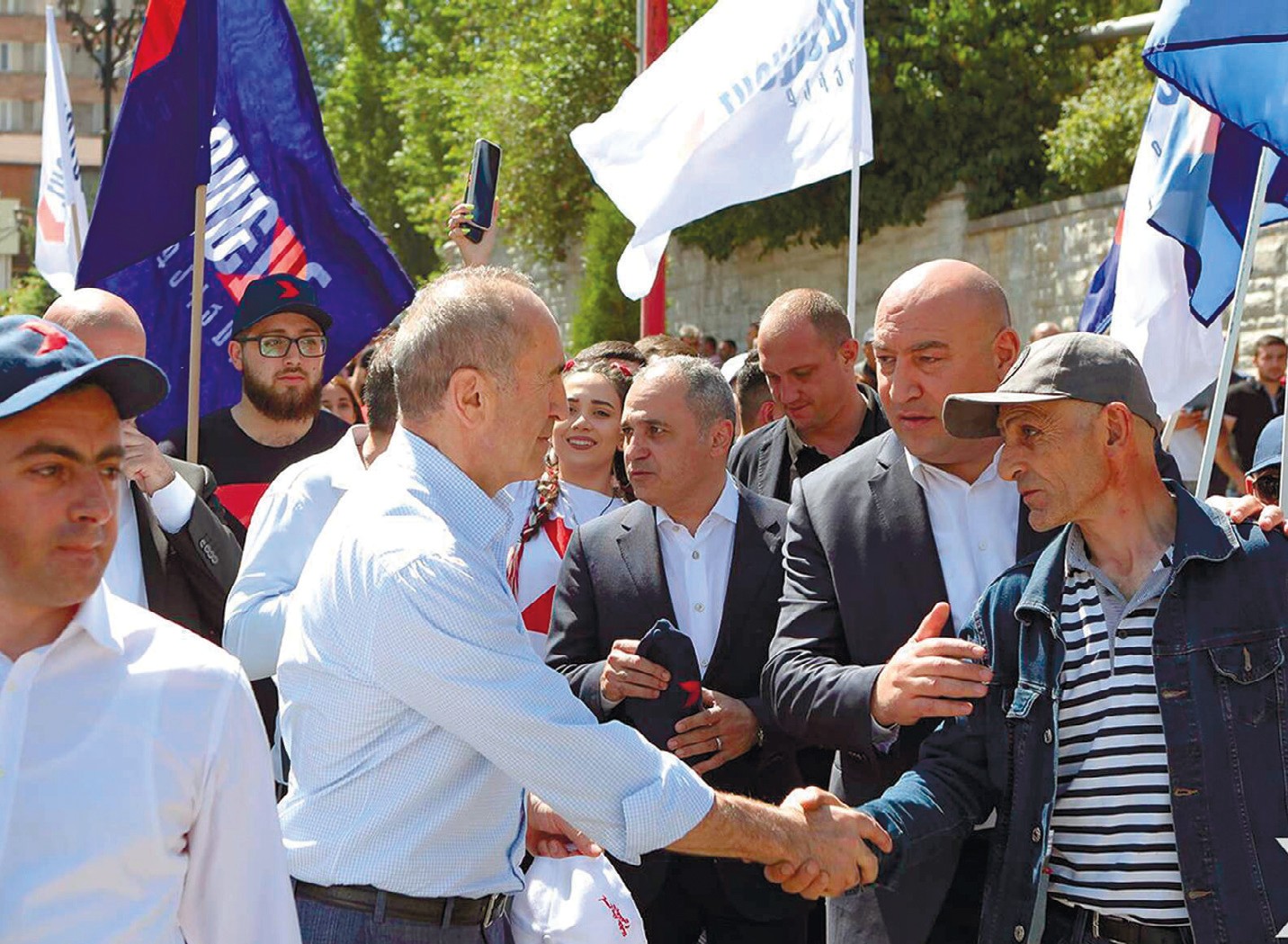
Meanwhile, within Armenia, the central theme of the election campaign is not Russia or the European Union, but Azerbaijan. Nikol Pashinyan speaks of brilliant prospects for a genuine peace, the opening of roads, cooperation, and the like, whereas his opponents from the revanchist camp take an entirely different stance. They never tire of accusing the incumbent Prime Minister of “betraying 'Artsakh',” openly calling him an “agent of Baku and Ankara,” and so on.
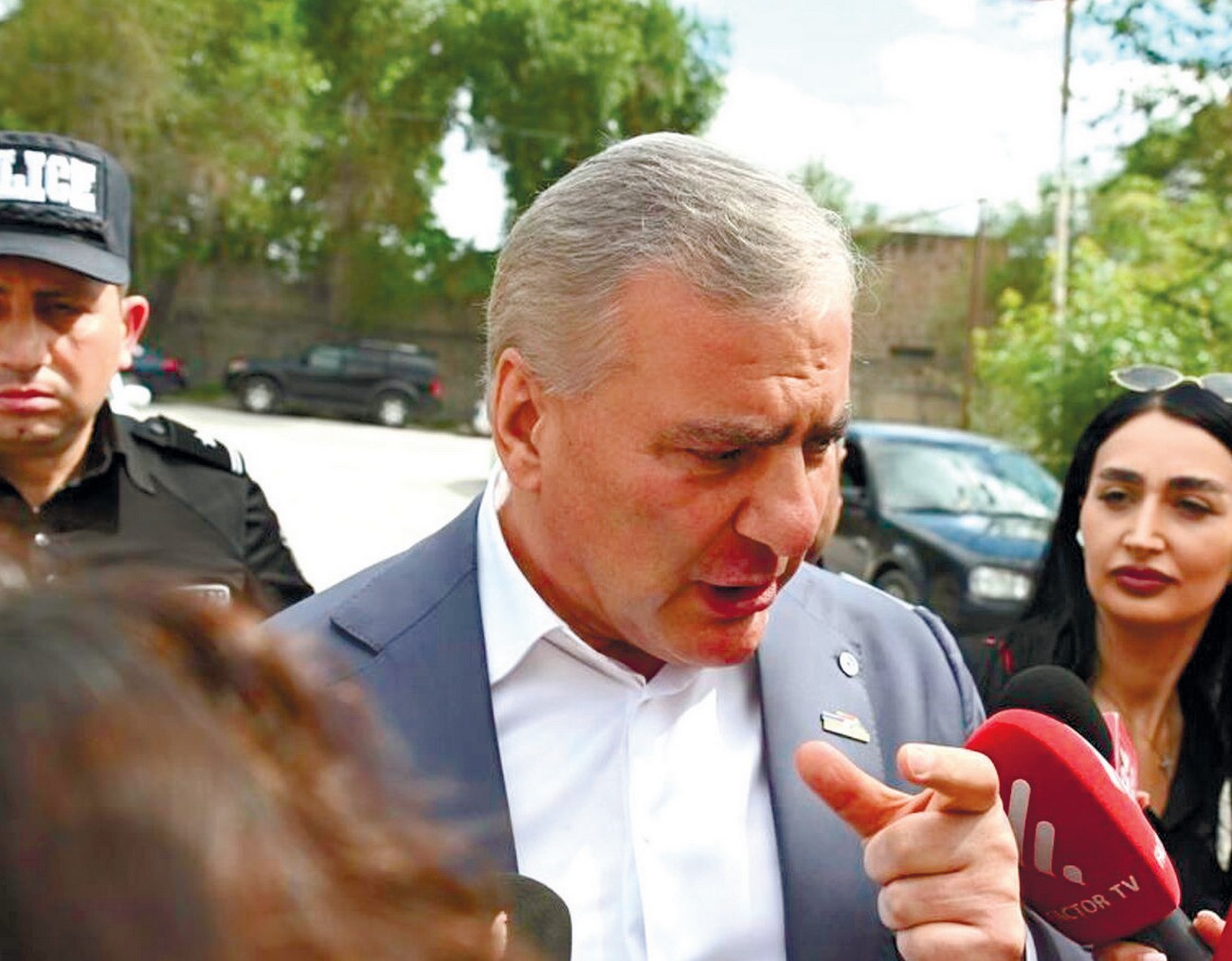
Robert Kocharyan, the second president of Armenia and a war criminal wanted for his involvement in the genocide of Azerbaijanis in Khojaly, is already transparently hinting that if he were president, Azerbaijan would never have dared to go to war. He “conveniently forgets” that it was Armenia that initiated the war in September 2020. And its Defense Minister, David Tonoyan, back in the autumn of 2019, promised “a new war for new territories.” The new war materialized, but things went awry with the territories.
The lost war of 2020 and the anti-terror operations of 2023 should, in theory, have sobered Armenian society. Sadly, they did not. As many experts acknowledge, revanchist sentiments linger in society for a long time even after a defeat. A classic example is Germany, which suffered a heavy defeat in World War I, yet it was on the wave of anticipation for revenge that Adolf Hitler came to power, plunging the country into an even greater catastrophe. Regrettably, the painful lessons of history are not always absorbed, particularly when politicians stand ready to exploit revanchist feelings.
There is a form of lying that involves telling what appears to be the truth, but in a way that ensures the listener misinterprets it. The revanchists do not speak the truth in any form. However, the calculation that they will “say a penny's worth, and the voters' imagination will fill in a hundred drams” is made almost in the open. Unlike Pashinyan himself, who during the 2021 snap elections promised his voters to “return Shusha and Hadrut,” today’s “stars” of the revanchist camp make no such promises. They understand perfectly well that under the current circumstances, such a war would be suicidal for Armenia.
By 2016, it became clear that Azerbaijan had succeeded in building a modern, combat-ready army. Today, the Armed Forces of Azerbaijan are stronger than they were in 2016, 2020, and 2023. As Azerbaijani President Ilham Aliyev has repeatedly emphasized, it was precisely the army of Kocharyan and Sargsyan that was crushed. But voters, as is well known, listen with their ears, and behind the phrase “if power were in my hands, we wouldn't have lost 'Artsakh',” many hear: “if I come (or return) to power, I will reclaim the 'lost territories'.” Samvel Karapetyan, a Russian oligarch of Armenian descent, openly promised that if his side wins the elections, he will “create problems for Azerbaijan.”
Naturally, under the current alignment of forces, Armenian politicians had better not dream of a new war, let alone territorial acquisitions. The scenario of the 1990s will not work today; Azerbaijan will respond, and it will respond painfully. Armenia may try to provoke border skirmishes in its new iteration. However, as the experience of border incidents from 2020 to 2024 shows, such games end badly. It is also possible that Yerevan will attempt to pull out of the Washington agreements. Azerbaijan is prepared for any scenario and is not in a position where it must sign a peace treaty at any cost, let alone with unfavourable phrasing.
“300 Thousand Azerbaijanis”
Food for thought is also provided by the regular attempts of revanchists to terrify voters with “300,000 Azerbaijanis” whom Pashinyan is supposedly planning to resettle in Armenia, claiming that schools are already being built for them, and so forth. Pashinyan himself and his Foreign Minister, Ararat Mirzoyan, routinely distance themselves from this topic.
Let us recall once more, however, that ethnic Azerbaijanis from Western Azerbaijan were victims of ethnic cleansing and, under international humanitarian law, they must have the opportunity to return to their homes. At the same time, it is entirely incorrect to draw parallels with the Garabagh Armenians, who left voluntarily. Two UN missions dispatched to Garabagh in 2023 found no evidence of pressure exerted on the civilian population. In interviews conducted at the Lachin checkpoint, departing Garabagh Armenians explicitly stated: “We have nothing against the Azerbaijanis, but we were told we had to leave. And it wasn't the Azerbaijanis who told us.”
The same Samvel Karapetyan has repeatedly promised to pass a special law under which Azerbaijanis would be prohibited from owning land and real estate in Armenia, receiving gifts, and so on. Experts are already drawing parallels between this foul-smelling “legislative initiative” and the anti-Jewish laws of Nazi Germany. This rhetoric is turning into a diagnosis for Armenian society, where the level of Azerbaijanophobia remains dangerously high.
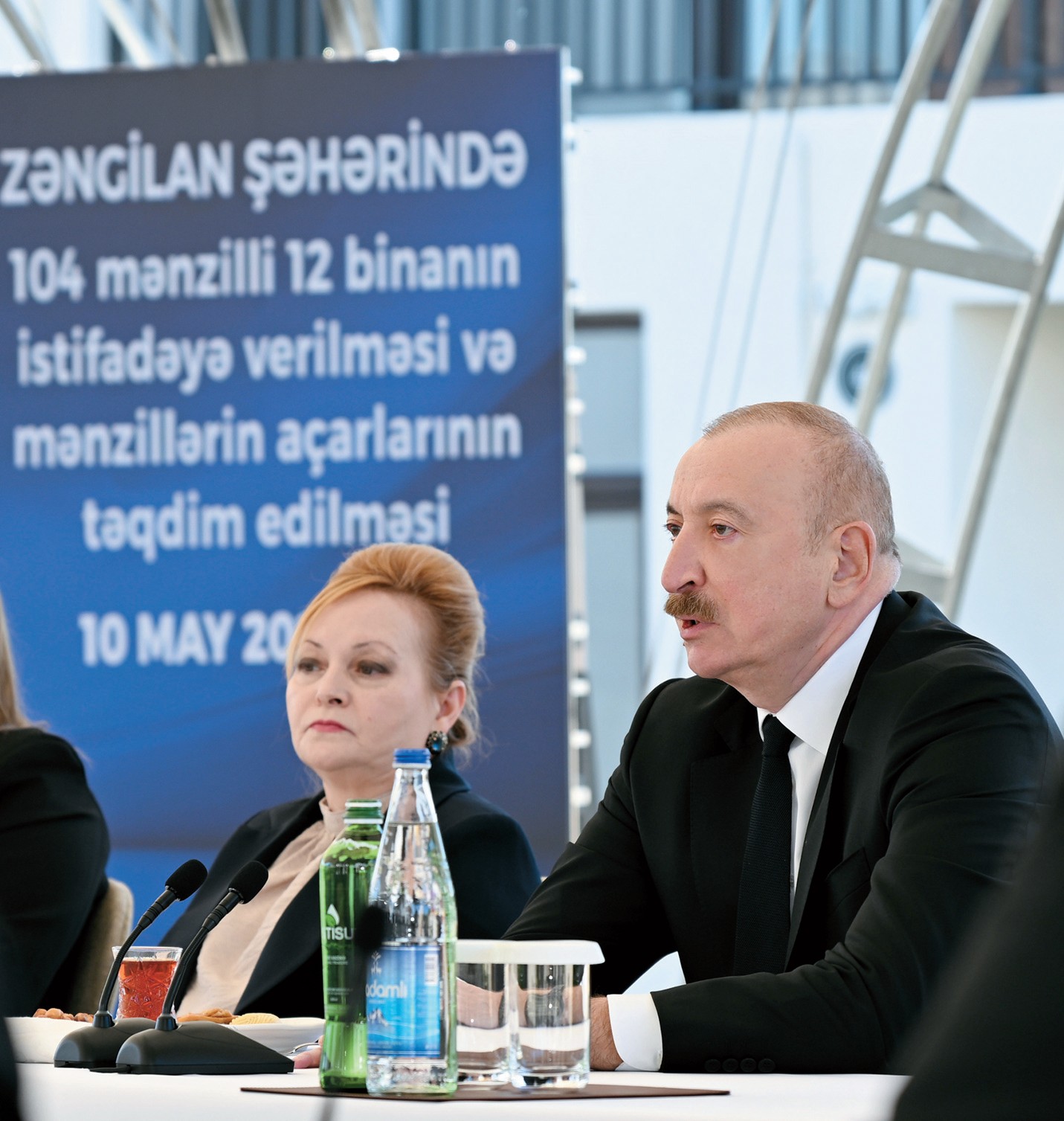
Granted, there is no war today, and both countries are preparing to sign a peace treaty. Yet the very existence of such sentiments in Armenian society, which are diligently fanned and nurtured, speaks volumes. As historians say, every war begins with the incitement of hatred. During his trip to the Zangilan district, Ilham Aliyev stated: “The Azerbaijani people have done nothing wrong to the Armenian people. The reasons for their hatred toward us should probably be studied by psychiatrists, psychologists, and doctors. As long as there are political forces in Armenian society that live with a sense of hatred toward Azerbaijan, we must remain vigilant.” This is precisely why Azerbaijan keeps its powder dry and does not succumb to postwar complacency.
RECOMMEND:
 128
128