

"IRON" BREAKTHROUGH OR?..
Pashinyan announces a new transport route—and triggers a political dispute
Author: Tofigakhanim GASIMOVA
A new political sensation is being discussed in Armenia. The country's Prime Minister, Nikol Pashinyan, has announced the opening of the Akhalkalaki–Kars railway.
A rail link with the European Union has been established, providing access for the export and import of goods via rail from Akhalkalaki in Georgia to Kars in Türkiye, Pashinyan joyfully announced on his Telegram channel. As reported by the media, his post stated: "Today, Armenia has a rail link to Russia via Georgia and Azerbaijan, which further extends to China through Russia and Kazakhstan. Now, a connection to the European Union has also been established via Georgia and Türkiye."
Pashinyan noted that this represents a "major milestone in the economic life" of the country, adding that the railway is fully open for both exports and imports.
From outrage to utilisation
At the time of the collapse of the Soviet Union, it was Armenia that possessed the finest logistics in the South Caucasus. Rail communication with Iran and Türkiye was conducted through its territory via the Gyumri–Kars branch line. However, due to the aggression against Azerbaijan, Armenia's borders with Türkiye were closed, and its borders with Azerbaijan were, quite naturally, sealed as well.
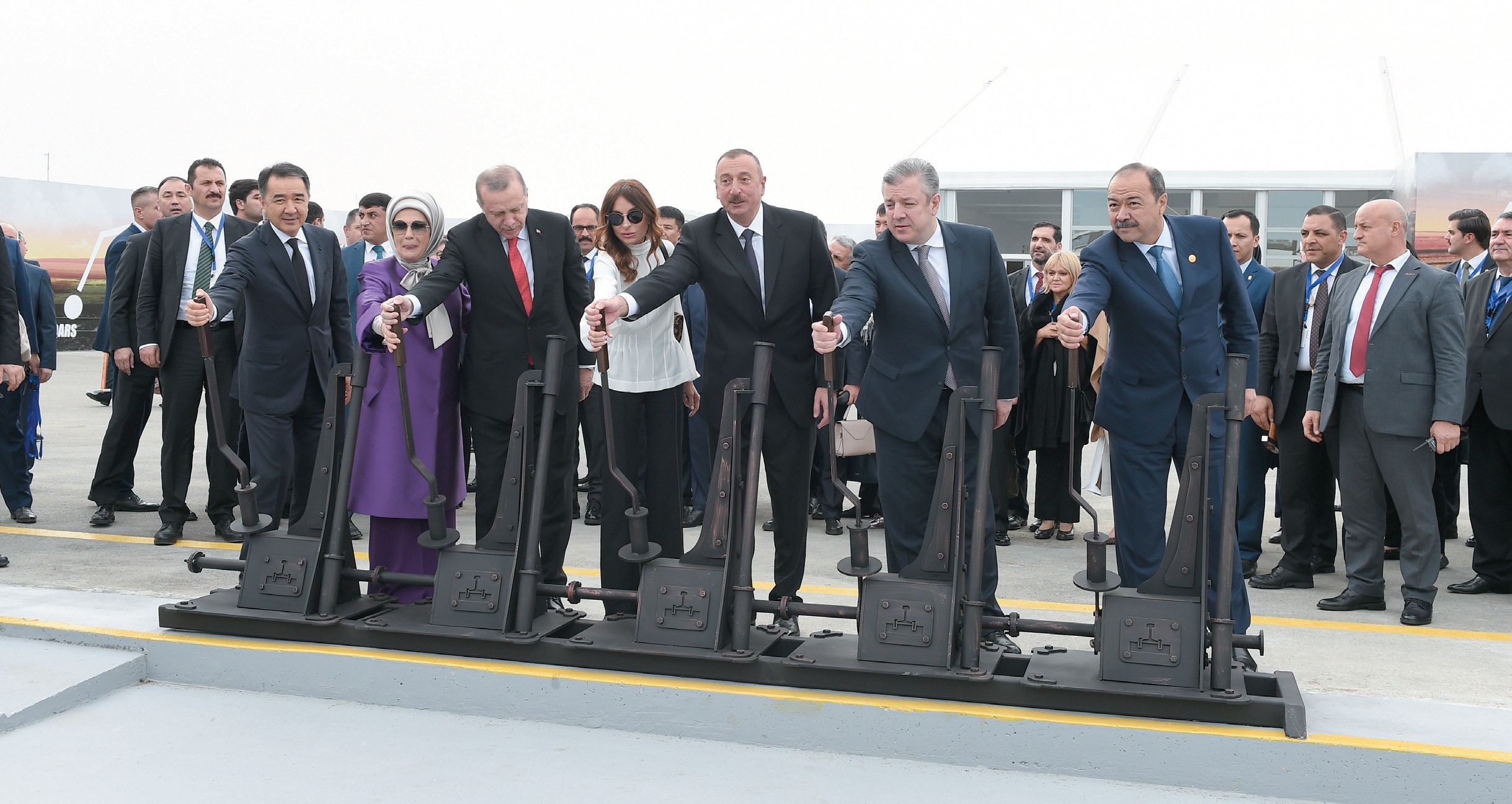
Armenian propaganda hysterically bemoaned a "blockade", while Azerbaijan urgently required a reliable transit route to Türkiye. When Baku first raised the prospect of constructing a new main railway line, the Armenian lobby in the US attempted to counter the initiative and block credit financing, arguing that the route would "isolate Armenia". At the time, Baku responded that it had never even considered requesting American loans. In any case, few believed that this project would ever become a reality. Nevertheless, in 2017, the grand opening of the new Baku–Tbilisi–Kars railway line took place near the new seaport and the Sangachal terminal, attended by the presidents of Azerbaijan, Georgia, and Türkiye. At the same time, Azerbaijan stipulated a strict condition: the new railway must not be used for transporting goods either to or from Armenia.
With the launch of the peace process, the situation is changing radically. Azerbaijan is already facilitating the transit of goods to and from Armenia across its own territory and that of Georgia. Under these circumstances, integrating Türkiye and the Baku–Tbilisi–Kars railway into the process was merely a matter of time, especially after Ankara and Yerevan agreed to initiate direct trade. According to the spokesperson for the Ministry of Foreign Affairs of Türkiye, Öncü Keceli, as of May 11, 2026, bureaucratic preparations for the commencement of direct trade have been finalised as part of the confidence-building measures in the Türkiye–Armenia normalisation process, which has been underway since 2022. Simultaneously, essential technical and operational efforts to open the shared border between Türkiye and Armenia are continuing.
News agencies quoted him as stating: "Thanks to the introduction of the new regulation, it is now possible to specify 'Armenia/Türkiye' as the final destination or point of origin for goods travelling from Türkiye to Armenia through a third country, or in the reverse direction along the same route. In light of this historic opportunity to consolidate sustainable peace and prosperity in the South Caucasus, Türkiye will continue to contribute to the development of regional economic relations and the further advancement of cooperation for the benefit of all countries and peoples in the region."
Trade begins. Who is against it?
Pashinyan primarily discusses trade with the European Union. However, this begs the question: does Armenia truly possess the potential to expand its trade turnover with the EU to such an extent that a new railway is required?
Armenia's export capacities are extremely limited. While Armenian brandy is popular in Russia, it will face an uphill battle competing with French cognac on the European market. The same applies to fruit and vegetables. Competition in the European market is fierce, compounded by additional transport costs and customs duties. Theoretically, Armenia could export ferroalloys or other metallurgical products, but it is only taking its first tentative steps in this sector. The European Union remains merely Armenia's fourth largest economic partner.
Yet, the transit is opening up not with the European Union, but with Türkiye.
In Armenia, where people have bemoaned the "blockade" for so many years, the news of opening transit to Türkiye via Georgia should, in theory, have triggered a wave of immense joy. Yet, as reality demonstrates, the prospect of direct trade is far from acceptable to everyone. Undoubtedly, the deeply entrenched and exceptionally high level of Turkophobia within Armenian society is making itself felt. Furthermore, the detractors' arguments are not confined to the primitive notion that "the Turks will arrive and slaughter all the Armenians." Instead, revanchists resort to far more sophisticated reasoning.
Despite the closed borders, Turkish commodities have long been present on the Armenian market and continue to be so. They were supplied via Georgia—though by road transport rather than by rail. In fairness, on the eve of the 44-day war, goods from Azerbaijan were also "discovered with horror" in Armenia. Sweets, tea, and powdered milk produced in our country frequently found their way onto Armenian shop shelves. The record, however, was set by apples packed in boxes clearly labelled "Product of Azerbaijan" and bearing "DaD" stickers.
Even more frequently, the issue concerned Turkish tomatoes, not to mention the ubiquitous Turkish consumer goods brought in by shuttle traders. In Armenia, videos were produced urging the public to boycott Turkish products, but they failed to make any significant impression on consumers. During the war in October 2020, the Armenian government finally raised the possibility of banning the import of Turkish goods into the country. However, this did not progress beyond mere rhetoric, as substituting Turkish imports proved impossible, particularly in sensitive sectors such as food supply.
Experts close to revanchist circles are warning that if direct trade commences and borders open between Türkiye and Armenia, a massive influx of Turkish imports will decimate certain sectors of the Armenian economy—above all, agriculture. It will be no easy task for Armenian farmers to withstand competition from Turkish producers.
"Railway dreams" and political reality
The question remains open: what about the Kars–Gyumri railway? This was the very line that served as the sole rail link between the USSR and Türkiye during the Soviet era.
Ankara and Yerevan have not even begun negotiations on this matter. To achieve this, they must first reach an agreement on borders; furthermore, Armenia will have to renounce its territorial claims against Türkiye. This particular "Armenian dream" is over a century old. Yet, even if politics is set aside, the rail tracks running towards the borders of Azerbaijan and Türkiye require fundamental repairs. However, the Armenian Railways are under the concession management of Russian Railways. Will Moscow, given the current circumstances, provide the funding for such a "railway rehabilitation"?
Pashinyan has promised to restore these railway tracks independently. He has already stated that the Armenian authorities intend to commence the reconstruction of the rail section towards Türkiye's Kars Province shortly, alongside repairing the Yeraskh rail corridor, announcing: "In the near future, we also intend to begin the restoration of the Gyumri–Ahurik–Akyaka railway section. On the part of Türkiye, work has already begun, and the railway will be opened."
Moreover, the Armenian government will also take charge of repairing the Yeraskh junction despite the existing concession agreement, with Pashinyan stating: "We intend to invest in the project, repair the railway, and restore it, so that the line can be opened."
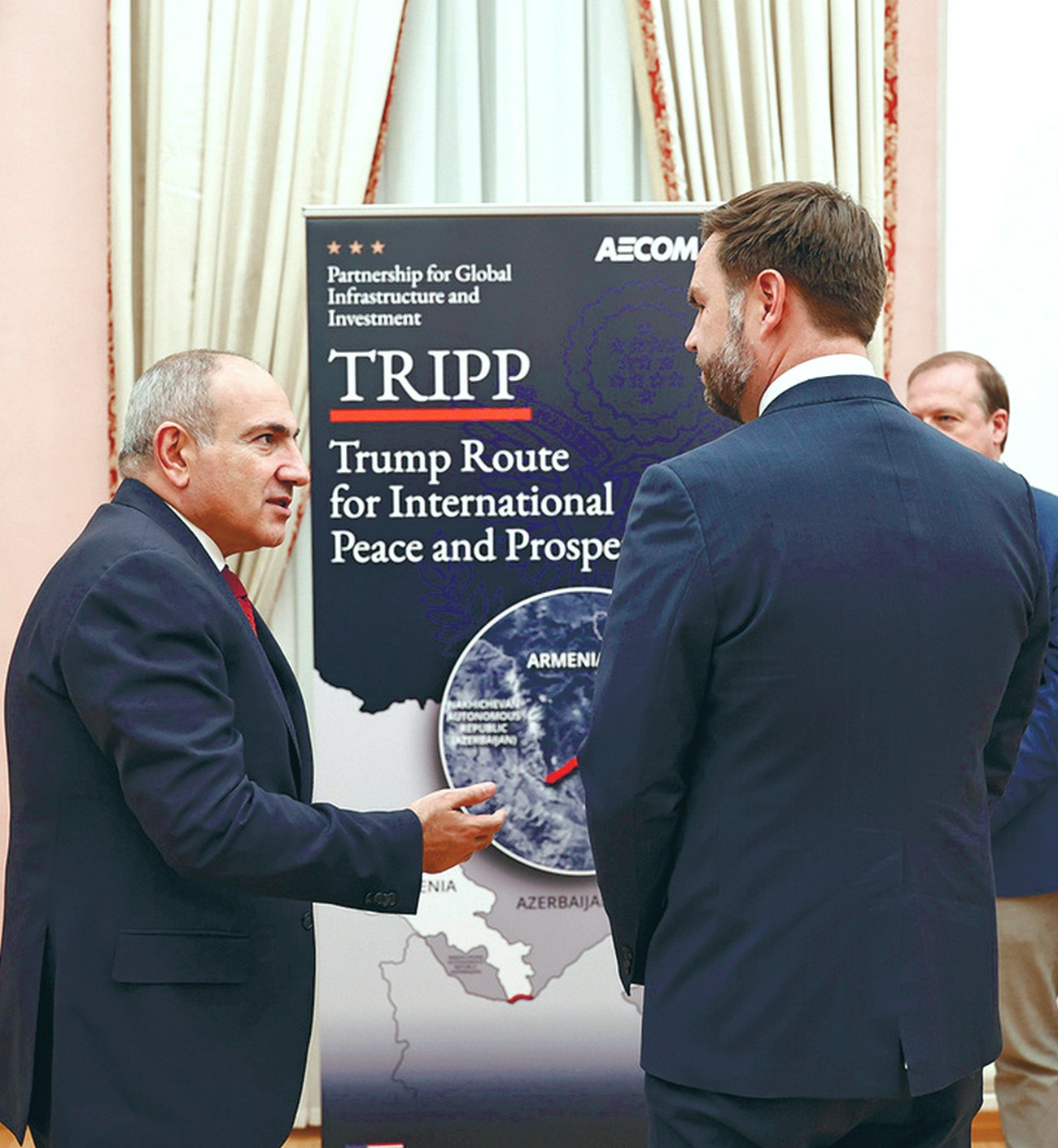
Furthermore, according to him, Armenia can expect "major developments" in the coming years tied to the implementation of the TRIPP project. Pashinyan noted that preparations are currently underway to sign an agreement with the US within the already disclosed framework. "Once the TRIPP project is implemented, we will have a railway through Meghri that enters Nakhchivan, goes from Nakhchivan to Yeraskh, from Yeraskh to Gyumri, from Gyumri to Ahurik, and from Ahurik into Türkiye," the Prime Minister promised.
Finally, according to him, the implementation of the project will also open the Armenia–Iran railway, which he explained would establish a direct rail link from the Persian Gulf all the way to the Black Sea, reaching the ports of Batumi, Poti, and Anaklia, thereby fundamentally transforming Armenia's economic situation.
However, this remains a prospect for a fairly distant future. In Yerevan, there appears to be a growing realisation that without the implementation of TRIPP, no "Armenian triangle" will materialise. And while Armenia is ostensibly fully supportive of this project in its rhetoric, in practice, work has not even commenced. Overcoming the resistance of those who are simply unprepared to see Azerbaijanis on Armenian territory, even as passengers in trains or cars, will prove extremely difficult for Pashinyan. Consequently, these Armenian "railway dreams" may well remain nothing more than illusions.
RECOMMEND:
 111
111