

START OF REPENTANCE
Why the testimony of an Armenian woman about the expulsion of Azerbaijanis from Armenia is particularly significant
Author: Namig H. ALIYEV
The Armenian-Azerbaijani conflict has been fought on many fronts, but one of the most persistent distortions is the attempt to portray Armenians solely as victims and Azerbaijanis purely as aggressors. This narrative has been systematically embedded into public consciousness both within Armenia and beyond its borders. The reality is far more complex and tragic.
The ethnic cleansing of hundreds of thousands of Azerbaijanis from lands where they had lived for centuries is one of the most silenced chapters of this conflict. This was not a spontaneous process; it was a carefully planned preparatory stage of the Armenian-Azerbaijani conflict.
On the completion of the ethnic cleansing of Azerbaijanis
In November 1986, Karen Demirchyan, First Secretary of the Communist Party of Armenia, sent a secret letter to the Central Committee of the Communist Party of the Soviet Union (CPSU). It is clear that from the first days of Soviet power, the CPSU Central Committee was actively repatriating Armenians from foreign countries. During the Soviet era, more than 230,000 Armenians were resettled in the Armenian SSR. The letter stated that many Armenians from the Middle East (Syria, Lebanon, Iran, Iraq, Jordan) wished to relocate permanently to Armenia. Demirchyan concluded by emphasising the important political significance of Armenian repatriation and requested an extension until the end of 1990 of the USSR Council of Ministers' 1985 resolution "On continuing repatriation in 1985-1986 of Armenians from abroad to the USSR."
Six months later, on July 17, 1987, the European Parliament made a decisive move by officially recognising the fabricated Armenian claims of "Armenian genocide" and establishing a day of remembrance for its "victims." Just a month later, Garabagh Armenians sent petitions with tens of thousands of signatures to Moscow demanding the transfer of Garabagh to Armenia.
In October 1987, Heydar Aliyev—a powerful USSR leader whose presence hindered this criminal plan—was removed from office and stripped of power in Moscow.
On 16 November 1987, Mikhail Gorbachev's presidential adviser Abel Aganbegyan gave a provocative interview in Paris to the French Communist newspaper L'Humanité. In it, he openly expressed support for Garabagh's transfer to Armenia, stating: "I would like to see NKAO [Nagorno-Karabakh Autonomous Oblast] as part of Armenia." In Armenia, this was interpreted as Gorbachev's consent to reassign NKAO from Azerbaijan to Armenia. This would mean redrawing borders between two sovereign union republics (according to the 1977 USSR Constitution) without mutual consent. This signalled steps towards Garabagh’s separation from Azerbaijan.
Just days after this interview, expulsion of Azerbaijanis began in Armenia’s Qafan district.
But it did not start there…
It is important to note that the expulsion of Azerbaijanis from Armenia has deep historical roots dating back to the early 19th century with the Treaty of Turkmenchay. Over the past two centuries, there have been numerous instances of ethnic cleansing, killings, violence and genocide against Azerbaijanis.
A substantial number of documents from the early 20th century provide evidence for this. For instance, a 1919 telegram from the Azerbaijani Democratic Republic's Foreign Ministry to the Entente's High Commissioner General Haskell reported mass killings of Muslim populations, village burnings, and expulsions from Erivan Governorate and Zangezur.
It is also important to note that in 1947, the USSR Council of Ministers adopted Resolution No. 4083, which involved the relocation of Azerbaijanis from the Armenian SSR to the lowland of Kura and Araz rivers in Azerbaijan. This effectively created space for the large number of Armenian repatriates entering the USSR through the 'Iron Curtain'. Such documents illustrate a historical continuity in efforts to displace Azerbaijanis.
For a considerable period, the expulsions received limited international attention. However, these were not isolated incidents but deliberate actions aimed at creating an ethnically homogeneous state. According to numerous studies and publications, in 1988-1989 around 300,000 Azerbaijanis were forcibly expelled from Armenia's 185 exclusively Azerbaijani settlements. Azerbaijanis were forcibly removed from their homes due to threats, violence, psychological terror, a complete atmosphere of insecurity, and murders.
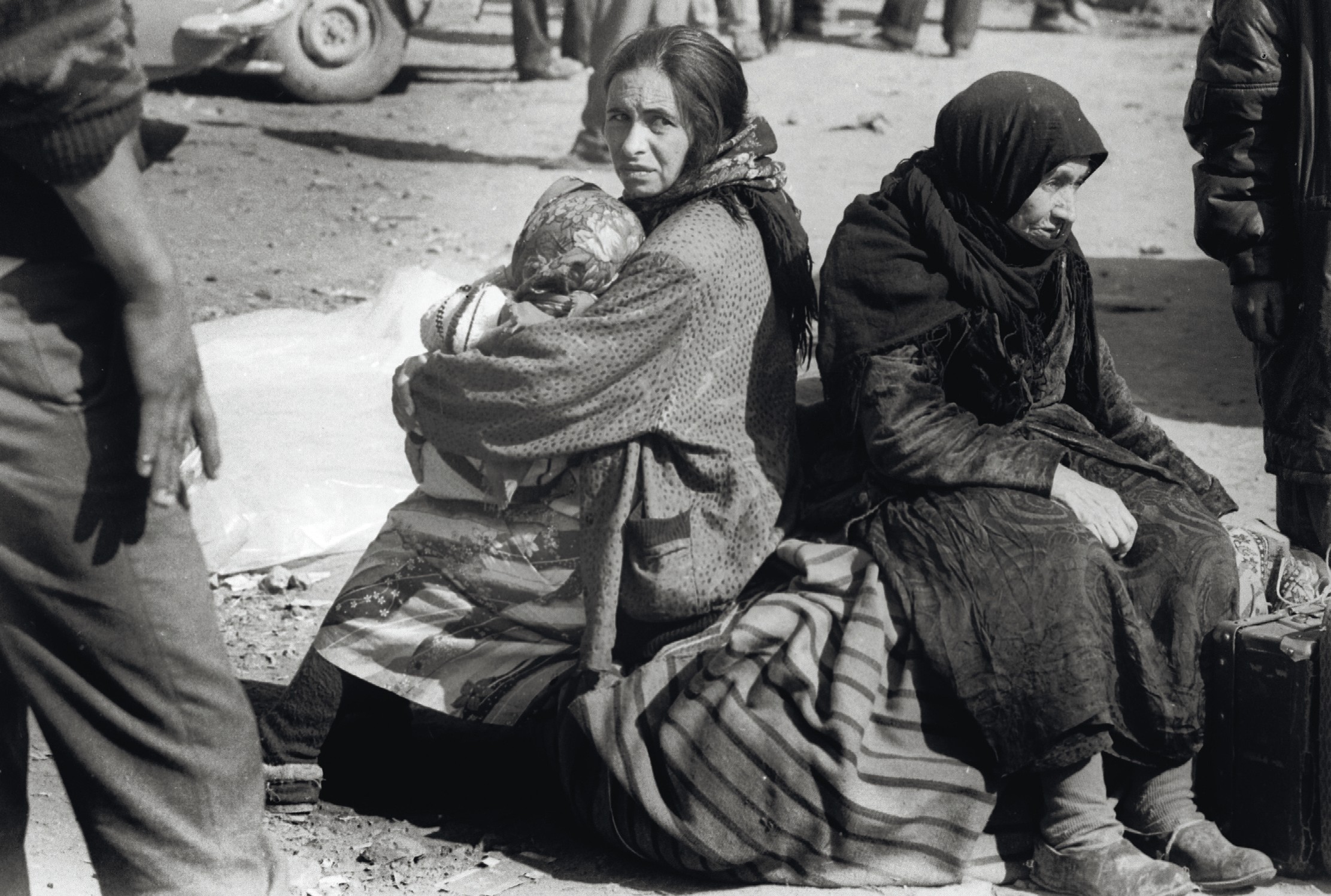
During the winter months, people were compelled to vacate their homes and travel on foot over mountain passes, often leaving behind property, ancestral graves and generational memories. It is important to note that many people lost their lives on these journeys. According to unfinished USSR Ministry of Internal Affairs investigations, 216 Azerbaijanis were killed during deportations. Some were burned alive, tortured to death, beaten to death, shot or frozen in mountains while fleeing.
Particularly tragic are testimonies regarding events in Gugark, Spitak, Masis, Qafan and other Armenian districts where Azerbaijani populations faced systematic terror. Following the devastating Spitak earthquake in 1988, Azerbaijani villages were effectively excluded from receiving humanitarian aid and medical support according to research data.
Behind cold statistics lie human tragedies: witnesses recalled families fleeing homes in winter with only documents and a few bundles of clothes. Elderly people died from cold and shock en route; children lived for weeks packed into overcrowded train carriages and temporary camps. People abandoned not only possessions but also graves, orchards and homes built by ancestors—leaving behind their hearths.
Former residents of the Qafan district have reported that armed groups entered Azerbaijani villages, demanding immediate departure. In Ganja, Azerbaijan, there have been reports of Azerbaijanis being beaten in the streets, with many being abducted and some going missing. Women remembered concealing children in cellars, fearing night raids. For many years, the international community failed to act on these testimonies.
By the end of 1988, 170 Azerbaijani and 94 mixed settlements in Armenia had been completely "cleansed". The population of the last Azerbaijani village—Nuvedi in the Meghri district—was deported in August 1991.
The physical expulsion of people was only part of the tragedy. The subsequent phase involved the destruction of cultural and historical heritage. Cemeteries, mosques and architectural monuments were destroyed, and hundreds of Azerbaijani toponyms were renamed. Researchers estimate that, during years of nationalist policy in Armenia, the names of more than 700 Azerbaijani settlements and geographical features were changed.
“A shot in the back”—a stage of awakening?
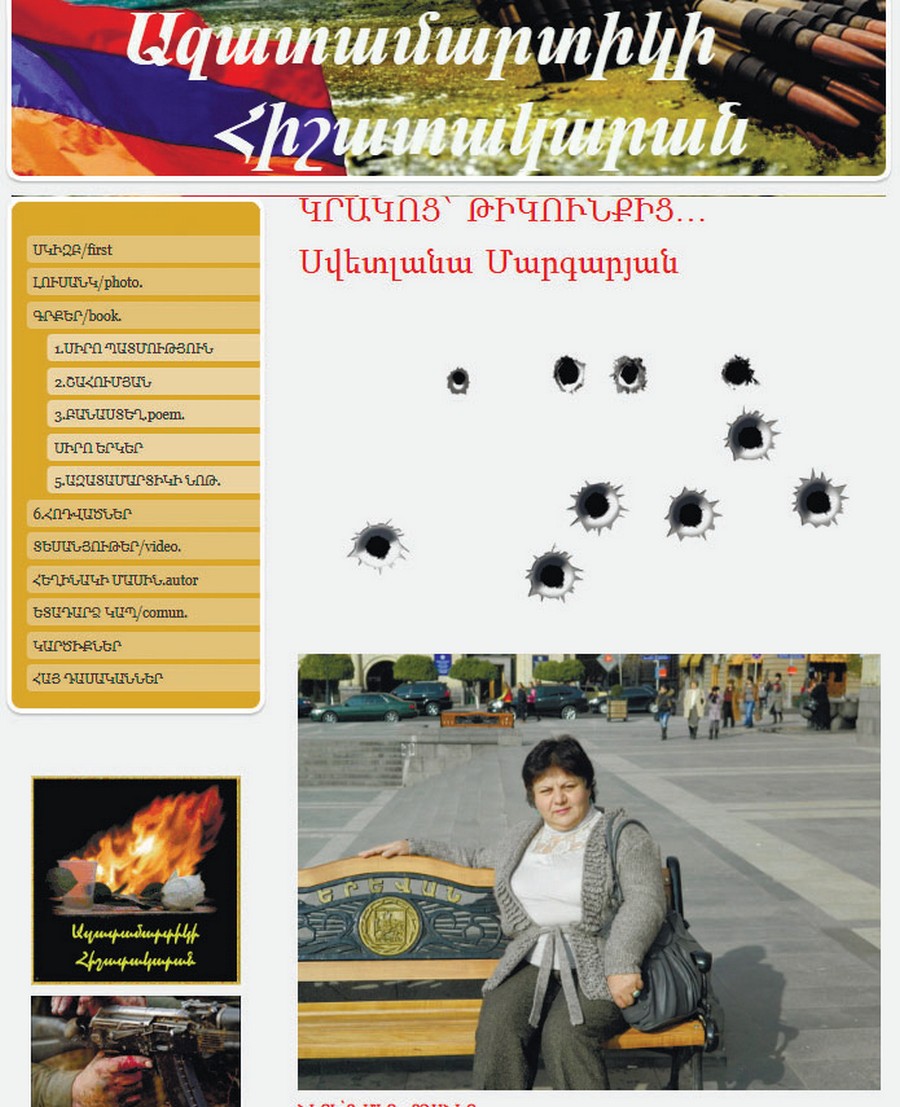
It is particularly significant today that the discussion of ethnic cleansing is being raised not by Azerbaijanis but by Armenians themselves. This underscores the significant historical and moral value of Albert Isakov's publication of Svetlana Markaryan's account.
This is a retelling of a witness account, presented by an Armenian woman. She was an active participant in the so-called "Garabagh movement" and the sister of the commander of one of the first nationalist detachments. She was personally acquainted with Sarkisyan and his circle. Svetlana Markaryan comprehensively details the subject in her book "Krakots tikunkits"—A Shot in the Back. The book was published in Armenian, lay in obscurity for years and reached the wider Russian-language public thanks to researcher and blogger Albert Isakov, who found it, translated it and published a key fragment on his YouTube channel with a direct link to the original.
It is noteworthy that the truth about the events of the late 1980s and early 1990s is expressed by an ethnic Armenian. In Armenian society, where a nationalist bias has been in place for decades, such testimony requires not only honesty but also civic courage. Voices such as this one challenge the false notion of the "impartial victim" and re-establish a human element in the conflict.
Subsequently, even Armenian political figures effectively admitted to such policies. Isakov's materials, which include speeches by Armenian leaders, including Levon Ter-Petrosyan, the first president of Armenia, contain candid acknowledgements that Armenia and Garabagh were "cleansed" of other peoples. This is significant because it originates not from the Azerbaijani side but from within the Armenian political environment; it was perceived as an admission of the consequences of ethnic cleansing.
Zori Balayan, a prominent ideologue of Armenian nationalism, has repeatedly employed aggressive nationalist rhetoric towards Azerbaijanis in his writings. This has contributed to the cultivation of an atmosphere of hatred. Publications of this kind laid the psychological foundation for the expulsion of individuals based on their nationality.
For many years, Armenian propaganda has sought to distort the narrative of events. Those responsible for the expulsions then proceeded to accuse their own victims. This mechanism is well documented throughout world history: an aggressor seeks not only to commit a crime but to monopolise the status of the injured. The adoption of the 907th amendment is explained by this. Consequently, an international narrative was established, effectively obscuring the fate of hundreds of thousands of Azerbaijani refugees from view.
This occurred despite the fact that international documents had already recorded the problem of refugees and forced population movements. Reports from international organisations and UN bodies have repeatedly highlighted the scale of the humanitarian crisis caused by the Armenian–Azerbaijani conflict. According to the Office of the United Nations High Commissioner for Refugees, hundreds of thousands of Azerbaijanis became internally displaced persons and refugees.
There is no other way…
The informational monopoly of Armenian nationalist discourse played a particular role in this distortion. Any attempt to speak about crimes against Azerbaijanis was treated as "betrayal". Individuals who attempted to adhere to the truth encountered social exclusion, verbal abuse and curses. This underscores the significant role of publications like Svetlana Markaryan's, which not only offer historical insights but also have a crucial moral dimension. By challenging the entrenched patterns of collective silence, these works play a pivotal role in promoting transparency and accountability.
It is important to recognise that this is not simply a disagreement between two historical interpretations. Ethnic cleansing is a crime against people, as well as violating the right of a people to live on their land. Those expelled from Armenia lost not only their homes, but also the homeland of their childhood, their cultural environment and historical memory. Azerbaijani place names were erased or appropriated, and cemeteries, mosques and cultural monuments were destroyed. The very presence of Azerbaijanis on their historic lands—territory that today belongs to the modern Republic of Armenia—was being erased.
The potential for the return of Azerbaijani refugees to Armenia, and the recognition of the criminality of these acts, is a cause for concern for the nationalist segment of Armenian society. Election-time assurances by Nikol Pashinyan that "under his rule the question of returning Azerbaijanis to their former places of residence in Armenia will not be discussed" are merely a response to attacks from his opponents.
It is imperative to acknowledge the significance of the testimonies provided by Armenians who have the courage to come forward and acknowledge the events that transpired. This is not an anti-Armenian stance; on the contrary, it is an attempt to restore to Armenian society the capacity for moral self-appraisal. It is essential to recognise one's own mistakes and to be willing to repent if reconciliation and genuine peace are to be achieved.
It is significant to note that a notable role in the dissemination of such materials has been played by Albert Isakov, a man of Armenian and Jewish roots who was raised in the cosmopolitan city of Baku. He later confronted aggressive nationalism in Armenia. His work is significant in that it challenges simplistic divisions between "us" and "them".
In light of the region's present reassessment of the past, truth is no longer a weapon but a prerequisite for the future. It is not possible to build peace on foundations of lies and historical amnesia. Voices such as Svetlana Markaryan's are particularly valuable as they originate from within a society that for many years denied the tragedy of Azerbaijani refugees.
The two-hundred-year history of ethnic cleansing of Azerbaijanis in what is now the Republic of Armenia is not only an Azerbaijani wound. The results of the test will provide a valuable indication of the region's historical conscience. The more honest testimonies there are, the harder it will be to sustain the myths built on hatred and the distortion of concepts.
Svetlana Markaryan's account is not merely a recollection of the past. This document is of significant historical importance and must be preserved. This underscores the critical importance of the initiative in today's business landscape.
RECOMMEND:
 110
110

