
A SINGLE-ISSUE SUMMIT
G7 leaders push the West to re-focus on the Ukrainian issue
Author: Elchin HUSEYNOV
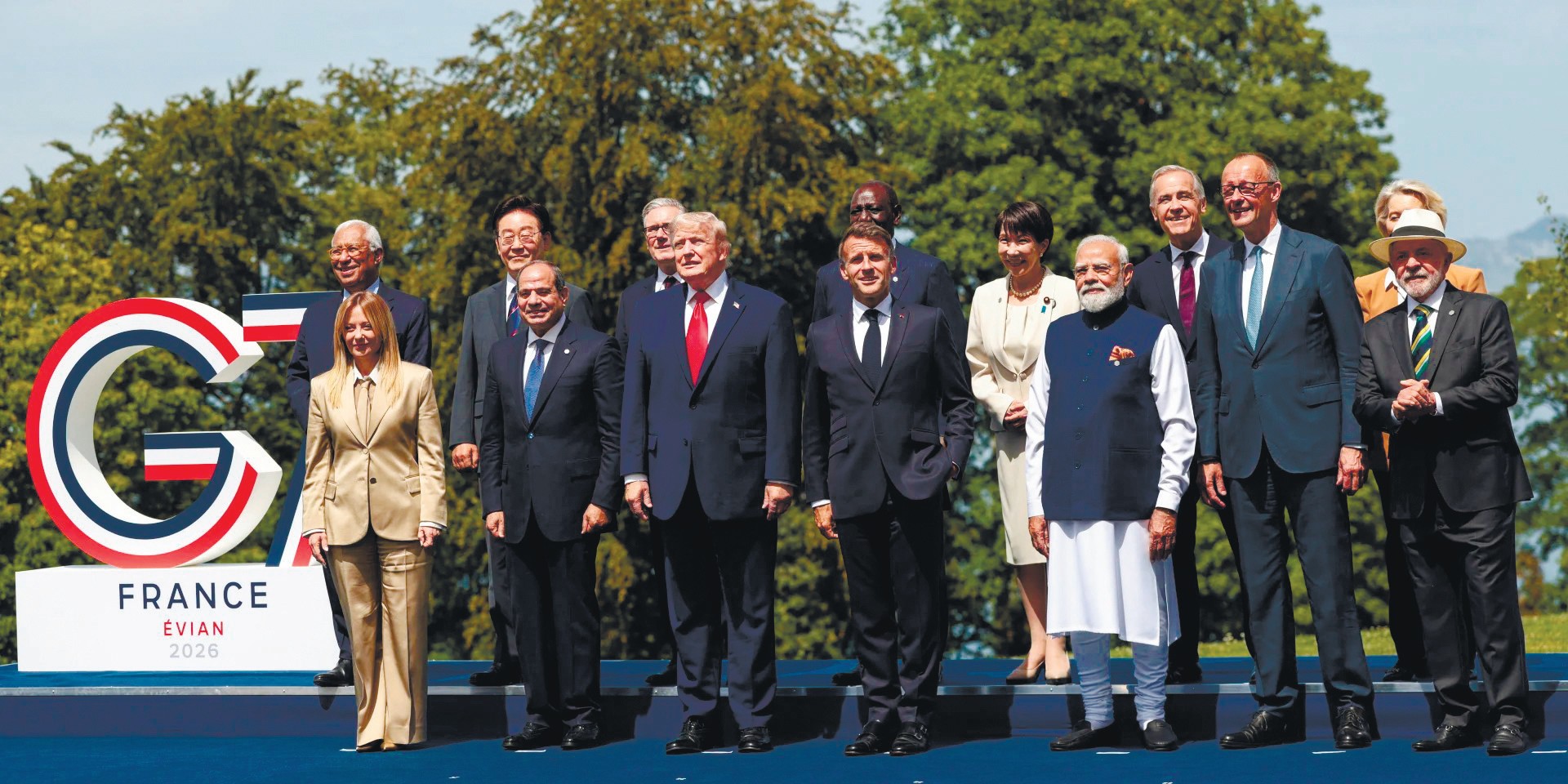
On June 15-17, the leaders of the G7 member states met once again at the French resort of Evian. The agenda covered a range of topics, including China, artificial intelligence, online child safety, the global economy and the Middle East. However, it became evident on the first day of the summit that, despite the numerous global challenges, the G7's primary concern remains Ukraine.
Just a few weeks ago, it appeared that the Russian-Ukrainian war was gradually being eclipsed by other crises. The global community was observing the perilous standoff between the US and Iran, contemplating the potential threats to shipping in the Strait of Hormuz and speculating on the possibility of a major regional war in the Middle East. In this context, Ukraine has moved from the centre of the international agenda for the first time in a long time.
It is clear that the G7 summit in France was of significant importance for both Kiev and its European allies. The focus was not limited to the imposition of new sanctions against Russia or the provision of additional military aid. It was imperative to redirect Washington's focus back to the Ukrainian situation.
The presence of Ukrainian President Vladimir Zelensky at the meeting as a key non-G7 participant was no coincidence. A significant proportion of the political signals were directed at US President Donald Trump.
Even before the summit began, French President Emmanuel Macron stated explicitly what he expected from the American leader: "It is imperative that the American public and government alike express their unwavering support for Ukraine, and that they commit to providing further assistance to Ukraine, while also intensifying the pressure on Russia."
For his part, Trump made it clear that, having reached a framework agreement with Iran, he was once again ready to shift the focus to the Russian-Ukrainian war. He stated that it is imperative for Russia to reach an agreement, and he will endeavour to do everything in his power to bring an end to the conflict.
This issue was a key focus of the summit's primary discussions. New sanctions against Russian oil and gas, additional air defence systems for Ukraine, attempts to open a ‘window of opportunity’ for diplomacy, and the Europeans’ desire to bring the US back into a more active role – all this became part of the major political game unfolding on the shores of Lake Geneva.
Macron’s mission
While the situation in Ukraine was the primary focus of the summit, it was French President Emmanuel Macron who played a pivotal role in efforts to consolidate support for Kyiv. For the host of the meeting, Evian presented an opportunity not only to demonstrate France's leadership ambitions, but also to persuade its allies to maintain a high level of engagement in the Ukrainian crisis.
The reasons for this persistence are clear. In recent months, Europe has found itself in an unfamiliar role. While the United States initially assumed the primary financial and military responsibilities in the early stages of the war, the current situation has undergone substantial modification. Macron himself acknowledged that aid to Kiev is currently funded 'almost exclusively' by Europeans.
Against this backdrop, Donald Trump's return to the White House has caused quite understandable anxiety amongst Europeans. In many capitals, there were concerns that the new US administration would prioritise domestic issues and Middle East policy, leaving the Ukrainian front to the Europeans.
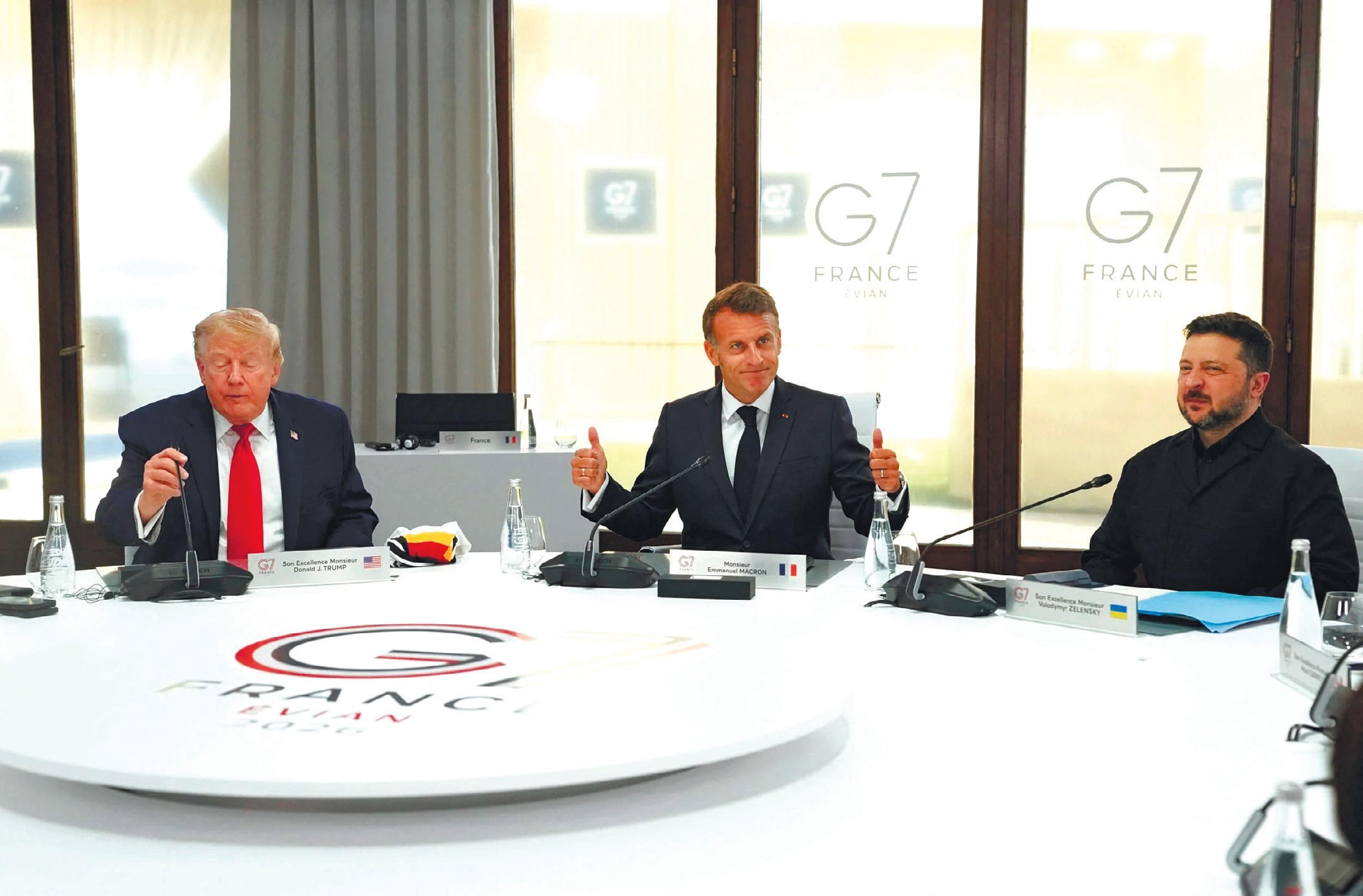
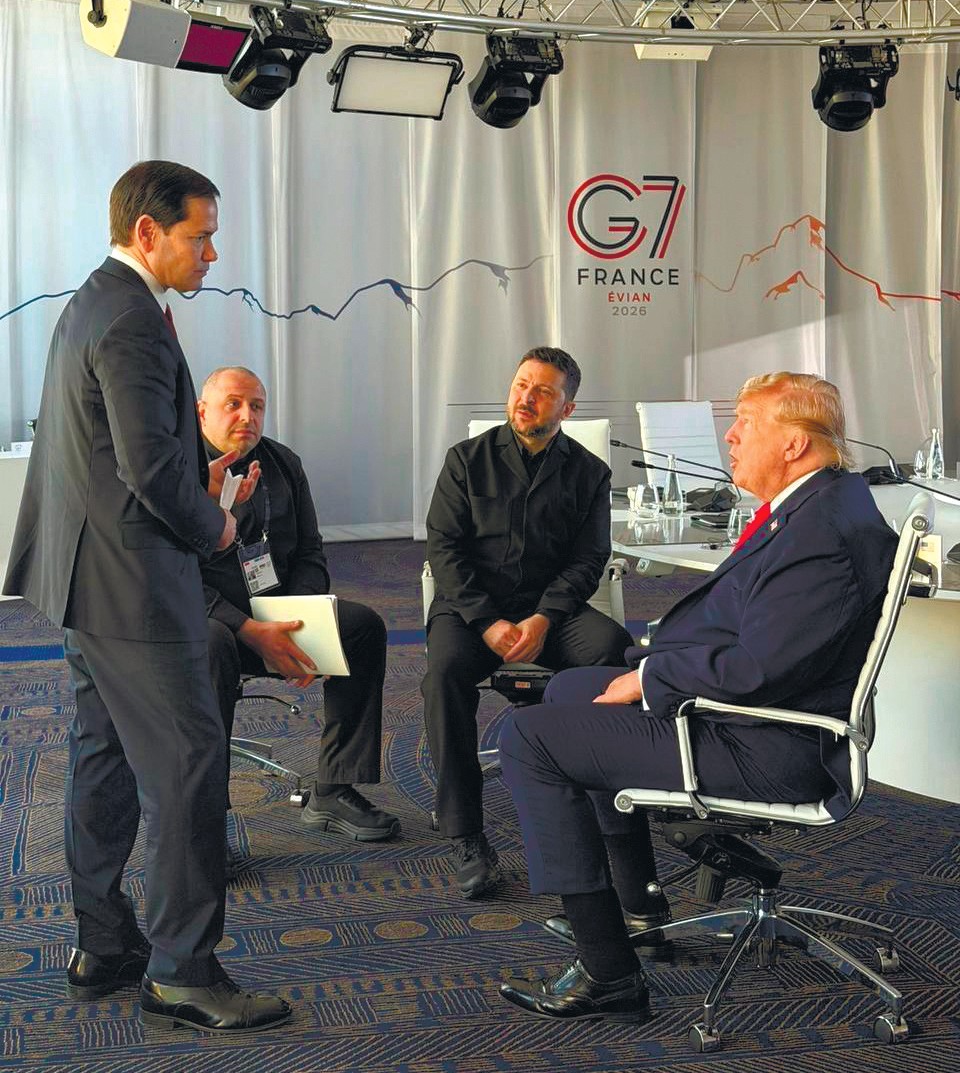
Evian therefore became a test of sorts. The Europeans were keen to ascertain whether Trump was prepared to adopt a more active role in the Ukrainian settlement once again. According to the statements issued by the US President, there are grounds for optimism. Following his meeting with Zelensky, Trump stated that Russia must conclude a peace agreement and that the US intends to refocus its diplomatic efforts on ending the war.
It is challenging to predict the duration of Washington's commitment to this initiative. However, this issue was a key point of discussion at the recent French summit.
The oil stranglehold
The primary outcome of the meeting was the establishment of new agreements on exerting pressure on Russia. According to diplomatic sources, the G7 leaders agreed on further sanctions against the Russian oil and gas sector.
'We are committed to increasing pressure on the Russian military economy. In this context, we will strengthen our sanctions, including those targeting the oil and gas sectors," the document states. It is asserted that the present moment is opportune for the introduction of further restrictive measures against Russia, given that President Trump has concluded an agreement to open the Strait of Hormuz, a course of action to which we are in favour.
At the same time, G7 members reaffirmed their "unwavering support for Ukraine". As per the agreed statement, there will be an increase in supplies of air defence systems, additional missile systems and interceptor missiles, as well as long-range weapons.
Despite the thousands of restrictions already in place, restrictions on energy exports are a particularly sensitive issue for Moscow, as they represent the main source of foreign exchange earnings and a vital tool for financing government expenditure.
In essence, the West is reverting to a strategy that has been employed on numerous occasions against major geopolitical adversaries: the prevention of windfall profits from the sale of raw materials.
This issue is particularly pertinent in the context of current events in the Middle East. Historically, any disruption in the Strait of Hormuz has typically resulted in a rise in global oil prices. This could partially offset Russia's losses resulting from sanctions pressure.
In Evian, the issue of energy was viewed not only as an element of sanctions policy, but also as part of a broader strategy of economic confrontation. The G7's approach is clear-cut: if a military conflict cannot be swiftly halted by diplomatic means, the economic cost of its continuation must be increased.
The only problem is how effective the new package of restrictions will prove to be. Over the three years of the sanctions war, Russia has managed to adapt to many of the restrictions by redirecting a significant proportion of its supplies to Asian markets. Therefore, the battle over oil revenues is likely to remain one of the central issues in international politics even after the summit has concluded.
A shield for Ukraine
Air defence systems continue to be a top priority for Ukraine as it seeks support from its allies. Zelensky's visit to Evian was not solely for the purpose of seeking political support. Kiev requires immediate solutions to bolster its defence capabilities.
Following the talks, the Ukrainian leader announced that agreements had been reached on several key areas. These include an increase in missile supplies for air defence systems, the granting of licences to manufacture such missiles directly on Ukrainian territory, and the preparation of a special support package for the winter period.
The localisation of arms production appears to be a particularly salient issue. Ukraine previously relied almost entirely on foreign supplies, but is now focusing on gradually establishing its own production base. For Kiev, this is not only a military but also a strategic objective.
Another key point to note was Zelensky's statement regarding the US's readiness to provide a so-called 'backstop': guaranteed support for the implementation of the agreements reached. This refers to a form of safeguard in the event of political or financial difficulties in fulfilling these commitments.
For Ukraine, this is one of the summit's most significant outcomes. This is particularly true in light of concerns that the international community might divert its attention to other crises.
A window of opportunity for diplomacy
It may appear somewhat unconventional that a summit focused on new sanctions and additional arms supplies would also lead to discussions on diplomacy. Nevertheless, this is precisely what transpired in Evian.
German Chancellor Friedrich Merz has stated that, for the first time in a long while, a 'window of opportunity for diplomacy' is emerging. It is worth noting that other summit participants reached similar conclusions.
Further expectations were given rise to by statements made by Donald Trump. Following the conclusion of a framework agreement with Iran, the US President emphasised that his administration would refocus its attention on the Russian-Ukrainian settlement.
Zelensky himself also attempted to use the summit to advance the negotiating agenda. According to him, Kiev was prepared to meet with Putin in a format that would include Trump, Macron and other Western leaders. However, it appears that the Russian side has dismissed this possibility.
That said, it is clearly too early to speak of an imminent peace. There are still significant differences between the parties' positions, and military operations continue with the same intensity. The primary paradox of the G7 summit is therefore that its participants are preparing for two scenarios simultaneously. On the one hand, there is an increase in pressure being applied on Moscow and an expansion of aid being provided to Ukraine; on the other, there is a desire to maintain the possibility of future negotiations.
The Evian summit demonstrated that the West continues to rely on the 'pressure for peace' approach. However, the key question remains unanswered. The question of whether new sanctions, arms supplies and diplomatic initiatives can bring the war closer to an end, or whether they will merely open a new chapter in this protracted conflict, is a key one. The question of the solution to this issue will no longer be addressed by diplomats on the shores of Lake Geneva, but by politicians and military leaders on both sides of the front line.
RECOMMEND:
 87
87