

PEACE THROUGH AUTONOMY
Europe: torn between allied loyalty and its own interests
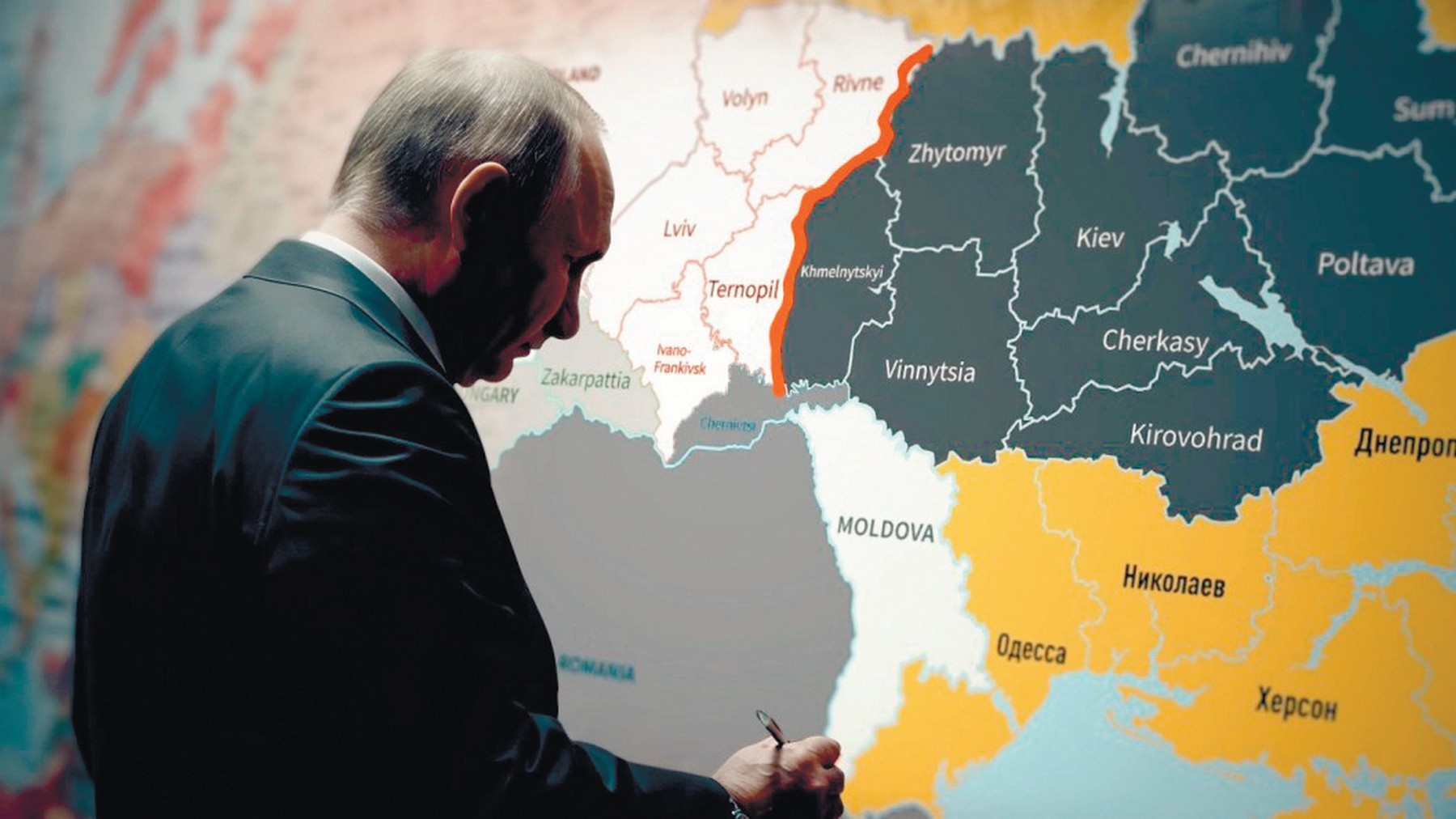
Author: Samir VELIYEV
In the context of the ongoing hostilities between Russia and Ukraine, the question of European countries' direct involvement in future negotiations on a peaceful resolution to the conflict has become a key point of discussion. In early June, the leaders of the UK, Keir Starmer; France, Emmanuel Macron; and Germany, Friedrich Merz, stated that they did not rule out the possibility of meeting with the Russian president, although they added that it was important for them to know the Ukrainian president's views.
At the same time, the President of Finland, Alexander Stubb, noted that Europe needed to initiate a diplomatic dialogue with the Russian leadership. He emphasised, however, the importance of coordinated action by European nations.
The ambassadors of the aforementioned countries met with Russian Foreign Minister Sergey Lavrov and proposed that negotiations take place in a new format. The Russian side rejected this proposal with a measured response.
Poor negotiations are better than a just war
When considering the sequence of events, it is important to note that on 4 June, the Ukrainian Ministry of Foreign Affairs officially delivered an open letter from Vladimir Zelensky to Russian President Vladimir Putin. This letter contained proposals for direct negotiations between the two leaders, without intermediaries. However, the content of the letter and Zelensky's own rhetoric suggest an attempt to reaffirm the immutability of his own demands and strengthen Ukraine's position vis-à-vis its Western allies, rather than a move towards full-scale negotiations.
At present, Moscow and Kiev remain at very distant negotiating positions. Each side continues to hope to secure more favourable terms in the future and shows no willingness to make substantial concessions on key issues.
In light of these challenging circumstances, Keir Starmer, Emmanuel Macron and Friedrich Merz invited Zelensky to London to discuss with him the prospects for further engagement with Moscow.
Until recently, the mere suggestion of engaging in negotiations with Putin would have been met with strong opposition in many Western capitals, where the prevailing approach was to apply maximum pressure on Russia. Nevertheless, the years of war have resulted in substantial changes to the initial calculations. While Russia has not yet achieved a military victory, nor has it faced political destabilisation, the Russian leadership has successfully maintained control of the situation. Furthermore, despite the sanctions, the Russian economy has adapted to the new conditions, and the defence industry has ensured the continuation of military operations in the long term.
It is evident that the deterioration of the socio-economic situation has not led to a change of power in Moscow or forced a new Russian leadership to abandon its objectives. In contrast, several years after the start of the conflict, Putin continues to play a pivotal role in Russia's political landscape, while the country maintains its capacity to engage in warfare and maintain its positions.
At the same time, it is becoming increasingly clear that relying solely on a military solution to the conflict has not yielded the expected result. Despite the substantial aid from Western countries, Ukraine has not yet achieved a decisive turning point. Consequently, the West has been compelled to recognise the indisputable fact that, irrespective of the final framework for a settlement, negotiations will have to be conducted with the current Russian leadership, rather than a hypothetical future one.
Consequently, the West is now focusing on negotiations, a ceasefire and the search for a political solution, rather than on a 'victory over Russia'. It is also concerning that discussions regarding the future architecture of European security are becoming increasingly prominent in Russian-American contacts, with limited involvement from Ukraine and virtually no participation from the European nations themselves. This raises concerns about Europe's capacity to independently impact processes that directly affect its security and strategic interests. This underscores the leaders of France, the UK and Germany's growing inclination to proactively engage in the negotiation process, seeking to shape the future of European security.
At the same time, the Western camp is still divided on the issue of the future negotiation process. According to the Italian newspaper La Repubblica, differences have emerged between Italian Prime Minister Giorgia Meloni and the leaders of the so-called Anglo-Franco-German group regarding the ways to achieve a peaceful settlement. According to the publication, Rome considers it impossible to reach sustainable agreements between Russia and Ukraine without the direct involvement of the United States, regardless of the efforts of London, Paris and Berlin.
This position seems entirely logical. It is the US that remains the main supplier of military aid to Ukraine, the key guarantor of the security of its European NATO allies, and the only Western player with sufficient political, economic and military-strategic clout to participate in shaping the final framework for a settlement. Therefore, without Washington’s involvement, any diplomatic initiatives by European countries risk facing serious constraints both during the negotiation phase and when implementing any potential agreements.
Conditions from Europe
As is well known, the leaders of the UK, Germany, France and Ukraine reached an agreement on five conditions for concluding a 'fair and lasting' peace with Russia at the talks in London:
1. An immediate ceasefire. It is imperative that Russian President Vladimir Putin agree to a complete cessation of hostilities. 2. The line of contact should be established as the initial point for negotiations. It is imperative to acknowledge that borders cannot be altered by force, and Ukraine's sovereign right to form alliances (including with NATO) must be fully respected. 3. Robust legal guarantees for Ukraine's security. These measures must be implemented immediately following the ceasefire and include the deployment of international forces in Ukraine. 4. It is imperative that Russian assets remain frozen until such time as the Russian government has compensated for all losses incurred. 5. The peace agreement must take European security interests into account. Any negotiations concerning the EU and NATO will require the consent of the EU and its Member States, respectively, as well as of NATO allies.
The practical implementation of most of the demands set out raises serious questions. A significant proportion of these are clearly unacceptable to Moscow and contradict the objectives that the Russian leadership has repeatedly identified as essential conditions for a settlement. These relate, first and foremost, to the possible deployment of international military contingents on Ukrainian territory, the preservation of Ukraine's prospects for NATO integration, and frozen Russian assets.
The demand that the current line of contact should serve merely as a starting point for negotiations effectively leaves open the question of the status of territories over which Russia considers its control to be an irreversible outcome of the conflict. From Russia's perspective, this approach does not resolve key contradictions, but merely postpones their resolution to a later stage.
It is also noteworthy that the final statement includes a clause on the need to take into account the security interests of the European Union and NATO. This is indicative of the European states' desire to secure a standing as mandatory participants in any future negotiations. After several months of increased Russian-American engagement, European capitals are clearly aiming to ensure that the parameters of a future settlement are determined with their direct involvement.
In this sense, the London meeting focused not only, and not so much, on Ukraine as on the future architecture of European security.
Warfare and costs—a reason to contemplate
As the war continues, it is becoming increasingly evident that the conflict is evolving into a multifaceted socio-economic challenge for both parties.
Ukraine is facing severe demographic and humanitarian consequences, including millions of refugees and internally displaced persons, the destruction of a significant portion of its residential and industrial infrastructure, a growing number of war veterans and disabled persons, and an increasing reliance on external financial aid. Despite the economy's recovery after 2022, the country still requires tens of billions of dollars in annual support to ensure fiscal sustainability and reconstruction.
Russia has successfully navigated the economic challenges anticipated at the onset of the conflict, demonstrating resilience through strategic adaptation to sanctions and reorientation of its foreign trade. However, the resilience of the Russian economy is increasingly being sustained by substantial military expenditure and a gradual shift towards a military-mobilisation model of development. This approach helps to maintain current stability, but at the same time exacerbates inflationary pressures, labour shortages and budgetary imbalances, whilst reducing resources available for the development of civilian sectors.
Consequently, neither side has shown any signs of imminent exhaustion, yet both continue to accrue significant economic, social and demographic costs. Consequently, the outcome of the standoff will increasingly depend on political decisions that are made not on the battlefield, but through negotiations.
For Europe, participation in this process offers an opportunity to put its claims to strategic autonomy to the test and to demonstrate that it remains capable of independently influencing matters of European security. At present, its primary objective is to secure its inclusion in the process. The question of whether this potential formal participation will subsequently translate into real influence over the decisions taken remains to be answered.
RECOMMEND:
 93
93

