

CYPRUS AFTER ANNAN
The idea of two separate states becomes increasingly realistic

Author: Namig H. ALIYEV
On 8 June, France and the Greek Cypriot administration signed a status-of-forces agreement, granting French frigates, aircraft carriers and fighter jets the right to a permanent presence in Cyprus. The Turkish side considers that the agreement has no legal basis. This follows the tensions in April in the area around the Cypriot village of Pila, located in the UN buffer zone (the 'Green Line'). At that time, the situation rapidly escalated from a local dispute between farmers into a matter of national security, with involvement from Ankara, Athens, the British contingent and UN peacekeeping forces. Preparations are currently underway for new multilateral negotiations, mediated by the UN, to resolve the Cyprus issue.
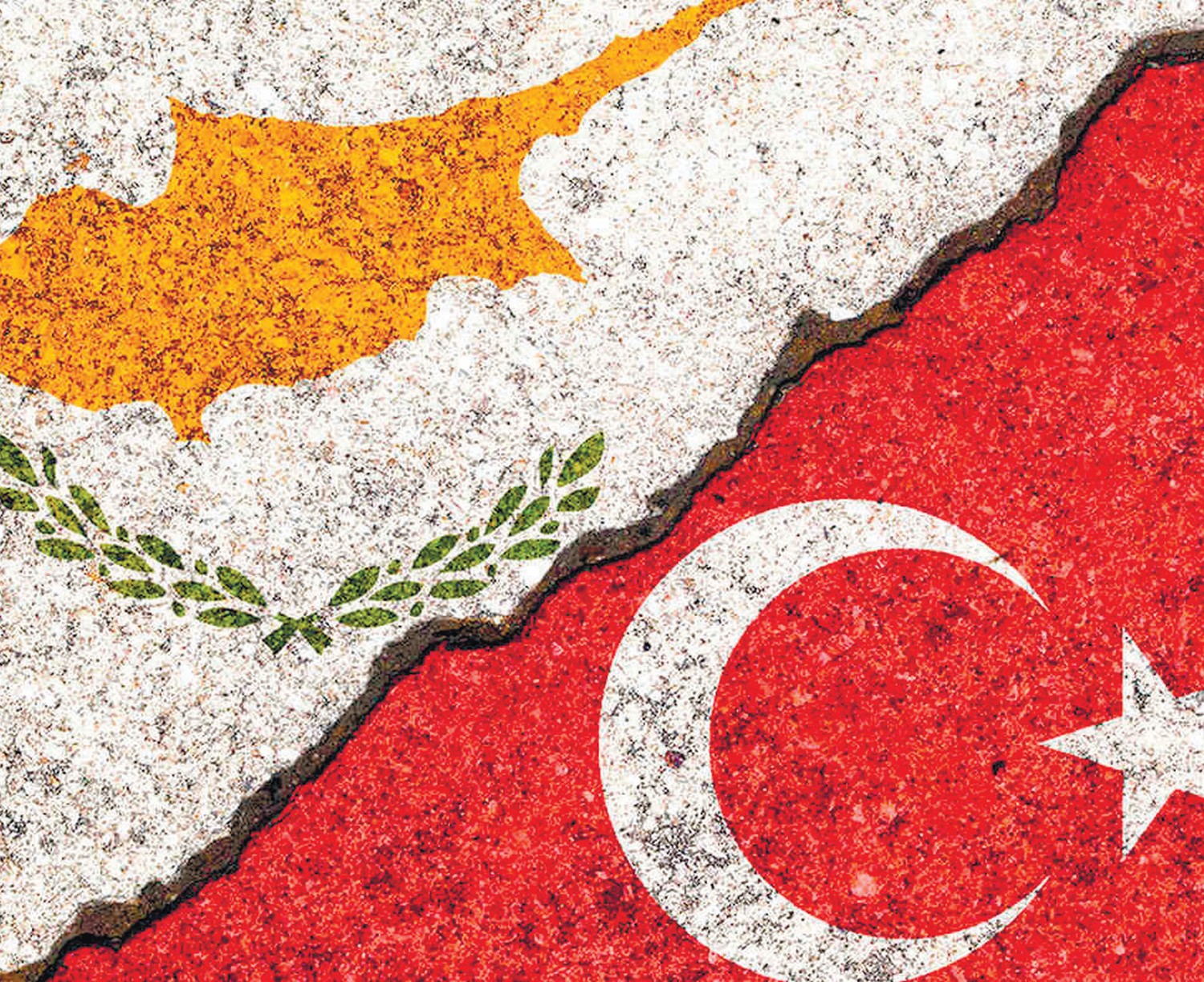
It is now more than twenty years since the historic referendum on Kofi Annan's plan, and the island of Cyprus remains divided. The prospect of establishing a unified federal state now appears less realistic than ever before. Furthermore, events in recent years have prompted many international observers to rethink established approaches to resolving the Cyprus issue and to acknowledge that the two-state concept is no longer exclusively a Turkish initiative, but is gradually emerging as one of the most widely discussed scenarios for the island's future.
As preparations begin for new UN-mediated multilateral talks on resolving the Cyprus problem, it is becoming increasingly clear that this is not merely a territorial dispute or a legacy of the Cold War. This is an illustration of how, for decades, the international community has endeavoured to implement a political model that fails to take into account the real sentiments and concerns of the island's two peoples. Recent developments since 2004 have raised questions about the continued relevance of the approach long promoted by the European Union and several Western states.
Opportunity missed in 2004
In the spring of 2004, the United Nations presented a far-reaching settlement plan, which went down in history as the ‘Kofi Annan Plan’. The document envisaged the creation of a united Cypriot state based on political equality between the two communities—Greek and Turkish. It was envisaged that this unified state would join the European Union.
The results of the referendum were telling. Turkish Cypriots supported the proposed compromise, hoping to emerge from international isolation and secure guarantees of their political status. However, the majority of Greek Cypriots rejected the plan. Despite this, just a few days later, the Republic of Cyprus was admitted to the European Union.
From the Turkish perspective, it was at that very moment that a strategic mistake was made. Brussels effectively lost its most important lever of pressure on the Greek Cypriot leadership, as EU membership was granted regardless of whether a compromise had been reached between the two communities.
Many Turkish politicians and experts now regard the events of 2004 as the moment when a significant opportunity to resolve the conflict was missed.
Following 2004, the Turkish political establishment began to perceive an inconsistency in the international community's approach towards the parties involved in the conflict. The Turkish community voted in favour of the compromise proposed by the UN, whilst the Greek community rejected it. However, it was precisely the side that said 'no' that reaped the political and economic benefits of accession to the European Union. In Ankara and Nicosia, this fact is still viewed as a serious blow to trust in international mediation mechanisms.
It is also crucial to consider the question of the European Union's responsibility. Many experts have noted that the decision to admit the Republic of Cyprus to the EU without first resolving the conflict has given the Greek Cypriot administration a powerful diplomatic tool, enabling it to block many of Türkiye's initiatives on the European front. It is evident that the Cyprus issue has evolved into a pivotal element in the broader context of Turkey's relationship with the European Union.
Deadlock for the federal model of governance
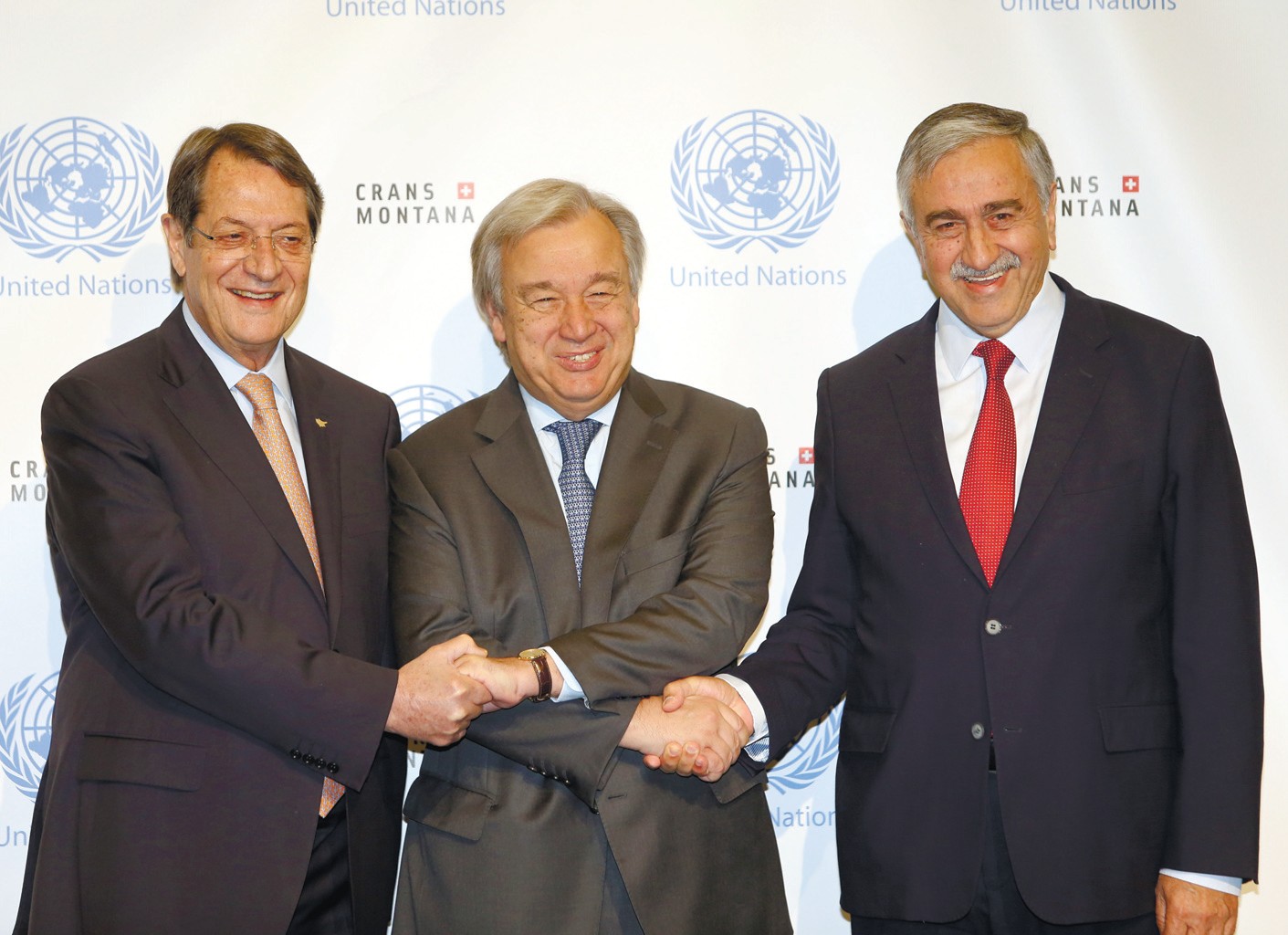
Negotiations on a federal structure for Cyprus have been ongoing for decades. However, during this time, none of the attempts has yielded results. Another serious round of talks in Crans-Montana, Switzerland, in 2017 also ended without result.
In Turkish and Turkish Cypriot political discourse, the argument is increasingly being put forward that the very concept of a bi-communal federation has run its course.
For many years, international mediators have operated on the assumption that, given sufficient time, the parties would be able to reach a compromise on the division of powers, security guarantees and mechanisms for joint governance. However, experience has shown that key differences have not only failed to disappear but, in many cases, have become even more entrenched.
There is a fundamental difference in how the island’s future is perceived. For a significant proportion of Greek Cypriots, a federation is seen as a transitional stage towards closer integration of the island under the dominance of the internationally recognised Republic of Cyprus. For Turkish Cypriots, however, the main condition for any agreement is the preservation of political equality and effective participation in decision-making. These approaches often prove to be incompatible.
The authorities of the Turkish Republic of Northern Cyprus (TRNC) have repeatedly emphasised that decades of negotiations have demonstrated the Greek Cypriot side’s unwillingness to recognise the de facto equality of the island’s two peoples. Following this logic, the latest round of federation talks is no longer seen as a path to a settlement, but as a repetition of a process that invariably ends in failure.
It is no coincidence that, since 2021, the authorities in Nicosia and Ankara have been promoting a new formula for a settlement, based on the recognition of the sovereign equality of the two sides and the existence of two states on the island.
Türkiye’s new strategy
In recent years, Türkiye's position has become unambiguous. The country's Foreign Minister, Hakan Fidan, has repeatedly stated that the most realistic option for a settlement is precisely the coexistence of two states on the island. The TRNC leadership adopts a similar stance.
TRNC President Ersin Tatar emphasises that for more than half a century, there have been two separate political systems, two administrations and two peoples with their own governing institutions on the island. He believes that attempts to revert to a single-state model fail to take into account the established realities.
Turkish President Recep Tayyip Erdogan also regularly expresses support for this approach, considering a two-state solution to be the most realistic path to achieving long-term stability on the island.
In recent years, Turkish diplomacy has shifted its approach on the Cyprus issue, adopting a more assertive stance. Ankara's position has evolved from a previous focus on demonstrating commitment to a federal scenario, to a more proactive stance of promoting an alternative concept based on the principle of recognising the de facto reality.
This approach is founded on a straightforward argument: if, after more than fifty years, a functional federation has yet to be established despite the backing of the UN, the EU and the world's leading powers, it is implausible that the continuation of the status quo will produce a different outcome.
Two peoples—two states?
Supporters of a two-state solution point to an important factor that is often overlooked in diplomatic discussions. Over decades of division, two distinct political communities have emerged on the island, each with its own institutions, education systems, social norms and foreign policy orientations.
The historical memory of both communities remains deeply traumatic. The inter-ethnic clashes of the 1960s, the events of 1974 and the subsequent division of the island have left a deep mark on the public consciousness.
In these circumstances, the idea of forced reunification within a single state raises serious doubts. The experience of many multi-ethnic states shows that a lack of trust between communities can turn state institutions into an arena of constant political conflict.
Supporters of a two-state solution argue that it is precisely the mutual recognition of existing realities that will ensure stability and lay the foundations for good-neighbourly relations, without either side attempting to dominate the other.
From this perspective, the two-state idea does not at all imply a rejection of cooperation. On the contrary, it involves building relations along the lines of those between independent states in Europe: open borders, economic cooperation, joint infrastructure projects, and coordination on security and environmental issues.
It is telling that even today, despite the absence of a political settlement, mechanisms for cooperation in the humanitarian and economic spheres exist between the two parts of the island. This allows supporters of a two-state solution to argue that peaceful coexistence is possible even without the creation of a single state structure.
International dimension
The idea of two states does not yet enjoy the support of the majority of international actors. The European Union, the UN and Greece continue to advocate a federal model for a settlement. The Republic of Cyprus also considers the two-state approach to be contrary to UN Security Council resolutions.
However, even international mediators acknowledge that, after decades of negotiations, the parties remain far from a shared vision for the island’s future. During recent consultations, the UN Secretary-General and his representatives repeatedly noted the lack of a common political basis for resuming a full-scale negotiation process.
At the same time, practical cooperation between the two sides continues on issues such as demining, the environment, energy and humanitarian contacts. This demonstrates that cooperation is possible even without a final resolution of the issue of the island’s political structure.
Particular attention should be paid to the fact that the international stance on Cyprus was shaped under entirely different geopolitical conditions. A significant proportion of the current UN Security Council resolutions were adopted decades ago, when there were different perceptions of international security, the regional balance of power and the principles for resolving ethno-political conflicts.
Meanwhile, global experience shows that the sustainability of political decisions often depends not so much on their formal conformity with previous diplomatic frameworks as on their ability to take account of the realities on the ground. It is precisely this argument that is increasingly being used today by those who advocate a review of the international approach to the Cyprus issue.
The Eastern Mediterranean and the New Geopolitics
A crucial factor that was absent at the time the Annan Plan was being drawn up was the shift in the strategic significance of the Eastern Mediterranean.
The discovery of large natural gas reserves, the development of energy routes and intensifying competition for maritime zones have transformed the region into one of the key centres of geopolitical rivalry. In these circumstances, Cyprus has ceased to be merely a local issue between the two communities.
For Türkiye, the question of the status of Turkish Cypriots is directly linked to safeguarding its legitimate interests in the Eastern Mediterranean. Ankara has consistently stated that any energy projects in the region must take into account the rights of both Türkiye and the island’s Turkish community.
According to Turkish analysts, recognising the political equality of the two sides would help create a more stable foundation for regional cooperation and reduce the risk of new conflicts arising over energy resources.
A time for rethinking
The Cyprus issue has evolved into a complex geopolitical problem, involving considerations beyond mere territorial disputes. The current focus is on identifying a model of coexistence that will guarantee security, political equality and lasting peace.
The 2004 referendum marked a significant turning point. For the Turkish side, this demonstrates a willingness to compromise, a stance that was not supported by the Greek Cypriot majority. This has led to a growing discussion in Ankara and Nicosia that the federal formula has reached its limits.
While opinions may vary on this assessment, it is crucial to acknowledge the fundamental reality: more than two decades after the collapse of the Annan Plan, Cyprus continues to be divided, and the concept of two states, once a provisional negotiating position, has evolved into a well-established political principle, supported by a substantial segment of the Turkish Cypriot community and the Turkish leadership.
The issue that we are dealing with at the moment is not the question of why the federal model did not materialise. It is crucial to assess whether there are grounds to believe that it can be realised in the future after decades of fruitless negotiations.
It is becoming increasingly evident that, at some point, the international community will be compelled to address a challenging question: to what extent is it justifiable to maintain an approach that has not yielded the desired results for many decades?
It may be more realistic to expect lasting peace on the island through the establishment of a new model of coexistence between the two peoples, based on mutual respect, cooperation and good neighbourliness, rather than attempting to restore an unsuccessful past model. If the Annan Plan represented the last major attempt to create a single state, the events of the subsequent years have made the two-state solution not just an alternative, but one of the most realistic scenarios for the future development of the Cyprus settlement.
RECOMMEND:
 89
89

