

ALLIES ON THE FAULT LINE
Why are Kiev and Warsaw at odds with each other?
Author: Natig NAZIMOGHLU
A serious diplomatic crisis between Kiev and Warsaw is escalating, with historical dispute carrying a distinctly geopolitical undertone.
Orders of discord
It all began with Ukrainian President Vladimir Zelensky's decision to bestow the honorary title of "Heroes of the Ukrainian Insurgent Army" (UPA) upon one of the Armed Forces of Ukraine units. This move sparked discontent in Poland, where attitudes towards the UPA are overwhelmingly negative.
In 2016, the Polish Sejm recognised the killing of nearly 100,000 Poles in Volhynia and Eastern Galicia during the Second World War as genocide, declaring the UPA guilty of this war crime. Ukraine has always rejected such accusations, emphasising the mutual nature of the violent acts. More importantly, however, Ukrainians evaluate the UPA through the prism of its contribution to the struggle for the country's independence—which is precisely why these honorary names are bestowed in the army's honour.
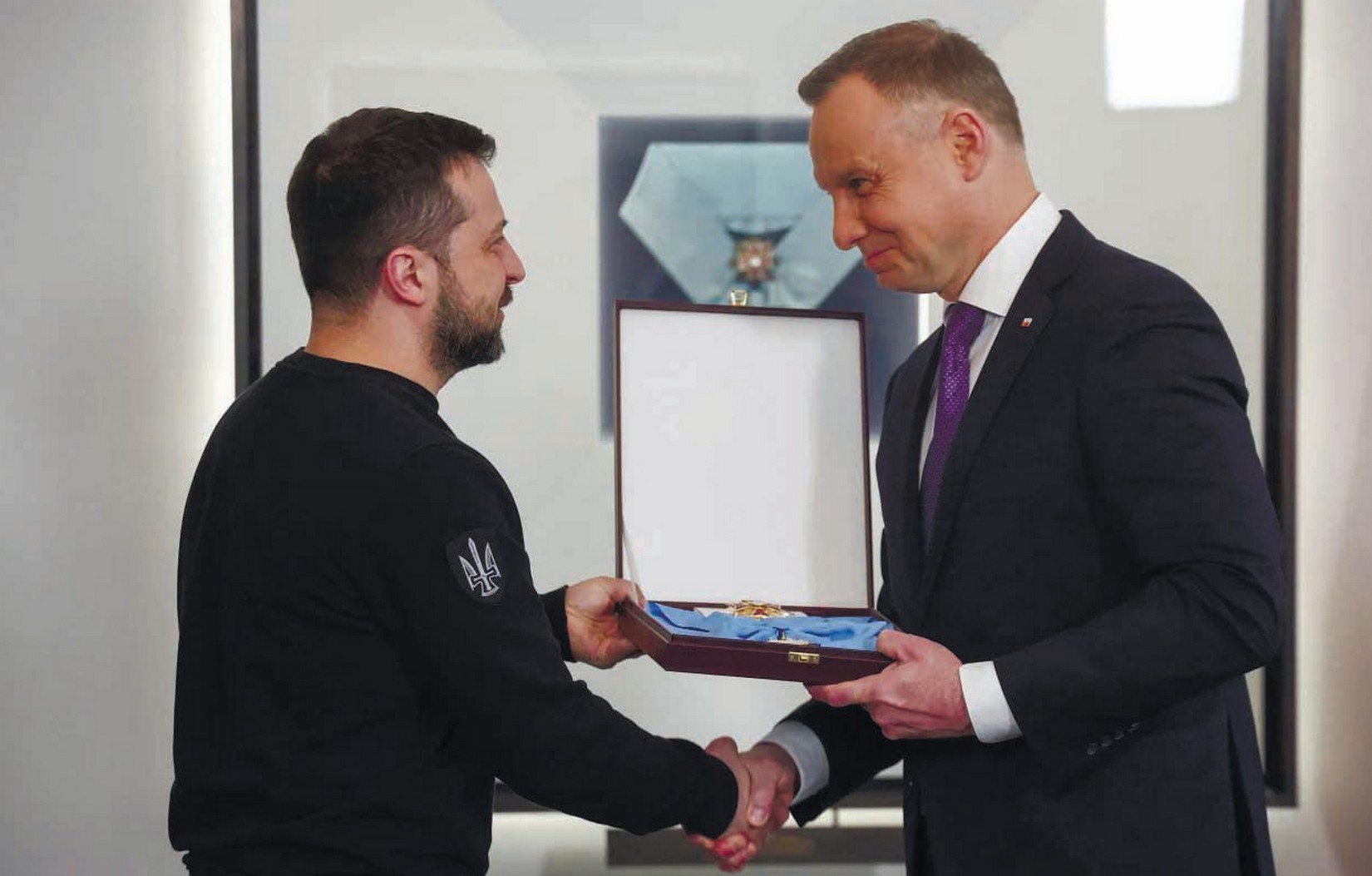
In response to Zelensky's decision to name an elite Ukrainian military unit after the UPA, Polish President Karol Nawrocki announced the revocation of the Order of the White Eagle from the Ukrainian leader. This is Poland's highest state decoration, which Zelensky received in 2023. In turn, Zelensky was quick to return the order to Poland. Significantly, former Ukrainian Presidents Leonid Kuchma, Viktor Yushchenko, and Petr Poroshenko, who had been awarded this Polish decoration in their time, voluntarily declined it in protest against Nawrocki's decision.
The saga of returning orders was compounded by a similar move from Michal Kaminski, Deputy Marshal of the Polish Senate. He decided to return two awards bestowed upon him by Ukraine, "given that the Ukrainian authorities and a substantial portion of the political elite have yet to secure an unequivocal condemnation of the Volhynian crimes and the mass murder of Polish citizens."
Kiev attempted to resolve the conflict by sending the Head of the Office of the President of Ukraine, Kiril Budanov, to Poland. However, the visit failed to achieve its goal, as the Polish authorities insisted that the UPA name be removed from the title of the Ukrainian military unit. Incidentally, shortly after his visit to Warsaw, Budanov also declined the Golden Officer's Cross of the Order of Merit of Poland, with which he had been awarded by President Nawrocki last year.
A sufficiently tough stance from Ukraine was also revealed in a statement by its Foreign Minister Andrei Sibiga. The statement contains an appeal to Poland to exercise restraint, indicating that Ukraine will respond to any actions it deems unfriendly or dismissive towards itself.
The next development in the Polish-Ukrainian crisis was Zelensky's decision to cancel his trip to Poland to attend the International Conference on the Recovery of Ukraine. The conference, which took place on June 25 and 26 in the city of Gdansk, proceeded without him. The Ukrainian delegation was led by Prime Minister Yulia Sviridenko.
Polish President Nawrocki was also not invited to the conference. Media reports suggest that the corresponding decision was made not only by Zelensky but also, quite notably, by Polish Prime Minister Donald Tusk. Tusk is Nawrocki's main political opponent—and the ruling liberal coalition led by the prime minister is competing with the nationalist camp, from which the Polish president hails. Tusk, albeit indirectly, is making his disagreement with Nawrocki's decision to strip Zelensky of Poland's highest order known. Overall, the Polish prime minister is attempting to play a conciliatory role, or at least there is a clear effort on his part to smooth over the escalating conflict.
On the eve of the Gdansk conference, Tusk described Zelensky's refusal to attend as "a gesture aimed at de-escalating tensions." He characterised the conflict between Polish and Ukrainian politicians as "a strategic blunder that will inflict damage on both sides in terms of commerce, geopolitics, and reputation." Therefore, Tusk urged, "the task for Presidents Zelensky and Nawrocki is to temper emotions rather than exacerbate tensions. The front line lies elsewhere."
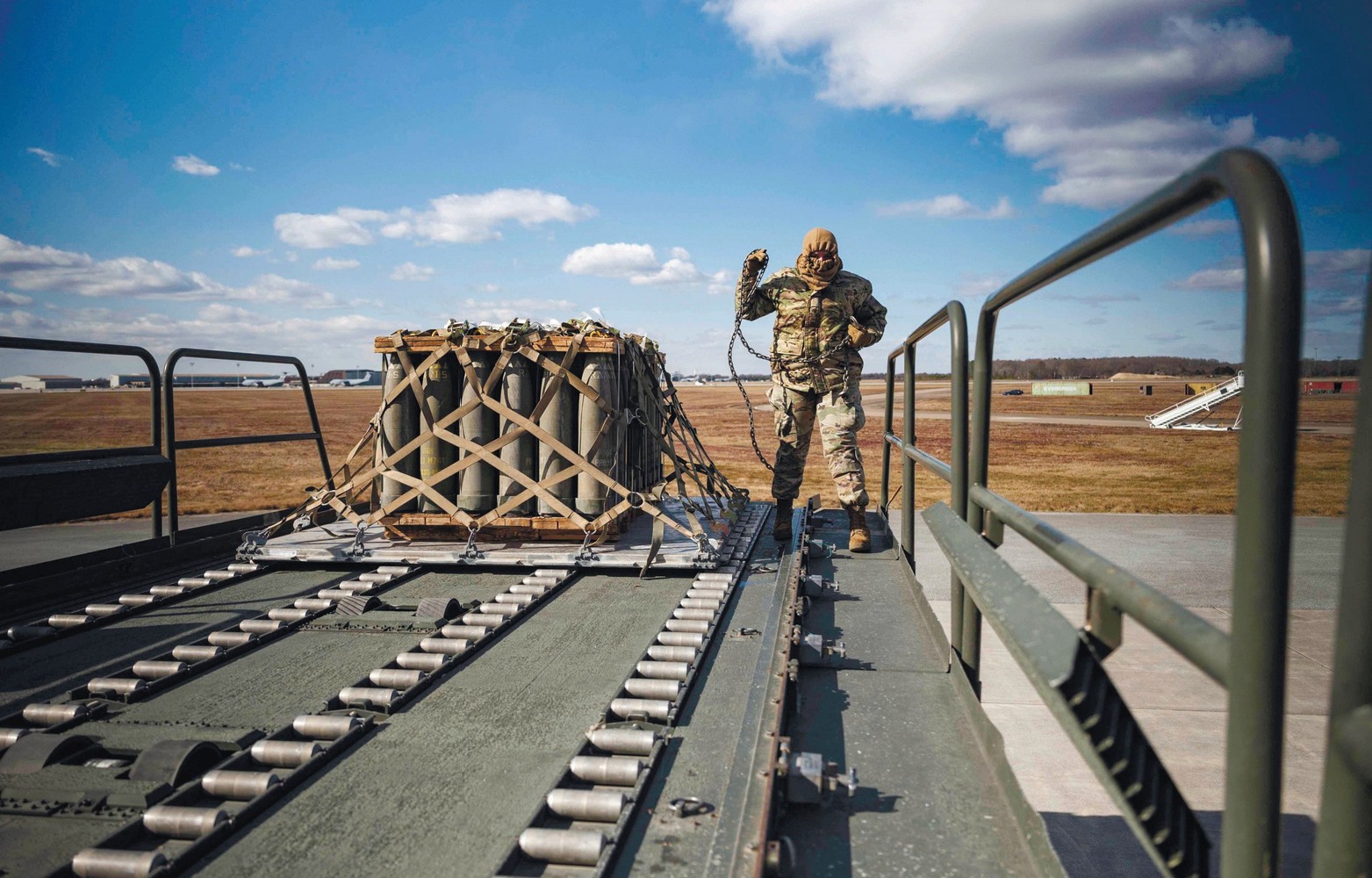
By the "front line," Tusk undoubtedly means Russia's war against Ukraine. Over the years of this war, relations between Kiev and Warsaw have taken on an allied character. Western weapons are delivered to Ukraine specifically through Polish territory—it is the sole route for providing military and military-technical assistance. Therefore, in Ukraine, Poland, and the wider West, it is reasonable to ask: what consequences could a cooling of relations between Kiev and Warsaw lead to? Will Poland start obstructing these vital supplies for Ukraine?
In any case, voices are already being heard in Poland calling for an end to support for Ukraine. In particular, far-right nationalist Slawomir Mentzen, who secured the support of 14% of voters in the last presidential elections, lamented that Poles had been "handing out their decorations like sweets," and urged Ukrainian figures, "once they have returned all the awards," to "also return the money, weapons, ammunition, and everything else we have previously supplied to them."
Furthermore, Poland, like any other country in the European Union, possesses the right of veto in decision-making, including on the issue of admitting new members. Could it, by exercising this right, stall the process of Ukraine's accession to the EU? Especially at a time when the EU is actively discussing the possible accelerated admission of the war-torn Eastern European country.
A powerful player on the doorstep
Meanwhile, both in Poland and Ukraine, there is concern that the disagreements between them could play into Russia's hands. This was stated, in particular, by Polish Prime Minister Tusk and Ukrainian Foreign Minister Sibiga.
Separate remarks by Presidents Zelensky and Nawrocki also draw attention, indicating a lack of intention on their part to weaken the de facto military alliance in any way. Nawrocki emphasised that the decision to strip Zelensky of the Order of the White Eagle "does not signify a shift in the strategic trajectory of Polish security policy." He made it clear that Warsaw would continue to support Ukraine "because we recognise that Russian aggression poses a threat to the security of Poland and the entirety of Europe."
Zelensky is also confident that Ukraine and Poland can be "nothing other than partners and friends." Nevertheless, the escalation has not yet been reversed. And it seems there are no guarantees that the dispute over historical issues can be kept within bounds that do not threaten the strategic task of strengthening bilateral relations. Moreover, despite the seemingly purely historical background of the crisis, it is evident that the contradictions between Poland and Ukraine have a geopolitical dimension.
Kiev defends the position that its vision of history must be taken for granted by Western allies—namely, considering the realities of the war the country is fighting for its independence and territorial integrity. At the same time, Ukraine demands to be perceived as an equal, or even privileged, partner in the context of European integration. Again, this is with the consideration that it is Ukraine which is on the front line of countering Russia, the existential adversary of the West.
As for Poland, it maintains that any actions offending the historical memory of Poles are unacceptable to it, even if they originate from a country with which Poland has allied relations, forged in the crucible of Ukraine's resistance to the Russian invasion. But that is not the whole story.
Poland has its own demands regarding its participation in European integration—demands that clearly indicate ambitions for one of the leading roles in the EU. The transformation of Ukraine into the most combat-capable European power does not align with the logic of these ambitions. And apparently, the factor of Ukraine's significant strengthening within the European security and political system affects the interests of not just Poland.
It is appropriate to cite in this context the remark by former Ukrainian Foreign Minister Dmitry Kuleba that "European leaders were stunned by Ukraine's strikes on Moscow. To say they were impressed would be an understatement. Yet I was told that some leaders are actually frightened by Ukraine's strength. They are strategically realising what a powerful player is emerging on their doorstep."
Indeed, an analysis of the policies of both the EU as a whole and its leading countries in particular shows that in Brussels, as well as in Paris, Berlin, Rome, and other influential European capitals, including Warsaw, there is a fear of one prospect: that out of the war with Russia, Ukraine will emerge as a power capable of influencing the entire configuration of European and transatlantic security. In this configuration, European heavyweights such as France and Germany will have to make way, running the risk of substantially losing their traditionally dominant positions in the Old World.
Let us turn to history once again. It suggests that the leading states of Europe, especially those that act as key continental centres or aspire to do so, have traditionally not taken kindly to "stunning strikes" executed by countries—even European ones—that do not belong to the same category as them, the great powers. In this sense, Ukraine faces the prospect of a stubborn struggle to overcome Europe's "stunned" state. One of the arenas for this struggle, it seems, is precisely the historical dispute with Poland, which is being increasingly admitted by the European ruling class into the circle of EU leaders.
RECOMMEND:
 78
78

