

AGREEMENT WITH NO GUARANTEES
First step from Israel and Lebanon to make peace comes with uncertain prospects
Author: Elchin HUSEYNOV
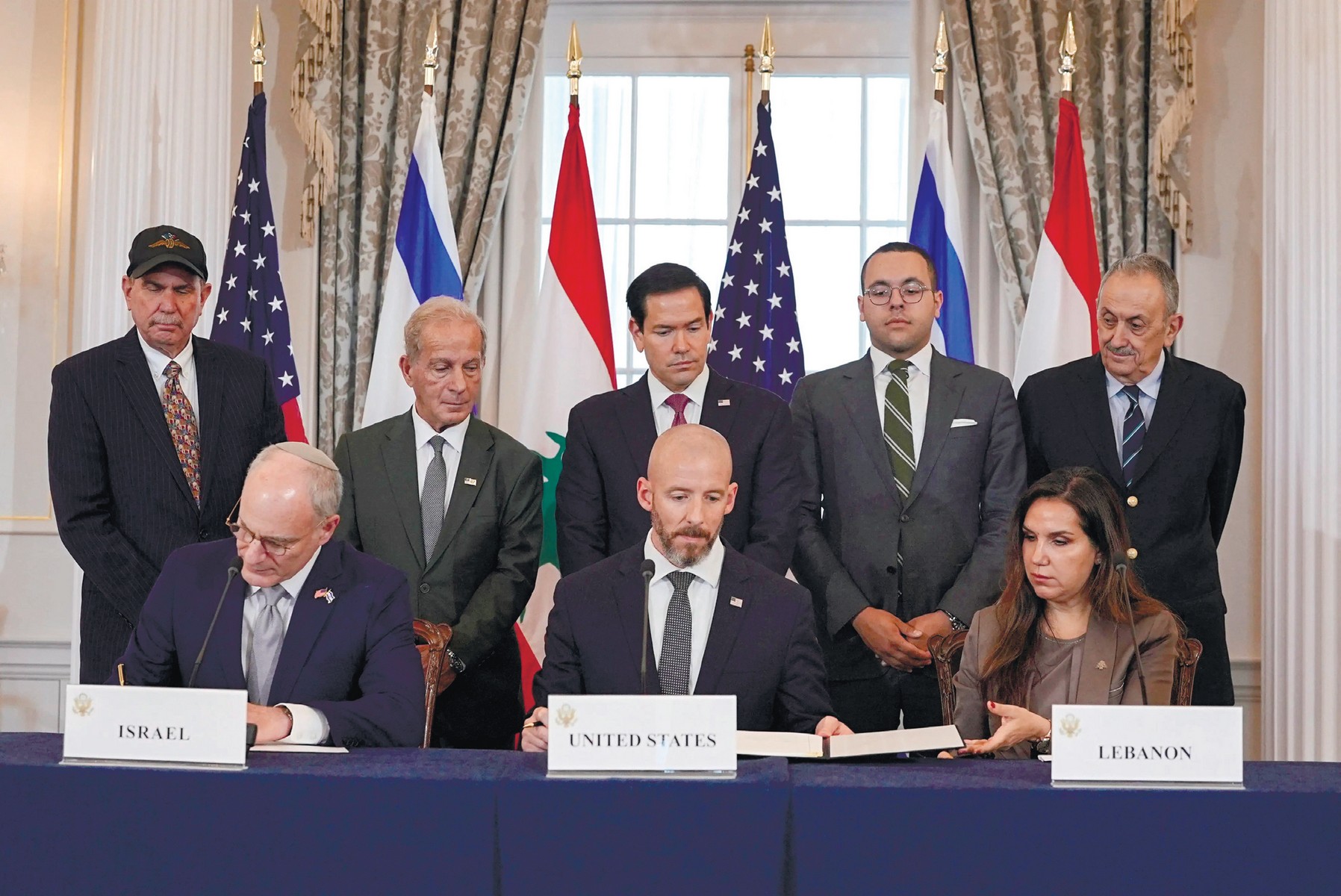
The signing of a framework agreement between Israel and Lebanon on 26 June in Washington was a significant diplomatic event in the Middle East. The document, brokered by the United States, represented the first political agreement of this calibre between the two states following many years of armed conflict and repeated attempts to secure a lasting ceasefire.
Cautious optimism
Meanwhile, the negotiators themselves are hesitant to exaggerate the significance of the agreements reached. US Secretary of State Marco Rubio emphasised that this is not a full-fledged peace treaty. He stated that this marks the beginning of the process towards a long-term settlement, and that the parties must now implement the agreements reached.
Rubio also stated that the people of both Israel and Lebanon deserve the right to live in safety, and that the restoration of Lebanon's full sovereignty and an end to the use of its territory for armed attacks are essential conditions for long-term stability.
The parties directly involved in the agreement also expressed similar caution. Lebanon's Ambassador to the US, Nada Hamadeh Moawad, has described the document as the first step towards restoring the country's sovereignty, bringing hostilities to a definitive end and enabling the residents of southern Lebanon to return to their homes. Israel's Ambassador to the US, Yechiel Leiter, stated that the negotiation process is intended to achieve lasting peace, with the security and sovereignty of both states to be reliably guaranteed.
On the day of the signing, it became apparent that implementing the agreement would be considerably more challenging than the negotiation process itself. The document was signed by representatives of Israel, Lebanon and the US. Hezbollah, a prominent Shia military-political organisation that has been a key player in the long-standing conflict in southern Lebanon, did not participate in the negotiations. It is therefore accurate to state that the current agreements represent a new phase in the diplomatic process, rather than an end to one of the region's longest-running conflicts.
Why the agreement became possible now
The signing of the document was preceded by several months of intensive diplomacy, which began following yet another escalation of the confrontation between Israel and Hezbollah. The hostilities were accompanied by mutual strikes, the destruction of border areas and the mass displacement of civilians on both sides of the border. In light of these developments, Washington has intensified its mediation efforts, emphasising that a ceasefire alone is insufficient and that a political mechanism capable of preventing further escalation is essential.
In accordance with the framework of the agreements, the deal constitutes a structured process for restoring Lebanon's full sovereignty, disarming Hezbollah and dismantling its military infrastructure. In order to ensure compliance, a trilateral military coordination mechanism is to be established involving the US, Israel and Lebanon.
The agreement is based on the principle of step-by-step fulfilment of mutual obligations. The Lebanese authorities are obliged to reinstate full state control over the southern regions of the country and to ensure compliance with the provisions of UN Security Council Resolution 1701. This stipulates that there must be no armed groups outside state control south of the Litani River. Once these conditions have been met, Israel will initiate a phased withdrawal of its forces from southern Lebanon. Monitoring of this process is to be carried out through a coordination mechanism to be established with US mediation.
However, no party has claimed that the signing of the document automatically signifies the end of the conflict. The success of this initiative hinges not only on the political determination of Israel and Lebanon, but also on the capacity of the Beirut government to implement the most challenging aspect of the agreements—namely, the establishment of full control over the southern region of the country. This issue is now becoming the primary focus of our attention.
How Hezbollah became a key force in the conflict
In order to comprehend the significance of the disarmament of Hezbollah as a central component of the new agreement, it is necessary to examine the historical context of the conflict.
The origins of this conflict can be traced back to the Lebanese Civil War (1975–1990), during which time the southern region of the country became a theatre of war, with confrontations taking place between the Israeli army, Palestinian armed groups and various Lebanese factions. In 1982, Israel launched Operation 'Peace for Galilee', with the stated aim of putting an end to attacks by the Palestine Liberation Organisation, whose bases were located on Lebanese territory.
Following these events, the Shia organisation Hezbollah began to take shape with the support of Iran. Initially, the movement positioned itself as a force of resistance to the Israeli military presence; however, by the mid-1980s, it had become one of Lebanon's most influential political and military players. Over the following decades, Tehran provided the organisation with financial, military and political support, viewing it as its main ally in the Middle East.
In 2000, Israel withdrew its troops from most of southern Lebanon, but this did not lead to a final settlement. Hezbollah have stated that armed resistance will continue until all territorial disputes are resolved, primarily those surrounding the Shebaa Farms area, which Lebanon considers occupied territory, whilst Israel regards it as part of the Golan Heights.
A new major war between Israel and Hezbollah broke out in the summer of 2006 following an attack by the movement's militants on an Israeli patrol and the capture of two soldiers. The 34-day operation was marked by significant airstrikes, rocket attacks and a ground offensive. The conflict concluded with the adoption of Resolution 1701 by the UN Security Council. This resolution established a ceasefire, authorised the deployment of Lebanese army units in the southern region of the country, and reinforced the UN peacekeeping mission. Additionally, it stipulated the absence of armed groups not under state authority.
However, many provisions of this resolution were never fully implemented. Israel has repeatedly stated that Hezbollah has continued to strengthen its military infrastructure and build up its missile capabilities in border areas. The movement’s leadership, for its part, has maintained that retaining its armed wing is necessary to defend Lebanon against possible Israeli aggression.
It is for this very reason that the issue of disarming Hezbollah has taken centre stage in the new diplomatic process. For Israel, the fulfilment of this condition is the main guarantee of security for the country’s northern regions. For the organisation itself and its allies within Lebanon, however, such a demand would mean a shift in the existing balance of power. This fundamental divergence in approaches is now regarded as the main obstacle to the implementation of the signed agreement.
Between diplomacy and political reality
The initial official statements following the signing of the document demonstrated that achieving a mutual understanding during negotiations was more straightforward than securing the support of the parties involved for the agreements reached.
In Washington, the document is regarded as marking the commencement of a new phase in the settlement process. According to Marco Rubio, this should lead to the restoration of Lebanon's full sovereignty, the disarmament of Hezbollah, and the creation of conditions for the long-term security of both Israel and Lebanon. The US side has also confirmed its readiness to facilitate the implementation of the agreement through the tripartite military coordination mechanism currently being established.
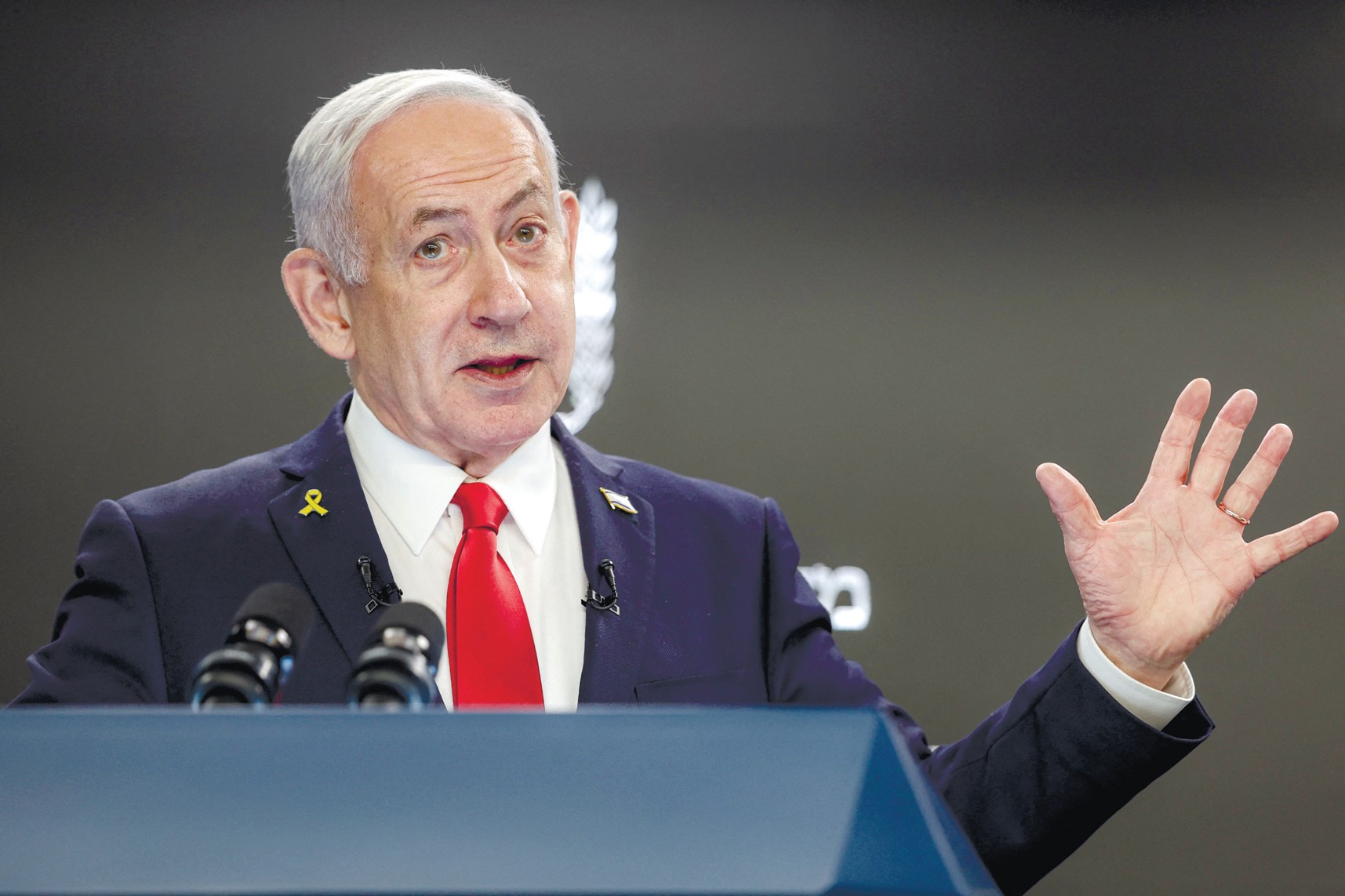
In Israel, the agreements reached were met with a degree of cautious optimism. Israeli Prime Minister Benjamin Netanyahu emphasised that the new measures open up the possibility of a long-term settlement. At the same time, he stated that Israeli troops would remain in southern Lebanon until the threat posed by Hezbollah had been eliminated. Israel would, however, reserve the right to take the necessary measures to protect its security.
Lebanese Prime Minister Nawaf Salam has stated that the agreements must ensure the withdrawal of Israeli troops from all Lebanese territory and the restoration of full state control in accordance with UN Security Council Resolution 1701. He asserts that the Lebanese state should be the sole authority for security matters nationwide.
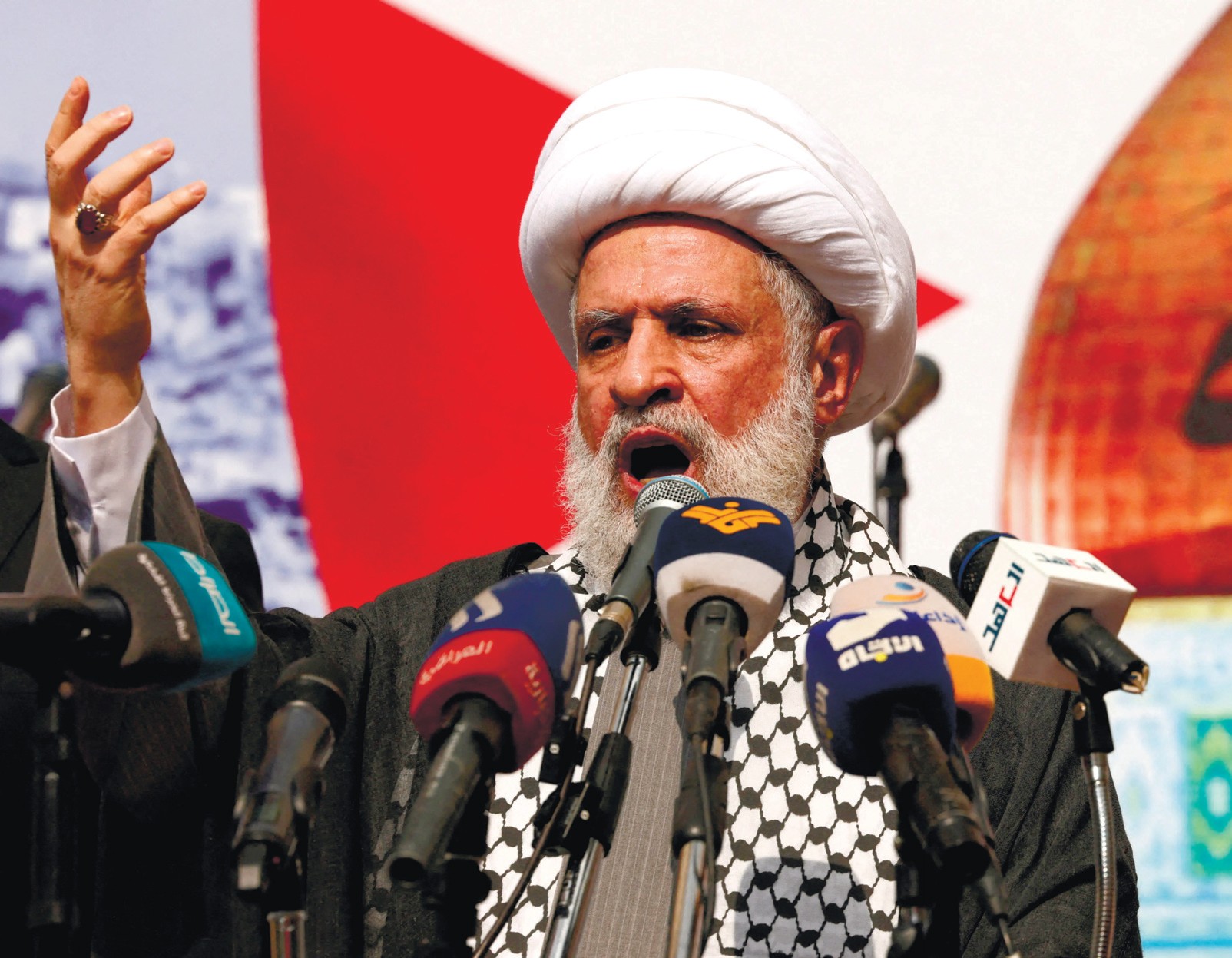
Hezbollah was the most vocal opponent of the agreement. The movement's leader, Naim Qassem, rejected calls for disarmament, stating that the organisation had no intention of giving up its weapons and would continue its resistance for as long as the threat from Israel persisted. In Qassem's opinion, the proposed settlement model did not serve Lebanon's interests and effectively amounted to capitulation to Israel.
Critical statements were also issued from Tehran. According to Iran's Foreign Minister Abbas Araghchi, any decisions concerning Lebanon's future must be taken exclusively by the Lebanese people and the country's legitimate state institutions. The war in Lebanon must be ended as a key component of any sustainable resolution. Attempting to compel resistance forces to disarm will not contribute to achieving stability. It is evident that the Iranian side has made it abundantly clear that it does not support approaches involving the forced disarmament of forces belonging to the so-called 'axis of resistance'.
Some influential politicians within Lebanon itself have also viewed the prospects for the agreement with scepticism. Speaker of Parliament Nabih Berri has expressed reservations about the document's current implementation.
The initial official responses have indicated that the primary disagreements pertain not to the signing of the document itself, but rather to the terms of its implementation. While the US, Israel and the Lebanese authorities view the agreement as the basis for a long-term settlement, Hezbollah, Iran and part of the Lebanese political leadership have expressed their rejection of its key provisions.
The accords reached in Washington are already being hailed as one of the most significant diplomatic initiatives in the Middle East in recent decades. Following years of ongoing tensions, Israel and Lebanon have reached a pivotal moment with the establishment of a ceasefire, marking a significant development in their relationship. This agreement, facilitated by US mediation, is a crucial step towards resolving the underlying causes of their border-related concerns. The agreement also includes the establishment of a political mechanism to ensure long-term stability and cooperation along their shared border.
The signing of the document alone does not yet guarantee peace has been achieved. The majority of its provisions—ranging from the restoration of the Lebanese state's full control over the south of the country to the disarmament of Hezbollah and the withdrawal of Israeli troops—have yet to be put into practice. This stage will present the most significant challenge for all those involved in the process.
The success of the current initiative in altering the current state of affairs is not predicted by any of the parties involved. It is evident that the agreement signed in Washington marks a significant turning point in the history of the Israeli-Lebanese conflict. It is yet to be seen whether this will mark the beginning of a long-term settlement or simply add to the list of unfulfilled peace initiatives in the coming months.
RECOMMEND:
 116
116