

PARTNERSHIP ON THE CASPIAN
Turkmen president's visit to Azerbaijan outlines new directions for joint business projects
Author: Aghasaf NAJAFOV
The increasing demand for the transshipment of oil and non-commodity goods along the Middle Corridor is prompting the countries of the Caspian region to accelerate the development of transport infrastructure, modernise their port hubs, and expand their cargo fleets.
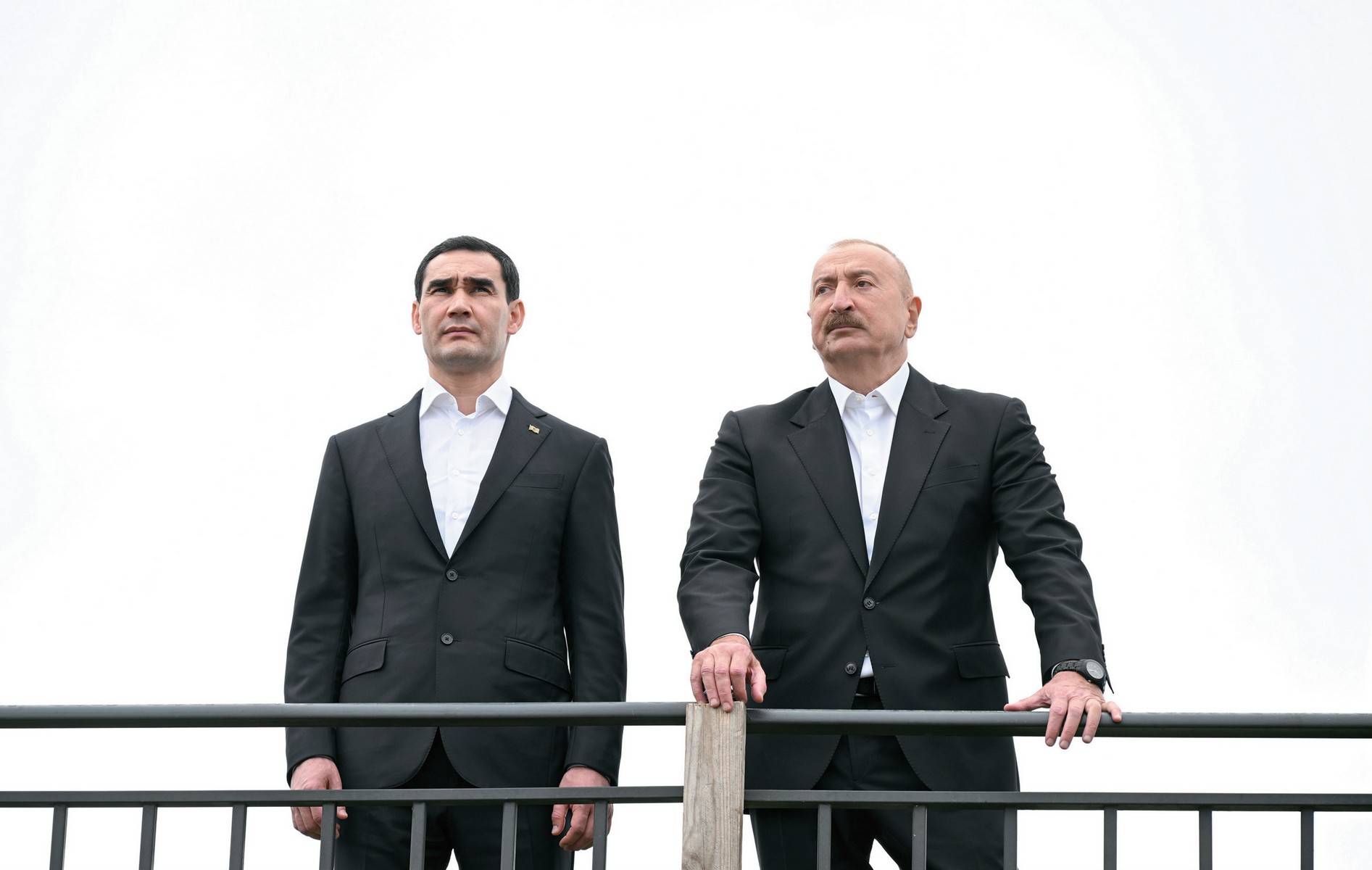
Energy and transport represent a substantial component of Azerbaijani-Turkmen cooperation. The negotiations between Azerbaijani President Ilham Aliyev and Turkmenistan's Serdar Berdimuhamedov focused on the potential for development in these key sectors.
Transport and energy
Azerbaijan and Turkmenistan occupy a pivotal geostrategic position, connecting East with West and North with South. Their joint efforts to align economic development strategies have the potential to benefit not only their peoples but also the wider Eurasian region.
The visit of the Turkmen president to Azerbaijan on 22-23 June was an important milestone in strengthening the friendly ties between the two states and expanding business cooperation. During joint press statements, Ilham Aliyev noted that many bilateral agenda issues were discussed in an expanded format and one-on-one, while further paths for cooperation were outlined.
"I would also like to reiterate my gratitude to the Turkmen side for their active support in Azerbaijan's acceptance as a full member of the Consultative Council of Heads of Central Asian States. I regard this event as historic because, although we are not geographically part of Central Asia, our cultural and historical ties, as well as the specific issues we address today regarding regional cooperation and transport-logistics challenges, naturally create preconditions for viewing the greater Central Asian region as a unified geopolitical and geo-economic area," said President Ilham Aliyev.
The Azerbaijani leader emphasised the need to expand partnership in the transport-logistics sector, which carries strategic importance not only for regional states but also for a broad geographical area, as there are few reliable and secure transport routes worldwide that connect cooperating countries. "We agreed to enhance our collaborative efforts in the transport-logistics sector to boost cargo volumes, which are already experiencing growth due to our combined initiatives. We are also working on attracting freight from third countries. Consequently, this area will continue to be a priority in our bilateral relations and multilateral cooperation."
Baku and Ashgabat have accumulated substantial productive experience in transport-logistics cooperation, with energy serving as a key foundation. For over fifteen years, Turkmen oil has been transported to global markets via the Baku-Tbilisi-Ceyhan pipeline. Azerbaijan has a significant role in global hydrocarbon trade, with more than 36 million tonnes of hydrocarbons being transported through the country to international markets. Turkmen petroleum products and fuel are exported through SOCAR's terminal Black Sea at Georgia's Kulevi port.
Since 2021, Baku, Ashgabat and Tehran have organised swap deliveries of "blue fuel" under a trilateral agreement. It is to be expected that, over time, this trend could be scaled up to a considerable degree.
A notable advancement in the energy sector is the agreement on joint development of the Dostlug field in the Caspian Sea and the organisation of hydrocarbon exports abroad.
According to Turkmenistan's "National Programme for Socio-Economic Development 2011–2030," the country plans to increase its oil production to 67 million tonnes by 2030, with natural gas output rising to 230 billion cubic metres per year. Of this, 180 billion cubic metres of gas are intended for export. This underscores the importance of the Caspian oil and gas sector in Turkmenistan's future exports and directly increases the role of maritime logistics and transport infrastructure expansion for Trans-Caspian transit through Azerbaijan.
In this context, cooperation between Baku and Ashgabat to increase the Caspian fleet is logical, including Azerbaijan's transfer of an oil tanker intended for maritime transport of raw materials between their ports. A ceremony was held to hand over the oil tanker Dostlug, with a deadweight of 7,875 tonnes and a draft of 4.54 m, built at the Baku Shipbuilding Plant, as a gift to Turkmenistan. The ceremony was overseen by the President.
Shipbuilding cooperation between Baku and Ashgabat is becoming a key element in the development of Trans-Caspian transshipment. A significant development occurred on 12 May, when the dry cargo vessel Gadamly arrived at Alat port. The vessel was constructed at Turkmenistan's Balkan shipyard and was ordered by Azerbaijan Railways CJSC. The dry cargo vessel has a capacity of 6,100 tonnes and can carry 240 standard 20-foot containers. It will be used for transportation between Baku and Turkmenbashi ports.
Non-oil sector
In addition to traditional oil and gas cooperation, specialised agencies from Azerbaijan and Turkmenistan plan to develop collaboration in renewable energy sources, including prospective supplies of "green" electricity to European countries. Over a year ago, the governments of Turkmenistan and Kazakhstan officially declared their readiness to participate in laying an underwater power cable across the Caspian Sea to facilitate electricity transit into the emerging Black Sea Energy system.
Baku and Ashgabat have successfully increased trade and transit in non-oil products by establishing sustainable Trans-Caspian transshipment of mineral, agricultural and other raw materials. The joint efforts of the parties concerned are centred on the expansion of both port and railway infrastructure, the implementation of digitalisation, and the simplification of cross-border procedures with a view to increasing the volume of cargo traffic via the Middle Corridor.
In order to diversify cargo transshipment, including containers, the decision was taken to transfer part of the Trans-Caspian International Transport Route traffic to Turkmenistan. Since early 2023, maritime feeder container shipments have commenced, along with ferry services. A key area for increasing freight volumes is transshipment of fertilisers and other bulk cargo using Alat Port's potential. At the end of 2023, a state-of-the-art fertiliser terminal with an annual capacity of 2.5 million tonnes was inaugurated at the Baku International Sea Trade Port. This terminal is the largest specialised facility on the Caspian Sea designed to receive bulk cargoes from Aktau and Turkmenbashi ports, handling sulphur, urea and ammonium nitrate fertilisers.
The Trans-Caspian route is experiencing significant growth in demand. In response, Azerbaijan and Turkmenistan are collaborating to expand non-oil freight transportation.
For instance, under the Lapis Lazuli project initiated seven years ago, a promising transport corridor is being established, connecting Torgundi in Afghanistan's Herat province with Ashgabat. From there, it will pass through Caspian ports Turkmenbashi and Alat via Georgia to Türkiye.
Serdar Berdimuhamedov has identified transport and transit as a strategic area for cooperation. He emphasised that the advantageous geographical locations of Turkmenistan and Azerbaijan create significant benefits for developing international transport corridors. He proposed a further intensification of activities within the Turkmen-Azerbaijani Commission on Transport, Transit and Logistics. Berdimuhamedov observed that the Afghanistan-Turkmenistan-Azerbaijan-Georgia-Turkey transport corridor is a prime example of a successful partnership, and that support is ongoing for the creation of a Caspian-Black Sea corridor along the Turkmenistan-Azerbaijan-Georgia-Romania route. According to Turkmenistan's President, establishing a connection between the Caspian and Black Sea regions presents significant prospects for fostering economic, trade and investment cooperation.
Conclusion
During the presidential talks, priority areas for trade, business and investment partnerships were discussed. Turkmenistan's leader has identified key sectors for the country's future growth, including energy, maritime shipping, chemical and textile industries, alongside several others. Following a detailed evaluation of business initiatives considered during the Baku meeting, specific projects will be brought before the Intergovernmental Commission, which is scheduled to convene in Turkmenistan.
Ilham Aliyev and Serdar Berdimuhamedov signed a Joint Statement and participated in exchanging bilateral documents, including protocols and memorandums on cooperation. These included an industrial cooperation programme for 2026–2028; agreements in energy; principal directions for developing and deepening economic partnership; memorandums between agriculture ministries of both countries; between Azerbaijan's Central Bank and Turkmenistan's Ministry of Finance and Economy; among others.
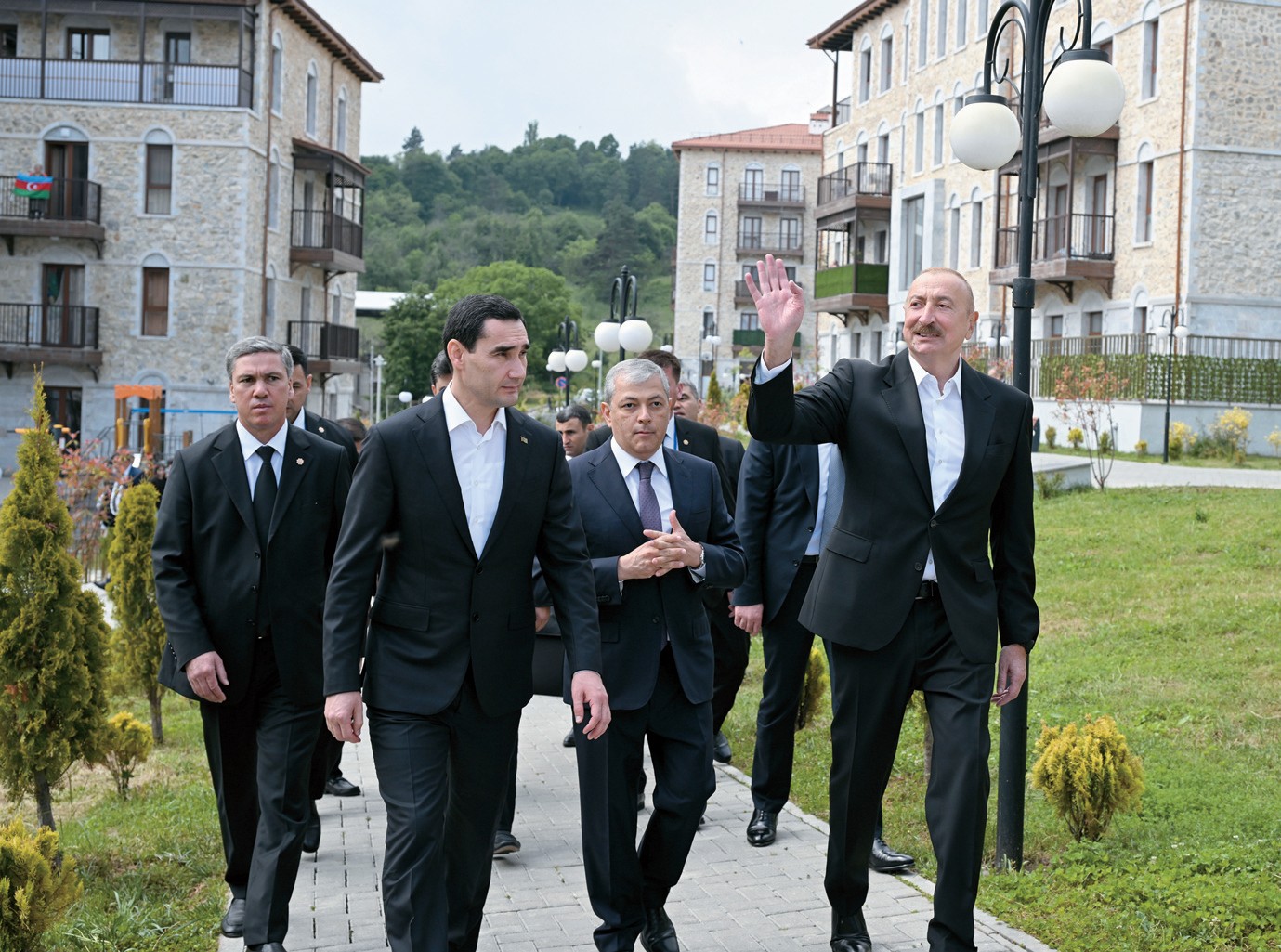
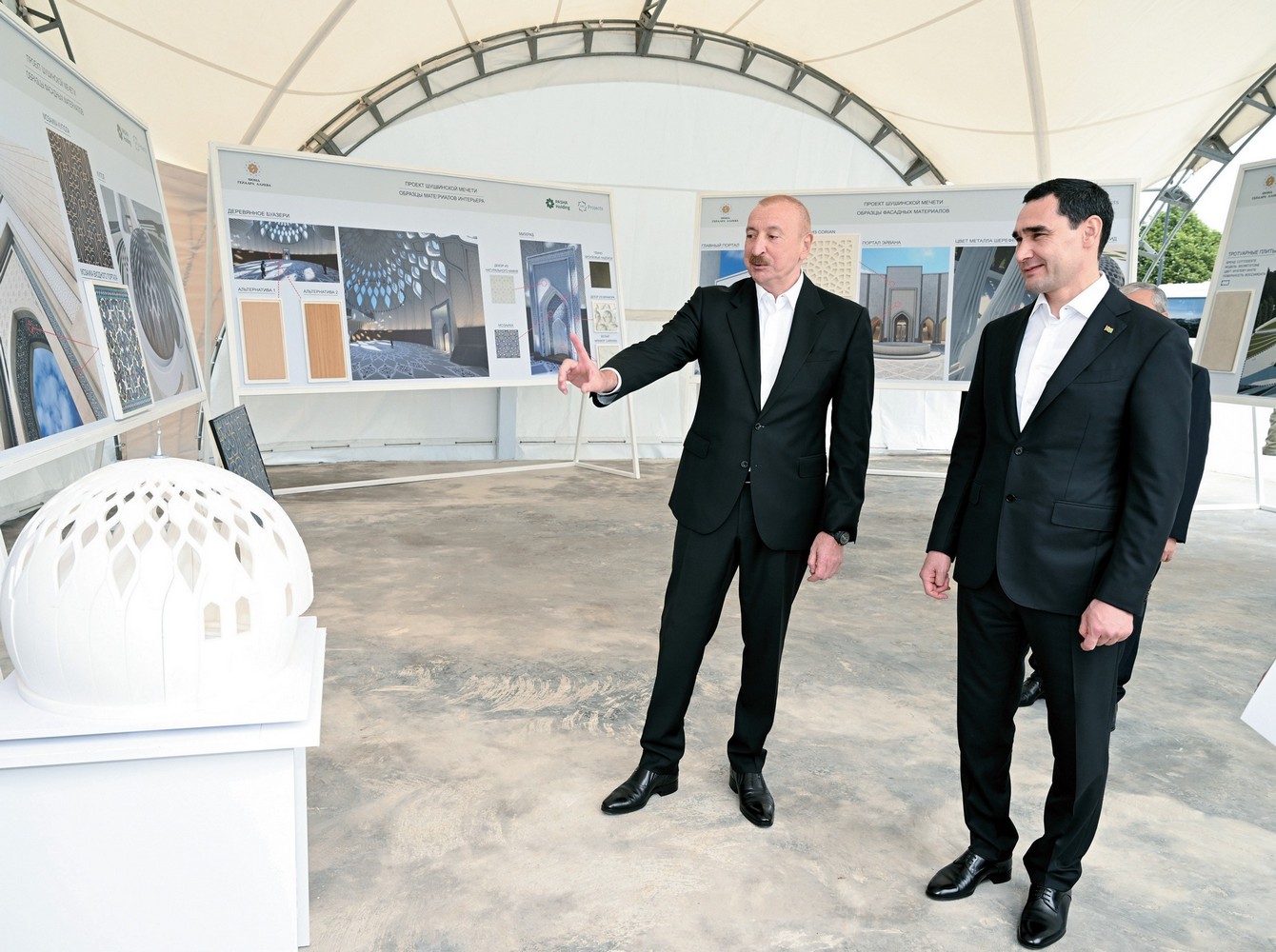
On the second day of the visit, leaders from Azerbaijan and Turkmenistan visited the Fuzuli and Shusha districts. They were there to review ongoing reconstruction works and development plans for territories freed from occupation. The distinguished guest was also briefed on a mosque under construction by Turkmenistan in Fuzuli city. The mosque complex will cover an area of over one hectare and will feature two minarets each 40 metres high and a main dome measuring 30 metres in height. The complex will have the capacity to accommodate up to 500 worshippers simultaneously. The mosque's foundation was laid online by President Ilham Aliyev and Chairman of Turkmenistan's Halk Maslahaty Gurbanguly Berdimuhamedov during the 12th Summit of Heads of Turkic States in October 2025 held in Gabala.
Another notable event during the visit was a show featuring famous Garabagh horses at the picturesque Jidir Düzü plateau. In a gesture of profound friendship between the two peoples, President Berdimuhamedov was presented with a Garabagh stallion, a symbol of shared values and cultural ties.
This visit once again demonstrated how fostering political dialogue, maintaining frequent high-level contacts and establishing a network of agreements can unlock significant potential for future partnership between these two countries. This is particularly important as the Turkic states work together more and more, especially on transport, logistics and energy connections. This means that Azerbaijan and Turkmenistan are very important countries in the wider Eurasian region.
RECOMMEND:
 109
109

