

ANKARA RESHAPES NATO
Türkiye is one of the key architects of the Alliance's new strategy
Author: Ilgar VELIZADE
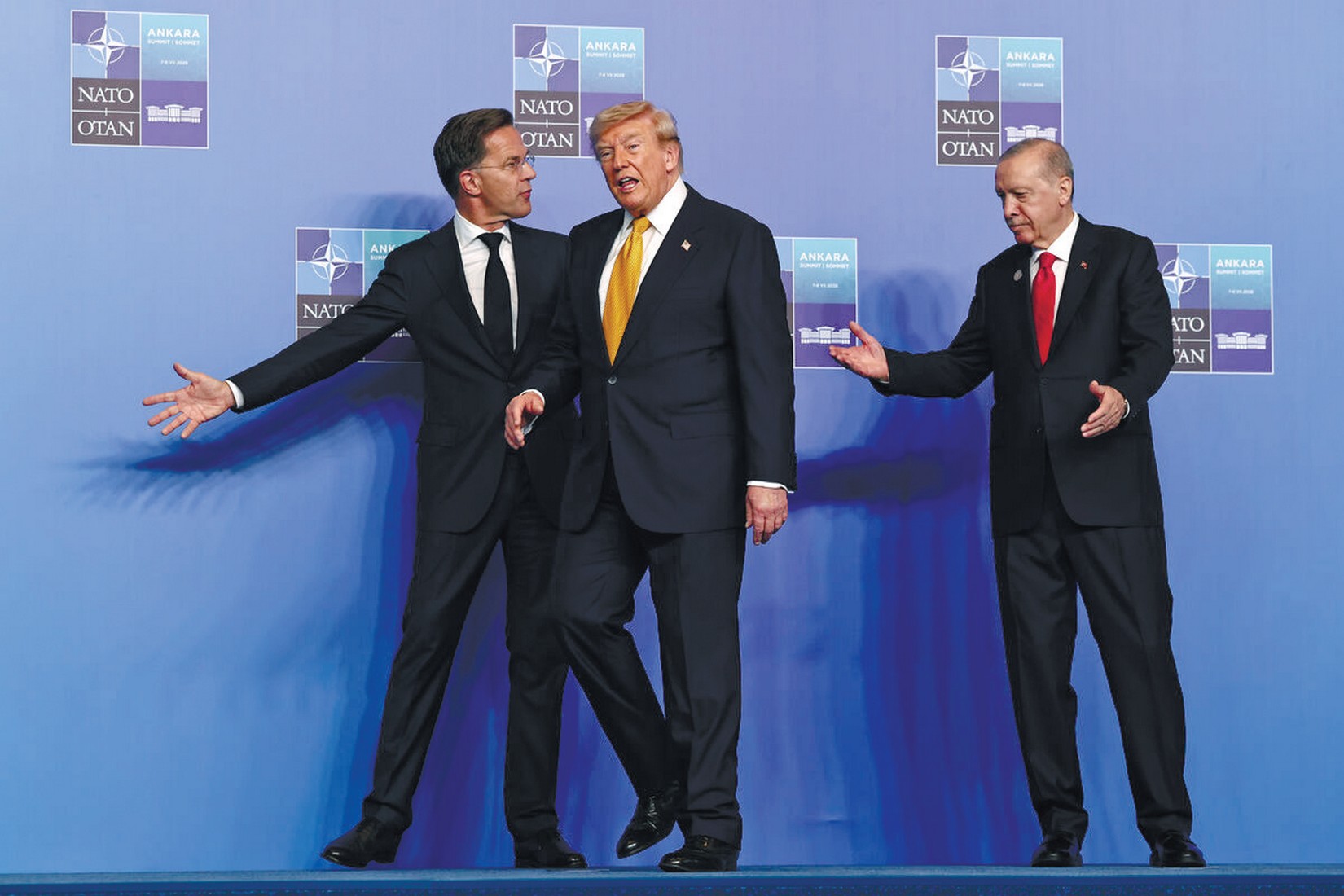
Few international gatherings in recent memory have commanded as much attention as the NATO summit held in Ankara on July 7–8. Its outcomes are still being dissected by politicians and analysts across the globe.
The sheer breadth of issues under discussion and the scale of the decisions taken make this summit one of the most consequential in the Alliance's post‑Cold War history. In effect, Ankara marked the culmination of a new development model for NATO—a process set in motion by the adoption of the 2022 Strategic Concept.
Setting the agenda
However, Ankara's involvement extended beyond mere hosting. It was Türkiye that largely shaped the contours of the debate on the Alliance's southern flank, defence industrial policy, the redistribution of responsibilities within NATO, and the future of regional security.
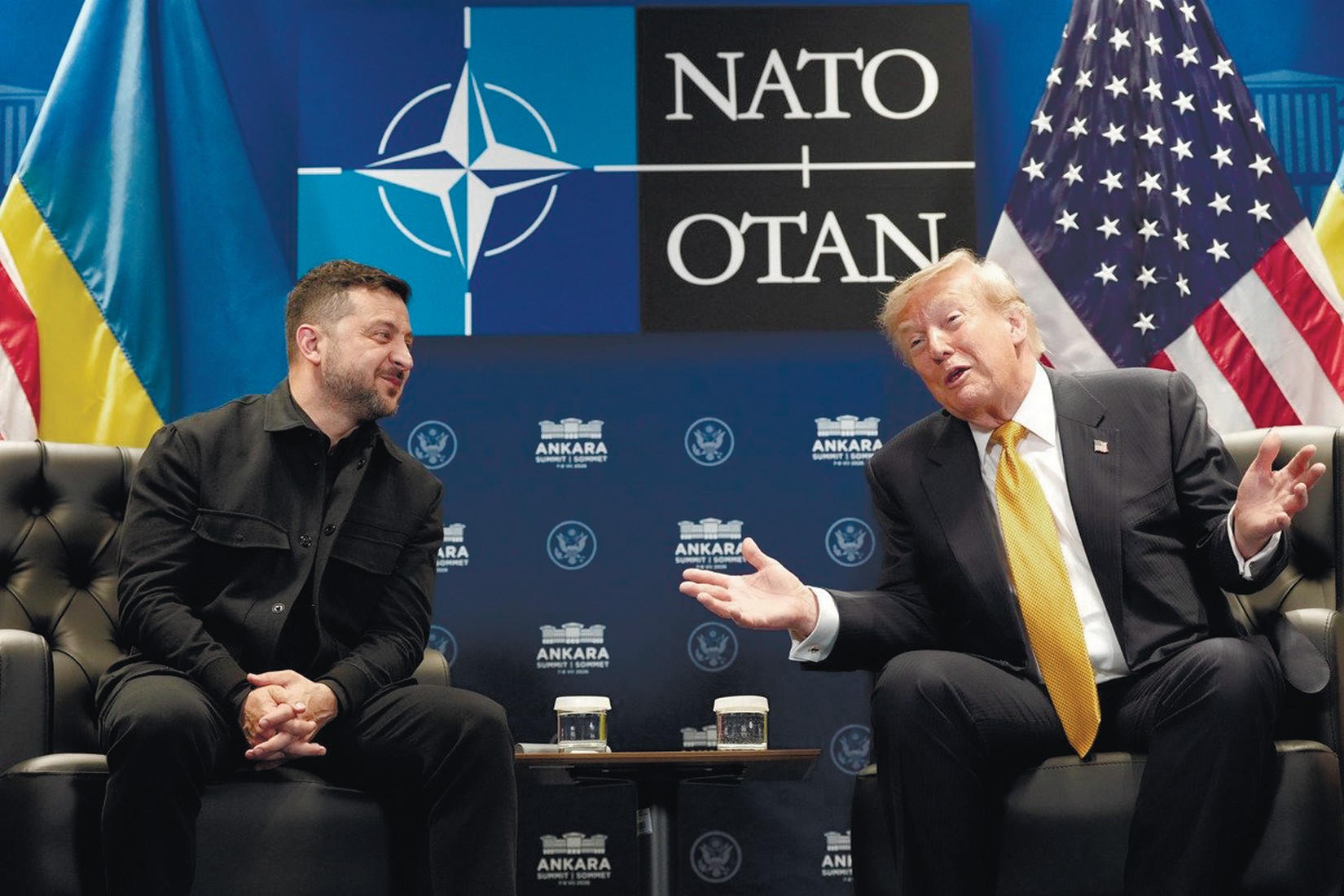
At the same time, one of the summit's most notable political events was the high-level US-Turkish talks, the consequences of which are likely to extend well beyond the bilateral sphere.
It is worth noting that Donald Trump has indicated that he might not have attended had the summit not been held in the Turkish capital and hosted by President Recep Tayyip Erdogan. This is indicative of Türkey's growing influence in US foreign policy and on the global stage.
It is noteworthy that the discussions focused on the potential for the lifting of CAATSA sanctions (the Countering America's Adversaries Through Sanctions Act), the prospect of Türkey's re-entry into the F-35 program, and the restoration of defence industrial cooperation. Washington is reevaluating Türkiye's role in its Eurasian strategy, acknowledging the limited success of previous sanctions pressure.
Türkey is now self-sufficient in terms of military hardware and is capable of producing the majority of its modern armaments domestically. These include drones, air defence systems, missiles and the national KAAN fighter jet. Ultimately, sanctions merely served to expedite Türkiye's efforts in achieving defence autonomy.
Trump's stated willingness to lift the sanctions and revisit Türkiye's participation in the F-35 programme should therefore be read as a recognition of the previous policy's limited effectiveness.
The recalibration of the US approach is driven above all by shifting regional geopolitics. Following the change of power in Syria, Türkiye has become the dominant external actor influencing the new leadership of the country. Its importance has also grown in the wake of the Israeli‑US war against Iran, as Washington increasingly leans on regional allies capable of upholding security on their own.
The South Caucasus remains no less critical. Türkiye is a key player in the development of the Middle Corridor and a central pillar of the US‑backed TRIPP project, which aims to build a new transport and logistics network linking Central Asia, the South Caucasus, and Europe. At the same time, Ankara is strengthening its foothold in Central Asia through the Organisation of Turkic States, making it an indispensable partner for Washington amid waning Russian influence and rising Chinese power.
In this context, bringing Türkiye back into Western advanced‑weapons programmes means more than just restoring defence industrial cooperation for Washington—it signals the reintegration of Ankara into a system of long‑term strategic interdependence. Despite lingering disagreements, the United States is increasingly interested not in pressure tactics but in re‑anchoring Türkiye within the Western security architecture.
Russia as the primary threat
Turning once more to the summit agenda, one of its most politically significant decisions was the maintenance of a robust stance on Russia. The declaration highlights "the long-term threat that Russia poses to Euro-Atlantic security." This approach suggests that NATO no longer anticipates a significant defeat for Moscow in its war with Ukraine, nor the possibility of a change in Russian leadership that might lead to a renunciation of territorial gains. Even if such changes were to occur, they are certainly not imminent. Consequently, the development of armed forces, defence industry, and collective defence systems must proceed from the imperative of long-term deterrence, regardless of how the Russian-Ukrainian conflict evolves.
Over the past four years, the Alliance has overhauled virtually every element of its security framework. Approaches to military planning have been transformed, the high-readiness force structure has been reformed, new regional defence plans have been approved, a major rebuilding of the defence industrial base has begun, and European allies have pledged sharp increases in military spending. Ankara has woven these decisions into a coherent strategic framework, effectively drawing a line under a protracted period of reform.
The sequence of these changes is clearly traceable through recent NATO summits. In 2023, Vilnius placed particular emphasis on the practical implementation of the new collective defence system. In 2024, the United States demonstrated its long-term commitment to supporting Ukraine, increasing defence industry output, and maintaining the Alliance's technological superiority. In 2025, the allies reached a consensus in The Hague to elevate their combined defence and security expenditure to 5% of gDP, thereby establishing the financial foundations for future transformation. Ankara crowned this process, lending it political and organisational finality.
Is the centre of gravity shifting to Europe?
This is precisely why the Ankara agenda was exceptionally broad. The discussions covered a range of issues beyond continued support for Ukraine and the deterrence of Russia. A significant portion of the discussion centred on the expansion of Europe's defence industrial base, the augmentation of ammunition, air defence, and long-range precision-strike production capacities, the integration of artificial intelligence into military applications, the protection of critical infrastructure, the reinforcement of the southern flank, and the rebalancing of responsibilities between the United States and its European allies.
A particular focus was given to the advancement of European long-range precision-strike capabilities. The United Kingdom, in collaboration with several European allies, has announced a long-term programme valued at over $50 billion to develop a family of missile systems with ranges from 300 to over 2,000 kilometres. In essence, this involves establishing a European component of precision non-nuclear deterrence, capable of targeting strategically significant targets without reliance on US weaponry.
A key point of discussion was the potential expansion of defence industrial capacity. It was acknowledged by Allies that current capabilities are not adequate to meet the demands of a modern high-intensity conflict. The war in Ukraine has demonstrated that there is a significant discrepancy between the consumption of ammunition, missiles, and air defence systems and production rates. Merely allocating additional funds to defence is no longer considered adequate in itself. The primary challenge now is to establish an industrial base capable of rapidly increasing weapons production and ensuring a consistent supply in the event of a prolonged conflict.
The summit's final declaration warrants particular scrutiny, as much of its language represents a carefully calibrated attempt to paper over the sharpest disagreements among allies. Virtually every key section of the document represents a compromise between divergent visions of NATO's future.
A serious point of friction remains the division of responsibilities between the United States and its European allies. Donald Trump's return to the White House has thrust back into the spotlight a debate that has rumbled on for more than a decade. Washington demands that European states shoulder a far greater share of both expenditure and military commitments, while reserving for the US the role of the Alliance's principal strategic leader. For many European countries, this means not only larger defence budgets but also the urgent need to develop military capabilities that for decades were provided by the American side.
Differences need not be an obstacle
The declaration avoids any wording that might suggest a scaling back of US commitments to its allies. On the one hand, the document reaffirms an "unwavering commitment" to Article 5 of the Washington Treaty and again underscores the primacy of transatlantic solidarity. On the other, it states with unprecedented clarity that European allies and Canada are assuming significantly greater responsibility for collective defence. Thus, the declaration serves two political purposes at once: it confirms that the United States remains bound by its defence obligations, while codifying the expectation that European states must bear a larger share of the costs and responsibility for their own security.
Equally revealing is the tension between the push for a unified NATO defence industrial base and the persisting restrictions on defence cooperation among certain allies. Nearly every speaker at the summit stressed the need for joint weapons production, expanded industrial collaboration, and accelerated development of defence technologies.
On this point, President Erdogan noted that such goals cannot be achieved while politically motivated restrictions on defence industrial cooperation remain in place. His call to dismantle barriers between allies served as a reminder that one of NATO's largest arms producers remains only partially integrated into a number of joint programmes.
Ankara therefore proposes extending the principle of collective defence to the defence industry itself, arguing that joint development and production should be open to all Alliance members without exception.
On the whole, the summit made clear that NATO is entering a new phase of development, where the primary challenge is no longer identifying a common adversary but reconciling divergent national interests within the Alliance itself. Despite lingering disagreements, the allies managed to preserve political unity and institutionally entrench the course towards further organisational transformation.
The ability to turn internal differences into collective decisions remains NATO's greatest competitive advantage.
RECOMMEND:
 172
172

