

SMART LOGISTICS
The ‘Single Window’s transforming Azerbaijan’s foreign trade management model

Author: Nurlana GULIYEVA
The rapid growth in transit flows through Azerbaijan requires the expansion of transport infrastructure, as well as a fundamentally new approach to the management of logistics processes. In today's global economy, the efficiency of freight delivery is contingent on the seamless exchange of data between countries, the timely issuance of permits, and the effective execution of customs procedures. In this context, digitalisation is evolving from a supporting tool into one of the key factors in the competitiveness of international corridors.
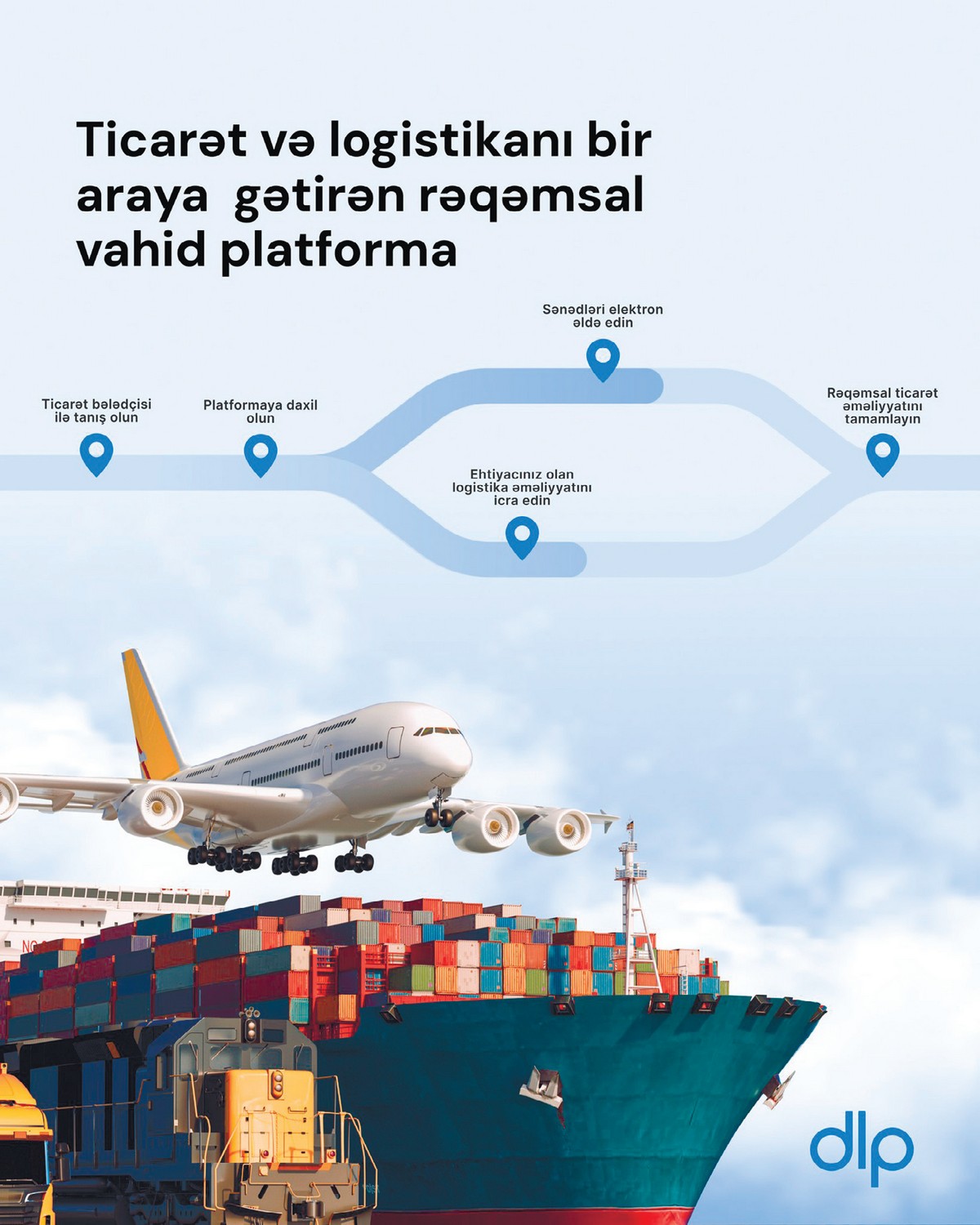
The 'Single Window' information system established in Azerbaijan—the Digital Logistics Platform—is designed to bring together disparate foreign trade services, documents and processes within a single electronic environment.
Everything in one go
The official launch of the 'Single Window' information system marked the latest stage in Azerbaijan's ongoing digital transformation of the transport and logistics sectors. The platform was developed by the Ministry of Digital Development and Transport in accordance with the decree of the Head of State dated 15 December 2025. It brings together information, services and document management relating to export, import, transit and transport operations.
Until now, participants in foreign economic activity have been required to interact with a variety of electronic resources and government bodies, repeatedly providing the same information. The fragmentation of platforms led to an increase in the administrative burden, delays in the processing of documents and difficulties in tracking the entire route of a consignment. The 'Single Window' initiative aims to address this fragmentation by establishing a transparent and traceable system for the provision of services.
According to Fariz Aliyev, Head of the Transport Policy Department at the Ministry of Digital Development and Transport, the project's significance extends far beyond the creation of yet another electronic platform. "This system is not merely a new digital platform. This new management model integrates government entities, commercial enterprises and carriers into a unified digital framework, thereby streamlining foreign trade processes and enhancing the accessibility and efficiency of services. The primary objective of the system is to streamline interaction between the state and the business sector, to eliminate the complex and repetitive procedures that previously existed in import, export and transit operations, and to organise all processes within a single digital environment," he noted.
The platform will offer a comprehensive range of functionalities, including transport, logistics and commercial document processing, as well as licence, permit, certificate of origin, phytosanitary certificate, and fumigation certificate acquisition. More than 30 government agencies are already connected to the system, and the single export procedure is effectively operating at full capacity. By the end of the year, there are plans to gradually extend this mechanism to cover import and transit operations.
Moving the entire process—from submitting an application to obtaining the necessary authorisation—to a single platform should ensure the implementation of the ‘once-only’ data submission principle. For businesses, this means fewer visits to government departments; for government bodies, it offers the opportunity to exchange information more quickly; and for the transport system as a whole, it reduces the risk of delays arising from inconsistent procedures.
Data corridor
The primary strategic advantage of the new system is that it is designed from the outset to extend beyond internal document management. The subsequent phase involves the incorporation of the 'Single Window' within the information systems of countries situated along the Middle Corridor and other international transport routes.
Digital fragmentation is a key challenge in the current landscape, impacting the efficiency of cross-border transportation. Despite the presence of modern rail, road and port infrastructure, goods can sometimes be delayed at borders due to the requirement to re-enter information, variations in document formats and the absence of mechanisms for mutual recognition. Therefore, the competitiveness of the corridor in the 21st century is determined not only by the capacity of roads and terminals, but also by the speed of data transmission.
As stated by Mr. Rahman Hummatov, Deputy Minister of Digital Development and Transport, Azerbaijan has become the first country in the CIS to bring government bodies and stakeholders in foreign trade and the transport and logistics sectors together on a single digital platform. "As part of the project, we are already working with a number of international organisations, and we are developing implementation mechanisms in line with relevant UN standards. Steps are currently being taken to fully digitise transport documents with Türkiye, Kazakhstan and Russia," he emphasised.
The system has been designed to cover the entire journey of goods—from the manufacturing company to the final destination—in the long term. For instance, an Azerbaijani entrepreneur importing goods from China will be able to submit applications for licences, permits and customs documents electronically from the moment the container is loaded. Government bodies will then process these applications and transmit the necessary documents via the same platform.
This model establishes the foundation for the development of a digital twin of the transport corridor, within which the physical movement of cargo is accompanied by a continuous exchange of verified data. Consequently, delivery times become more predictable, downtime is reduced and the planning of transport operations is simplified. For the Middle Corridor, which competes with alternative routes between Asia and Europe, this factor may be no less significant than large-scale investment in roads, ports and rolling stock.
According to Vusal Gasimli, Director of the Centre for Economic Reform Analysis and Communications, the platform will help strengthen Azerbaijan's strategic position on the international East-West and North-South transport corridors and further enhance the country's role as a regional transport and logistics hub. In the future, the platform will form a vital institutional and digital foundation for Azerbaijan to achieve higher rankings in the World Bank's Logistics Performance Index. It will also positively impact the investment attractiveness of the transport and logistics sector, and expand the use of the 'Green Corridor' clearance system.
Customs process
One of the most complex elements of the project relates to the integration of customs procedures. At this stage, a significant proportion of the documentation is generated, and the speed at which goods are cleared and can continue their journey depends on how efficiently this documentation is processed.
The initial phase of the project comprised 154 functional and technical tasks, all of which have now been fully completed. An API architecture has been established, security and authentication mechanisms have been created, VPN connections have been set up, and interfaces for the commodity nomenclature and classification data have been prepared. Concurrently, tools for electronic customs declarations, document exchange and user notifications have been developed.
Natig Shirinov, Deputy Chairman of the State Customs Committee, has announced that on 4 May, the system successfully processed its first export customs declaration, which was then validated. The second phase has now commenced, involving the integration of summary import and transit declarations.
Following the integration process, the receipt and processing of data on import and transit operations will be consolidated onto a single platform. This will allow for the electronic exchange of data between the relevant state bodies. This will eliminate the need to resubmit data, and the processes of customs clearance and the release of goods will be carried out more promptly and efficiently," he said.
In the third phase, the plan is to complete the integration of the import customs declaration and documents relating to other customs procedures. All necessary permits, approvals and licences must be submitted directly to the customs information system by government bodies. This will streamline the process for businesses, as they will no longer need to contact each agency separately.
The minutes’ effect
The creation of the platform was preceded by a comprehensive analysis of existing procedures. A total of 150 business processes across over 30 government bodies and companies were analysed, and meetings were held with more than 400 business representatives. This approach enabled us to consider not only the requirements of government departments but also the real needs of market participants.
Ehtiram Guliyev, project manager of the Digital Logistics Platform, emphasises that the 'Single Window' is not merely a local technical solution. Similar models have already proven their effectiveness in Singapore, South Korea, the Netherlands and Estonia; however, their implementation requires a phased approach and continuous development.
Guliyev explains that the mission is to fully digitise import, export and transit processes through the 'Single Window' information system, ensure their traceability, and improve service quality and operational efficiency.
The initial results demonstrate a clearly measurable impact. Although the platform has only just been officially launched, some services have been available since April. During this period, we have received over 180 requests for fumigation certificates from more than 60 companies. The procedure, which previously took 2–3 hours, is now completed in 7–8 minutes.
The next stage in the platform's development involves the introduction of a unique trade number that complies with World Customs Organisation standards. This single identifier will enable government bodies and businesses to track all information relating to a specific export, import or transit operation, regardless of how many departments are involved in processing it.
In the future, there are plans to integrate artificial intelligence and optical character recognition (OCR) technology into the system. AI can be used to verify documents, identify discrepancies, forecast delivery times and analyse risks, whilst OCR will enable information to be automatically extracted from uploaded documents. This will reduce the amount of manual data entry and the likelihood of errors, which are a common cause of delays in cargo clearance.
E-commerce will be a separate area of focus. In the future, transactions carried out via Amazon, Temu and other international platforms are also expected to be integrated into the 'Single Window'. Given the rapid growth in cross-border online orders, this will enable the creation of a unified mechanism for interaction between buyers, sellers, carriers, customs authorities and delivery operators.
It is vital that this technological expansion is accompanied by a clear division of responsibilities among the system's participants. Issues relating to the protection of commercial information, database compatibility and the legal recognition of electronic documents will require further regulatory work both domestically and at the international level. The project's ultimate success will therefore depend on the speed with which technical integration is complemented by institutional and legal coherence.
In summary, if the 'Single Window' platform successfully reduces time, costs and administrative procedures, it will provide a significant competitive advantage for the country in terms of international transport routes. The subsequent task will be to interface it with the digital systems of partners along the Middle Corridor, and to ensure the mutual recognition of electronic documents. In this case, Azerbaijan will be able to offer the market a route that is not only geographically convenient but also technologically fast, transparent and predictable.
RECOMMEND:
 80
80