

WAR ON HOLD?
Military lull has not resolved the major conflicting points, nor has it ruled out the possibility of a new regional crisis
Author: Samir VELIYEV
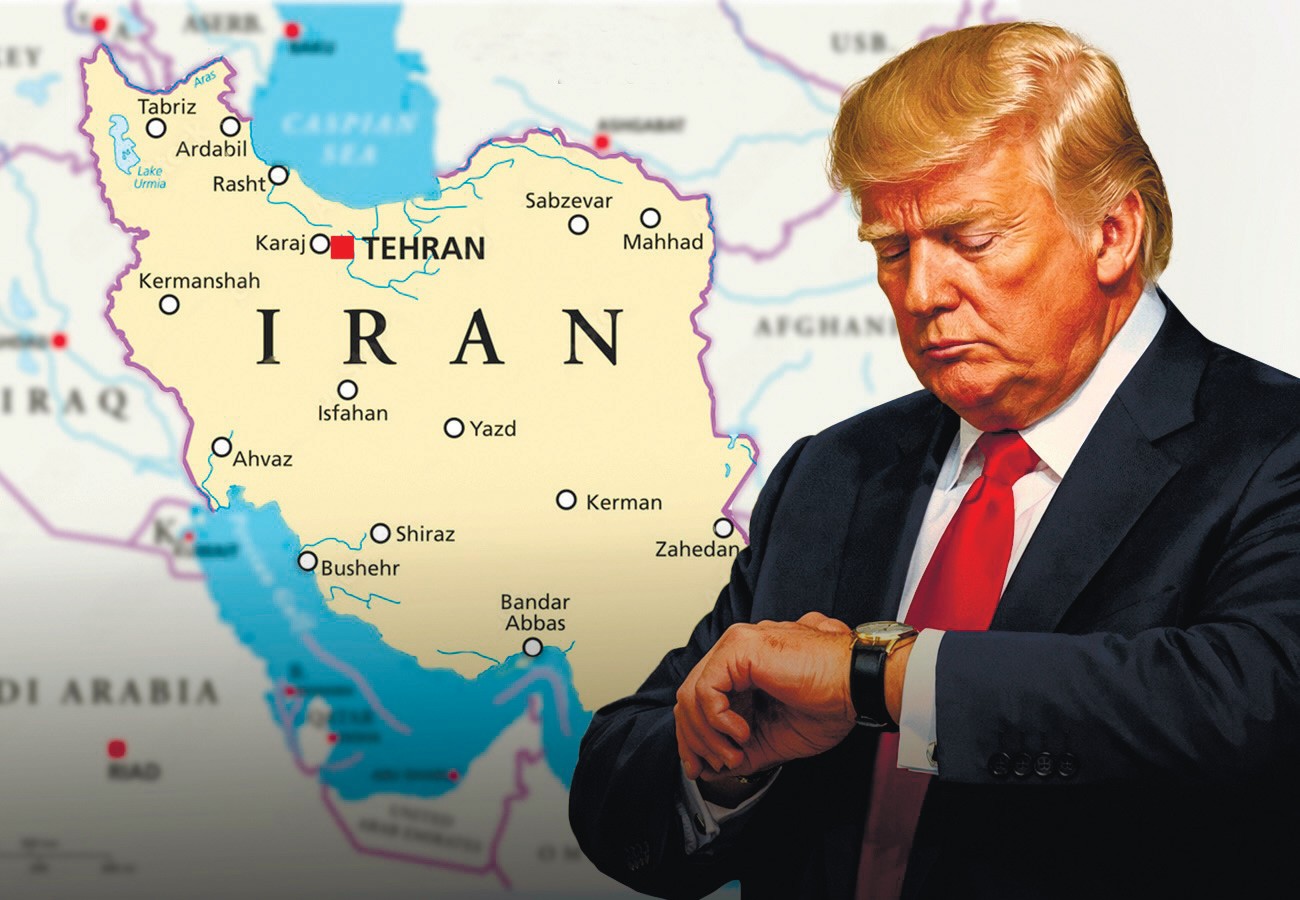
On 25 July, US President Donald Trump ordered the American military to cease strikes against Iran following nearly two weeks of daily attacks. This proves that the recent escalation was merely a means of raising the stakes in the negotiation process. Which, however, does not rule out a subsequent escalation.
Betting on force, again...
The latest phase of the US-Iranian conflict, which began in July following the de facto breakdown of the ceasefire, differs markedly from the previous phase. In the spring, the US's primary objective was to inflict maximum damage on Iran's strategic capabilities—its nuclear programme, air defence system, command centres, missile bases and military-industrial complex facilities. The latest campaign, however, was more specific in nature and focused on forcing Iran to abandon its attempts to block the Strait of Hormuz and on ensuring the security of maritime routes.
The formal pretext for the resumption of large-scale US strikes was Iran's attacks on commercial vessels in the Strait of Hormuz. According to a statement by the US Central Command, on 7 July US forces successfully targeted over 80 key assets, including air defence systems, command networks, coastal radar stations, anti-ship systems and more than 60 IRGC small boats. The following day, the list of targets was expanded to include missile and drone depots, naval forces and military logistics facilities on the Iranian coast. By 11 July, CENTCOM had reported that more than 300 targets had been struck over the course of three nights.
The primary objective of the US campaign was to target the elements of Iran's military infrastructure that directly underpin its control over the Strait of Hormuz. The strikes were concentrated along the country's southern coast—in the areas of Bushehr, Bandar Abbas, Jask, Konarak, Chahbahar and Abu Musa Island. The area is home to a variety of military infrastructure, including coastal missile systems, small boat bases, observation posts, drone depots, airfields and communications hubs. This strategic positioning enables Iran to exercise control over the Strait and pose a threat to vessels traversing it.
The US sought not merely to destroy individual patrol boats or missile launchers, but to dismantle the entire infrastructure enabling Iran to use the Strait of Hormuz as a tool to exert pressure on the global economy. At the same time, Washington resumed the naval blockade and began diverting vessels bound for Iranian ports.
Almost simultaneously, the conflict spread once again to the Red Sea. The Iranian-backed Ansar Allah (Houthi) movement announced attacks on commercial shipping, stating that it regarded its actions as part of a unified campaign against the US and its allies. As a result, some shipping companies were once again forced to alter their routes, whilst insurance premiums and delivery times for cargo between Europe and Asia increased.
Iran thus effectively gained the ability to exert pressure on two of the world’s most vital maritime trade routes simultaneously—the Strait of Hormuz and the route through the Red Sea and the Suez Canal.
Another sign of this new war was the gradual broadening of the category of permissible targets. Donald Trump stated that for every new Iranian attack on a commercial vessel, the US could strike an Iranian bridge or power station. In doing so, Washington effectively threatened to shift from targeting military infrastructure to limited strikes against dual-use and civilian facilities. The United States is banking on the continuation of the war being economically and socially more damaging to Tehran, as well as on establishing a direct link between Iran’s actions in the Strait and the damage suffered within the country.
Iran plays its trump cards
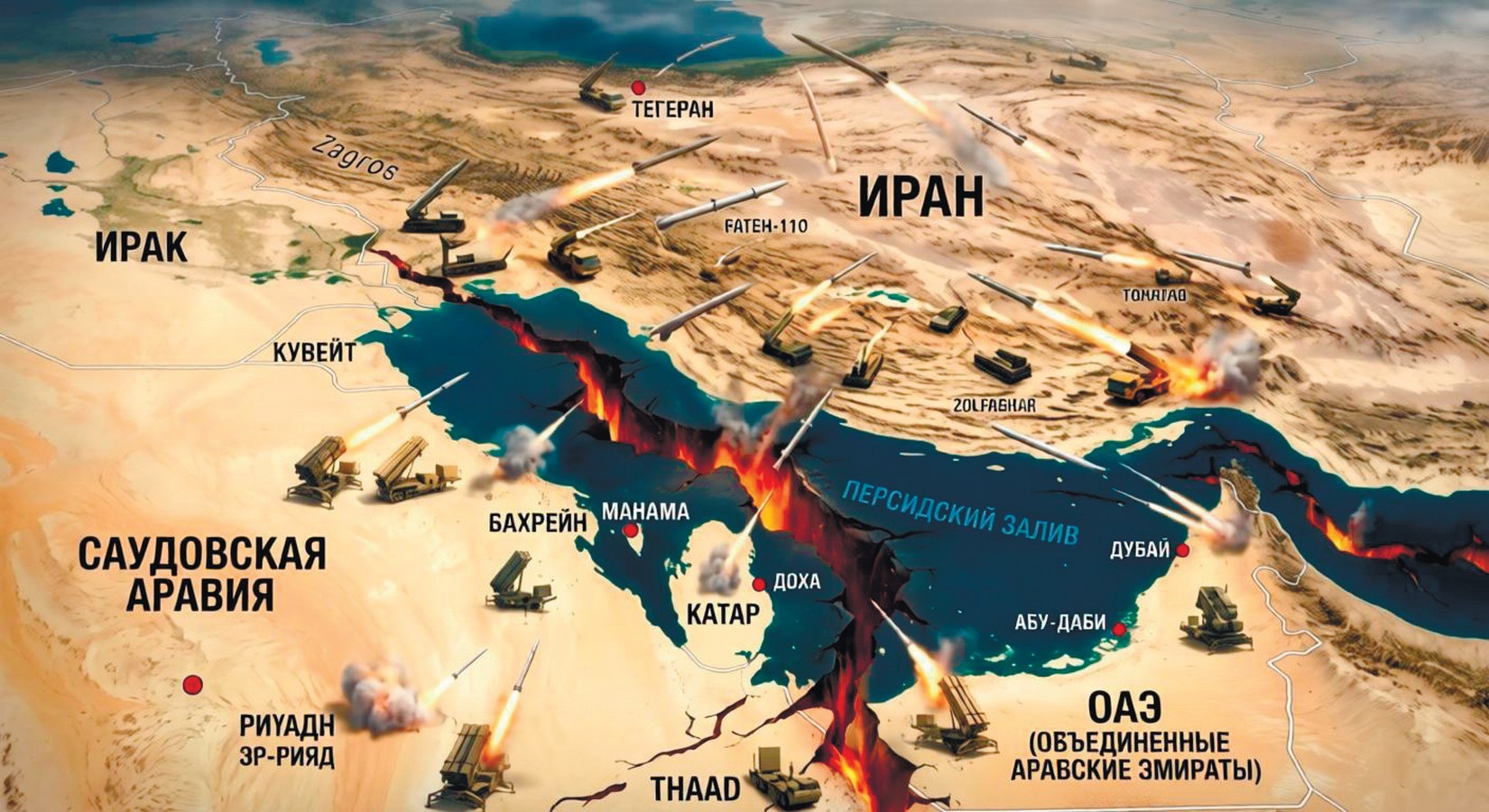
In response, Tehran has decided to make fuller use of its asymmetric means of influencing the enemy, thereby expanding the geographical scope of the conflict. The primary targets of the Iranian military have expanded beyond American bases and facilities in the Gulf states to include the energy and water infrastructure of those states, which Iran considers to be complicit in the American military campaign.
It is evident that Bahrain and Kuwait have been subjected to a significant number of intense attacks. Bahrain is home to the headquarters of the US Fifth Fleet, whilst Kuwait hosts major American bases, depots and logistics facilities. Iranian official sources portray such attacks as strikes specifically targeting American military infrastructure, even when the facilities are located on the territory of Arab states.
In July, the Iranian side claimed to have targeted Patriot systems, fuel depots, antennae and intelligence facilities. Kuwait has reported damage to its electricity and water supply facilities. Meanwhile, Bahrain has accused Iran of carrying out attacks that pose a threat to the civilian population.
At the same time, the current situation with Israel remains unresolved. Despite the US-focused strikes in southern Iran, the Israeli Air Force continued to carry out strikes against military-industrial complex facilities, arms depots, IRGC facilities and missile infrastructure. This ensured that Tehran could not focus all its available forces solely on countering the US operation in the Persian Gulf.
Through its actions, Tehran pursued several interrelated objectives at once. First and foremost, it sought to raise the cost of the American military presence in the region by demonstrating that further escalation would inevitably increase the risks for the US and its allies. At the same time, Iran signalled to the Gulf states that the deployment of American military facilities automatically turned their territory into a potential theatre of operations.
An equally important objective was to sow discord between Washington and its Arab partners, prompting the latter to adopt a more cautious stance towards US operations. Finally, by striking shipping, oil infrastructure, power stations and desalination plants, Tehran hoped to inflict economic damage on its adversary that was disproportionate to its own military capabilities.
The Gulf striking back?
However, the outcome has proven to be the opposite of what was expected. Instead of securing the neutrality of the Gulf monarchies, Iran is gradually pushing them towards closer military coordination with the US and with one another.
The most significant revelation was the report that, in early July, Bahrain and Kuwait discreetly deployed fighter jets to conduct strikes on targets within Iran. According to sources, the targets included missile and drone depots, as well as other military installations. The United Arab Emirates, which is reported to have previously participated in individual operations at an earlier stage of the war, provided intelligence and air cover.
Although Kuwait officially denies any involvement in offensive operations against Iran, and Bahrain has not publicly confirmed the strikes, all the evidence suggests that the Gulf states are unlikely to be content with the role of passive observers and, in all likelihood, may not only be planning but also taking concrete action against Tehran.
For decades, the Gulf states have sought to avoid direct military confrontation with Iran. They have provided the US with bases, airspace, surveillance systems and logistical infrastructure, but have generally endeavoured not to participate formally in strikes on Iranian territory. This caution was due to their heightened vulnerability. It is important to note that the monarchies' major cities, oil refineries, ports, power stations and desalination plants are within range of Iranian missiles and drones.
It would appear that the behaviour of the Arab Gulf monarchies is gradually changing. While these countries have previously sought to maintain both a military partnership with the US and political channels with Tehran, Iran's constant attacks may now gradually undermine this dual strategy.
That said, there is as yet no talk of forming a fully-fledged anti-Iranian military coalition. Saudi Arabia, the UAE, Qatar, Kuwait, Oman and Bahrain assess the threat from Iran differently and have varying attitudes towards direct involvement in the war. Oman and Qatar have traditionally sought to maintain a mediating role, whilst Kuwait is particularly sensitive to accusations of involvement in offensive operations. This is precisely why the alleged strikes, if they did indeed take place, were carried out in secret.
Awaiting the next escalation
The latest phase of the US-Iranian standoff has concluded without either side achieving any significant breakthrough. The United States succeeded in inflicting considerable military and economic damage on Iran, yet failed to achieve its primary objective of permanently preventing Tehran from leveraging the Strait of Hormuz as a means of strategic coercion.
In response, Iran has demonstrated that, despite significant military strikes, it retains the capacity to launch retaliatory strikes, threaten shipping in the Strait of Hormuz and the Red Sea, draw new parties into the conflict, and thereby continuously increase the cost of any further military campaign for the US and its allies.
The repercussions of this confrontation are already extending far beyond the region. The ongoing threat to key maritime routes is exerting pressure on global energy markets, driving up the cost of maritime transport, insurance premiums and energy prices, and thus increasing the economic costs for Western nations. Recent events have demonstrated that, despite the substantial damage inflicted on its military and civilian infrastructure, Iran retains its capacity to continue the war and maintains a significant portion of its asymmetric capabilities.
Therefore, it is most likely that the decision to suspend the strikes by Donald Trump should be viewed not as an end to the conflict, but as an attempt to use the military gains achieved to strengthen Washington's negotiating position. As neither side has achieved its key objectives and their fundamental differences remain unresolved, the current pause is likely to be temporary. Should the next round of talks fail to produce mutually acceptable agreements, a further escalation in the situation will be virtually inevitable.
Evidence of this can be seen in Iran's latest attacks on ships in the Strait of Hormuz and on US military targets in Jordan on 29 July. All this shows that the parties have not ruled out a military scenario, but have merely taken a tactical pause to regroup their forces and assess the results achieved. Under these circumstances, the likelihood of a resumption of large-scale confrontation remains high, and the truce that has been reached should be viewed more as a tactical respite than as the beginning of a sustained de-escalation.
RECOMMEND:
 132
132

