

PRAGMATIC PARTNERSHIP
Azerbaijan and Germany expand the scope of economic cooperation
Author: Nurlana BÖYÜKAGHAGYZY
President Ilham Aliyev’s talks in Berlin marked the beginning of a new stage in Azerbaijani-German relations, based on a combination of economic interests and strategic dialogue. Energy remains their most developed area of cooperation, but the substance of the visit demonstrated the parties’ determination to move well beyond trading in oil and gas. The new agenda includes investment, industrial modernisation, the Middle Corridor, digitalisation, renewable energy, agriculture and hydrogen technologies.
The political prerequisite for implementing these plans remains stability in the South Caucasus, which is why economic issues were discussed in Berlin in direct connection with the peace process.
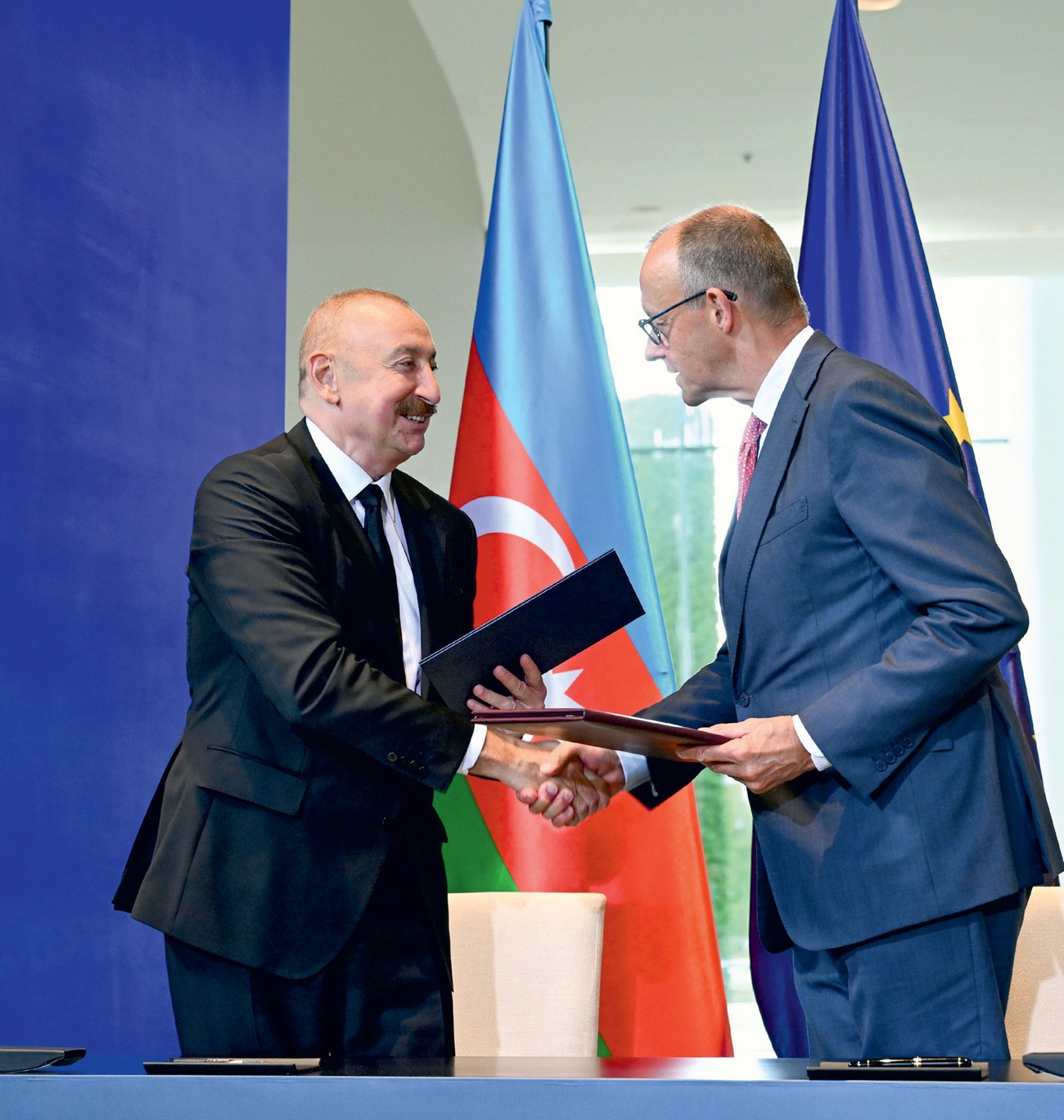
The visit’s central outcome was the signing of two documents: one on a strategic agenda for bilateral partnership and another on the establishment of an Azerbaijani-German Business Council.
New level of cooperation
Ilham Aliyev’s official visit to Germany began with a business-related engagement—a meeting with Michael Harms, Chairman of the German Eastern Business Association. The parties discussed the growing interest among companies from both countries in working together and ways to institutionalise this interest. In addition to conventional and alternative energy, the talks focused on transport, logistics, the Middle Corridor, tourism and the application of German technologies in smart agriculture.
The agenda itself showed that Baku and Berlin are gradually moving away from a narrow model in which Azerbaijan acts primarily as a supplier of energy resources and Germany as a provider of industrial goods. The objective of this new stage is to move towards investment, joint projects and technological cooperation.
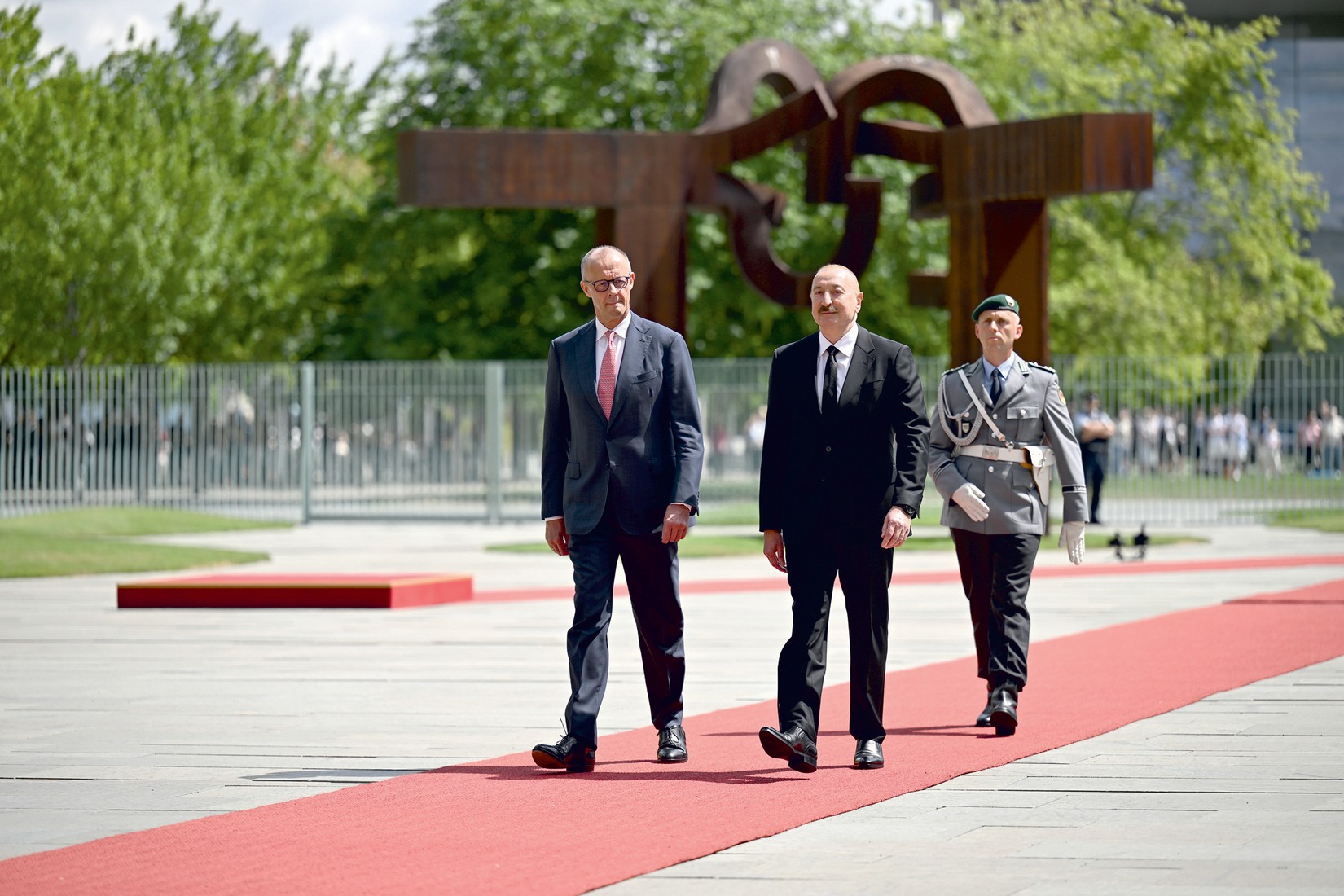
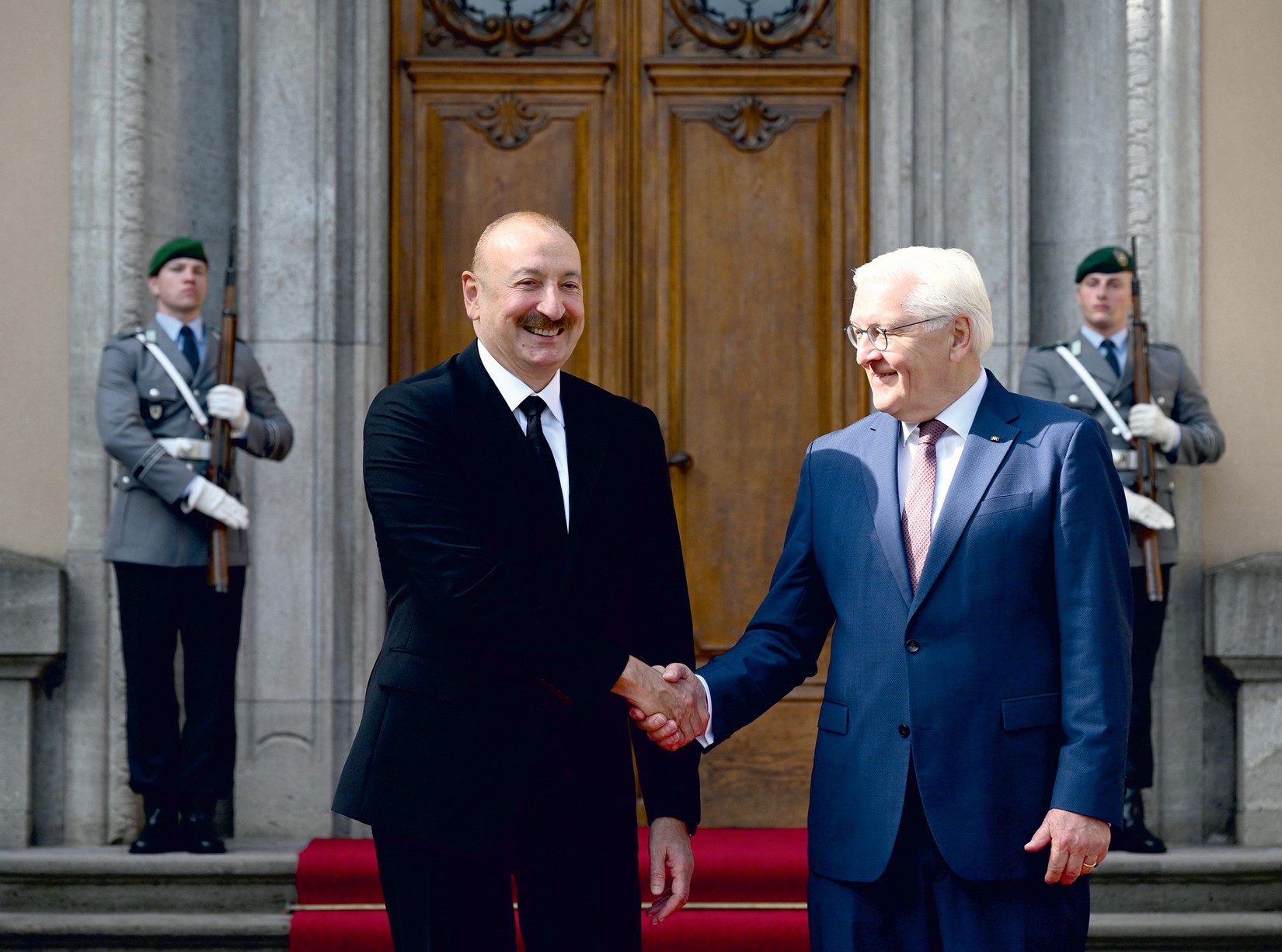
The political part of the programme began with meetings with Federal President Frank-Walter Steinmeier at Bellevue Palace. The German President described Azerbaijan and Germany as “islands of stability” against the backdrop of developments in the world and the region, placed particular emphasis on Azerbaijan’s role in Europe’s energy security, and congratulated it on its achievements in the peace agenda with Armenia. Relations between Baku and the EU, the Middle Corridor and the situation in the Middle East were also discussed.
The main event of the visit was Ilham Aliyev’s talks with Chancellor Friedrich Merz. Following the talks, the parties signed a Joint Declaration on the Strategic Agenda for Bilateral Partnership. The document provides for regular political consultations, the continuation of the high-level working group on trade and investment, and cooperation in industry, agriculture, energy, infrastructure, digital transformation, science and education.
“I am confident that the documents signed today will take our relations to a new level. We wanted the strategic dialogue to begin, and we have achieved that,” Ilham Aliyev said.
The declaration itself is framework-based and contains neither financial assessments of the projects nor firm deadlines for their implementation. Its importance lies in the shift from cooperation in individual areas towards the systematic coordination of long-term interests. According to Ilham Aliyev, several working groups will be established to implement the agreements.
Business calculation
The economic foundation for this transition has been developing for many years. In 2025, trade between the two countries amounted to approximately $1.4 billion, an increase of around 68% compared with 2020. The structure of trade remains largely traditional: Germany exports machinery, industrial equipment, vehicles, chemicals and pharmaceutical products to Azerbaijan, while crude oil accounts for the bulk of Azerbaijan’s exports to Germany.
More than 200 German companies are active in Azerbaijan, while the German-Azerbaijani Chamber of Commerce and Industry brings together more than 150 business representatives. Nevertheless, the scale of direct investment and joint production remains below the potential of the EU’s largest economy and the South Caucasus’s largest market.
“Many German companies are operating successfully in Azerbaijan. The number of active companies exceeds 200. I am confident that their number will increase following today’s visit,” Ilham Aliyev said. According to him, specific proposals have already been put forward to expand the activities of German businesses.
One practical outcome of the visit was the signing of a separate declaration on the establishment of the Azerbaijani-German Business Council. It is expected to provide a direct channel of communication between companies, support investment projects and help remove administrative obstacles.
Friedrich Merz described the council’s establishment as “an important signal for companies in both countries”, adding: “Germany takes the expansion of relations with Azerbaijan seriously.” The Chancellor also said that the investment programme proposed by Baku had been discussed constructively and could create additional opportunities for German companies.
The most promising areas could include the production of industrial equipment, automation, the digitalisation of transport, agricultural technologies, water management and energy efficiency. Germany has strong expertise in these fields, while Azerbaijan is implementing large-scale programmes to modernise its economy and rebuild its liberated territories.
German business is not limited to major corporations. A significant part of Germany’s economy consists of specialised medium-sized companies, for which entering a distant market involves higher costs and risks. “Small and medium-sized enterprises often find it difficult to invest when they are located far away. Having favourable conditions on the ground is always very important,” Friedrich Merz stressed. The effectiveness of the Business Council will therefore be judged not by the number of meetings it holds, but by its ability to facilitate the entry of new investors into the market.
Gas contract
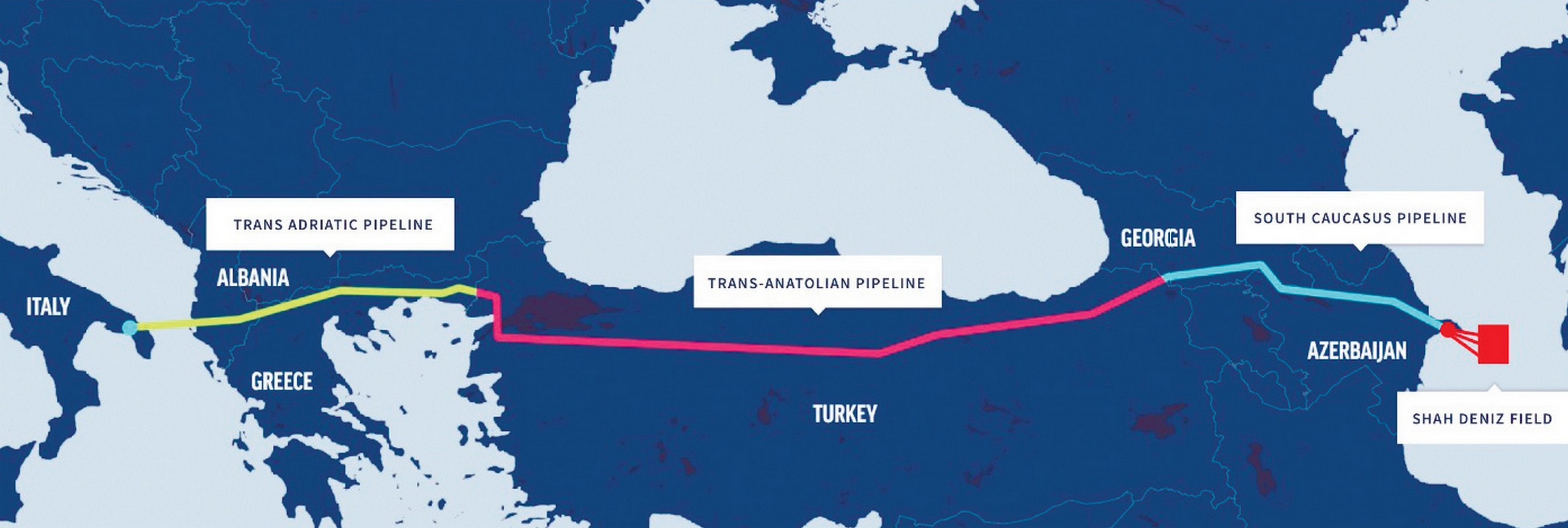
Energy remains the most specific and commercially substantial area of cooperation. Azerbaijan has long supplied oil to Germany, and natural gas was added to these supplies at the beginning of 2026. The gas is transported via the Southern Gas Corridor through Italy to Austria and Germany.
SOCAR has signed a ten-year contract with the German company SEFE to supply 1.5 billion cubic metres of gas annually. With access to the German and Austrian markets, the geographical reach of Azerbaijani gas exports has expanded to 16 countries, ten of them EU members. In 2025, Azerbaijan’s total gas exports amounted to 25.2 billion cubic metres, of which 12.8 billion went to Europe.
For Germany, the contract matters not only because of its volume. Following the cessation of imports of Russian pipeline gas, Berlin has had to diversify its suppliers, develop LNG infrastructure and preserve sufficient resources for industry at the same time. Azerbaijani gas is becoming part of this complex security system.
“After halting gas imports from Russia four and a half years ago, we naturally began looking for new sources of supply, and Azerbaijan plays an important role in this respect. From an economic point of view, this is an interesting prospect for us,” Friedrich Merz said.
The Chancellor confirmed Germany’s interest in additional volumes: “We want to diversify our energy supplies further through cooperation with Azerbaijan.” He described supplies to southern Germany as particularly promising, as the necessary infrastructure either already exists there or can be expanded.
Baku is also ready to increase exports, provided that two conditions are met: additional demand and the development of the transport system. “The initial volume is 1.5 billion cubic metres. However, this volume can naturally increase,” Ilham Aliyev said.
The main limitation today is capacity. TANAP and TAP are operating virtually at full capacity, while new connections and the expansion of existing pipelines are required to supply Central Europe. A modest 1.2-billion-cubic-metre increase in TAP’s capacity made it possible to begin exports to Austria and Germany, but substantially larger investments will be needed for significant growth.
The cost of expansion
The problem lies in the contradiction between Europe’s energy security and its financial policy. European institutions, including the European Investment Bank, have virtually ceased financing traditional oil and gas projects as part of the green agenda. At the same time, geopolitical crises are forcing the EU to seek additional volumes of gas from sources other than Russia.
“Today, both TANAP and TAP are operating at full capacity, and there is no room left in these pipelines. New inter-connectors are needed across Europe. Naturally, this requires funding,” Ilham Aliyev said.
He called on European banks to reconsider their approach to infrastructure financing in light of instability in the Middle East and the disruption of traditional supply chains. If funding is found to develop fields and expand pipelines, Ilham Aliyev believes, Azerbaijan will be able to significantly increase its gas exports to Europe, including Germany.
This proposal effectively raises the question of risk-sharing for Berlin and Brussels. Long-term contracts with European buyers could guarantee demand, while financial support could make it possible to build the necessary infrastructure. Without these two elements, political interest alone will not be enough.
At the same time, the parties are seeking to avoid the impression that the new stage of their partnership is based exclusively on fossil fuels. The joint declaration provides for cooperation in green energy, energy efficiency and the production of low-carbon hydrogen.
“Today, we also discussed expanding the use of renewable energy sources and hydrogen,” Friedrich Merz said. Ilham Aliyev, for his part, stressed that Azerbaijan was determined to supply green energy to Europe in the future.
A two-tier model is therefore taking shape: in the medium term, gas will support the diversification of the European market, while in the long term cooperation should shift towards green electricity and hydrogen. This will require not only the development of generation capacity in Azerbaijan, but also the development of the Black Sea Energy Corridor, grid infrastructure and European certification mechanisms.
The Middle Corridor
The second strategic block of the visit concerned transport and logistics. As global trade is being restructured, Germany is interested in reliable routes to Central Asia and onwards to China. The Middle Corridor, running through the Caspian Sea, Azerbaijan, Georgia and Türkiye, offers such an opportunity, but its competitiveness depends on transport speeds, the coordination of tariffs, and the capacity of ports and railways.
Azerbaijan already possesses a significant part of the required infrastructure: the Port of Baku, the Baku-Tbilisi-Kars railway, a Caspian fleet, and a network of road and rail routes. The task now is to synchronise the operations of all the countries along the corridor and introduce the digital exchange of documents.
“The South Caucasus is becoming increasingly important as a bridge between Europe and Asia. New transport and trade corridors are creating economic potential that we want to use together,” Friedrich Merz said.
For Germany, the Middle Corridor is important not only as a route for transporting finished products. Berlin views Central Asia as a source of raw materials, energy and new markets. Azerbaijan, meanwhile, is becoming a link that enables German businesses to build shorter and more diversified supply chains.
“Having become a full member of the Central Asian consultative format last year, Azerbaijan plays a kind of bridging role between Central Asia and Europe. This role will gradually grow,” Ilham Aliyev said.
The discussion is expected to continue in Baku on October 6 at the German-Azerbaijani Conference on Connectivity. It is planned to focus on investment in transport, logistics, port and railway infrastructure, green energy and digitalisation. For German companies, this will be an opportunity to participate not only in transportation, but also in the modernisation of the route itself.
The stability factor
The visit’s economic agenda was inseparably linked to regional politics. Both Frank-Walter Steinmeier and Friedrich Merz paid particular attention to the peace process between Azerbaijan and Armenia. Germany regards its conclusion as a condition for stability in the South Caucasus and for the reliability of the routes connecting Europe and Asia.
“Germany and the European Union have a strong interest in achieving lasting peace in this geopolitically important region,” Friedrich Merz said, describing the initialling of the peace agreement as a historic event. “Germany and Europe will be happy to do everything within their power,” he added.
Baku is already linking normalisation to practical economic steps. More than 40,000 tonnes of transit cargo have passed through Azerbaijan into Armenia, while supplies of petrol and diesel fuel have begun. The expansion of such operations could gradually alter the economic map of the South Caucasus and give new substance to regional communications.
The role of Azerbaijan as a platform for international dialogue was also discussed in Berlin. Responding to a question about meetings in Baku involving former and current German and Russian representatives, Ilham Aliyev said that the Azerbaijani authorities had learned of them through media reports. He added that if such contacts could help bring the Russian-Ukrainian war to an end, Baku would welcome this dialogue.
The visit confirmed Germany’s growing importance in Azerbaijan’s relations with the EU. Ilham Aliyev’s meeting with Frank-Walter Steinmeier ensured political continuity in the dialogue, while the talks with Friedrich Merz gave it economic substance. Following visits to Baku by the presidents of the European Council and the European Commission, Berlin’s support could become an additional factor bringing Azerbaijan closer to European institutions.
Thus, Ilham Aliyev’s official visit to Berlin established a new framework for bilateral relations. Azerbaijan is offering Germany oil and gas, future green energy, a transit route to Central Asia and access to a developing regional market. Germany can provide capital, technology, industrial expertise and political influence within the European Union. Whether this complementarity develops into a fully fledged strategic partnership will depend on how quickly the two signed declarations are translated into investment, effective institutions and concrete projects.
RECOMMEND:
 154
154

