
CAPITAL OF CONVERGENCE
Azerbaijan and Uzbekistan moving from trade growth to joint investment, manufacturing and new routes
Author: Nurlana GULIYEVA
Until recently, the economic agenda for Azerbaijan and Uzbekistan was focused on increasing trade and on cooperation projects. Today, it encompasses joint investment capital, car manufacturing plants, banking services, geological exploration, petrochemicals, property development, agro-industrial cooperation and their own transport infrastructure on the Caspian Sea. Over the past five years, bilateral trade has tripled; however, the most significant shift is taking place beyond the realm of trade. Businesses from both countries are increasingly not just selling products to one another, but establishing production facilities and services directly in the partner's market.
During President Ilham Aliyev's state visit to Uzbekistan and the 4th Uzbek-Azerbaijani Interregional Forum held in Tashkent, new dimensions and directions for economic cooperation were outlined.
Total investment
In 2025, the volume of trade between Azerbaijan and Uzbekistan reached $795 million, more than tripling the previous year's figure. In the first five months of 2026, it grew by a further 33 per cent, to $144 million. However, the sustainability of the next phase will depend less on increasing exports and more on the establishment of production chains and regular freight flows.
"We have adopted a new strategy and agreed to increase trade turnover to one billion dollars. It is clear that this is not the limit," stated Shavkat Mirziyoyev, President of Uzbekistan. It is crucial to emphasise that the capacity of one billion is not the upper limit in this context. The total value of joint projects has already surpassed $5 billion, indicating that the investment strategy is substantially outpacing current trade figures. This is changing the very model of cooperation: instead of exchanging a limited range of goods, a system of mutual presence of capital, technology and companies is taking shape.
The Azerbaijan-Uzbekistan Investment Company, with a capital of $500 million, is the main financial instrument of the new model. Initiatives totalling approximately $160 million have already been identified using its resources, involving investments in both countries.
Azerbaijani President Ilham Aliyev stated that Azerbaijan has similar cooperation arrangements with various countries, but that the Uzbek-Azerbaijani fund is the most effective and results-oriented. He emphasised that the volume of investments already contracted and planned far exceeds the fund's own capacity. In summary, its function extends beyond the provision of direct financing. The joint capital acts as a seal of quality, helping projects to attract additional resources from banks, large companies and private investors.
A notable example of this strategy is the entry of JSC 'International Bank of Azerbaijan' into the Uzbek market via ABB Davr Bank. The local financial platform will be able to support Azerbaijani investments on the ground and reduce transaction costs. In Azerbaijan, in turn, there are over 130 commercial organisations registered with Uzbek investment—ranging from industry and construction to transport and services.
Investments in property and tourism appear to be particularly significant. PASHA Holding is developing a hotel and residential complex in Tashkent under The Ritz-Carlton brand, whilst Sea Breeze Uzbekistan is developing a large-scale tourism and residential area. According to Ilham Aliyev, plans are in place to invest $5 billion in Uzbekistan's tourism sector alone. This demonstrates that, following on from state-led initiatives, significant private capital is already being channelled into long-term projects.
A reciprocal flow of investment is also taking shape in Azerbaijan. Karabakh and Eastern Zangezur are of particular importance, with new infrastructure and investment incentives creating opportunities for the private sector. Uzbekistan's involvement in the reconstruction of the liberated territories—from the Mirza Ulugbek School to the 100-hectare pomegranate orchard known as the 'Garden of Friendship' in Fizuli—is significant for both practical and symbolic reasons.
As Ilham Aliyev noted in an interview with the National News Agency of Uzbekistan, joint projects in these territories are expanding economic cooperation and creating new opportunities for the development of both countries.
From assembly to manufacturing
The automotive industry is the most prominent example of manufacturing cooperation. Azerbaijan has already produced 10,720 Chevrolet cars and 275 Isuzu buses. The next step is of far greater significance than mere assembly. A second plant is currently under construction in Hajigabul, with investments exceeding $80 million, and designed for a full production cycle. In order to generate an industry-wide impact extending far beyond the confines of a single enterprise, it is vital to complement this with the localisation of components, staff training and a network of suppliers.
For Azerbaijan, this presents an opportunity to utilise the expertise of Uzbekistan—Central Asia's largest manufacturer of passenger cars—in establishing its own industrial cluster. For the Uzbek side, the project means consolidating brands and technologies in the South Caucasus market and gaining access to neighbouring regions. Mutual benefit is realised precisely at the localisation stage: the finished car no longer simply crosses the border, but creates jobs and generates demand for metal, plastic, glass, logistics, services and vocational training within the country of manufacture.
A similar logic can be seen in the energy and extractive industries. SOCAR is participating in a project to develop six blocks on the Ustyurt Plateau, with potential investment estimated at $2 billion. The Azerbaijani company is acting as the geological exploration operator. The initial five-year period will involve 3D seismic surveys covering at least 1,000 square kilometres and the drilling of an exploration well. The estimated reserves are significant, with projections reaching up to 100 million tonnes of oil and 35 billion cubic metres of gas. However, it is important to note that these figures should currently be regarded as geological potential rather than proven commercial reserves. The appointment of SOCAR as operator is a testament to the export of Azerbaijani engineering and management expertise.
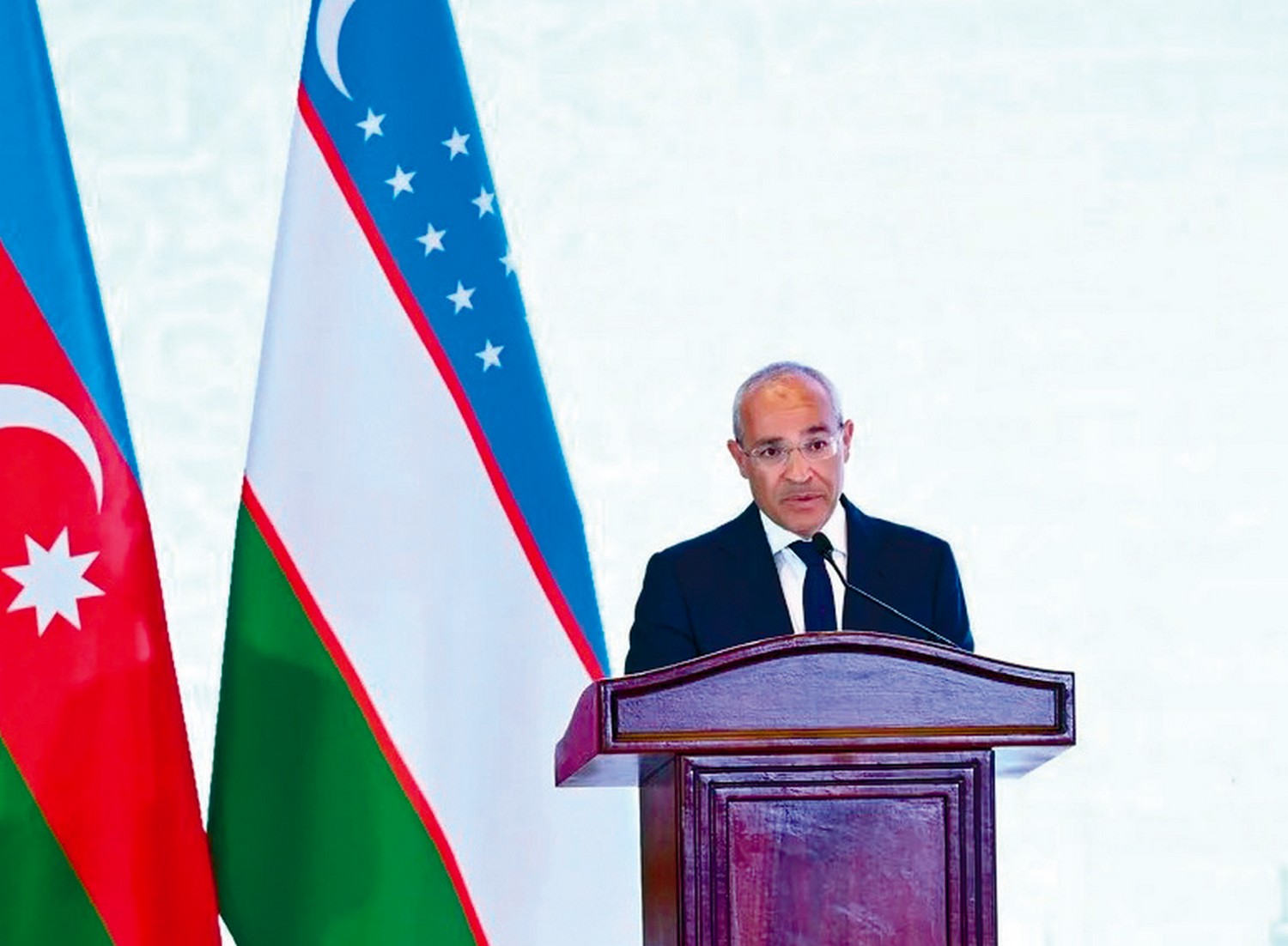
It should be noted that cooperation is not limited to production. The Neftegaztexnologiya joint venture has been operating on the basis of the two countries' industry-specific institutes since 2016, whilst Turan Energy AFEZCO—a company established by SOCAR and Uzbekneftegaz—supplies high-pressure polyethylene produced by Azerkhimia to Uzbekistan. Discussions are now underway regarding the joint production of motor and aviation fuel, with SOCAR's entry into the Uzbek retail market set to be the next link in the chain. Azerbaijan's Minister of Economy and Chairman of SOCAR's Supervisory Board, Mikail Jabbarov, announced this at the 4th Interregional Forum. The collaboration encompasses all stages of the process, from production to sales, and ultimately to the end consumer.
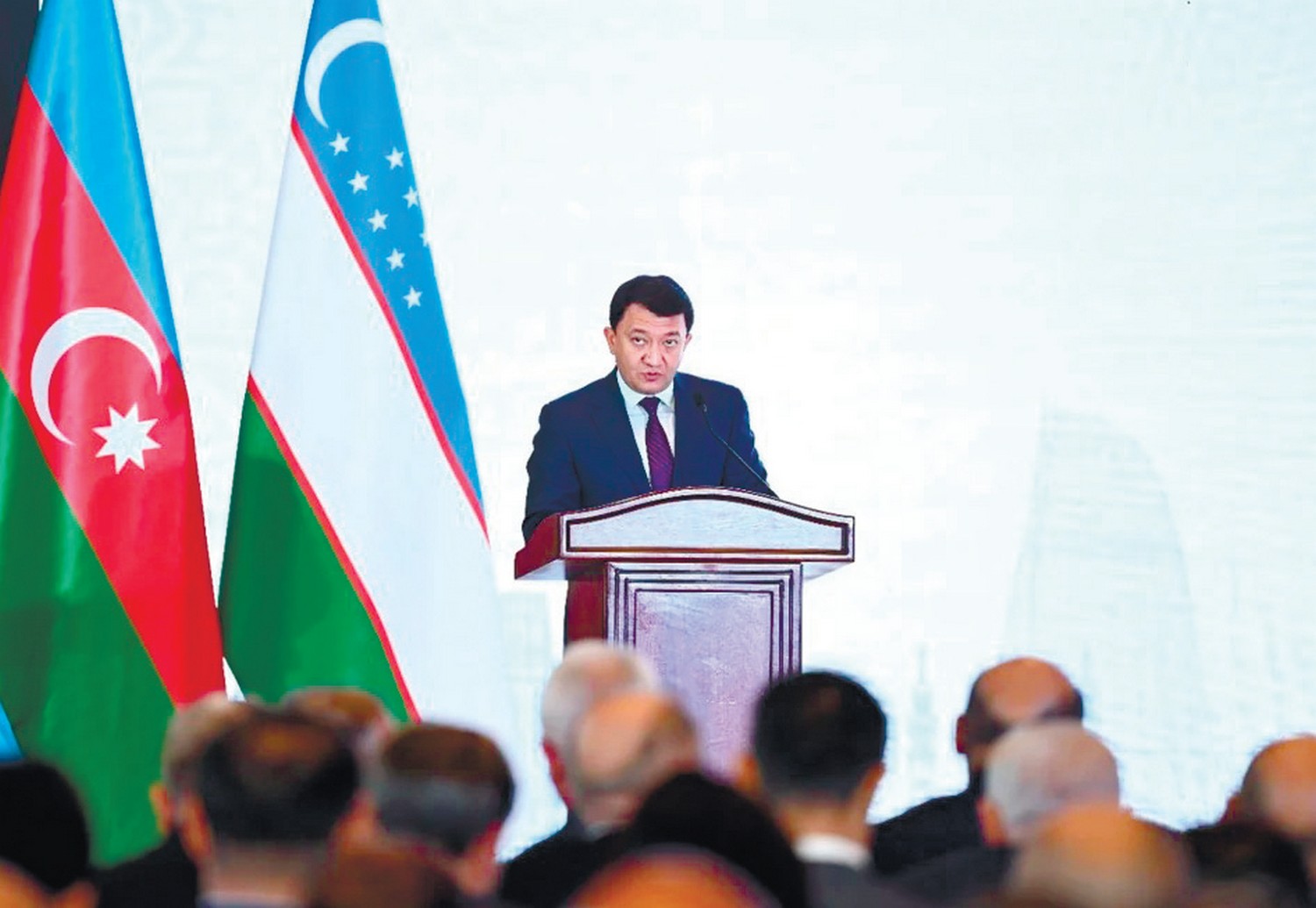
Sherzod Khojaev, the country's Minister of Energy, has announced plans for a new joint production initiative with Uzbekistan. The initiative will focus on the production of petroleum products, including motor and aviation fuel, to meet the needs of Uzbekistan. This agreement will provide Uzbekistan with an additional source of technological and energy security, while SOCAR will gain a new and substantial market. The energy portfolio is complemented by a mining component: AzerGold, in collaboration with its Uzbek partners, plans to undertake geological exploration and initiate mining operations. "All these activities will be carried out in the regions of Uzbekistan," emphasised Mr. Jabbarov.
A joint export project in renewable energy generation may be added to the traditional energy and petrochemical sectors. The 'Green Corridor Union', established by Azerbaijan, Uzbekistan and Kazakhstan, is a strategic initiative aimed at facilitating the transmission of electricity across the Caspian Sea to Europe. Further technical and financial preparation is required, but the logic behind the proposal is clear: Uzbekistan gains a potential export market, whilst Azerbaijan consolidates its role as an energy bridge.
The economics of the route
The key question to consider is how quickly and reliably raw materials, components and finished goods will be able to move between countries. In 2025, the volume of transit shipments rose by 6.7 per cent to 1.4 million tonnes, and in the first half of 2026, it increased by a further 12.2 per cent to 675,000 tonnes. While there is growth, the current logistics infrastructure may soon prove insufficient for a project portfolio worth over $5 billion.
Therefore, the proposal to establish a separate Uzbek-Azerbaijani corridor with a single operator on the Caspian Sea is economically viable. "As part of the development of the Middle Corridor, it is necessary to accelerate the launch of a joint fleet on the Caspian Sea. We are also interested in creating a separate Uzbek-Azerbaijani corridor with a single operator," stated Shavkat Mirziyoyev. Unified management can synchronise the rail and maritime sections of the route, reduce port delays, simplify tariffs and make delivery times more predictable.
A ferry for Uzbekistan, which is planned to be built at the Baku Shipyard, is to form a separate element of the project. Ilham Aliyev emphasised the importance of prioritising this project, despite the shipyard's current full booking with orders and the simultaneous construction of approximately ten vessels.
At the same time, it is important to note that the objective goes beyond simply increasing transit volumes. At the 4th Interregional Forum, the Middle Corridor was identified as an economic platform where added value is created. Along the specified route, warehouses, distribution centres, service enterprises and manufacturing facilities will be utilised to generate revenue from transport charges and industrial cooperation.
New opportunities are also emerging in the agricultural sector. Uzbekistan has adapted Azerbaijan’s experience in agricultural risk insurance and, with the involvement of specialists from Azerbaijan, is trialling over 1,200 olive and hazelnut saplings. These are, as yet, small-scale projects, but they are important for small and medium-sized enterprises.
Overall, the main outcome of the current rapprochement lies not in individual trade turnover records. Azerbaijan and Uzbekistan are gradually integrating investment, production, finance and transport into a single economic system. It is precisely this complementarity that can provide the bilateral partnership with long-term economic stability.
RECOMMEND:
 49
49