

THE MECCA TRIANGLE
New regional game: Türkiye, Saudi Arabia, and Pakistan sign agreement
Author: Ilgar VELIZADE
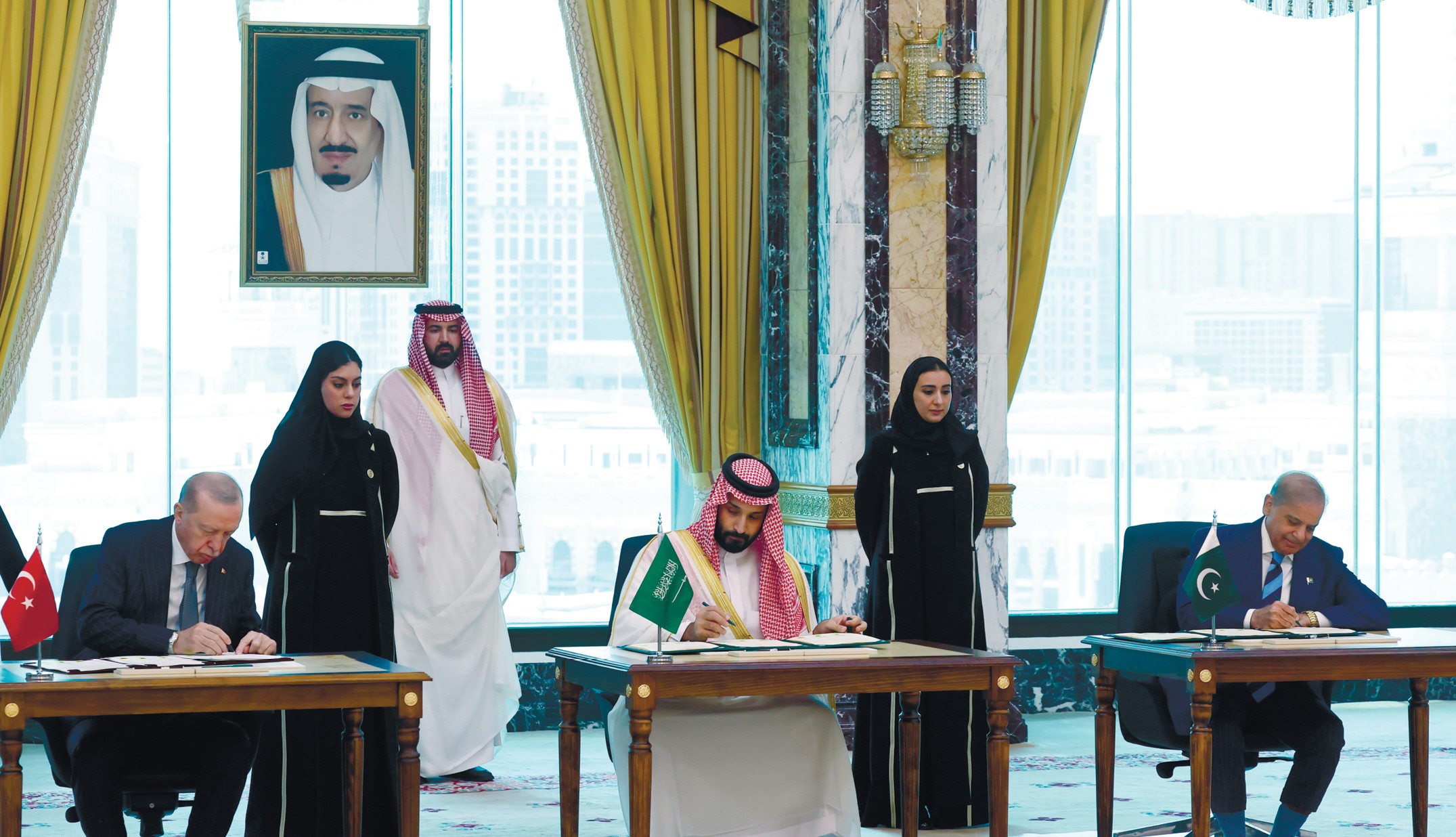
In August, a significant event occurred in the Middle East that can be regarded as a landmark moment. It has the potential to significantly impact the current security architecture and influence future processes in the region.
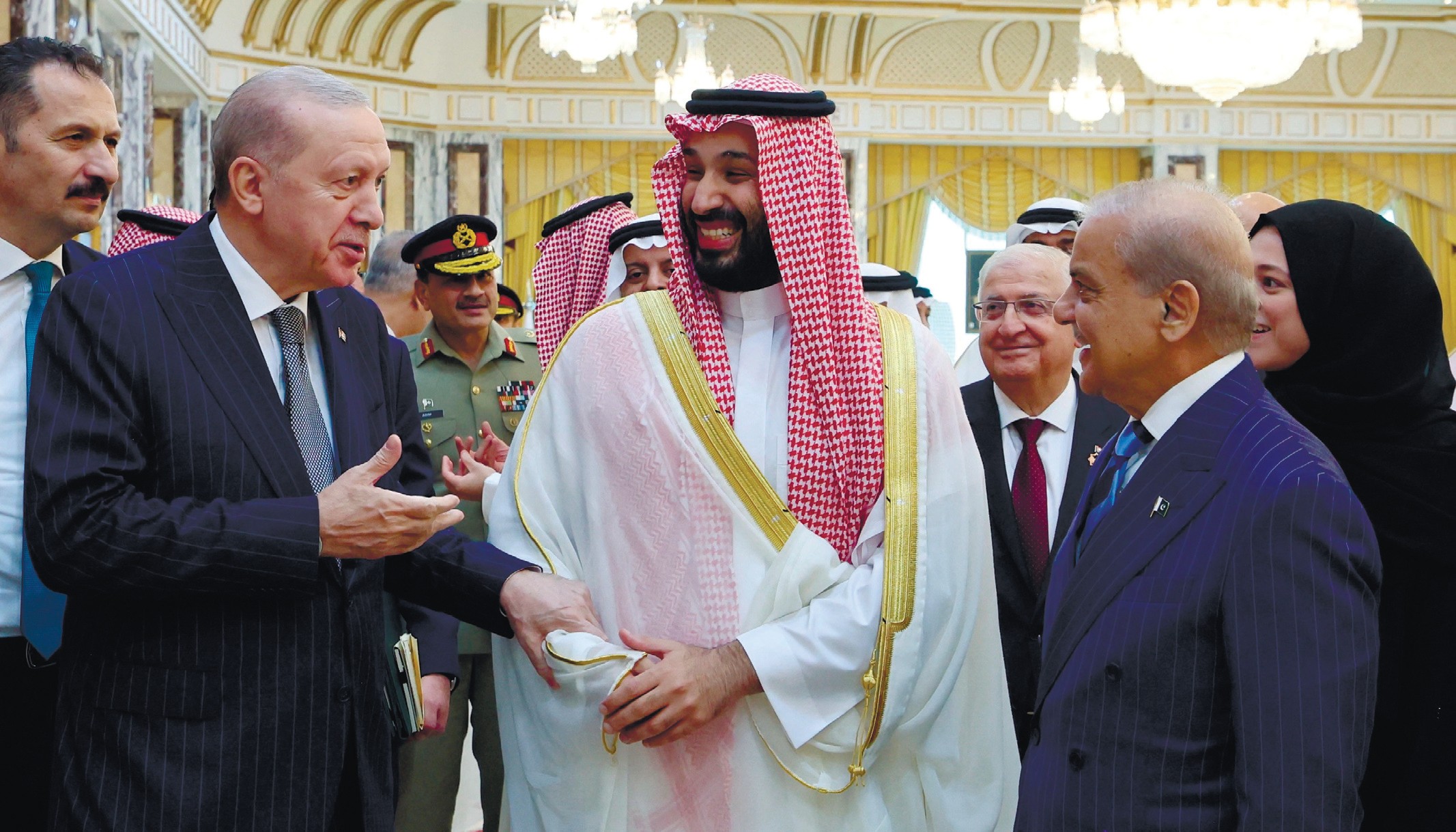
This refers to the defence pact signed in Mecca on 7 August between Türkiye, Saudi Arabia and Pakistan. In accordance with the terms of the agreement, an armed attack on one of the participants will be considered an attack on all participants. If this principle is implemented in practice, the Mecca Pact could represent one of the most significant changes to the regional security architecture in recent years.
Long-term commitment between Ankara, Riyadh, and Islamabad
The new format of the agreement is based on a strategic mutual defence pact between Saudi Arabia and Pakistan signed back in September 2025. Negotiations on Türkiye's inclusion commenced at the start of the current year. In January, Turkish Foreign Minister Hakan Fidan confirmed the consultations and, at the same time, spoke of the need for a broader regional security system.
The formation of such an alliance would have been difficult to envisage just a few years ago. Following the Arab Spring, Türkiye and Saudi Arabia found themselves on opposing sides of the majority of regional conflicts. They supported competing political forces, had differing positions on the Muslim Brotherhood, and opposed each other during the Qatari crisis. Following the high-profile murder of Jamal Khashoggi, relations were on the verge of complete rupture.
However, in recent years, the situation has changed dramatically. Following the restoration of political dialogue, the expansion of economic cooperation, and the initiation of joint projects in the defence sphere, Ankara and Riyadh have established a strong foundation for further collaboration. Following the visit of Recep Tayyip Erdogan to Saudi Arabia in 2023, the kingdom signed a significant contract for the purchase of Turkish Baykar drones. Furthermore, this issue pertains not only to purchases but also to the localisation of production and technology transfer.
In this case, Pakistan effectively functioned as the connecting link. For decades, Islamabad has maintained close military relations with Saudi Arabia and participates in the training of its armed forces. At the same time, Pakistan is one of Türkiye's closest military-political partners.
It is evident that the capabilities of the three countries complement one another well. Türkiye is a member of NATO and has one of the largest armies in the alliance, as well as a rapidly developing defence industry. Pakistan is a country with a strong military presence and is the only Islamic nation with nuclear weapons. Saudi Arabia has significant financial resources and is developing its own defence production. The combination of Turkish technology, Pakistani military potential and Saudi investment creates a formidable partnership.
Redesigning the Middle East
The agreement is of great significance, extending far beyond the scope of military cooperation between the three states. This is indicative of a broader process. It is evident that countries in the region are becoming increasingly reluctant to rely solely on external security guarantees.
For Saudi Arabia, this issue is of particular importance. The 2019 attacks on the Abqaiq and Khurais oil facilities demonstrated the vulnerability of the kingdom's critical infrastructure, even under a close military alliance with the US. Subsequent Houthi missile and drone attacks have served only to reinforce these concerns. The latest escalation around Iran has finally shown that Riyadh needs its own regional deterrence mechanisms.
At the same time, it would be erroneous to view the new alliance exclusively through the prism of confrontation with Iran. In the Middle East, another potential source of tension is emerging, linked to the deterioration of relations between Türkiye and Israel.
It should be noted that this does not necessarily imply the formation of a direct military alliance against Israel. However, Israel's further actions in Gaza, Syria or Lebanon could bring the positions of the three countries closer together.
It is likely that the primary objective of the new agreement will not be preparation for war, but rather its prevention. The principle of collective defence significantly increases the cost of any attack on a participant. A potential adversary must now take into account the possibility that a bilateral conflict could escalate into a multilateral one.
This is particularly relevant in the context of Iran. In the event of a direct clash with Saudi Arabia, Tehran must consider not only the kingdom's capabilities, but also the reaction of Türkiye and Pakistan. Conversely, the potential for conflict to escalate significantly could prompt all parties to adopt a more cautious approach.
The new alliance may also have consequences for relations within the Arab world. This issue primarily concerns the UAE. A few years ago, Saudi Arabia and the United Arab Emirates were regarded as the closest of allies. They participated together in the war in Yemen. However, over time, serious disagreements emerged between them over Yemen, economic issues and regional policy.
Saudi Arabia is currently establishing a new military-political alliance with Türkiye and Pakistan, excluding the UAE. For Abu Dhabi, this is of particular significance, given that until recently, Türkiye was regarded as one of the Emirates' primary regional competitors.
Consequently, Saudi Arabia and the UAE are progressively establishing diverse systems of partnership. Riyadh is strengthening its ties with Türkiye and Pakistan, while Abu Dhabi is expanding its relations with Egypt, India, France, the US and Israel. While it is premature to discuss the emergence of two competing blocs, the divergent trajectories of the two countries' foreign policy are becoming more evident.
Therefore, the future of the Mecca Pact depends on whether it remains an alliance of three states or whether other countries join it over time.
Cairo is already cooperating with Türkiye, Saudi Arabia and Pakistan within the quadrilateral R4 format, where regional security issues are discussed. Concurrently, Egypt is developing military ties with these three countries.
At the same time, Cairo traditionally avoids making rigid alliance commitments that could draw it into another country's conflict. Therefore, it is in Egypt's best interests to maintain its position within the more flexible R4 category for the time being. This approach enables the coordination of actions with partners without incurring collective defence obligations.
Another potential participant could be Qatar. Doha has long maintained close military relations with Ankara. Turkish military personnel are stationed in Qatar, and the two countries regularly conduct joint exercises and develop cooperation in the defence industry. At the same time, Qatar has good relations with Pakistan, and after the end of the 2017–2021 crisis it restored relations with Saudi Arabia.
However, Qatar has its own distinctive feature. Doha endeavours to cultivate positive relations with a diverse range of nations, encompassing both aligned and opposing interests. This capacity for constructive engagement is particularly relevant in the context of regional conflicts, where it can play a pivotal role in facilitating dialogue and finding solutions. Becoming a member of a rigid military alliance could restrict the freedom of action available to us. Furthermore, it should be noted that the largest US air base in the Middle East is located in Qatar.
Therefore, it is premature to speak of the creation of a kind of "Islamic NATO". However, the significance of the Mecca Pact should not be underestimated. The first significant challenge will provide a crucial test of the new alliance. It is at this point that it will become evident whether the pact will remain a political declaration or whether it will evolve into a genuinely functional mechanism of collective security.
Reactions and possible consequences
The formation of the new alliance has not resulted in a significant division within the region to date. In contrast, the majority of interested countries have adopted a circumspect approach and are seeking to ascertain the precise content of the Mecca Pact.
Iran's position is particularly noteworthy. Despite the evident strengthening of Saudi Arabia, Tehran did not portray the new alliance as a direct threat to its interests. Following the agreement's official signing, the Pakistani Foreign Minister Ishaq Dar engaged in a discussion with his Iranian counterpart Abbas Araqchi. Islamabad has effectively clarified that the agreement was not intended to target any specific nation.
It is also not in Iran's own interests to turn the new format into an anti-Iranian bloc in advance, especially given its close relations with Türkiye and Pakistan. Consequently, Tehran is adopting a cautious approach and observing the situation closely.
Washington also reacted in a calm manner. For the US, the desire of regional allies to assume greater responsibility for their own security generally corresponds to US interests. Furthermore, Türkiye remains a member of NATO, while Saudi Arabia and Pakistan maintain close ties with Washington. Therefore, at the current stage, the new alliance is more of a complementary addition to the existing security system than a replacement. The situation may change if the Mecca Pact evolves into an independent centre of power capable of pursuing a policy independent of the US.
The situation in Israel is somewhat different. Tel Aviv has not yet issued an official response to the establishment of the Mecca Pact. The Israeli leadership has not publicly stated that it regards the new format as a threat or as an alliance directed against it. Nevertheless, its further development will be of significance for Israel.
Pakistan does not recognise the Jewish state, Israel’s relations with Türkiye remain tense, and the normalisation process with Saudi Arabia has stalled. So much will depend on whether the pact remains exclusively a defence mechanism of three countries or over time acquires a more pronounced political content.
If other major countries begin to join it over time, and political coordination is complemented by real military interaction, it could become the foundation of a much broader regional security system. That is when it will become finally clear how seriously the new alliance is capable of changing the existing balance of power in the Middle East.
RECOMMEND:
 57
57

