

‘REAL ARMENIA’: A FRESH START
Between historical solidarity and state sovereignty
Author: Namig H. ALIYEV
On 20 August, the new 'Programme of the Government of the Republic of Armenia for 2026–2031' was approved and submitted to the National Assembly for discussion.
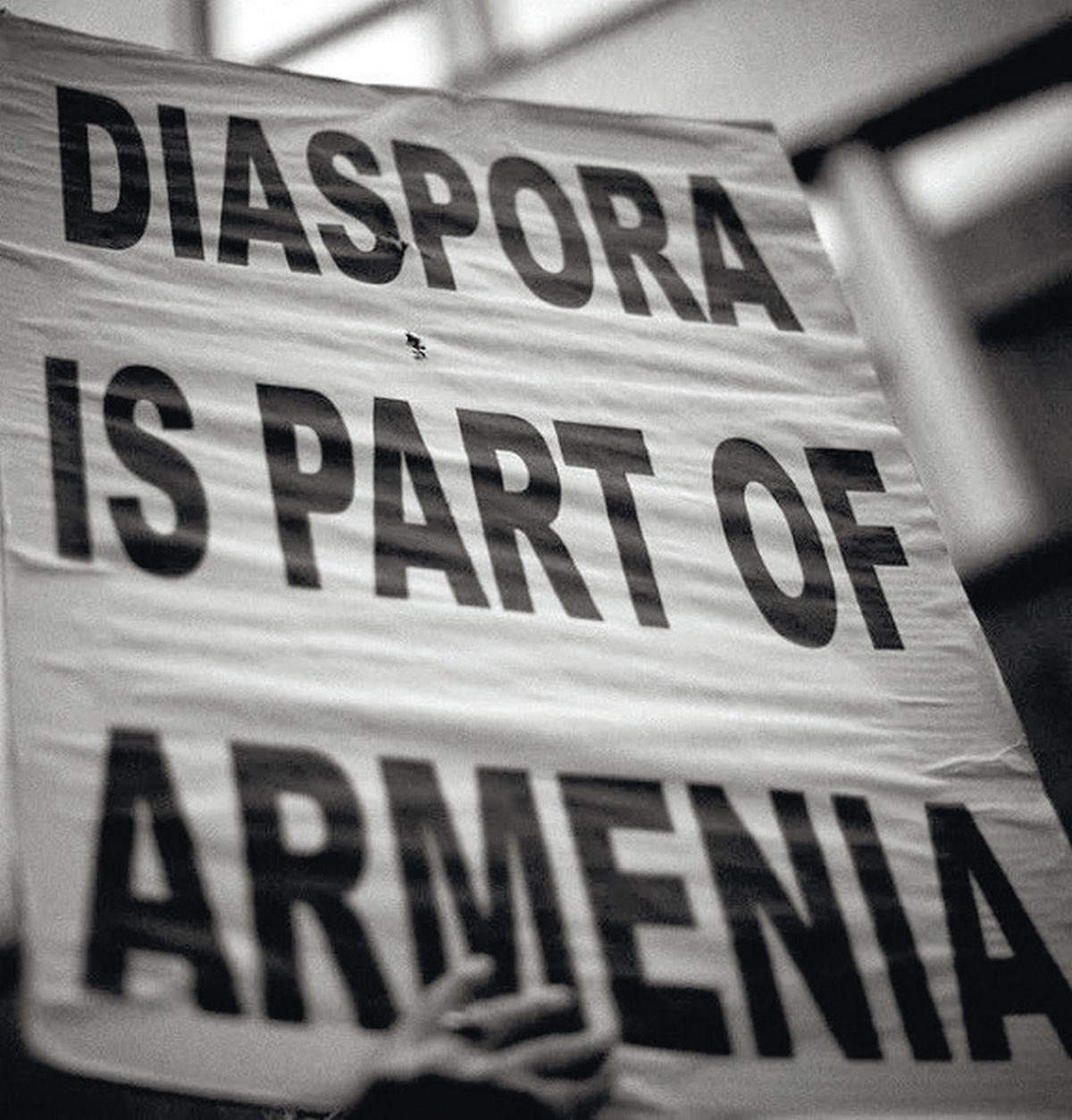
A separate chapter of the document is devoted to the government's relations with the Armenian diaspora, whilst the programme's key tenets are 'rethinking relations with the diaspora in a context of peace' and structuring them around the ideology of 'Real Armenia'. This is not merely a continuation of previous cultural and humanitarian programmes; it is a fundamental shift in the state's approach to its diaspora.
A rethink on relations with the diaspora
The Armenian diaspora is widely regarded as one of the country's most significant external resources. According to various estimates, the number of Armenians living outside the country far exceeds the number living within its borders. For decades, the diaspora has provided substantial financial, humanitarian and political support to Yerevan, while also playing an active role in promoting the Armenian agenda in Western countries.
However, following the events of 2020–2023, and particularly after the return of the occupied territories to Azerbaijan's full control and sovereignty, the policy of the official authorities in Yerevan began to change noticeably. The government led by Nikol Pashinyan is taking steps to prioritise the interests of the internationally recognised Armenian state over the political expectations of overseas Armenian diaspora organisations. This situation has contributed to the escalation of tensions between a segment of the Armenian diaspora and the current leadership of Armenia.
From a 'nationwide agenda' to national interests
For many years, the political landscape of Armenia was predominantly shaped by the Nagorno-Garabagh issue. A significant proportion of Armenia's foreign policy activity was geared towards supporting international campaigns run by the largest diaspora organisations in the US, France, Canada and a number of other countries.
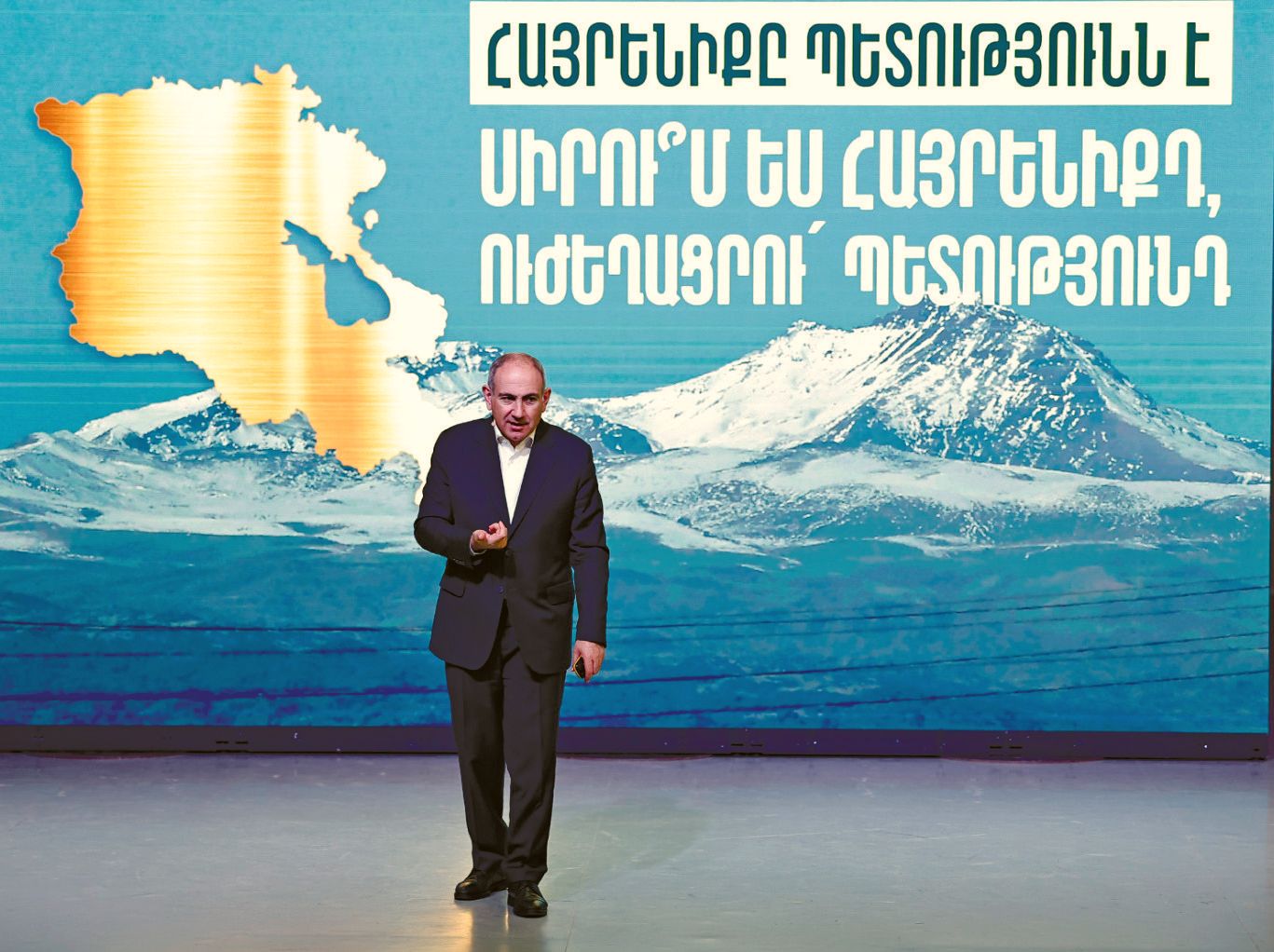
Following the defeat in the Second Garabagh War and Azerbaijan's full restoration of its territorial integrity and sovereignty in 2023, the Armenian leadership began to publicly reassess its previous strategy. Prime Minister Nikol Pashinyan has repeatedly stated that the republic must build a model of the so-called 'Real Armenia', based on recognised international borders, state sovereignty and the long-term security of its citizens.
According to the British think tank Chatham House, the loss of (occupied – Ed.) Garabagh was not only a severe political defeat but also forced the Armenian elite to rethink their very understanding of Armenian statehood. Researcher Lawrence Broers notes that the new concept entails a move away from a policy based on territorial claims and a transition towards the development of Armenia as a conventional nation state, integrated into regional economic projects.
Garabagh, as a separate pan-Armenian political issue, is virtually absent from the new programme. A review of the programme's documentation reveals that it is referenced exclusively in the context of a housing initiative designed for Armenians who have voluntarily departed from Garabagh. The document does not include any provisions regarding the status, return or political representation of Artsakh.
This approach differs from the political model of previous decades, when Garabagh-related issues largely determined both the country's domestic and foreign policy.
Concurrently, there has been a shift in the government's foreign policy discourse. The international media have repeatedly noted that Pashinyan is attempting to pursue a more balanced policy, whilst reducing dependence on Russia, expanding cooperation with the European Union and the US, and seeking to normalise relations with Azerbaijan and Türkiye.
The peace process as the foundation of the new strategy
A key element of the policy declared by the official authorities in Yerevan is the achievement of a final peace agreement with Azerbaijan.
According to Reuters, the French Le Monde and the US-based think-tank the Carnegie Endowment, Armenia's current leadership views a peace agreement not only as a means of ending the long-standing conflict, but also as an opportunity to transform the country's economic situation by opening up transport links and expanding regional trade.
The Carnegie Endowment has highlighted that the potential opening of transport routes through the South Caucasus could create significant new opportunities for Armenia in the fields of transit, logistics and trade, opportunities that the country has been deprived of for many decades.
Consequently, the peace process is gradually becoming, for the Armenian government, a matter not only of security but also of long-term economic development.
The diaspora and differing political priorities
Incidentally, not all Armenian organisations abroad have supported Yerevan's new approach.
Disagreements are particularly pronounced in the United States and France, where the Armenian diaspora wields considerable political influence and maintains strong links with legislative bodies.
Armenian organisations in the US have historically concentrated on matters pertaining to sanctions policy, the acknowledgement of the events of the First World War as 'genocide', and the instigation of various congressional resolutions against Azerbaijan and Türkiye. A similar level of activity is observed in France, where representatives of Armenian organisations regularly engage with members of the National Assembly and the Senate.
From the perspective of these organisations, such activities are aimed at protecting the interests of the Armenian people. However, within Armenia itself, this agenda is increasingly viewed in a far more complex light.
It has been noted by a number of foreign analysts that there is sometimes a divergence between the political priorities of the diaspora and those of the Armenian state. Diaspora organisations tend to prioritise the concept of 'historical memory', while the leadership of Armenia is compelled to take into account the economic, geographical and military-political realities of the region.
Furthermore, the role of the diaspora in promoting the interests of relevant states within Armenia cannot be ruled out. This is particularly evident in Armenian diaspora organisations in Russia.
In this regard, many initiatives by overseas organisations receive significantly less support from official Yerevan than was previously the case.
Foreign analysts have emphasised that such contradictions are a characteristic feature of relations between nation states and influential diasporas. They have stated that these contradictions cannot be reduced to a simple opposition between the 'state' and the 'overseas community'.
The role of the Armenian diaspora in the negotiation process
The impact of the Armenian diaspora lobby on Armenian-Azerbaijani negotiations remains a contentious issue.
In the US, representatives of Armenian organisations are continuing to advocate for the adoption of various legislative initiatives concerning the now-concluded conflict between Armenia and Azerbaijan. Processes of this kind are also underway in France, where certain politicians are frequently issuing statements that reflect the position of Armenian civil society organisations. Representatives of the Armenian diaspora in Russia are sent to Armenia (and, in the past, to the Garabagh region of Azerbaijan) to intervene and participate in these processes.
Meanwhile, Western think tanks have noted that lasting peace requires, first and foremost, direct political dialogue between Baku and Yerevan.
In a paper published long before the current stage of the peace process, experts at Chatham House emphasised that external initiatives can only complement the negotiation process, but cannot replace it. Furthermore, the politicisation of the conflict outside the region can hinder the search for compromises by increasing pressure on the negotiating parties and reducing the scope for mutual concessions.
Research findings from around the world also show that there is a clear difference between the political logic of a state that has to make compromises with its neighbours, and the logic of international civil society organisations, which are often less affected by the consequences of decisions made.
In this sense, the disagreements between Yerevan and the majority of the overseas diaspora reflect a difference in political functions, rather than merely a difference in views.
A new political model
The expert community views the changes taking place as an attempt by Armenia to strengthen its own statehood.
The recent elections in Armenia are characterised as a de facto referendum on Pashinyan's course towards peace with Azerbaijan and a more independent foreign policy.
Pashinyan's concept of 'Real Armenia' is a shift from a policy based predominantly on myths and territorial claims against neighbours to one focused on ensuring the state's security, economic development and internationally recognised sovereignty.
Many researchers cite this as the reason for the growing tension between the official authorities in Yerevan and some Armenian organisations abroad, which continue to view the Garabagh issue as a central element of national policy.
This has resulted in the incorporation of pertinent provisions in the new Government Programme, which redefines the approach to relations with the diaspora: peace, the territorial integrity of Armenia and the development of the republic itself have become the central guiding principles. The document even states that Armenia is an internationally recognised territory covering an area of 29,743 square kilometres.
Under the new approach, the state seeks to move away from the notion of the diaspora as an independent socio-political centre with its own pan-Armenian agenda. It is proposed that relations be shaped on the basis of Yerevan’s interests and state policy.
Relations between Armenia and the Armenian diaspora abroad have entered a new phase of development. Whilst government policy and the activities of the largest diaspora organisations previously largely coincided, differences in their understanding of national priorities are now becoming increasingly apparent.
The Pashinyan government is focusing on strengthening Armenia’s internationally recognised statehood, normalising relations with Azerbaijan and Türkiye, expanding economic cooperation and reducing regional isolation. A significant proportion of expert publications abroad view this course as an attempt to forge a more independent model of Armenian statehood.
For their part, many diaspora organisations continue to adhere to their traditional political agenda, which is currently leading to differences of opinion with the official authorities in Yerevan.
At the same time, the Armenian leadership’s current ability to independently determine its foreign policy priorities is increasingly seen as a key element in strengthening the state sovereignty of the Republic of Armenia.
RECOMMEND:
 88
88

