

THE EU CHANGES THE RULES
A new wave of enlargement forces Europe to transform itself
Author: Elchin HUSEYNOV
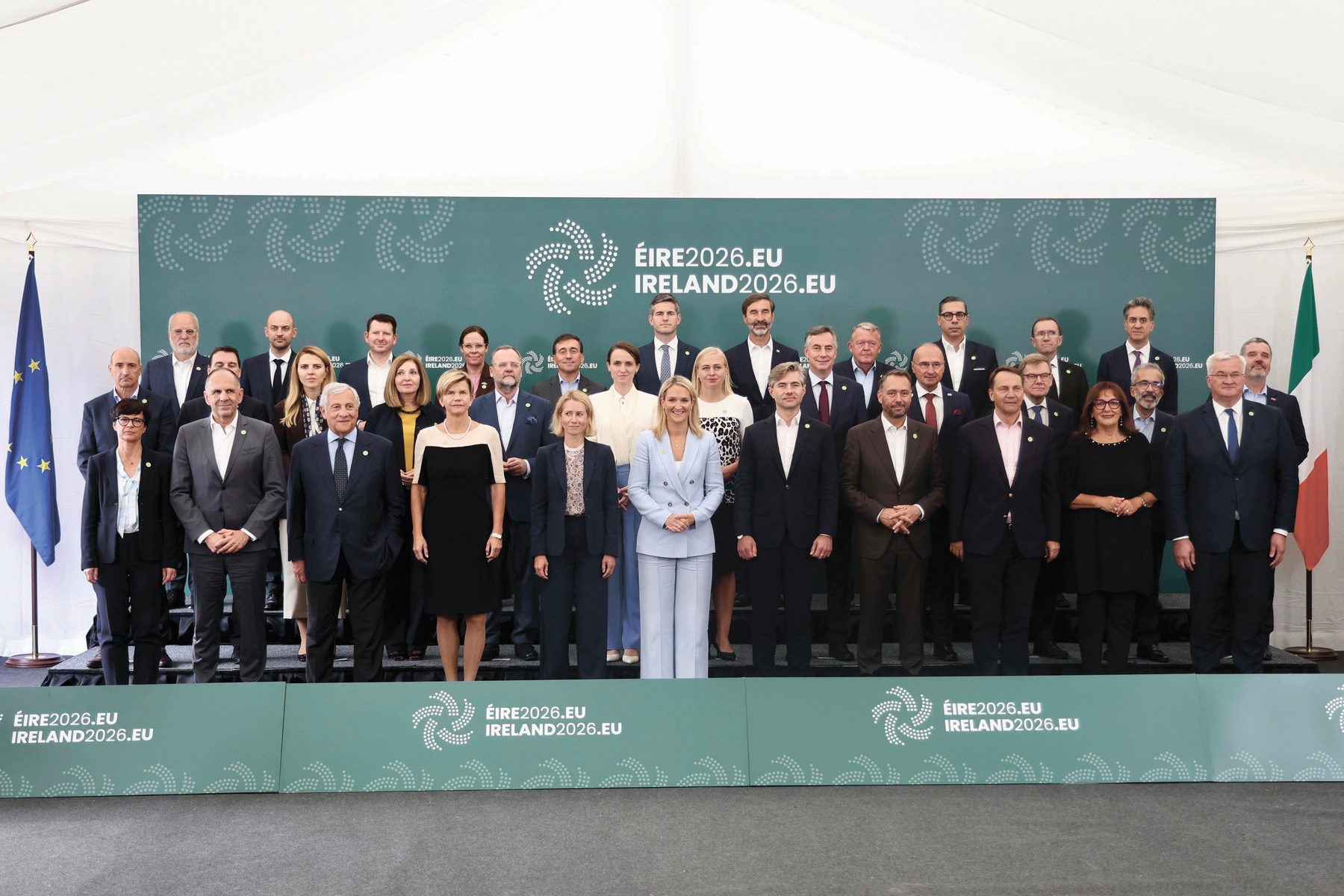
The European Union is once again discussing the possibility of enlargement, and at the same time has to consider whether it is prepared for a new wave of accession. At a recent informal meeting of EU ministers for European affairs in Dublin on 3-4 September, the agenda included discussions on the potential enlargement of the union, the future budget, and mechanisms for protecting democratic principles. Representatives of candidate countries and potential candidates also participated in the talks.
The key issue is becoming increasingly evident: as the EU's membership expands, decision-making under the current system becomes more challenging, necessitating the unanimous consent of all member states for progress in negotiations. Individual capitals are already capable of slowing the process down, and possible enlargement is forcing Brussels to think about its own rules of the game. In Dublin, ministers discussed how to maintain the pace of enlargement while also preparing the union for its future, which is set to be far more complex.
Own veto as an obstacle
Enlargement is encountering a persistent challenge that has not yet been resolved. This is known as the principle of unanimity. The opening and closing of negotiation clusters with candidates requires the consent of all member states. This means that one capital can decelerate a process supported by the others.
The most recent disagreements over the advancement of Ukraine and Moldova have once again demonstrated the vulnerability of this system. For instance, Hungary is blocking a number of enlargement-related issues, citing, among other things, concerns regarding the rights of national minorities. Such situations can complicate the negotiation process with candidates, making it susceptible to bilateral and domestic political disputes.
The issue is, naturally, much more extensive than the Hungarian position. If today we are talking about several candidate countries, then after the new enlargement the number of participants in the decision-making process will become even greater. Maintaining the current system would result in every new capital gaining the ability to block key decisions.
The EU is currently engaged in active discussions regarding the potential transition from unanimity to qualified majority voting in specific areas. For proponents of such a reform, this approach offers a method of averting a scenario in which one country might have the capacity to block a decision by the others. For opponents, it is the potential loss of one of the most important instruments of national influence within the union.
Consequently, the debate on enlargement is evolving into a discussion about the fundamental structure of the EU. The union must decide whether to admit new members without making the process more cumbersome and vulnerable to blockages.
Safeguards for new members
If the primary concern is the admission of additional countries, the secondary concern pertains to the subsequent actions following their accession. It is precisely for this reason that, in Dublin, ministers separately discussed the so-called safeguard mechanisms that are to be included in future accession treaties.
The objective is to provide in advance for instruments to respond to a possible departure by a new member from democratic standards and the principle of the rule of law. This is particularly relevant when viewed in the context of the EU's own experience, where conflicts with individual states over rule-of-law issues have repeatedly evolved into protracted political and legal disputes.
Montenegro could be the ideal location to conduct the first test of the new model. It is precisely this country that has made more progress than the other candidates: it has closed 18 of the 33 negotiating chapters, and in April EU states agreed to establish a committee for negotiations on its accession treaty—the first such step since Croatia's accession in 2013.
The EU is currently deliberating on the guarantees to be incorporated into this treaty, and the extent to which it can serve as a model for future agreements with other candidate countries.
Following the meeting, the Irish Minister for European Affairs, Thomas Byrne, emphasised that the adoption of effective safeguards is a key condition for maintaining public support for enlargement among EU citizens. He expressed his belief that enlargement is an expression of European values, and that the union must therefore simultaneously ensure its advancement and protect its own democratic standards.
The outcome of this process is a form of exchange. The candidate would be granted full membership, but the EU wants to determine in advance the consequences of any violation of the rules after accession. This underscores the significant differences between the current wave of enlargement and its predecessors. Brussels is considering not only the process of welcoming new members, but also the implications of their integration.
No second-class members
Another issue that was discussed in parallel with the debate on the future of enlargement was the potential for intermediate formats. Over the years, there has been much discussion of models of gradual convergence, under which candidate countries could receive certain EU advantages without becoming full members.
However, Brussels' current line is moving in a different direction. Convergence in the economic and political spheres may occur in a gradual manner as the necessary reforms are implemented. However, it should be noted that the ultimate objective remains the attainment of full membership.
This approach is of particular importance for the current group of candidates, which includes Ukraine, Moldova, Albania and the countries of the Western Balkans. For them, the accession process may be protracted, and access to individual EU mechanisms and advantages may be incremental. However, it is important to note that an intermediate state should not be considered the final model.
In this sense, the current policy combines two opposing tendencies. On the one hand, the EU is keen to accelerate the process and provide candidates with more tangible results even before final accession. Conversely, it does not aspire to establish a permanent category of states that find themselves between membership and partnership.
The Irish presidency has established a direct correlation between the progression of candidates and the execution of essential reforms. Mr. Byrne stated that the EU's common goal should be to assist countries aspiring to membership in carrying out these reforms, since enlargement serves the strategic and collective interests of the union.
The current model is therefore quite clear: the closer a country is to the EU, the more it can gain from this convergence, but the "entry ticket" remains the same. Full membership is dependent on fulfilling all necessary conditions, and in return, the EU itself pledges to maintain the possibility of accession.
Who is next?
Iceland's decision not to resume accession negotiations was met with disappointment in Brussels. In a referendum, the majority of participants expressed opposition to resuming the negotiation process, which had been suspended in 2013. However, European officials have made clear that they do not regard this outcome as grounds for reviewing the overall strategy.
Instead, the primary focus is now on the countries that are already in the active phase of negotiations. European Commissioner for Enlargement Marta Kos has referred to the current period as an "autumn of enlargement", emphasising Brussels' desire to maintain the momentum it has built up.
Montenegro occupies a unique position. In addition to the 18 chapters that have already been closed, the establishment of a committee on its accession treaty means a transition to a qualitatively new stage of negotiations. Consequently, Podgorica is currently regarded as the most advanced candidate.
However, it is important to note that this process is not confined to a single country. In July, Ireland hosted a series of intergovernmental conferences with Montenegro, Albania, Ukraine and Moldova, which were held simultaneously. The Irish presidency referred to that day as Super Tuesday, as it was a significant day for the number of accession conferences being held. The last time a number of conferences were held on a single day was in 2002.
The next step is to ensure the maintenance of this dynamic. In Dublin, the agenda for candidates and member states included in-depth discussions on the political implications of accession, as well as the capacity of future members to implement the substantial reforms and governance obligations associated with EU accession.
Consequently, Iceland has become more of an exception than a reason to halt the process. Brussels is demonstrating its intention to continue working with those candidates that are ready to move forward. Montenegro is effectively the first test of the new enlargement model in this group.
The price of new enlargement
The political debates surrounding the question of who to admit to the European Union and on what terms are ultimately secondary to a far more pragmatic issue: the financial implications of this process. In Dublin, the discussion about candidates was held alongside the debate on the EU's new long-term budget for 2028-2034.
The future budget will have to take into account several major needs at once. The European Union must consider its financial obligations, including defence and security, the competitiveness of the European economy, and the preservation of traditional areas of spending, such as agriculture and regional development. At the same time, the possibility of expansion will require additional resources for new members and further economic development.
It is imperative to consider enlargement in conjunction with the budget. As more states join the EU, the number of recipients of European funds will increase, making it more challenging to distribute resources between current and future members.
The proposed new seven-year budget is already estimated at around €2 trillion, and serious disagreements remain within the EU over its structure and priorities. The Irish presidency is aiming to achieve a consensus on the long-term budget by the close of 2026. Thomas Byrne has stated that this is one of his primary objectives. In the context of global instability, he emphasises the critical importance of competitiveness and security in the new financial plan.
Consequently, the budget question is inextricably linked to the political one. The EU will need to determine the number of countries it wishes to include in its future composition. It will also need to decide on the budget required to ensure the economic sustainability of an enlarged union and its ability to finance new priorities.
Restart with old problems
The Dublin meeting did not provide a ready answer to all the questions facing enlargement policy. But it showed quite clearly the direction of further work: the EU wants to maintain movement towards new members while at the same time changing the mechanisms that should make an enlarged union more sustainable.
European capitals now face a whole series of difficult decisions—from negotiations with candidates and future accession treaties to reform of the decision-making process and the new seven-year budget.
Therefore, the current “autumn of enlargement” may prove more important than simply another stage of negotiations with candidates. It is becoming a test of the European Union itself—of its ability to enlarge without losing governability, to protect its own values and at the same time to find resources for a new configuration.
The question now is not so much who will join the EU, but what it will become afterwards.
RECOMMEND:
 36
36

