

ECHOES FROM THE PAST
Oil and Trump’s shifting stance reignite the long-standing dispute between Argentina and the UK


Author: Ilgar VELIZADE
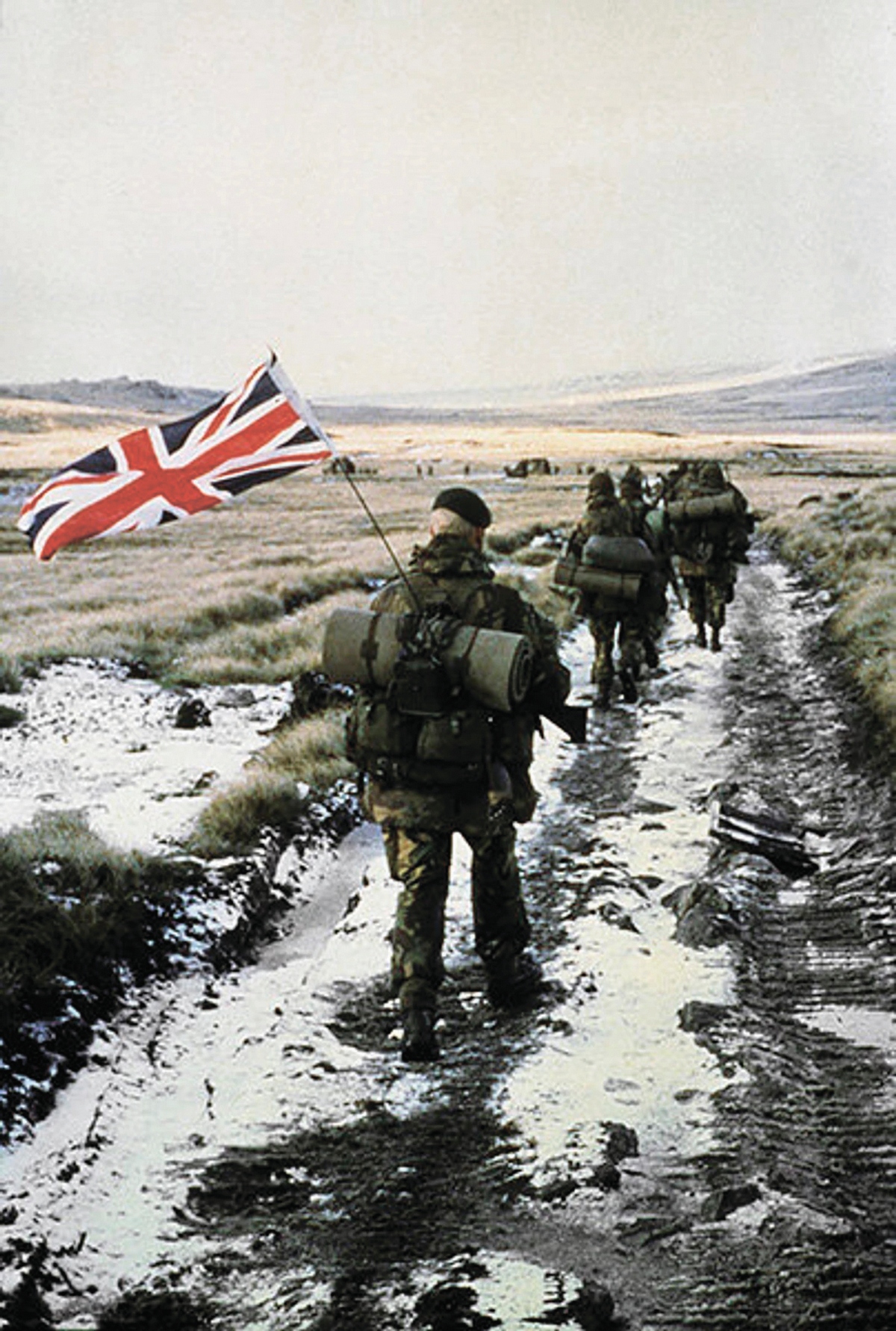
Until very recently, it seemed that the dispute over the Falkland Islands—or the Malvinas, as they are known in Argentina—had settled permanently into the category of historical footnotes. More than four decades had elapsed since the 1982 war. The islands remained firmly under British administration, Argentina persisted in asserting its sovereignty, yet the controversy was broadly viewed as the relic of a bygone era rather than a catalyst for a fresh international crisis.
However, in early September 2026, the Falklands abruptly resurfaced at the heart of high-stakes geopolitics.
All because of oil
Tensions surrounding the archipelago have escalated to levels not seen for many years. It is important to note that the recent tensions are not as a result of the ongoing debate surrounding territorial sovereignty, but rather due to the significant petroleum reserves located beneath the surrounding seabed. These resources have the potential to significantly impact the islands' economic and strategic profile.
On September 3, 2026, Argentine President Javier Milei announced a significant tightening of policy targeting corporations involved in offshore oil and gas exploitation around the archipelago. Buenos Aires intends to broaden sanctions to encompass the shareholders, executives and contractors of such firms, while simultaneously bolstering its military presence in the south and accelerating naval infrastructure developments in Tierra del Fuego. Milei contended that the extraction of the islands' natural resources without Argentina's explicit consent should no longer be regarded as a mere commercial disagreement, but as a matter of national security.
Buenos Aires did not merely pay lip service to this commitment; it took concrete action. On 7 September, the government announced its intention to prepare criminal complaints against corporations participating in the extraction of these petroleum deposits. The following day, the offensive gained further momentum as Argentine authorities formally launched a legal campaign, accusing the involved companies and their executives of operating under licences that Buenos Aires deems entirely illegal. In short order, the confrontation transitioned from political posturing to direct coercive pressure.
At the core of this developing controversy is Sea Lion, a significant offshore oil field located 220 km north of the Falklands. The project was initiated on December 10, 2025, when Israel's Navitas Petroleum and Britain's Rockhopper Exploration reached a final investment decision to commence commercial development. Navitas holds a 65 per cent stake in the venture, with Rockhopper retaining the remaining 35 per cent.
Over recent months, their ambitions have expanded considerably. In May, the developers signalled the potential addition of a second floating production vessel capable of dramatically boosting future yield, while in August, Rockhopper confirmed plans to fast-track development in the central sector of Sea Lion. Should these initiatives materialise, the conversation by the decade's end will no longer revolve around a solitary offshore project, but around the emergence of a major new petroleum-producing province surrounding the Falklands.
This reality explains why Argentine authorities have reacted with such urgency. Every practical step toward exploiting the field ensures that time works against Argentina. So long as the oil remains beneath the ocean floor, Buenos Aires retains leverage to delay or impede the venture. Once heavy offshore infrastructure is deployed, multi-billion-dollar investments are locked in, and initial shipments commence, disrupting the status quo will prove infinitely more difficult.
A helping hand from Trump
This narrative contains a crucial nuance. The decision to develop Sea Lion was finalised back in December of last year, raising the question of why Milei’s aggressive posture materialised only now. The answer lies in the shifting geopolitical backdrop surrounding the Falklands—specifically, the evolving dynamic between the US and the UK.
On April 24, leaks revealed an internal Pentagon document drafted amid policy rifts between the US and its European allies regarding the conflict with Iran. Listed among potential coercive measures against nations refusing to actively support American military operations was a surprising proposition: a formal reassessment of Washington’s position on the Falklands.
Initially confined to internal deliberations, the matter spilled into the public sphere on August 31, when Donald Trump confirmed that the US position was indeed under review. While this hardly implies that the White House is siding with Argentina, it sent an unmistakable signal to Buenos Aires: a dispute in which the US had maintained a status quo favourable to London for decades had suddenly become a bargaining chip between the two transatlantic allies.
Discontent in Washington over British defence spending is palpable. In late August, American officials again linked a potential shift on the Falklands to London’s compliance with commitments to boost its military budget. In essence, the remote territorial dispute is gradually being transformed by the Trump administration into yet another leverage point against a long-standing ally.
Milei seized upon this opening almost instantaneously—a mere three days elapsed between Trump’s remarks on August 31 and the Argentine president’s public declaration.
Buenos Aires presses its advantage
This situation features another intriguing dimension. One of the primary targets of Argentine pressure has been Israel’s Navitas Petroleum, despite Milei being among Israel’s most staunch allies in Latin America. Buenos Aires took deliberate care to signal that measures directed against the corporation should not be construed as a cooling of diplomatic relations with Israel. For the Argentine president, the sovereignty of the Malvinas clearly transcends even his government's most prized foreign policy alignments.
The fallout from the escalating row was immediate. Following Milei’s address, shares in corporations connected to the project came under marked selling pressure. Meanwhile, major oilfield services providers including SLB, Baker Hughes, and Halliburton reportedly signalled to Argentine authorities that they have no intention of taking part in operations around the Falklands. While this does not pose an immediate existential threat to Sea Lion—which operators insist remains on schedule with valid licences from the island administration and full backing from HM Government—it highlights the core logic of Buenos Aires' strategy. Argentina does not necessarily need to physically halt extraction; it merely needs to render international corporate participation increasingly costly, legally precarious, and politically cumbersome.
London, for its part, shows no inclination to capitulate. On September 8, the British government reaffirmed in Parliament its unwavering confidence in UK sovereignty over the islands, reiterating that the fundamental right of the islanders to self-determination remains paramount. Ministers cited the landmark 2013 referendum, in which an overwhelming majority of residents voted to retain their status as a British Overseas Territory.
A repetition of the 1982 armed conflict remains highly unlikely. Despite his fiery rhetoric and plans to reinforce military infrastructure across southern Argentina, Milei has displayed no intention of seeking a military resolution. Moreover, the current balance of military capability renders such a scenario virtually unthinkable.
The modern struggle for the Falklands is being waged on an entirely different battlefield. Its weapons are financial sanctions, criminal indictments, investment risks, commercial contracts, and strategic diplomatic manoeuvres.
A calculated political gamble
Milei’s unyielding posture also carries clear domestic political utility. Faced with slipping approval ratings, the Malvinas issue serves as a convenient rallying cry. While his radical economic reforms deeply polarise Argentine society and his close alignment with the US and Israel draws mixed reactions, sovereignty over the islands remains one of the few issues commanding near-universal national consensus—a claim explicitly enshrined in the country's constitution. By ratcheting up pressure on Sea Lion, Milei aims to thwart the further consolidation of Britain’s position while unifying the public behind a cause that resonates far beyond his core political base.
Thus far, Donald Trump has taken no concrete actions in Argentina’s favour, and may ultimately choose not to do so. Abrupt geopolitical realignments are therefore unlikely in the near term. Yet for Milei, the mere emergence of strategic ambiguity is a victory in itself. For the first time in decades, Buenos Aires sees an opportunity to exploit friction between Washington and London—and Milei is determined to capitalise on it.
Consequently, the next two years could prove pivotal. Argentina must raise the barriers to Sea Lion’s development as high as possible before commercial extraction begins in 2028. At the same time, it stands to benefit from exploiting current transatlantic tensions while Trump remains in office.
Whether this strategy yields long-term success remains uncertain. Washington has not formally aligned with Buenos Aires, nor does London have any intention of relinquishing the islands. Yet Milei appears determined to strike while the geopolitical iron is hot—for the first time in decades, circumstances offer Argentina a window of strategic leverage. And judging by initial developments, his calculated gamble may well be paying off.
RECOMMEND:
 31
31

