
TIME TO EXTRACT
From geological exploration to finished product output
Author: Aghasaf NAJAFOV
The State Programme for the Development of the Mining and Metallurgical Industry in the Republic of Azerbaijan for 2027-2030, approved by President Ilham Aliyev, opens a new stage in the country's industrialisation. Its key task is to link geological exploration, extraction, ore beneficiation and the production of finished metallurgical goods into a single production chain. This means creating a full cycle of ore processing, producing concentrate, pellets, hot-briquetted iron and ultimately steel rolled products.
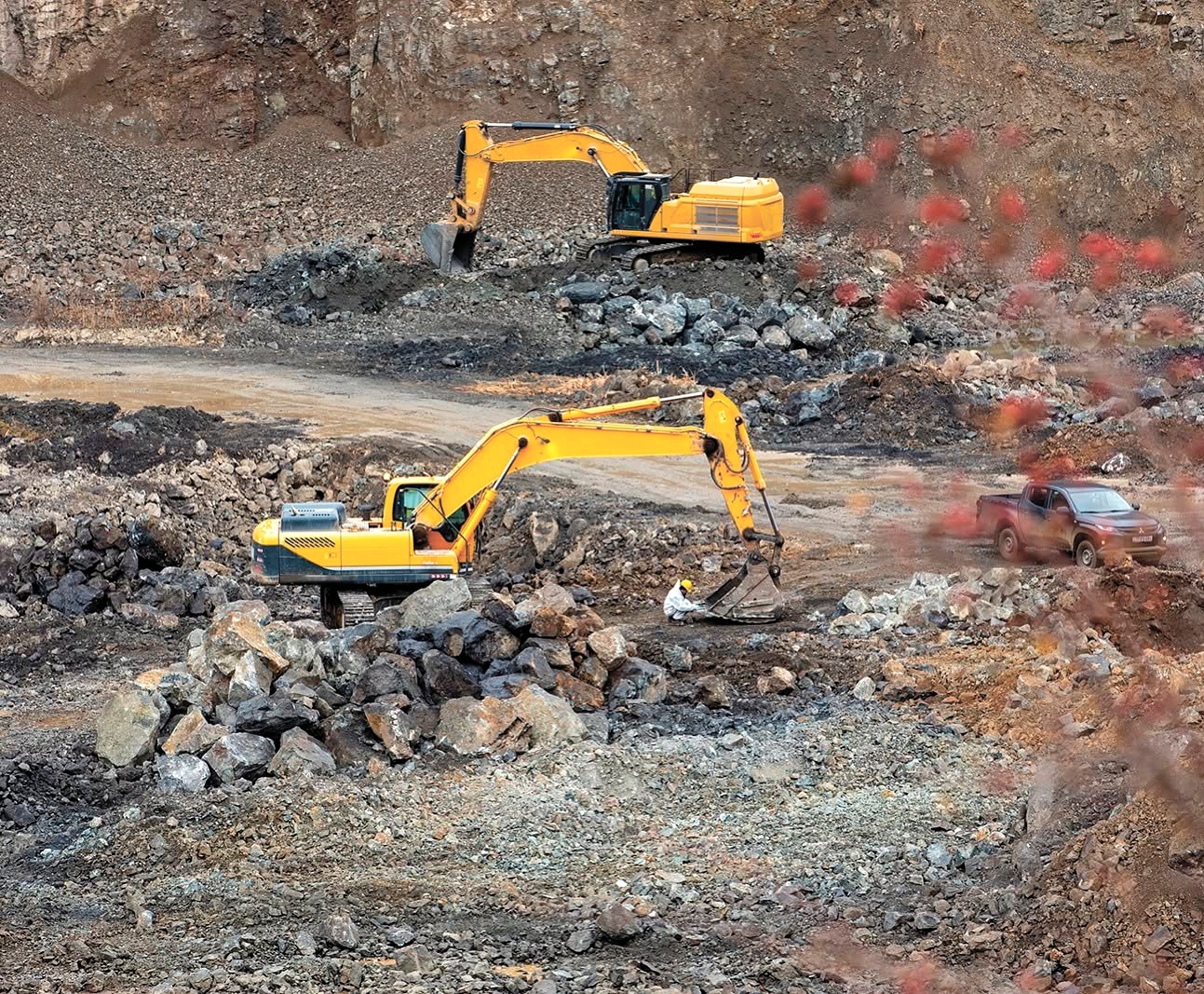
The centre of this model will be the Dashkasan iron ore deposit and the Western Industrial Park being created in Ganja and the Shamkir district. In parallel, it is planned to accelerate the development of gold, copper, silver, lead, zinc and molybdenum reserves, as well as to expand aluminium production. By 2030, the mining and metallurgical sector's contribution to GDP should more than double, and its export potential should almost triple.
Reserves require re-evaluation
Azerbaijan's extractive sector has traditionally been associated primarily with oil and gas. The ore base, in turn, was developed unevenly: some deposits were located in occupied territories for decades, while information about others was still based on Soviet-era research. Therefore, the priority task today is to re-evaluate reserves according to international standards, establish the feasibility of their development and select optimal processing technologies.
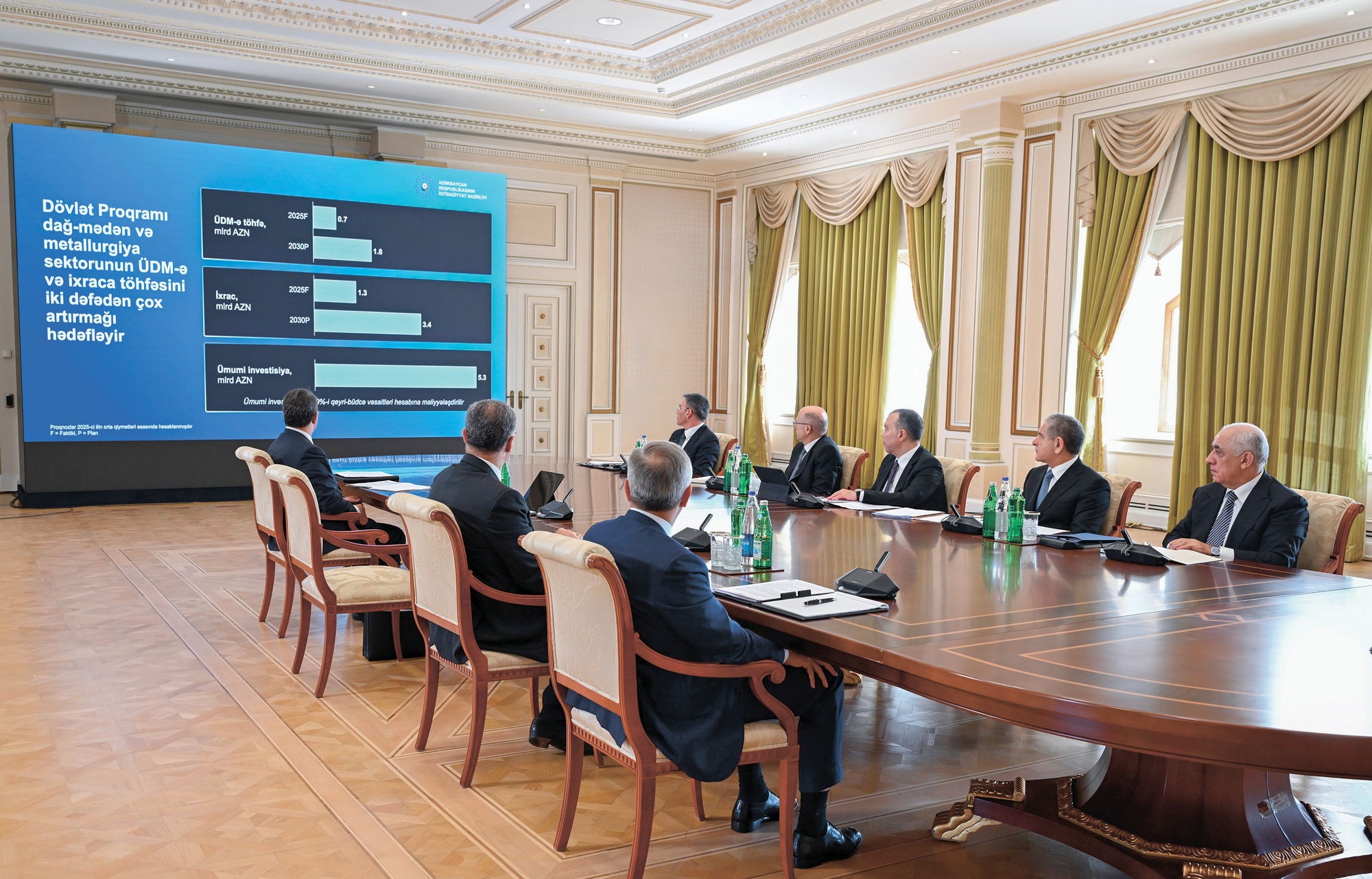
"At the same time, we must fully analyse the existing deposits and, using modern geological methods, fully clarify the reserves there. In Soviet times, certain figures were cited, but about 40 years have passed since then, the data are outdated, and moreover, new technologies exist today that no one in Soviet times could even have imagined," President Ilham Aliyev emphasised at a meeting dedicated to the development of the mining and metallurgical industry.
The State Programme identifies promising areas for geological exploration, production projects, sources of financing and targets up to 2030. The economic effect will be ensured by synchronising exploration work with infrastructure construction and the commissioning of processing capacities.
According to the head of state's assessment, the development of the industry will create over five thousand permanent jobs. At the same time, large mining projects will expand demand for transport, energy, construction and services. Thus, the programme covers the entire production contour—from geological study of areas to the sale of deeply processed products.
Priority attention will be given to the Garabagh and East Zangezur economic regions. At gold, copper and molybdenum deposits in the Aghdara district, work has already begun; in the near future it should start in the Kalbajar and Zangilan districts. The Nakhchivan Autonomous Republic is becoming a separate promising area, where AzerGold CJSC, together with a company from the United Arab Emirates, plans geological exploration of ore reserves.
A special place in the new configuration is occupied by the Filizchay polymetallic deposit in the Balakan district. Its total resources are estimated at 120 million tonnes, with deposits including copper, lead, zinc and silver. According to experts, the development of the deposit could bring in over ₼10 billion in revenue. Currently, AzerGold is preparing a feasibility study for the project, after which a final investment decision must be taken. At the initial stage, the state company must retain 100% participation, while the possibility of attracting foreign investors for a certain share may be considered as the value of assets grows.
Copper deposits are also found in the Gadabay, Kalbajar, Garadagh and Ordubad ore districts. Moreover, the Garadagh copper-porphyry deposit alone accounts for about 5% of all ore reserves in the country. The expansion of the raw material base and the commissioning of new capacities should increase exports of copper, gold and silver from 600 million in 2025 to ₼1.6 billion in 2030.
The Dashkasan cycle
The key link in the programme is the Dashkasan iron ore complex. In 1954-1994, the ore extracted here was processed into concentrate and, together with local fluxes and bentonites, sent to the Rustavi Metallurgical Plant, while pig iron and steel billets were supplied to Azerbaijan. After the collapse of the Soviet economic system, this scheme lost its economic basis, and domestic enterprises switched to imported steel and scrap metal.
The new model is intended to eliminate this structural gap. Research by AzerGold's subsidiary, Daşkəsən Dəmir Filiz LLC, in the North-West and South-East areas provided an increase of an additional 70 million tonnes of resources. After re-evaluation according to international standards, the total mass of ore reserves reached 309.16 million tonnes. The results obtained formed the basis of a 21-year operation plan and a preliminary roadmap for the project.
"The main goal of creating the Western Industrial Park is the development of the mining industry specifically," the head of state noted. The park is being formed on territories of 81.8 hectares in the city of Ganja and 100 hectares in the area of the village of Köhnüllü in the Shamkir district. Transport, energy, gas, water and communication infrastructure, as well as production and administrative facilities, are to appear here. Management of the project is entrusted to the Economic Zones Development Agency, SOCAR is to create the gas infrastructure, and AzerGold is to oversee iron ore extraction.
Overall, the production scheme envisages several successive stages of processing. "Here, naturally, ore extraction and the creation of several plants are envisaged; beneficiation, pellet and briquetted iron production plants must be created. The transport of ore occupies an important place, so preferential tariffs for transportation must be provided to ensure economic efficiency," President Ilham Aliyev stated.
As part of the modernisation of the mining plant, the replacement of the worn-out cable car leading to the settlement of Gushchu is planned. The concentrate will be transported via a 45-kilometre slurry pipeline to the pellet production facility. The next link will be a hot-briquetted iron plant, designed for an annual output of up to 2 million tonnes of product with 95% iron content. It is expected that about 1.7 million tonnes at the first stage will be sold on the external market.
"The start of production under the Dashkasan iron ore project is planned for 2030, and the required investment amounts to ₼1.95 billion," said Zakir Ibrahimov, Chairman of the Board of AzerGold CJSC. "Financing of the project will be provided through state budget funds, borrowed funds and investor participation."
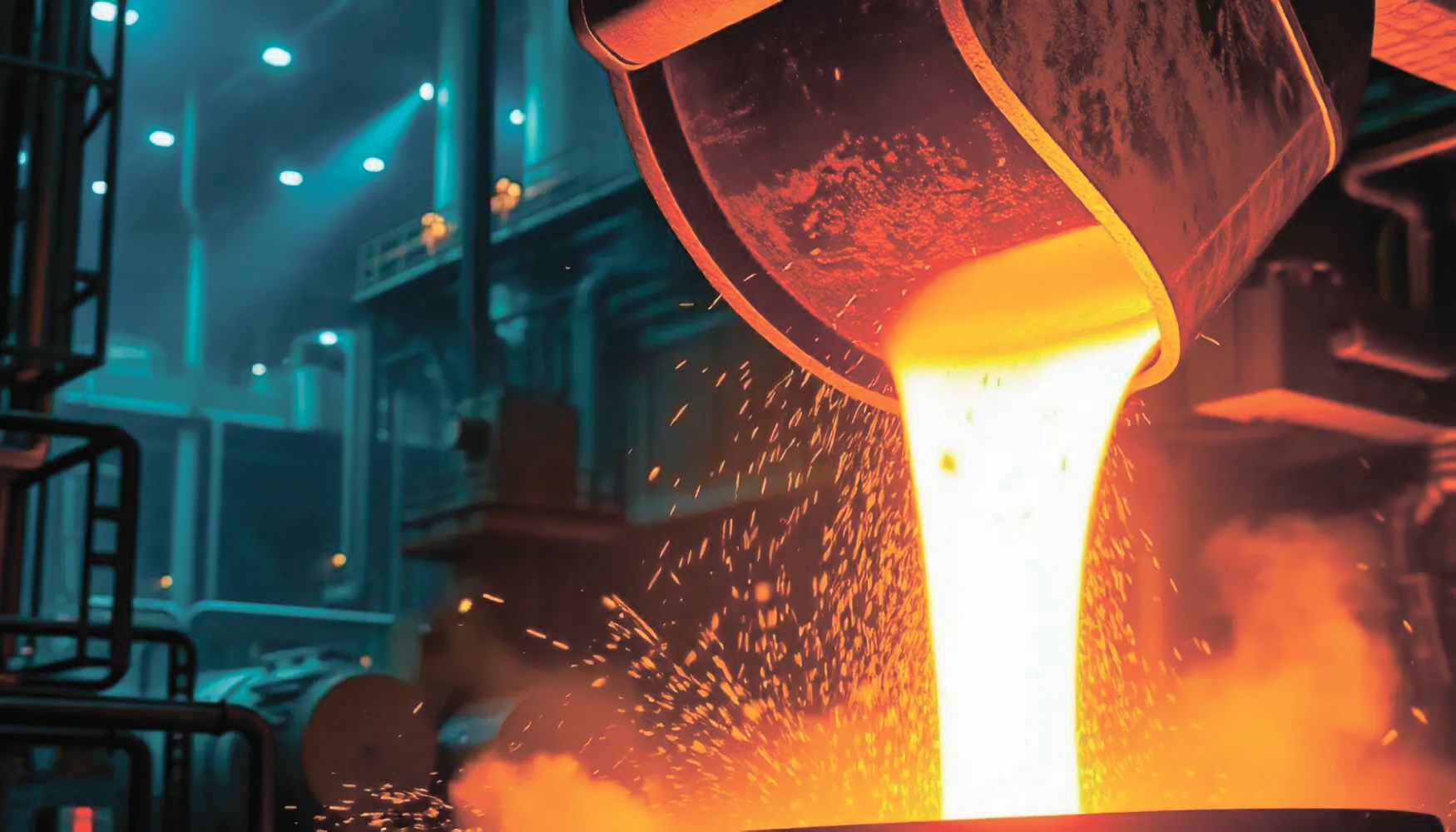
At subsequent stages, the semi-finished product is to be melted in electric arc furnaces, and the steel used for the production of pipes, rebar, channels, rails, wire and section rolled products. Thus, Dashkasan should become the starting point of the national metallurgical chain, oriented towards both the domestic market and export.
Added value
A similar logic underlies the plans for non-ferrous metallurgy. The State Programme envisages the formation of a full cycle of the aluminium industry: the annual capacity of the electrolysis plant is to be increased from 50,000 to 100,000 tonnes, and the output of rolled products from 20,000 to 50,000 tonnes. The creation of a calcination and anode baking plant and the production of carbon anode blocks is also planned. In turn, research into the Zeylik alunite deposit should determine its potential as an additional raw material base.
The result of the listed measures should be an increase in Azeraluminium's exports from ₼252 million in 2025 to ₼510 million in 2030.
The significance of deep processing is not exhausted by the growth of external supplies. The more operations are performed within the country, the higher the share of value that remains in the national economy, and the broader the cooperation with local enterprises.
The financial architecture of the programme corresponds to the scale of the tasks set. As Minister of Economy Mikayil Jabbarov stated, "the main goals of the programme are quite large-scale: by 2030, it is planned to increase the mining and metallurgical sector's contribution to gross domestic product from ₼700 million to ₼1.8 billion, and annual export potential from ₼1.3 to ₼3.4 billion, based on average world prices in 2025." Achieving these results requires investment of about ₼5.3 billion.
Of the total investment requirement, ₼1.1 billion will be provided from the state budget, ₼2.2 billion from state enterprises, including borrowed capital, and ₼2 billion from private funds, also including borrowings. Thus, approximately 80% of financing should come from extra-budgetary sources.
Public-private partnership in this scheme is becoming one of the main conditions for the implementation of the programme. Large projects will require long-term resources, the participation of banks and international investors, as well as tax, customs and other incentives capable of compensating for the long investment cycle.
Undoubtedly, the capital intensity of the industry increases the importance of organisational decisions. Economic efficiency will depend on tariffs for ore transportation, the cost of energy and gas, and the synchronisation of the construction of mines and processing plants. Environmental expertise and compliance with standards at all stages—from exploration to metallurgical production—are no less important. Without such linkage, individual capacities risk remaining fragmented, whereas the programme is designed for them to operate as part of a single complex.
In short, the coming four years must determine whether Azerbaijan can turn its accumulated reserves into a sustainable industrial specialisation. Unlike the raw material model, a full cycle requires the simultaneous launch of geological exploration, infrastructure, beneficiation plants and metallurgical capacities. At the same time, the economic result here is measured not only by the value of the ore extracted: the country gains products of higher processing, new jobs, technological competencies and the ability to reduce imports of raw materials for its own metallurgical enterprises.
RECOMMEND:
 41