

TOTAL SCORE
Britain’s regions discussing future without Westminster
Author: Irina KHALTURINA
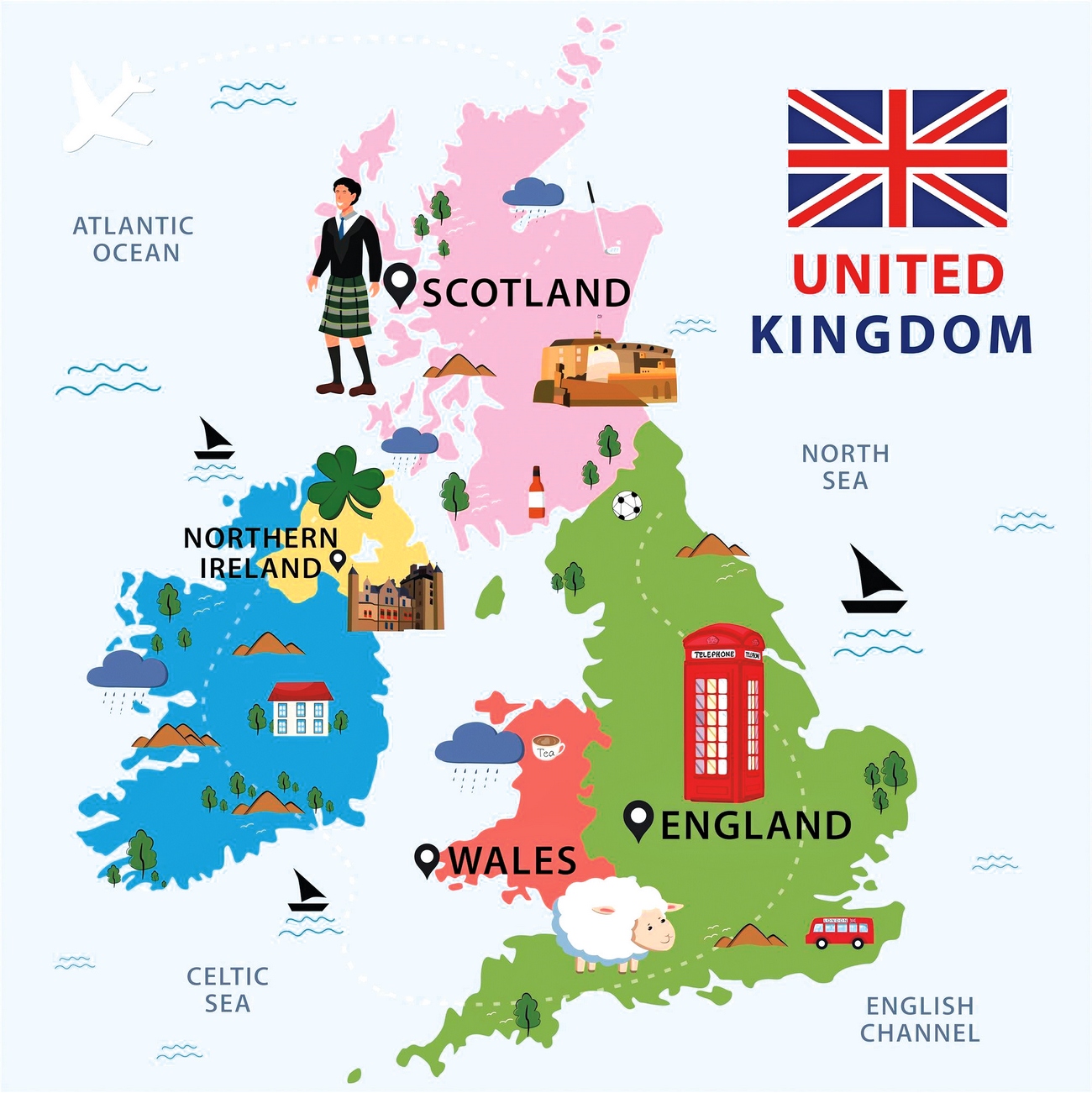
The signing of a memorandum of understanding in Cardiff on 14 September 2026 by Scotland, Wales and Northern Ireland, which enshrined their peoples' right to self-determination, was described by observers as a symbolic and politically significant step. Some analysts have expressed concerns that the joint document could potentially lead to the break-up of the United Kingdom.
A signal from Cardiff
It should be noted that this conclusion is a gross exaggeration, given that the agreement was signed by the First Ministers of Scotland, Wales and Northern Ireland—John Swinney, Rhun ap Iorwerth and Michelle O'Neill—who represent parties advocating a change to the current constitutional structure of the United Kingdom. Therefore, it is clear that this agreement is not legally binding. Notwithstanding, the primary messages of the report have attracted significant attention in both the British and international media. The First Ministers of the three regions of the UK that enjoy extensive autonomy have informed Prime Minister Andy Burnham and his government of the need to prepare for constitutional change. They have also expressed their view that their future is inextricably linked to that of the European Union.
The agreement states that 'the political landscape across the islands is changing' and that 'for the first time in history, the people of these islands—in Scotland, Wales and Northern Ireland—have First Ministers who advocate independence from the United Kingdom. For those observing the situation on these islands and around the world, this serves as the clearest signal that the era of Westminster (the seat of the UK government and parliament) is drawing to a close. The document goes on to state that 'Our movements are gaining momentum; we are convinced that constitutional change is inevitable.'
It should be recalled that in the late 1990s, the United Kingdom began the process of so-called devolution—the transfer of some of the central government's powers to the authorities in Scotland, Wales and Northern Ireland. These regions were granted their own parliaments or assemblies and governments with varying levels of authority. At the same time, Westminster maintained control over several key national areas, including defence, foreign policy and a significant proportion of constitutional matters. In the aftermath of the prominent meeting in Cardiff, a scenario is evolving that was aptly characterised by Nicola McEwan, Director of the Centre for Public Policy at the University of Glasgow: 'This once again raises the question: if the United Kingdom is a union based on voluntary consent, what might the situation look like when that consent appears to have broken down?'
No threat of break-up yet
UK Prime Minister Andy Burnham did not consider the Cardiff documents to be of great importance, emphasising his belief in the unity of the country and adding that he is more concerned with tackling national issues. Tom Wells, the Prime Minister's spokesperson, also stated that the UK is stronger when people unite around shared values and problem-solving, rather than around division.
Bernam's confidence that the agreement poses no threat is well-founded. The document does not set out any specific actions, such as a mechanism for holding referendums, procedures for negotiations with London, a joint action plan for the three parties, or specific deadlines. Furthermore, it is evident that there is a significant discrepancy between the statements and slogans concerning independence and the practical implementation of secession. This implementation entails various issues, including border demarcation, governance, infrastructure, economic ties, and foreign policy.
Conversely, when we examine the matter of British unity from a long-term perspective, the situation is somewhat different. It is to be expected that political statements will evolve into concrete actions over time, a process that will be accelerated if the situation is favourable. A survey conducted by the research firm Ipsos revealed that while more than half (55%) of the adult population in the UK is of the opinion that the United Kingdom will maintain its current form in five years' time, opinions on the survival of the union in ten years' time are already divided. Market research indicates that 35 per cent of respondents believe the company will survive, while 34 per cent believe it will not. Only 24 per cent of survey respondents believe that the current constitutional arrangement will remain in place in twenty years' time. In summary, there is a growing public scepticism regarding the long-term viability of the UK in its current form.
From this perspective, the Cardiff meeting is significant, at the very least, precisely because it demonstrates growing support for constitutional change and points to the possibility of a future without the UK’s current system.
The Irish question returns
The party leaders' memorandum also attracted further attention because it was issued just two days after US President Donald Trump, during a visit to his golf course in Dunbeg, said he 'would be happy to see' the reunification of Ireland. The White House leader is of the opinion that the unification of the Republic of Ireland with Northern Ireland—which is part of the United Kingdom—would be a logical step to take.
However, this issue is deeply rooted in a regrettable past, and consequently, the response to the US President's remarks—which he subsequently described as 'simply his personal opinion'—was robust. This was despite the fact that his statements regarding Greenland and Canada had become commonplace. Following the establishment of the Irish Free State in 1922, the six counties of Northern Ireland remained part of the United Kingdom. The current dispute between unionists, who advocate keeping Northern Ireland within the United Kingdom, and Irish nationalists, who seek its unification with the Republic of Ireland, is precisely due to this historical and constitutional status.
In the late 1960s, this confrontation escalated into an armed conflict that went down in history as 'The Troubles'. For almost thirty years, there have been terrorist attacks, murders and clashes, resulting in the deaths of more than 3,500 people. The pivotal moment came with the Belfast Agreement, formally known as the Good Friday Agreement, which was signed on 10 April 1998. The new system of government in Northern Ireland was established, with power-sharing between nationalists and unionists. The principle of consent was enshrined, meaning that the region's constitutional status can only be changed with the consent of the majority of its population.
Furthermore, should the question of uniting Northern Ireland with the Republic of Ireland be raised, referendums must be held in both places. In other words, any current discussion of Irish unification is, in essence, a political issue for which an agreed democratic mechanism has existed since 1998. At the same time, the British Government believes that, at present, public sentiment in Northern Ireland has not shifted sufficiently to justify holding a referendum on the unification of Ireland.
On 9 September, Burnham stated in the House of Commons that London would strictly adhere to the Good Friday Agreement. And on 18 September, he met with the Irish Prime Minister, Micheál Martin, in Manchester, where the parties once again reaffirmed their commitment to the Belfast Agreement and its principles.
Meanwhile, Gavin Robinson, leader of Northern Ireland’s Democratic Unionist Party, stated that Michelle O’Neill should not present her trip to Cardiff as an official visit in her capacity as First Minister, and that she was there primarily as a party politician. Northern Ireland’s Deputy First Minister, Emma Little-Pengelly, went so far as to accuse O’Neill of having ‘turned the office of First Minister into a political weapon’.
Three different paths
With regard to Scotland, it is important to note that in the 2014 independence referendum, 55 per cent of voters expressed their opposition to leaving the United Kingdom. In the aftermath of the 2016 referendum on the UK's withdrawal from the EU, the question of Scottish independence once again became a matter of particular urgency, given that the majority of Scottish voters had voted to remain in the EU at that time. Opinion polls in subsequent years demonstrated fluctuations in public sentiment, with no consistent majority favouring independence.
Nevertheless, Scotland's First Minister John Swinney believes that, were a new referendum to be held, a majority of Scots would vote for independence. On 9 September, Burnham stated in the House of Commons that he was, in theory, prepared to consider the issue of a referendum provided there was a 'clear consensus' in Scotland. Swinnie interpreted this as a change of heart on London's part and proposed discussing the mechanism for holding the vote. However, Burnham clarified his position, stating that no such consensus currently exists and that the question of a new referendum has been 'taken off the agenda'.
In this context, the remarks made by Rhun ap Iorwerth to a journalist from The Guardian the day before the meeting in Cardiff are also noteworthy. He emphasised that he does not view cooperation between Scotland, Wales and Northern Ireland as a project aimed directly at the 'break-up' of the United Kingdom. "My goal is to develop my country. That concludes the update," stated the Welsh First Minister.
At the same time, Mr Iorwerth is very clear about his belief that the ultimate goal of his constitutional project is Welsh independence. However, he does not set any specific deadlines for this, nor does he advocate holding a referendum immediately. He stated that Wales is on a 'constitutional path', and the question of its ultimate status must be decided by the country's own people.
This approach is also in line with Plaid Cymru’s election strategy. In the 2026 election, the party focused on healthcare, reducing the cost of living, economic development, education and tackling child poverty. Plaid Cymru had ruled out holding a referendum on independence during its first five-year term. Therefore, Iorwerth’s attendance at the Cardiff meeting should not automatically be interpreted as Wales shifting towards an immediate campaign for independence. For Plaid Cymru, the constitutional issue remains a fairly long-term goal.
The key point to note is that, for the first time, three national political forces advocating a change to the current constitutional structure of the United Kingdom are simultaneously in power in Scotland, Wales and Northern Ireland. They are, in one way or another, demonstrating a willingness to coordinate their actions. The question of whether regular political cooperation can be established between them is one that has been asked before. Such coordination has the potential to strengthen their collective influence on the UK government and the Parliament in Westminster.
However, it should be noted that the objectives and constitutional paths of the three territories differ significantly. In Scotland, efforts are being made to hold a new referendum on independence; in Wales, independence is viewed as a long-term goal, without any specific timeframe; whilst in Northern Ireland, there is support for unification with the Republic of Ireland. For Northern Ireland, a specific mechanism is in place, as set out in the 1998 Belfast Agreement.
At this stage, it is more accurate to view the significance of the Cardiff meeting primarily in political terms. The progression of this situation is contingent on public sentiment, the decisions made by governments and parliaments, and, in the case of Northern Ireland, the mechanism outlined in the Belfast Agreement. It is clear that changes and even 'surprises' are possible at any stage, as one must also take into account the overall situation in the UK and globally. And this is a highly unpredictable situation.
RECOMMEND:
 40