

A VISIT FULL OF SYMBOLISM
Xi’s state visit to the US and personal gestures masked complex discussions on trade, technology and Taiwan
Author: Samir VELIYEV
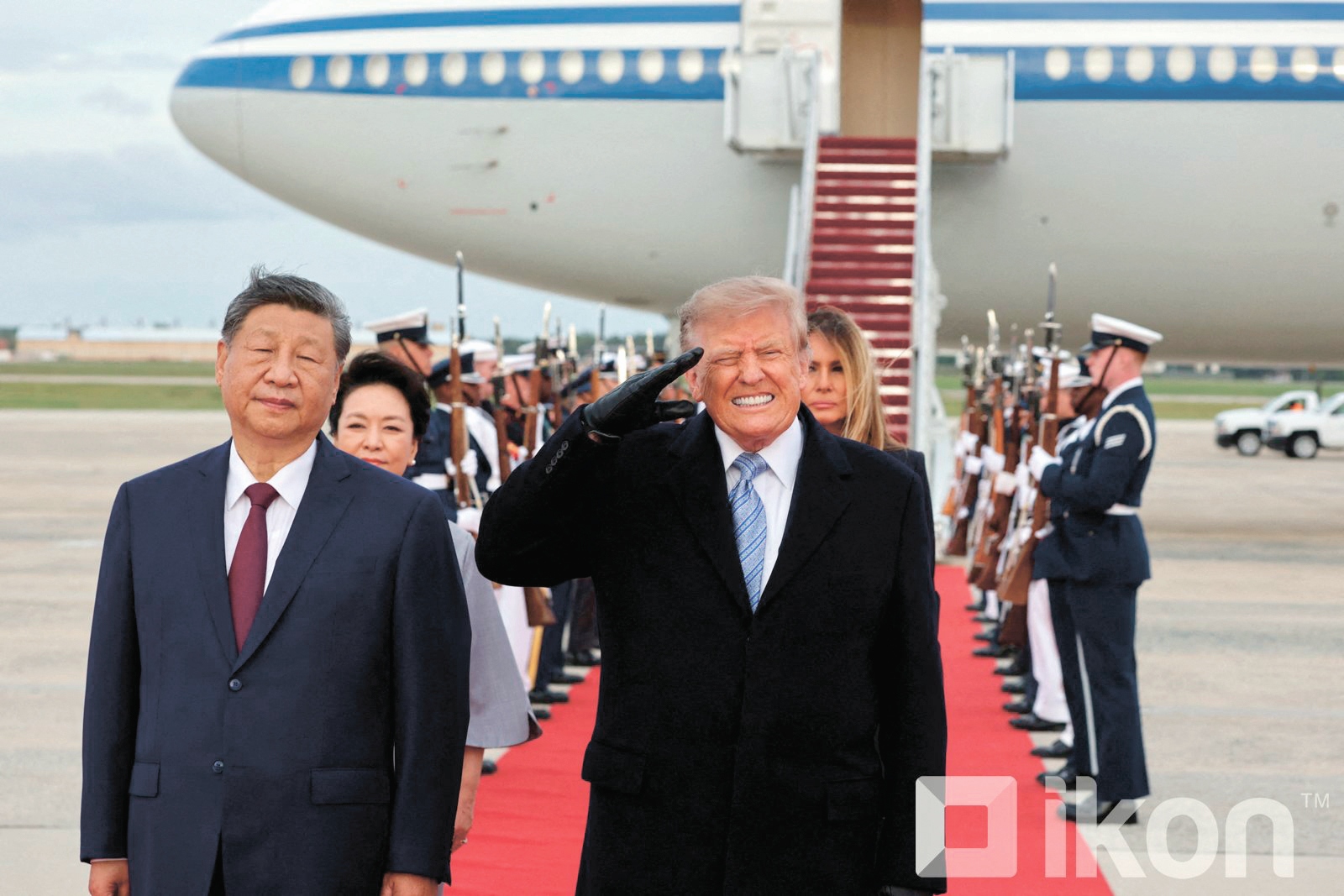
Undoubtedly, one of the most significant events on the global agenda in recent times was the state visit by Chinese President Xi Jinping to the US from 24 to 26 September. Indeed, for many, it was memorable from the very first moments of the distinguished Chinese guest's arrival on American soil. In a departure from established protocol, US President Donald Trump, accompanied by First Lady Melania Trump, personally welcomed Xi and his wife Peng Liyuan at Andrews Air Force Base. It was anticipated that this would establish the tenor for the ensuing negotiations.
The distinguished guests were greeted by a military band and a gun salute, whilst two B-1 bombers flew over the airfield.
Talks with hints
It is not customary for US presidents to greet foreign guests at the aircraft steps. Only British Prime Minister Harold Macmillan was accorded such a reception. In 1962, he was met at Andrews Air Force Base by President John F. Kennedy. In 2015, former US President Barack Obama made an exception for Pope Francis—a religious leader.
Nevertheless, the White House's decision to hold a formal reception of this nature is indicative of the significant value they place on the relationship with China. In essence, Trump's actions conveyed his perception of Xi Jinping as a peer in the global political arena, acknowledging China's emergence as a dominant economic and political force, second only to the United States.
Apparently, the Chinese side was appreciative of this gesture. However, the visit did not resolve the main question of whether the leaders would be able to turn their personal contact into concrete agreements on trade and security.
The following day, Trump continued to play host to Xi Jinping in a highly ceremonial fashion. Following a formal ceremony at the White House, he personally showed his guest the new helipad and the presidential helicopter, Marine One. It would appear that the American leader was intent on making as strong an impression on Xi as the latter had made on him during his visit to China in May. During that visit, the Chinese President gave Trump a tour of the gardens of the Zhongnanhai compound, a former part of the imperial gardens where foreign guests are rarely invited. It was now President Trump's turn to demonstrate the seat of American power and its symbols to President Xi.
This exchange of gestures was underpinned by a mutual recognition of each other's status. However, this did not indicate any progress in reaching an agreement on the matters that had prompted their meeting in Washington.
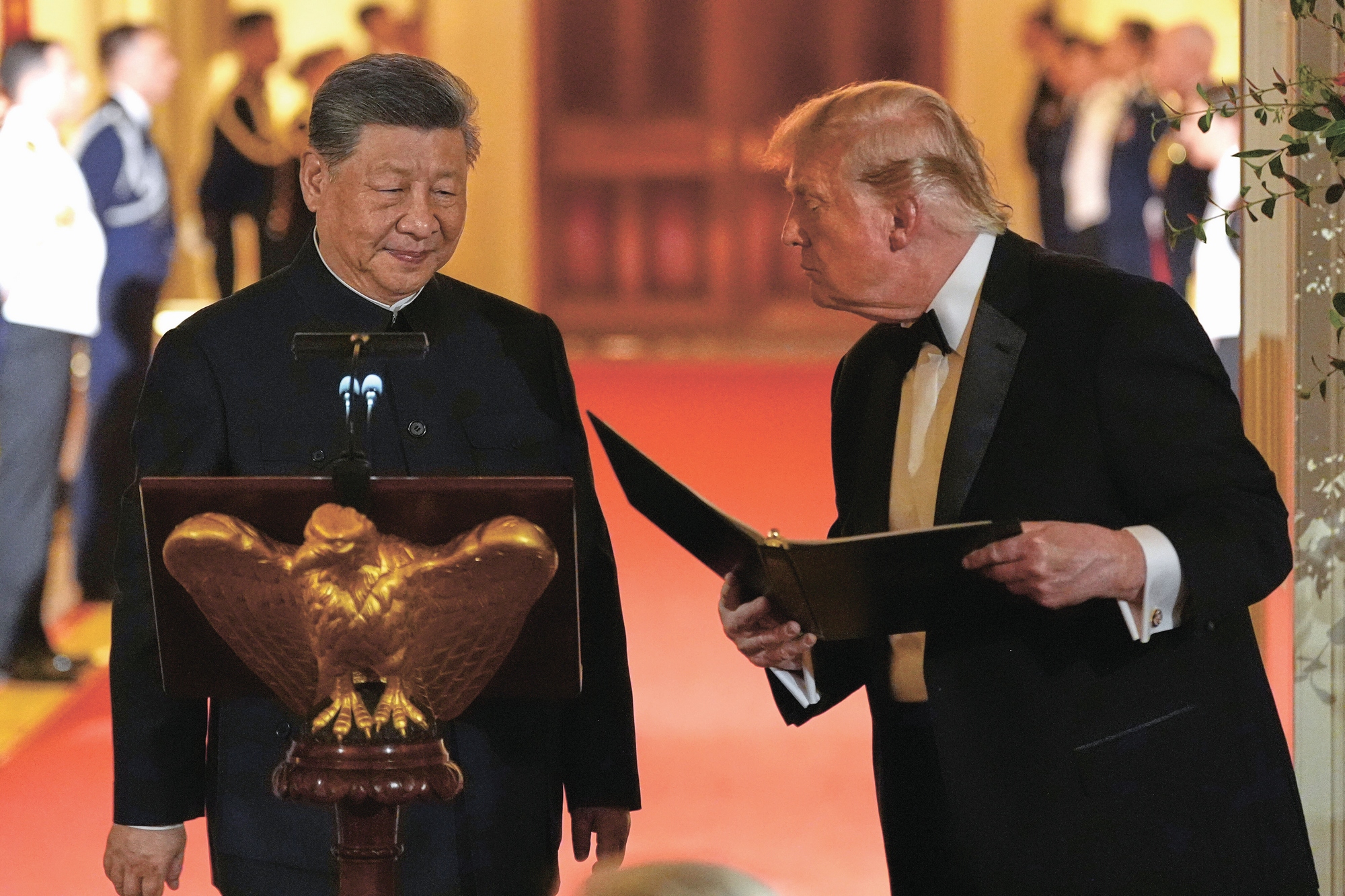
The choice of words used by the leaders in their welcoming addresses is also of interest. Xi Jinping extended congratulations to the Americans on the 250th anniversary of their independence. Given China's own extensive history, stretching back thousands of years, this could be seen as a subtle hint. He went on to acknowledge that China and the US are competitors, but suggested viewing this competition as a contest rather than a clash in which one side must inevitably defeat the other. Xi explicitly referred to the Thucydides Trap, the notion that the rise of a new power leads to war with the dominant power, and stated that it could be overcome. In this section of his speech, China was portrayed not only as a competitor to the relatively young United States, but also as a state that, drawing on its centuries-old historical experience, offers the US a different perspective on relations between great powers. Xi's remarks appear to underscore the notion that a nation's rise does not necessarily entail conflict with other countries.
The Chinese leader's assertion that the 'great rejuvenation of the Chinese nation' and the aspiration to 'make America great again' could coexist was particularly noteworthy. The Chinese leader adopted Trump's main slogan, suggesting that he recognise China's rise without feeling that this signified a defeat for the US. This formula was mutually beneficial, though each party interpreted it differently. For Beijing, it signified the legitimisation of China's right to chart its own course on the global stage. For Washington, however, the question was what consequences this rise would have for American industry, technological superiority and its position in Asia.
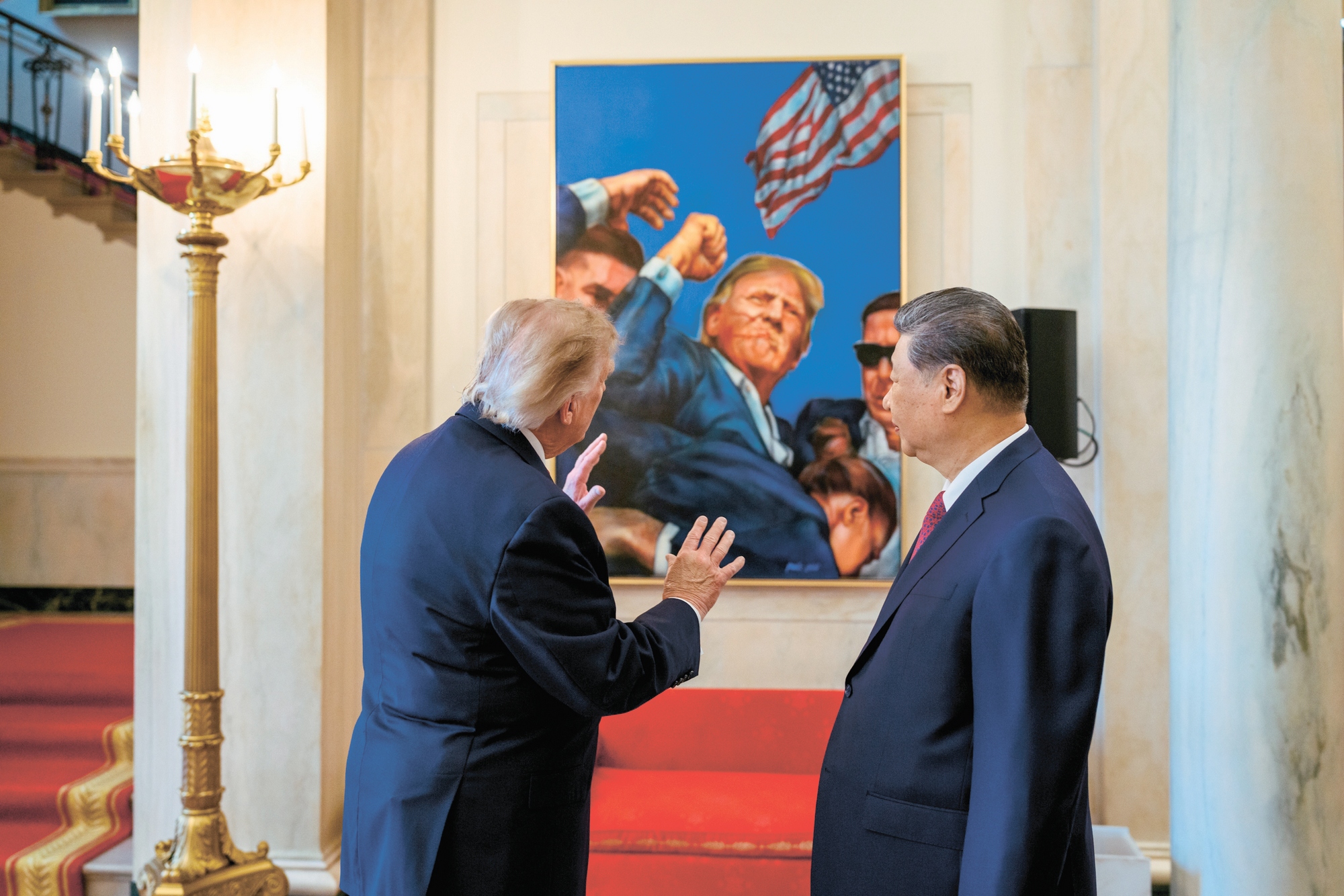
Trump characterised his relationship with Xi as a "truly great friendship" founded on mutual respect, although even here he could not resist his customary digressions. During a tour of the White House, he declared Xi an 'expert on stone', noting that the Chinese leader liked the granite. While presenting a series of portraits of former presidents, Trump gestured towards an autograph machine—a device for automatic signing—and made a humorous reference to Biden. In his speech, he referred to artificial intelligence as 'superintelligence', abbreviating it to SI. Xi sought first and foremost to cement the principle of coexistence between the two powers, whilst Trump assessed the relationship primarily in terms of what specific conditions the US could secure in the negotiations.
The economics of US-China relations
The significance of these statements can be assessed by referring to the agreements reached by leaders in private meetings. Following the conclusion of the talks, Beijing announced its intention to continue economic dialogue, discuss artificial intelligence and maintain military-to-military contact. Xi also discussed regional issues with Trump, including Taiwan, the Middle East, Ukraine and the Korean Peninsula.
The meeting did not result in an agreement that would allow one to claim that the parties had resolved even one of their major disputes. However, this does not imply that the talks were unsuccessful. In light of the current state of relations, the mere opportunity to address the most pressing disagreements at the highest level is a significant achievement. It is important to note that this should not be confused with their resolution.
The example of trade illustrates this point well, as the outcome proved to be both concrete and highly limited. The US and China have agreed to extend their trade truce until 10 January 2027. In summary, the threat of further escalation has been postponed and negotiators have been granted a further two months, however definitive tariffs have not been agreed upon and mutual restrictions have not been lifted.
Washington is keen to see an increase in Chinese purchases of American goods and supplies of rare-earth materials. In turn, Beijing is counting on more predictable access for its goods and companies to the US market. The extension of the truce allows trade to continue whilst each side seeks to secure more favourable terms.
However, the extension of the trade truce was not accompanied by any new commitments from China to increase purchases of American goods. China has committed to purchasing 25 million tonnes of soybeans on an annual basis. Additionally, during the leaders' meeting in May, it committed to purchasing other American agricultural goods worth $17 billion annually. According to US Treasury Secretary Scott Bessent, China is on track to meet its soybean purchase targets, but there is room for improvement with regard to other goods. All these promises were made prior to the September visit. There are no new commitments to purchase US products up to a specific value.
Following the recent meeting, the US trade negotiator, Jamison Greer, announced that a mechanism is being prepared to shield certain trade flows from future tariff disputes. He mentioned US agricultural produce and medical equipment, and on the Chinese side, consumer goods not classified by Washington as sensitive. The new procurement volumes and tariff rates have not yet been announced. It is premature to suggest that a significant agreement has been reached during this visit.
The scale of economic relations illustrates why even a temporary agreement required a meeting between the two presidents. In 2025, the US exported approximately $106 billion worth of goods to China, while importing $309 billion worth from China. The US trade deficit in goods totalled approximately $203 billion. Trump interprets this discrepancy as indicative of trade terms that are unfavourable to the US.
However, this perspective does not encompass the entirety of the situation. In trade in services, by contrast, the US ran a surplus of around $34 billion. American companies generate revenue from the Chinese market, whilst American consumers and businesses rely on supplies of goods manufactured in China. Consequently, the implementation of tariffs can have adverse consequences not only for the targeted country but also for the United States.
Cooperation driven by political interests
In this context, the struggle is moving towards areas where one side's dependence can become the other's advantage. The US is seeking to maintain control over the supply of the most advanced chips required for the development of artificial intelligence. China holds a strong position in the processing of rare-earth elements and the production of magnets, which are essential to many American industries. Consequently, the leaders' discussion on artificial intelligence was not limited to the security of new systems. The core issue was the question of who would gain access to the technologies needed for their development and who would be able to restrict their rival's access to the necessary resources.
It is noteworthy that, in the context of exploring potential trade opportunities, Jamison Greer chose to exclude advanced American chips from the discussion.
It should be noted that trade statistics do not reflect another connection. Current estimates indicate that investors from mainland China and Hong Kong hold US shares worth more than $750 billion. This is not a state-owned stake that Beijing can dispose of at its discretion, but investments made by various owners. Nevertheless, they demonstrate just how deeply intertwined the financial interests of the two countries are. A significant shock to the US market would also result in losses for Chinese investors.
Meanwhile, Chinese technology companies continue to use the services of US financial institutions. This is yet another reason to avoid a sudden break, although money alone cannot resolve political differences.
The line of economic pragmatism runs, first and foremost, through Taiwan. Xi has called on Washington to oppose the island's independence, whereas the customary American formulation is that the US does not support such independence. The difference here is politically significant. Beijing is seeking a more definitive US stance and opposes American arms supplies to Taiwan. Washington retains the option of providing assistance to the island with its self-defence.
Following the meeting, no change was announced to the policy. Consequently, the leaders were able to extend the trade truce, but did not reach an agreement on the issue that could potentially lead to military confrontation.
Furthermore, for the US, the issue is not limited to Taiwan alone. Should Washington alter its position due to pressure from Beijing, this would impact perceptions of Japan, South Korea and other partners regarding the reliability of American commitments in the Indo-Pacific region.
In the period leading up to the visit, the US side separately reaffirmed its security guarantees and its commitment to stability in the Taiwan Strait to its allies. This was a key point of discussion during the recent meeting in Washington. Trump accorded Xi the honours befitting the leader of the world's second superpower, but at the same time could not ignore the concerns of those states that rely on the US presence in Asia.
The final day of the visit was once again marked by history. Following a private tea reception, Trump and Xi proceeded to the US National Archives, where they viewed a number of significant documents, including the Declaration of Independence, the US Constitution and the Bill of Rights. This gesture brought to a close the symbolic exchange that had begun during Trump's visit to China. On that occasion, Xi had shown him a site linked to Chinese history and governance; now Trump had presented his guest with the documents upon which American statehood is founded. However, behind this mutual respect for history, there exist some contemporary disagreements. The visit demonstrated that the leaders are prepared to take personal steps to prevent a sharp deterioration in relations. The long-term stability of this situation will be contingent on whether the US and China can reach an agreement on trade without allowing the disputes over technology and Taiwan to escalate into a wider conflict.
RECOMMEND:
 66