
BAKU ON AIR
The CICA Summit strengthens Azerbaijan’s diplomatic position, boosting regional cooperation further
Author: Elchin HUSEYNOV
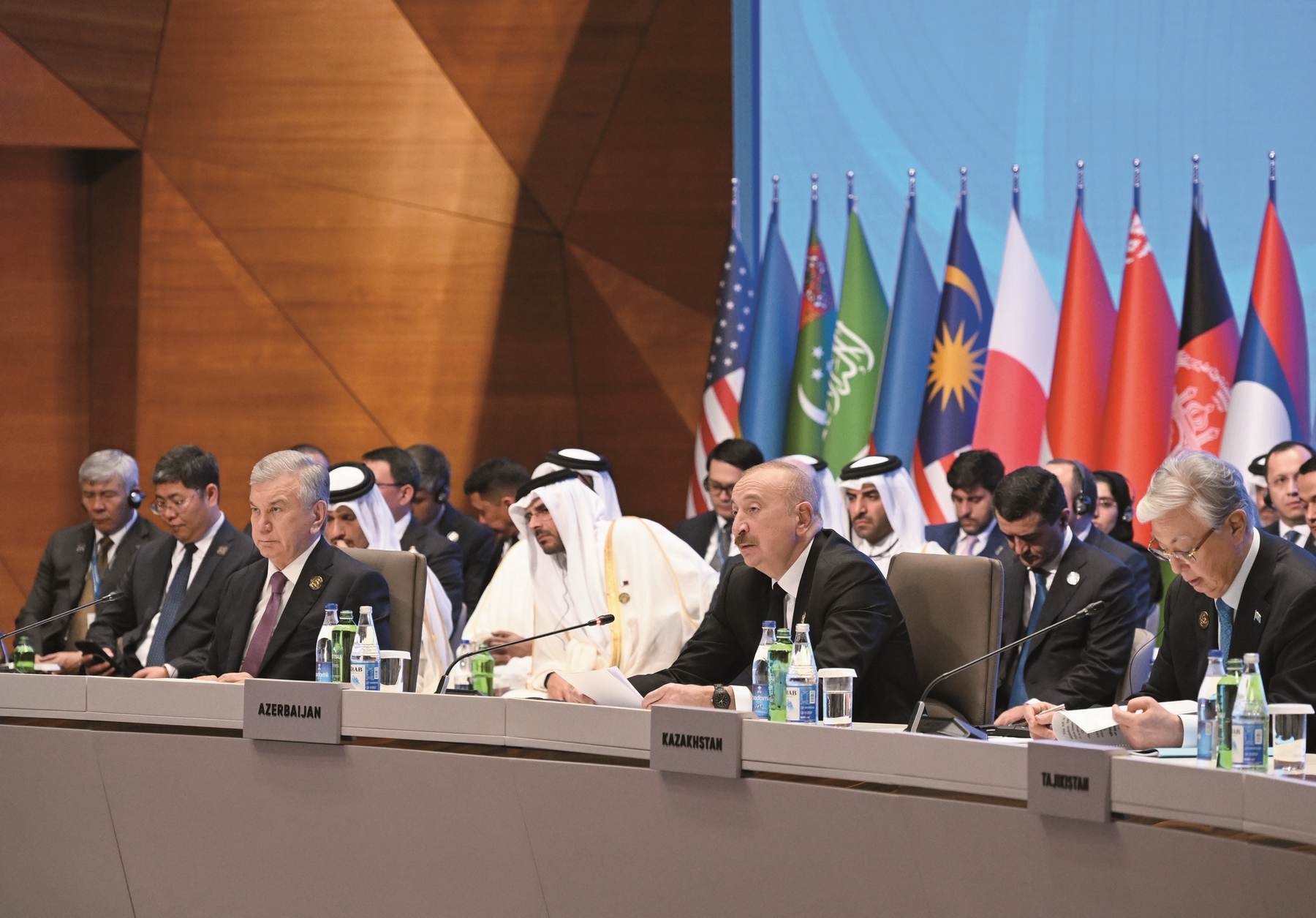
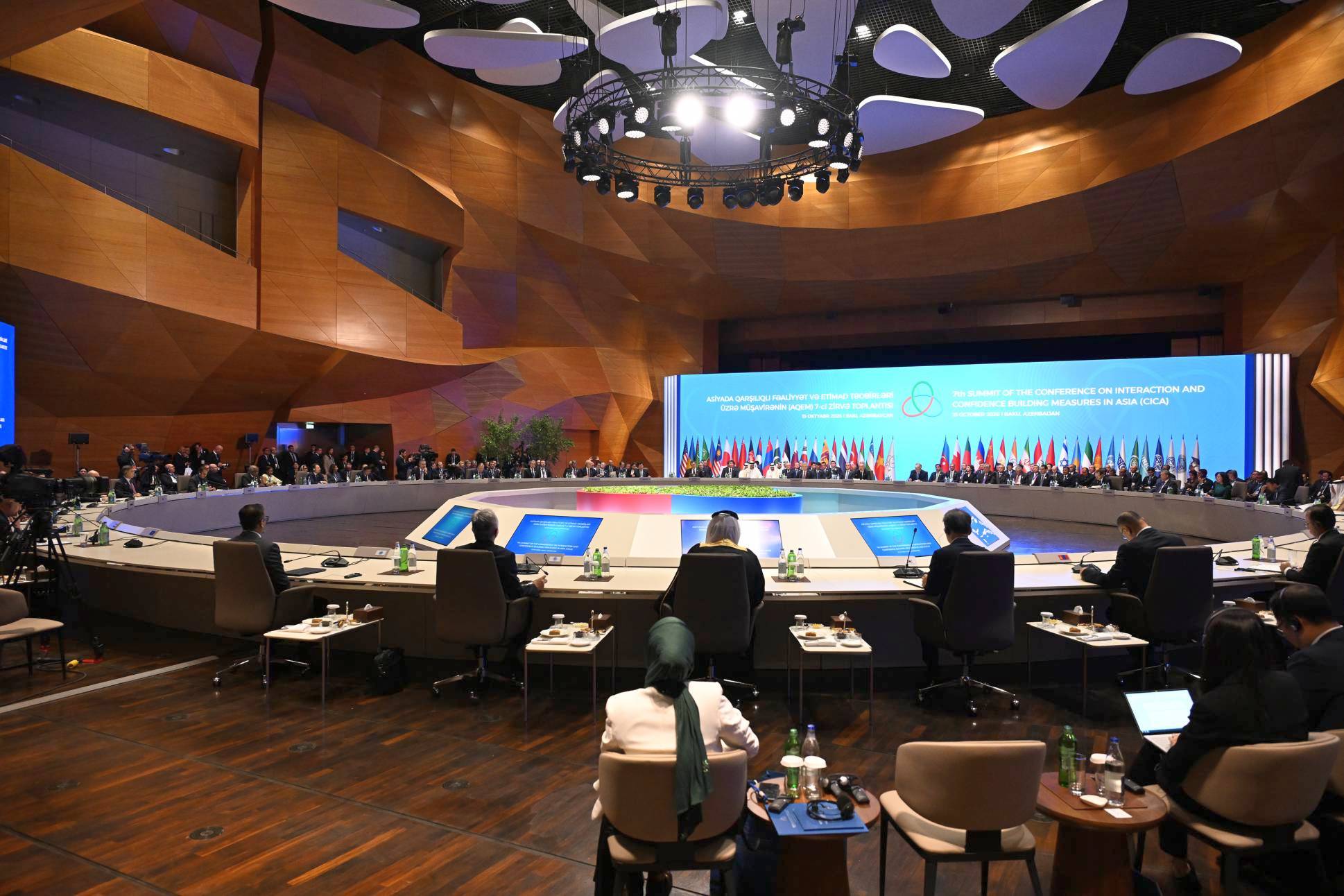
On 14–15 October, Baku played host to the 7th Summit of the Conference on Interaction and Confidence-Building Measures in Asia (CICA). This multilateral forum is designed to build trust, foster cooperation and discuss regional security issues. The summit was chaired by Azerbaijan and focused on the theme 'A Stronger CICA: Interconnectivity, Digitalisation and Sustainable Growth in Asia'.
The summit was attended by the heads of state of Azerbaijan, Israel, Kazakhstan, Kyrgyzstan, Laos, Turkmenistan and Uzbekistan, the Emir of Qatar, the Vice-President of Vietnam, and the Prime Minister of Cambodia, while the leaders of Russia, China and Türkiye were represented by their foreign ministers.
The scale of the organisation highlights the importance of the meeting: the CICA brings together 28 states, which account for around 90 per cent of Asia's territory and population. The organisation thus covers a significant part of the continent and unites countries with diverse political systems, economic capacities and foreign policy interests. The summit focused on the organisation's development prospects, the strengthening of peace and security, transport connectivity, digitalisation and sustainable economic growth.
From dialogue to practical cooperation
For Azerbaijan, holding the chairmanship of the CICA presented an opportunity not only to participate in shaping the regional agenda, but also to promote its own vision of multilateral cooperation. In December 2024, the country assumed the chairmanship for the 2024–2026 period, setting its guiding principle as 'Strengthening the CICA: Interconnectivity, Digitalisation and Sustainable Development in Asia'. These priorities reflect Baku's desire to broaden the practical scope of the organisation's activities by linking the traditional diplomatic agenda with issues of economic development, transport logistics and technological transformation.
One of the key issues is how to enhance the institutional effectiveness of the CICA. Given the organisation's broad geographical scope and the diversity of interests among its member states, mechanisms are needed to ensure the continuity of initiatives, their implementation and the development of permanent forms of cooperation. During Azerbaijan's chairmanship, particular attention was paid to strengthening the association's institutional framework and advancing its transformation into a fully-fledged international organisation, as well as to digitalisation, environmental protection, tourism, education and science.
A significant milestone was the ratification of the Convention on the Privileges and Immunities of the CICA, which was signed in 2010. This will strengthen the legal foundations of the organisation's activities and create the conditions for expanding its institutional capacity.
Concurrently, Baku sought to expand the scope of cooperation. During its chairmanship, the CICA Women's Council and the Finance Summit were established, whilst youth and university links, business cooperation, and expert and media dialogues were developed. In April 2026, the first meeting of the CICA Women’s Council took place in Baku, dedicated to expanding women’s participation in ensuring sustainable development. The Leading Universities Partnership Network, designed to strengthen academic ties, knowledge exchange and joint research, became operational. These initiatives broaden the organisation’s agenda beyond traditional political consultations, involving educational institutions, the business community and civil society organisations in cooperation.
A separate focus of the chairmanship has been on strengthening the CICA’s ties with other international and regional organisations. Azerbaijan views the development of the organisation within the context of a broader system of multilateral cooperation, in which regional mechanisms can complement the activities of global institutions. Cooperation with the UN occupies a special place in this work. A practical example of this was the informal meeting of the CICA foreign ministers in New York on the sidelines of the 80th session of the UN General Assembly. This event is significant not only from the point of view of diplomatic protocol. It demonstrates Azerbaijan’s commitment to strengthening the international dimension of the CICA and linking the regional agenda to global discussions on peace, security and development.
Transport connectivity also features prominently on the agenda of Azerbaijan’s chairmanship. The holding of the first CICA Conference of Port Directors of the States Parties has made it possible to bring issues relating to the development of port infrastructure, multimodal transport and the coordination of logistics routes to the regional level. This area is of particular importance to Azerbaijan. Its strategic location at the crossroads of the East–West and North–South transport routes, the development of its port and rail infrastructure, and its participation in international transport corridors enable the country to act not only as a participant in regional dialogue but also as a practical partner in developing links between Asian markets.
At the same time, the effectiveness of cooperation is dependent on more than just the availability of infrastructure. The streamlining of customs procedures, the digitisation of documentation, the harmonisation of logistics processes and coordination between different modes of transport are essential for transforming geographical advantages into real economic opportunities.
Consequently, Azerbaijan's chairmanship focused on broadening the scope of the CICA—moving from political consultations towards a more systematic and multi-sectoral model of cooperation. As the President of Kazakhstan, Kassym-Jomart Tokayev, stated during his address, Baku is making a significant contribution to realising the potential of the CICA, both in terms of economic development and the expansion of international and mutual ties.
Through comprehensive cooperation, Azerbaijan is creating the conditions for the organisation to play a more active role in addressing existing geopolitical challenges and strengthening regional cooperation. The leaders of Kyrgyzstan, Uzbekistan, Turkmenistan, Israel and many other speakers also spoke highly of "Azerbaijan's significant contribution to strengthening cooperation between states within the CICA and maintaining peace".
The decision taken at the summit on 15 October to extend Azerbaijan's chairmanship of the CICA for a further two years can be regarded as a logical continuation of Baku's efforts. President Ilham Aliyev expressed his gratitude to the member states of the organisation for their support of this initiative. The head of the organisation expressed their gratitude to the member states for their support of the proposal to extend Azerbaijan's chairmanship of the CICA for a further two years.
Key messages from the summit
The President of Azerbaijan highlighted the problematic practice of a selective approach to resolving interstate conflicts: "Since regaining its independence 35 years ago, our country has constantly been confronted with double standards." He asserts that the ongoing presence of wars and conflicts will persist in the absence of mechanisms to ensure the implementation of decisions and resolutions by the UN Security Council and other international organisations. Furthermore, he anticipates the emergence of new conflicts. "We have proposed peace and have been living in peace for just over a year. This peace remains fragile; it must be protected and strengthened," added the Azerbaijani leader.
During his speech, Israeli President Isaac Herzog expressed his hope for the achievement of long-term peace in the region, stating: "It is my hope that we will be able to realise the vision of peace in the Middle East — in Lebanon, Syria, Gaza and with our Palestinian neighbours — and that we will fight together against all forms of terrorism." According to him, Israel's aim is to strengthen partnerships across Asia and to participate actively in regional projects.
Cambodian Prime Minister Hun Manet has restated his strong support for transforming the CICA into a fully-fledged international organisation. The Turkmen leader, Serdar Berdymuhamedov, has proposed the establishment of the Ashgabat Climate Dialogue, which aims to facilitate the exchange of experiences and coordinate approaches to issues such as adaptation to climate change, combating desertification and drought, the rational use of water resources, and the promotion of 'green' solutions. Uzbek President Shavkat Mirziyoyev emphasised the importance of enhancing collaboration in the effort to combat climate change, as well as in addressing emerging challenges, such as the utilisation of artificial intelligence in a manner that is both ethical and responsible.
Tajik President Emomali Rahmon, for his part, is convinced that the CICA Youth Council is capable of playing an even more effective role as a platform for dialogue between the countries of the continent. Proposing to expand the capabilities of the CICA Youth Council, Rahmon assured that, with political will and joint efforts, countries would be able to transform CICA into “an effective platform for dialogue and cooperation, and for strengthening trust and solidarity amongst the states of Asia”.
Chinese Foreign Minister Wang Yi, commending Baku’s work, said: “During its two-year chairmanship, Azerbaijan has promoted cooperation in the areas of connectivity, the digital economy, ‘green’ development and enhancing resilience to climate change, whilst consistently working to strengthen the CICA.”
Bahrain’s Minister for Foreign Affairs, Abdullatif bin Rashid Al Zayani, stated that Manama proposes expanding existing confidence-building measures to cover the security of maritime and air transport and to transform the CICA into a practical platform for safeguarding the routes connecting the countries: “Bahrain calls for the assurance of safe and unimpeded shipping and air traffic, as well as the right of innocent passage in accordance with the United Nations Convention on the Law of the Sea—without unlawful restrictions or the imposition of charges.”
According to Varsen Aghabekyan Shahin, Palestine’s Minister for Foreign Affairs and Diaspora Affairs, it is particularly important today to strengthen confidence-building measures in Asia, to ensure respect for international law and human rights, and to prevent humanitarian disasters, which are “often addressed selectively”. “It is essential to ensure that resolutions are implemented, that people’s rights are restored, and that their lands are returned in accordance with international law,” Shahin believes.
Incidentally, one of the key outcomes of the Baku summit was the decision for the Lao People’s Democratic Republic to join the CICA as its 29th member state.
Significant side talks
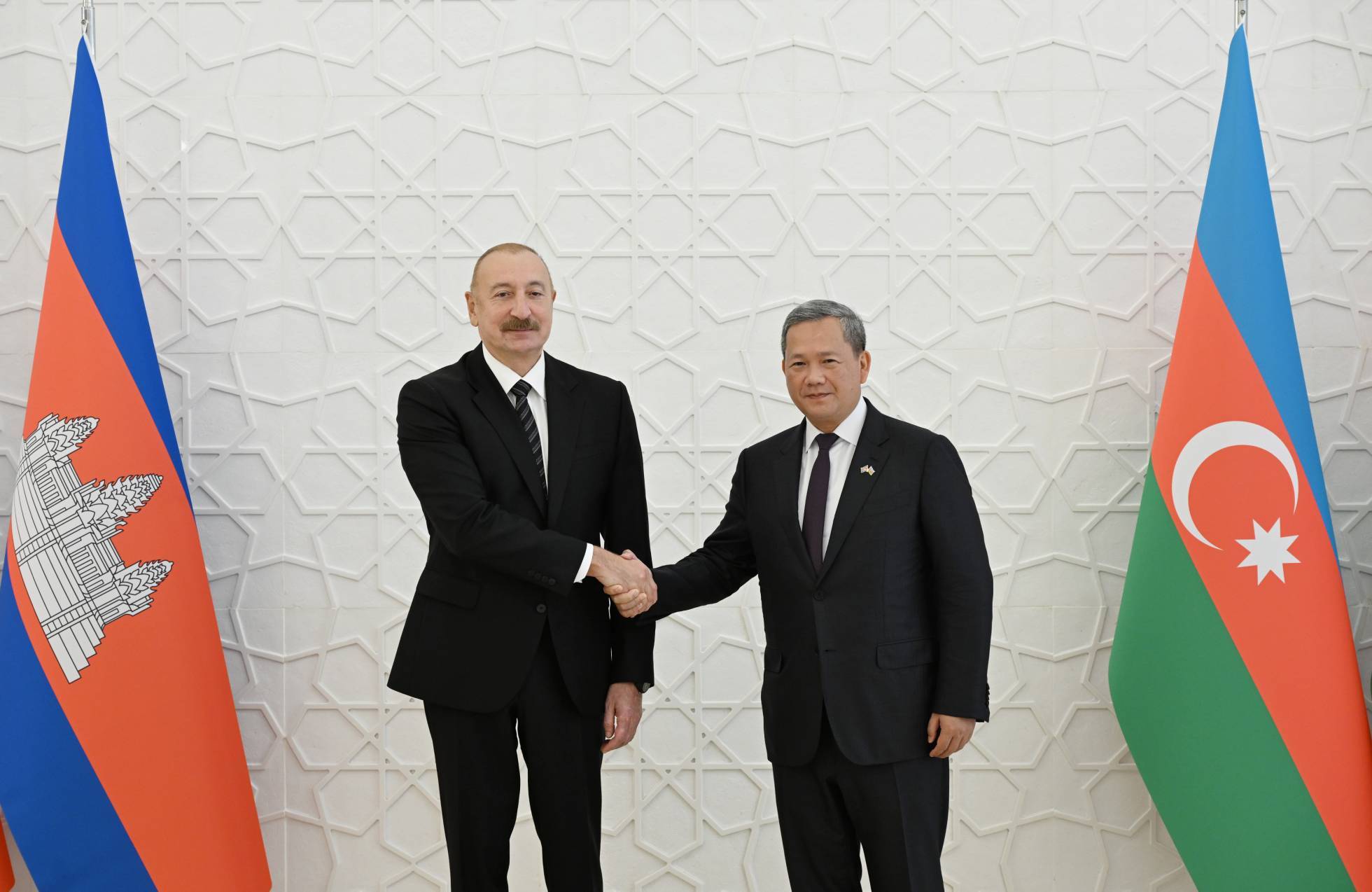
In the run-up to the CICA summit, Baku became a venue for active diplomatic dialogue. On 12 October, Ilham Aliyev held talks with the Prime Minister of Cambodia, Hun Manet, who had arrived in the country on an official visit. The parties outlined prospects for expanding trade and economic ties, investment and cooperation in the energy sector. Among the practical outcomes were the exchange of documents on trade and economic cooperation, the elimination of double taxation and cooperation in the field of diplomatic education. The following day saw the first official state visit to Azerbaijan by the President of Laos, Thongloun Sisoulith, since the establishment of diplomatic relations in 1995. A joint declaration was adopted following the talks. The parties exchanged documents on cooperation in agriculture and on the mutual exemption of holders of service passports from visa requirements.
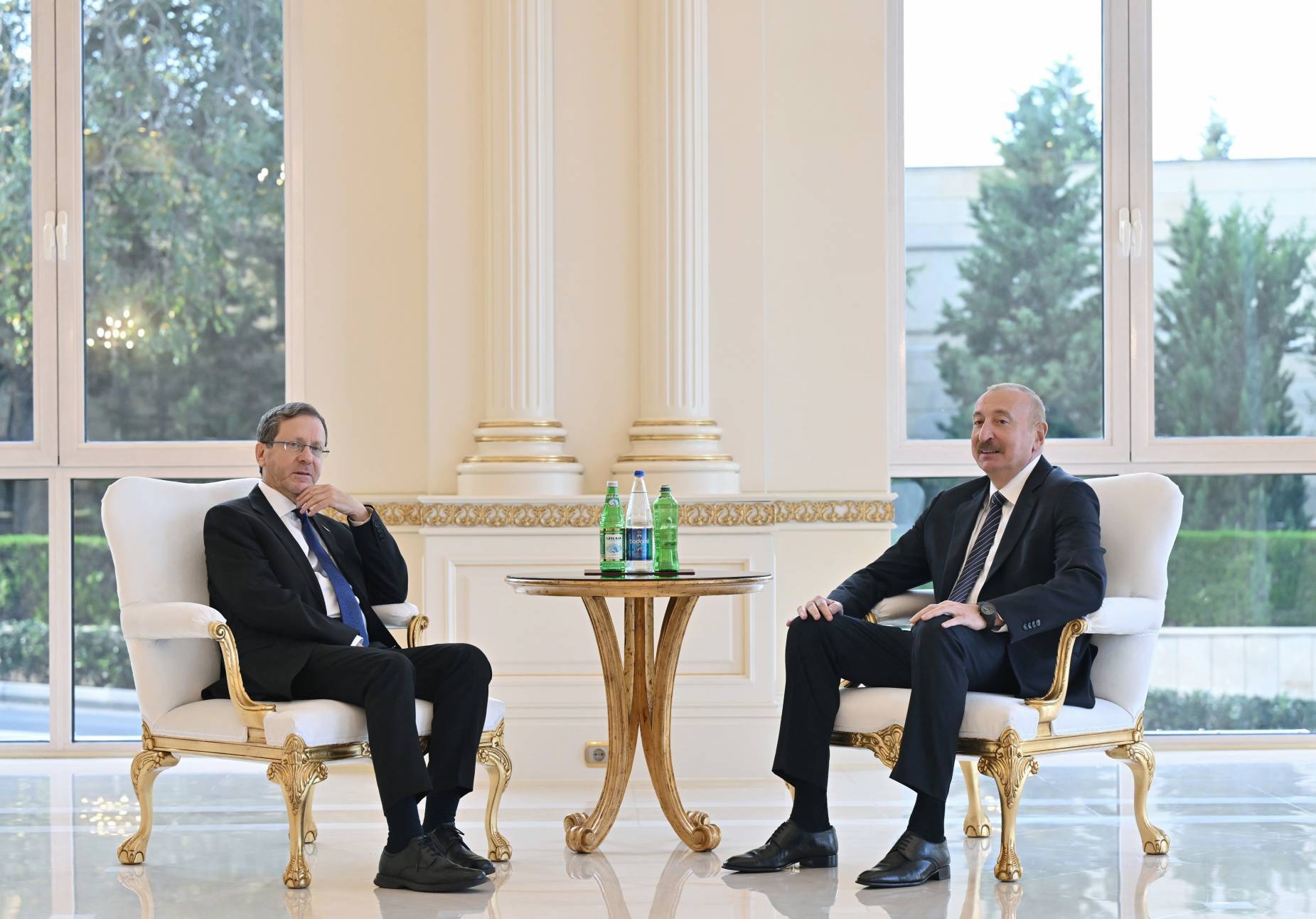
On 14 October, Ilham Aliyev met with his Israeli counterpart, Isaac Herzog. During the meeting, the President of Israel congratulated Azerbaijan on assuming the chairmanship of the Conference on Interaction and Confidence-Building Measures in Asia. Isaac Herzog regarded Azerbaijan’s continued chairmanship of this organisation in 2026–2028 as a sign of a high level of trust in our country and expressed his satisfaction with this. The meeting provided an opportunity to exchange views on bilateral relations between Azerbaijan and Israel, as well as on issues relating to the international and regional agendas.
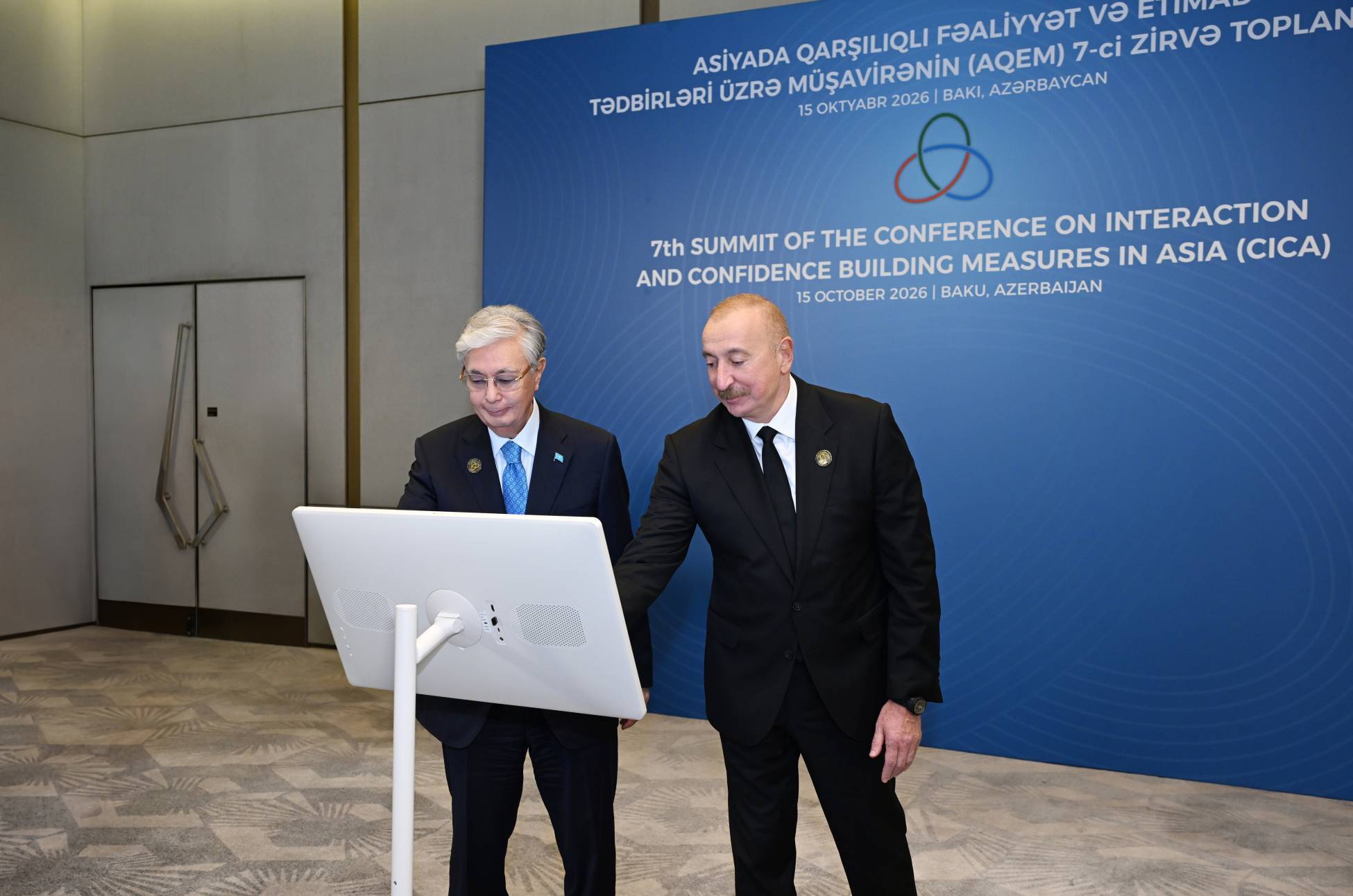
A separate event took place on 15 October, when the leaders of Azerbaijan and Kazakhstan inaugurated the Trans-Caspian fibre-optic cable line. The cable, laid along the seabed of the Caspian Sea between Sumgayit and Aktau, is approximately 380 km long, and its bandwidth exceeds 400 Tbit/s. The project, part of the ‘Digital Silk Road’ initiative, is designed to expand data exchange between Asia and Europe and give the Middle Corridor a new dimension—a digital one. During the ceremony, Kassym-Jomart Tokayev described the line as a new type of corridor, whilst Ilham Aliyev emphasised its importance for strengthening ties between Central Asia and the South Caucasus. Ministers from both countries exchanged a signed agreement on cooperation for the development of the Middle Corridor.
At a meeting with Chinese Foreign Minister Wang Yi, the Azerbaijani leader emphasised that the adoption of a joint statement on the strategic partnership between the two countries had taken bilateral relations to a new level. The parties paid particular attention to the strategic importance of the Middle Corridor and the ‘Belt and Road’ initiative, as well as to cooperation in the field of renewable energy. Wang Yi congratulated Azerbaijan on its chairmanship of the CICA and on hosting the summit, and expressed support for the country’s sovereignty and territorial integrity. For his part, Ilham Aliyev reaffirmed Azerbaijan’s commitment to the ‘One China’ policy.
Ilham Aliyev also held important discussions with the presidents of Uzbekistan, Tajikistan and Qatar, the vice-president of Vietnam, and the foreign ministers of Türkiye, Bahrain and Sri Lanka.
Among the meetings that attracted media interest on the sidelines of the Baku summit were the talks between the Russian and Turkish foreign ministers, Sergey Lavrov and Hakan Fidan. It was stated that "an exchange of views took place on current tasks aimed at intensifying trade, economic and energy cooperation, with a focus on the progress of key bilateral projects". The ministers emphasised the significance of aligning Russia's and Türkiye's actions on the global stage, notably in addressing the Russian-Ukrainian situation.
Sergey Lavrov engaged in discussions with his Chinese counterpart, Wang Yi. The diplomats discussed the schedule for upcoming high-level contacts, including preparations for Vladimir Putin's visit to Shenzhen for the APEC summit. Sergey Lavrov noted that trade between Russia and China had grown by 25 per cent over the first eight months of this year, and that a new all-time high is expected by the end of the year. The importance of the strategic partnership between Moscow and Beijing as a stabilising factor in the global context was emphasised. It was agreed that the organisation would increase its cooperation in international forums, including the UN, SCO, BRICS, APEC and within the framework of the CICA itself.
A rare diplomatic meeting between Israeli President Yitzhak Herzog and Bahrain's Minister of Foreign Affairs, Abdullatif bin Rashid al-Zayani, attracted significant attention. The discussions covered the friendly ties between the two nations, recent events in the Middle East, and the crucial importance of the Abraham Accords for strengthening security, stability and prosperity in the region.
At a meeting in Baku, the foreign ministers of Azerbaijan, Turkmenistan and Uzbekistan discussed the development of trilateral cooperation, the expansion of transport and transit links, the strengthening of collaboration in the energy and trade sectors, and the realisation of the potential of regional and inter-regional transport corridors.
Baku and the new geography of Asian dialogue
Following the 7th Summit of the Conference on Interaction and Confidence-Building Measures in Asia, the Baku Declaration was adopted. The participants also endorsed the CICA statement on cooperation in the field of occupational health and safety. These documents establish the primary guidelines for ongoing collaboration among the participating states.
For Azerbaijan, the outcome of the summit not only reaffirmed Baku's significance as a venue for international dialogue, but also provided an opportunity to continue working on strengthening the institutional foundations of the CICA. The extension of the country's chairmanship for the 2026–2028 period presents a valuable opportunity to implement new initiatives, expand economic and transport links, and strengthen trust between the states of Asia. The primary objective at this time is to provide tangible content to the agreements that have been established, with a view to converting political dialogue into sustainable mechanisms for regional cooperation.
RECOMMEND:
 78